
Fallout from hidden history Donald Pols: Milieudefensie board resigns
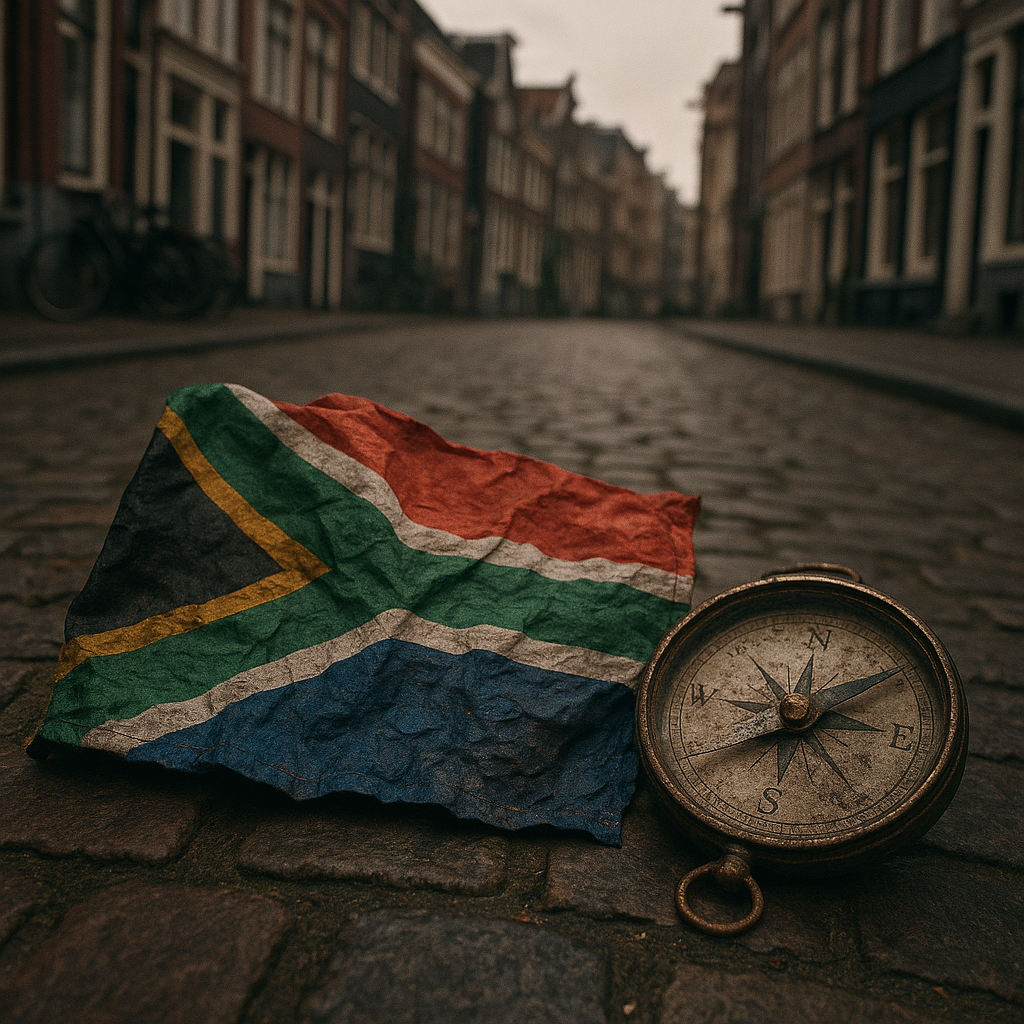
Milieudefensie implodes as ex-director Donald Pols' apartheid past is revealed, sparking resignations, legal woes, and a crisis for climate NGOs.
The environmental group Milieudefensie faced a huge scandal. Their boss, Donald Pols, had a dark secret: he was a violent racist in South Africa's apartheid past. When this shocking truth came out, he was fired, and the whole organization was thrown into chaos. They lost money, trust, and their good name, showing how old secrets can cause big problems.
What is the Milieudefensie scandal about?
The Milieudefensie scandal involves the unravelling of the Dutch environmental NGO after revelations about its director, Donald Pols. Pols, a former Afrikaner Student Front member, had a hidden past of violent racist activities during apartheid in South Africa. This led to his dismissal, a crisis of trust within the organization, and significant financial and reputational damage.
Get Cape Town news in your inbox
Stay updated with the latest stories from the Mother City.
1. A Monday No One Saw Coming
Staff at Milieudefensie were told to clear their calendars on 18 March and meet an hour earlier than usual. The warehouse on the IJ-river was already buzzing when the supervisory board marched in without warning. Six envelopes hit the lectern at once: every trustee stepped down on the spot. Chair Marty Smits’ note needed only two lines to admit that “our silence since 2015 about the past of the former director has destroyed the trust placed in us.” By dusk, Dutch radio had turned the verb doorgewinterd into shorthand for “being worn thin by the truth.”
2. The Making of a Firebrand
Donald Pols grew up in 1970s Lynnwood, the son of an air-force quartermaster and a government typist. School magazines remember him quoting Nietzsche at fourteen and persuading the rugby team to stitch the old Transvaal vierkleur onto their jackets. At the University of Pretoria he swapped engineering for politics and chaired the Afrikaner Student Front, a group founded the same year apartheid was codified. Weekend drills run by ex-army instructors taught recruits to break up mixed meetings with bricks, smoke bombs and knives taped to rulers.
On 25 April 1991, front pages showed a tall teenager kicking a bodyguard beside a burning ANC flag. Pols later boasted to a daily that he had led 300 students who stormed the hall where Nelson Mandela was speaking. No one died, but six bodyguards and two students ended up in hospital. Police waited twenty minutes before moving in, feeding rumours that off-duty soldiers were in the crowd.
3. Years That Vanished
After the rally, Pols dropped out of university. Former cadres say the Afrikaner Resistance Movement paid his ticket to the Netherlands. Immigration logs show he entered on a temporary visa in April 1992 and enrolled in a one-year environmental conversion course in Utrecht. Classmates recall a loner who read the Afrikaans Bible in bars. The next decade is a blur: he brokered hazardous waste, married a Dutch librarian, naturalised in 1998 and by 2004 was writing glossy life-cycle studies for airlines. None of the résumés mentioned Pretoria.
4. Reinvention Inside the Green Empire
In 2008 Milieudefensie advertised for a head of corporate campaigns. A board member scribbled “great Afrikaans surname – could work in South Africa?” during the interview. His first win came in 2010 when he co-wrote Fuelling Trouble, accusing KLM of illegal palm-oil subsidies. Within three years he was deputy director. In 2015 the supervisory board – already tipped off by an anonymous e-mail from an ex-Afrikaner Student Front member – appointed him director. Trustees later told staff they had hired private investigators who found “no criminal record and no ongoing extremist link.” The memo was never circulated.
5. The Court Ruling That Hid the Cracks
Under Pols, membership tripled to 230,000 and in May 2021 the Hague court ordered Shell to cut global CO₂ emissions by 45 % by 2030. The judgment is now cited from São Paulo to Oslo. Inside the office, the victory masked rising unease: campaigners from the global south asked why a white South-African with no lived experience of environmental racism was the public face of climate justice. Meanwhile, investigative reporters traced a 1991 newspaper photograph. The tipping point came in January 2024 when a whistle-blower at Tata Steel leaked a dossier to a weekly.
6. Three Weeks That Shook the NGO
- Week 1 – 4 March:* The weekly prints a 5,000-word exposé plus the 1991 photo. Within hours #PolsResign trends; Milieudefensie loses 12,000 Instagram followers in a day.
- Week 2 – Pols is summoned to the IJmuiden blast-furnace complex, offered a pay-off and escorted off site. Staff post an open letter about “moral whiplash.”*
- Week 3 – A chaotic staff forum on 15 March explodes when a Congolese campaigner asks whether Mandela would have spoken had he known a violent racist was running the NGO. The board promises an external inquiry; employees walk out en masse.*
7. Governance in the Rubble
The Dutch Association of Charities has frozen a €3.2 million grant for a new “climate-democracy” programme. A skeleton board of four veterans has ninety days to appoint a search committee and an interim director. Jacqueline Smit, operations chief under Pols, is the provisional face of leadership, earning €30,000 less than her predecessor and with no UN-plenary experience.
8. Fault-Lines in Law and Ethics
Dutch civil code obliges trustees to act in the best interest of the mission. A professor of law argues the board’s failure to disclose Pols’ past is “a serious breach of due diligence” that could expose the NGO to donor lawsuits. South African transitional-justice activists are preparing a submission to The Hague, arguing the 1991 rally could fall under crimes against humanity if it was part of a systematic campaign. The statute of limitations for common assault has lapsed, but legal scholars say the wider framing keeps the door open.
9. Money and Reputation in Free-Fall
Milieudefensie’s 2023 accounts listed €21 million in assets; €8 million came from the national postcode lottery and €2.8 million from the European Climate Foundation. Within forty-eight hours of the board resigning, the lottery suspended the next quarterly tranche pending an audit. Three corporate law firms have advised clients to pause joint litigation led by the NGO. The landmark Shell case, now under appeal, has been tagged “potentially affected by organisational-credibility issues.”
10. The Staff Uprising and the New Guard
Roughly 120 employees, half of them under thirty-five, have formed a horizontal “climate collective” inside the warehouse. They are crowd-sourcing a code of conduct on encrypted pages and demanding a binding referendum on any future director. Fatima Achbari, a Moroccan-Dutch lawyer who co-wrote the Shell writ, is touted as “the new moral compass,” but she insists on a rotating triumvirate model borrowed from Spanish activists.
11. Shockwaves Beyond the Dutch Border
- Germany:* Campact, a 1.7-million-member digital platform, quietly updates vetting protocols.
- South Africa:* The Ahmed Kathrada Foundation asks the Dutch embassy for restorative dialogue; Julius Malema tweets that “the Dutch must clean their own house before preaching emissions.”
- United States:* 350.org’s May Boeve cancels a keynote at Milieudefensie’s May-Day festival, tweeting that “accountability is the first renewable resource.”
12. The Hydrogen Plant Left Leaderless
Pols’ dismissal from Tata Steel Netherlands matters beyond symbolism. The company is under a 2030 court order to cut NOx emissions at Europe’s second-largest mill by 55 %. He had been piloting a €1.5 billion hydrogen-ready direct-reduction plant, the biggest private green-tech investment in Dutch history. His successor, former Nissan Europe EV director Linda Jackson, must now negotiate with regulators, unions and a fractious provincial council while fielding questions about apartheid-era violence. Shares dipped 3.8 % the day after Pols was escorted out.
13. The Archive Boxes That May Hold More
Investigative collective Bellingcat has located an unindexed box labelled “ASF 1989-1991” in the basement of a conservative heritage foundation near Stellenbosch. The foundation will digitise 27 minutes of Super-8 footage in exchange for an embargo until after South Africa’s 29 May election. Sources say the film shows Pols ordering students to chain the hall doors and congratulating them in Afrikaans: “Now our land is safe again.” If authenticated, the clip could widen the criminal probe.
14. The Whistle-Blower Who Warned Early
Rudie van Niekerk, a former Afrikaner Student Front member who moved to Arnhem in 2001, has handed staff a chain of e-mails he claims to have sent Pols in 2014. In one, van Niekerk warns: “Sooner or later your accent will betray you.” Pols allegedly replied: “I have buried that skin and become a tree-hugger; let the past rest.” The half-confessional, half-threatening tone has become Exhibit A in the integrity inquiry.
15. The Missing Thesis That Was Flooded Away
Pols’ 1996 polytechnic thesis, titled Environmental Risk and Industrial Policy: A Neo-liberal View, has vanished from the university repository. A librarian’s note dated 2002 cites “privacy reasons.” When reporters asked for a hard copy, the department said all microfiche was destroyed in a basement flood. Digital-forensics experts suspect Pols requested redaction because the acknowledgements reportedly thanked “my comrades in the Front.”
[{"question": "
What is the Milieudefensie scandal about?
", "answer": "The Milieudefensie scandal involves the unravelling of the Dutch environmental NGO after revelations about its director, Donald Pols. Pols, a former Afrikaner Student Front member, had a hidden past of violent racist activities during apartheid in South Africa. This led to his dismissal, a crisis of trust within the organization, and significant financial and reputational damage."}, {"question": "Who is Donald Pols?
", "answer": "Donald Pols was the director of Milieudefensie, a prominent Dutch environmental organization. He grew up in South Africa during apartheid and was a leading figure in the Afrikaner Student Front, a group known for its violent racist activities. He was involved in a notorious incident in 1991 where he led students in storming a hall where Nelson Mandela was speaking, resulting in injuries. After moving to the Netherlands and naturalizing, he reinvented himself as an environmentalist, removing any mention of his past from his CVs."}, {"question": "How was Pols' past revealed?
", "answer": "Pols' past began to surface through anonymous tips and later through investigative reporting. An anonymous email in 2015 had already tipped off the supervisory board, but they appointed him director after private investigations found no 'criminal record or ongoing extremist link.' The full extent of his past was publicly exposed in January 2024 when a whistle-blower leaked a dossier to a weekly newspaper, which then printed a 5,000-word exposé, including a 1991 photograph of Pols kicking a bodyguard at the Mandela rally."}, {"question": "What were the consequences for Milieudefensie?
", "answer": "The revelations about Donald Pols' past caused significant damage to Milieudefensie. The entire supervisory board resigned, the organization lost trust, reputation, and substantial funding, including a \u20ac3.2 million grant from the Dutch Association of Charities. Membership plummeted, and internal dissent led to staff walkouts. The scandal also impacted the organization's legal standing, with their landmark Shell case now potentially affected by 'organisational-credibility issues.'"}, {"question": "What happened to Donald Pols after the scandal broke?
", "answer": "After the exposé, Donald Pols was dismissed from his role as director of Milieudefensie. He was also removed from his new position at Tata Steel Netherlands, where he was piloting a \u20ac1.5 billion hydrogen plant, a significant green-tech investment. His past actions are now subject to scrutiny, with South African transitional-justice activists preparing a submission to The Hague, arguing the 1991 rally could fall under crimes against humanity."}, {"question": "What is the broader impact of this scandal?
", "answer": "The scandal sent shockwaves beyond the Netherlands. International environmental groups like Germany's Campact updated their vetting protocols. The Ahmed Kathrada Foundation in South Africa called for restorative dialogue, and prominent figures like Julius Malema and May Boeve of 350.org commented on the need for accountability. The incident highlights the critical importance of due diligence, transparency, and ethical governance within NGOs, especially concerning leadership roles and past conduct."}]
A Russian-Spanish journalist and Cape Town native, channels his lifelong passion for South Africa into captivating stories for his local blog. With a diverse background and 50 years of rich experiences, Serjio's unique voice resonates with readers seeking to explore Cape Town's vibrant culture. His love for the city shines through in every piece, making Serjio the go-to source for the latest in South African adventures.
View all articles →