
Fires kill two and leave scores homeless in Dunoon
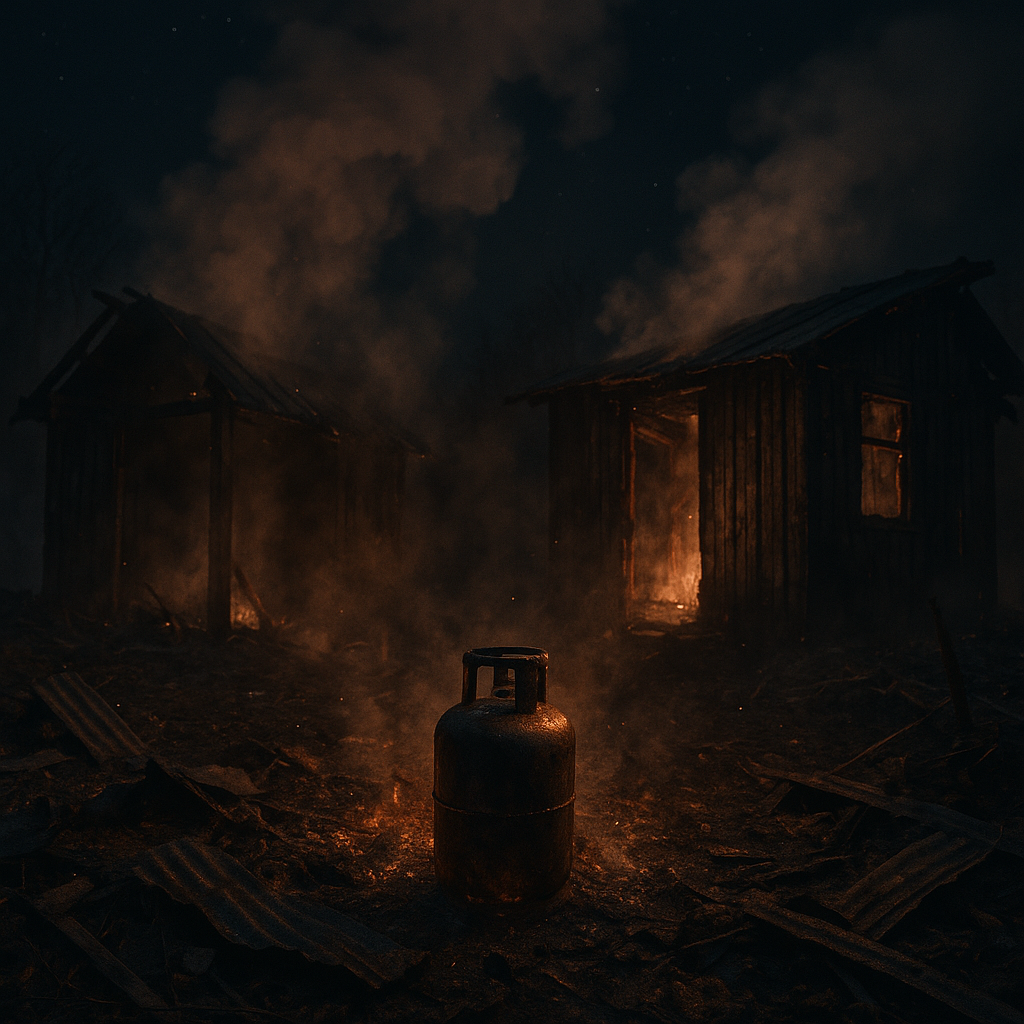
Two devastating fires ripped through informal settlements in Cape Town, claiming lives and homes. Learn about the challenges and solutions.
In the quiet early morning, a birthday party in Newlands turned to horror when a shack fire, fueled by everyday items, erupted and claimed a life. Soon after, another devastating fire tore through Siyahlala, leaving behind a trail of destruction and further loss of life. These blazes, fed by flimsy materials and cramped conditions, highlight the urgent danger faced by many informal settlements. The community now faces the difficult task of rebuilding amidst ashes and sorrow, with little help from official solutions.
What caused the devastating fires in Newlands and Siyahlala?
Shack fires in Newlands and Siyahlala were fueled by highly flammable materials like timber and zinc, closely packed dwellings, unofficial electrical connections, and stored paraffin and gas. These factors, combined with inadequate water pressure and the absence of smoke detectors, contributed to the rapid spread and intensity of the blazes.
Get Cape Town news in your inbox
Stay updated with the latest stories from the Mother City.
Midnight Revelry Turns to Panic in Newlands
In Newlands, the hush of the early hours normally swallows every sound. A handful of bulbs glow orange above doorways, a stray television flickers on a wooden crate, and a distant shebeen lets out the occasional laugh. Sunday, 21 April 2024, broke that pattern. A twenty-fifth birthday was in full swing and the courtyard - really just a patch of stamped earth fenced in by zinc sheets and plastic - became an open-air dance floor. Gqom beats bounced off the scrap-metal walls while neighbours drifted in and out, balancing paper plates of cake. Vuyokazi Jabona, thirty-one, a woman with a bright yellow doek wrapped high, ladled slices and promised to return after making sure her paraffin stove at home was off. Home stood a mere hundred and twenty metres away, past the communal tap and through ankle-deep grey water.
She never made it back to the party. Seventeen minutes after she left, an orange tongue licked up the side of her shack. Bongani Tofile, whose window stays propped open because autumn makes the zinc walls weep, caught the first warning: a crackle, then the dull glow of the roof ridge. By the time he sprinted across the clearing, the plastic sheet that served as weather-proofing had split and the hidden layer of cardboard - cheap insulation against winter’s bite - was already burning. Seconds later flames rolled across the ceiling and devoured the polyester curtains Vuyokazi had proudly hung only weeks earlier after a bargain hunt in Milnerton.
Anelisa Mpetsheni was tipping out dishwater when a single scream - “umlilo!” - cut the night. She dropped the basin and ran. The door handle burned like a stove plate; she wrapped a jersey around her fist and still blistered her palm. Two men arrived with a crowbar, another sloshed a five-litre paint tin of tap water against the wall. The metal buckle on the door bowed in the heat, turning the latch into a molten knot. Inside, a rasping cough rose once, then nothing. Neighbours formed a line from the tap, passing buckets hand-to-hand, but pressure on a Sunday night in Dunoon is treacherous; by the fourth bucket the flow had thinned to a drizzle. At 01:34 the structure folded in on itself, a steaming ruin of corrugated iron.
Fire Station 19 logged the call at 01:27. Two tankers and a rescue crew forced their way along the single sand track that passes for a road, stopping forty metres short because rubble from illegal building dumps blocked the rest. Firefighters dragged 70-millimetre hoses over mattresses and cooking pots and finally doused the last flame at 02:05. All that remained were the blackened coils of a fridge and the stumps of two kitchen chairs. Vuyokazi’s body lay near the doorway, one arm stretched toward the latch - frozen in a final effort to escape.
A Second Blaze Erupts While the First Still Smoulders
Barely nine hundred metres west, another plume climbed skyward over Siyahlala, a strip of forty-three shacks wedged between the N7 and the Killarney racecourse embankment. Sibusiso Danti, forty-one, locked the shutters of his tshisa nyama at midnight after selling twelve chickens charred over an oil-drum braai. He tucked R10 500 from his side hustle - scholar transport in a battered fourteen-seater Toyota - inside a hollowed-out four-plate gas stove he never used for cooking, then checked the valve on a 19-kilogram gas cylinder that fed two industrial burners. He blew out the paraffin lamps and dropped onto a sofa fashioned from two car seats.
At 02:12 Melikhaya Dola lit a cigarette three doors down. Eyewitnesses disagree on what happened next - some say he dozed off, others insist a spark found the polyurethane mattress off-cuts he used for bedding. What is certain is that flames raced faster than anyone could shout. Alleyways in Siyahlala are barely forty centimetres wide; radiant heat alone set the next shack alight, then the next. Sibusiso woke to aerosol cans popping in a neighbour’s cosmetics stall. He grabbed his wallet - ID inside - and ran. The cylinder in his shop vented, then detonated, punching a hole through the zinc roof and flinging coins like shrapnel against the N7 embankment.
The second crew radioed from Potsdam Road at 02:27. Three jet engines drew water in rotation from a hydrant and a 9 000-litre tanker. Flames had crowned across one hundred and twenty square metres. Crews rotated every few minutes; heat inside the alley warped their helmet visors. By 05:13 the fire was out. Melikhaya’s body was found under a collapsed door; dental records will confirm his identity.
Aftermath and the Anatomy of a Shack Fire
Sunrise brought two Disaster Risk Management teams to the ruins. Under a sickle fig tree that doubles as a weekday preschool yard in Newlands, Red Cross volunteers spread tarpaulins and counted seven structures gone: four homes, a barbershop, a spaza and a crèche. Thirty-five adults and sixteen children queued for blankets. The NGO MES rolled in a mobile kitchen and ladled 190 plates of samp and beans from a pot so large it required two men and a galvanised pipe to lift.
At Siyahlala, front-end loaders carved paths through charcoal lattice. Among the ashes lay the skeletons of school uniforms: a navy skirt embroidered with the Sophakama Primary badge, a white shirt turned grey, a Marvel Comics backpack liquefied into a plastic puddle. Sibusiso picked over the wreckage barefoot, mourning documents - “Grade 5 reports, clinic cards, birth certificates, all ash.” He tallied losses at close to R42 000 including stock, cash and electronics. Next-door neighbour Nombulelo Tyebela wept as she sifted for photographs of her late mother.
Both scenes displayed the same grim blueprint: walls of timber and zinc that flash-ignite well below water’s boiling point; shacks packed tighter than legal plots; spider-web electrical ties feeding a dozen homes from one prepaid meter; jerry-cans of paraffin and bulky gas bottles stored inside; not a single smoke detector; and, when residents yank open every tap to fight the flames, water pressure that wilts within minutes.
City Statistics, City Solutions - and the Long Wait
May to October is Cape Town’s winter fire season, when Atlantic gales fan every spark. Last year the city counted 1 067 informal-structure fires and thirty-five deaths. Langenhoven explains that seventy-one percent of fatalities occur between 22:00 and 05:00, when sleepers are trapped by household goods stacked against doors for security. Stellenbosch University research shows a typical zinc-and-timber shack collapses in two minutes thirty-seven seconds - faster than the average response time to remote settlements.
The City has trialled fixes. In 2021 it handed out 1 500 battery smoke detectors in Khayelitsha; six months later only thirty-eight percent still worked - most batteries had been hijacked for radios. A pilot sprinkler network in Mfuleni’s Watergate precinct cut fire spread by ninety-two percent, yet each unit costs R14 000, making mass roll-out improbable. Last year the Fire Service trained three hundred “community fire stewards” with twenty-litre backpack pumps; two were on patrol in Newlands on Sunday night but neither could reach Vuyokazi’s door in time.
South Africa’s building codes ignore dwellings under thirty-six square metres, a loophole NGOs say perpetuates disaster. The Social Justice Coalition wants a statute compelling municipalities to carve ten-metre firebreaks between shack blocks and to subsidise cladding made from compressed farm waste. Human Settlements replies that budgets allow only twelve thousand upgrades yearly against a backlog exceeding half a million.
For the moment the City’s Urban Waste Management arm offers two skip-loads of clean building sand and three hundred zinc sheets per affected family - provided stock lasts. Yet tenure haunts every rebuilding effort. Newlands lies on a floodplain owned by SANRAL, pencilled in for future N7 widening; three eviction notices have been served since 2018, each stalled by protest. Siyahlala falls inside the 2012 densification zone, but municipal documents schedule no services until 2027.
While paperwork drifts in corridors, small mercies surface. A Dunoon trader nicknamed “Malume Sparks” pulled up on Monday with a bakkie stacked with pine off-cuts and fresh plastic sheeting. Teenagers who had danced at the birthday bash hammered nails in noon heat to raise temporary walls. At Siyahlala, Grade 11 pupil Lwandile Dola - Melikhaya’s nephew - walked shack-to-shack with a clipboard, logging lost IDs so the ward councillor could summon a Home Affairs mobile unit.
By Tuesday afternoon, the scorched ground smelled of burnt polyester and sodden ash. Children turned melted spoons into cars while women sang hymns and sifted soil for coins. Overhead, the N7 traffic hummed, indifferent to the brief columns of smoke that had stolen the sky two nights earlier.
[{"question": "What caused the devastating fires in Newlands and Siyahlala?", "answer": "The fires were fueled by highly flammable materials common in informal settlements, such as timber, zinc, cardboard, and polyester. Other contributing factors included closely packed dwellings, unofficial electrical connections, and stored paraffin and gas. Inadequate water pressure and the absence of smoke detectors also exacerbated the rapid spread and intensity of the blazes."}, {"question": "When and where did the fires occur?", "answer": "The first fire erupted in Newlands on Sunday, April 21, 2024, in the early hours of the morning, specifically around 01:27 AM. Shortly after, a second fire broke out in Siyahlala, approximately 900 meters west, with the first call logged around 02:27 AM on the same day."}, {"question": "How many lives were lost in these fires?", "answer": "Tragically, at least two lives were lost. Vuyokazi Jabona, 31, died in the Newlands fire, found near her doorway. Melikhaya Dola's body was discovered under a collapsed door in Siyahlala, and his identity will be confirmed by dental records."}, {"question": "What were the immediate impacts of the fires on the communities?", "answer": "In Newlands, seven structures were destroyed, including homes, a barbershop, a spaza, and a crèche, displacing 35 adults and 16 children. Siyahlala experienced widespread destruction, leading to significant loss of personal belongings, important documents like birth certificates and school reports, and livelihoods as seen with Sibusiso Danti's shop and cash."}, {"question": "What challenges did firefighters face during the incidents?", "answer": "Firefighters encountered several difficulties, including rubble from illegal building dumps blocking access roads to settlements like Newlands, forcing them to drag hoses over long distances. In Siyahlala, narrow alleyways (barely 40 cm wide) and intense radiant heat made operations challenging, warping helmet visors. Inadequate water pressure, which thinned to a drizzle within minutes when residents tried to help, also hampered efforts."}, {"question": "What long-term challenges do these informal settlements face regarding fire safety and rebuilding?", "answer": "Informal settlements like Newlands and Siyahlala are prone to fires due to flimsy construction materials, high dwelling density, and lack of basic services. Official solutions are often insufficient; for example, battery smoke detectors have a low retention rate, and effective sprinkler systems are too costly for mass rollout. Additionally, building codes ignore dwellings under 36 square meters, perpetuating unsafe conditions. Rebuilding efforts are complicated by issues of land tenure, as many settlements are on land designated for other purposes, leading to continued uncertainty and lack of permanent infrastructure like firebreaks and proper services.", "context": "The question asks about long-term challenges, and the provided text details various systemic issues contributing to the ongoing vulnerability of informal settlements to fires and difficulties in implementing sustainable solutions."}]

Chloe de Kock is a Cape Town-born journalist who chronicles the city’s evolving food culture, from township braai joints to Constantia vineyards, for the Mail & Guardian and Eat Out. When she’s not interviewing grandmothers about secret bobotie recipes or tracking the impact of drought on winemakers, you’ll find her surfing the mellow breaks at Muizenberg—wetsuit zipped, notebook tucked into her backpack in case the next story floats by.
View all articles →