
From London, With Love: The Savoy’s iconic Afternoon Tea returns to Cape Grace
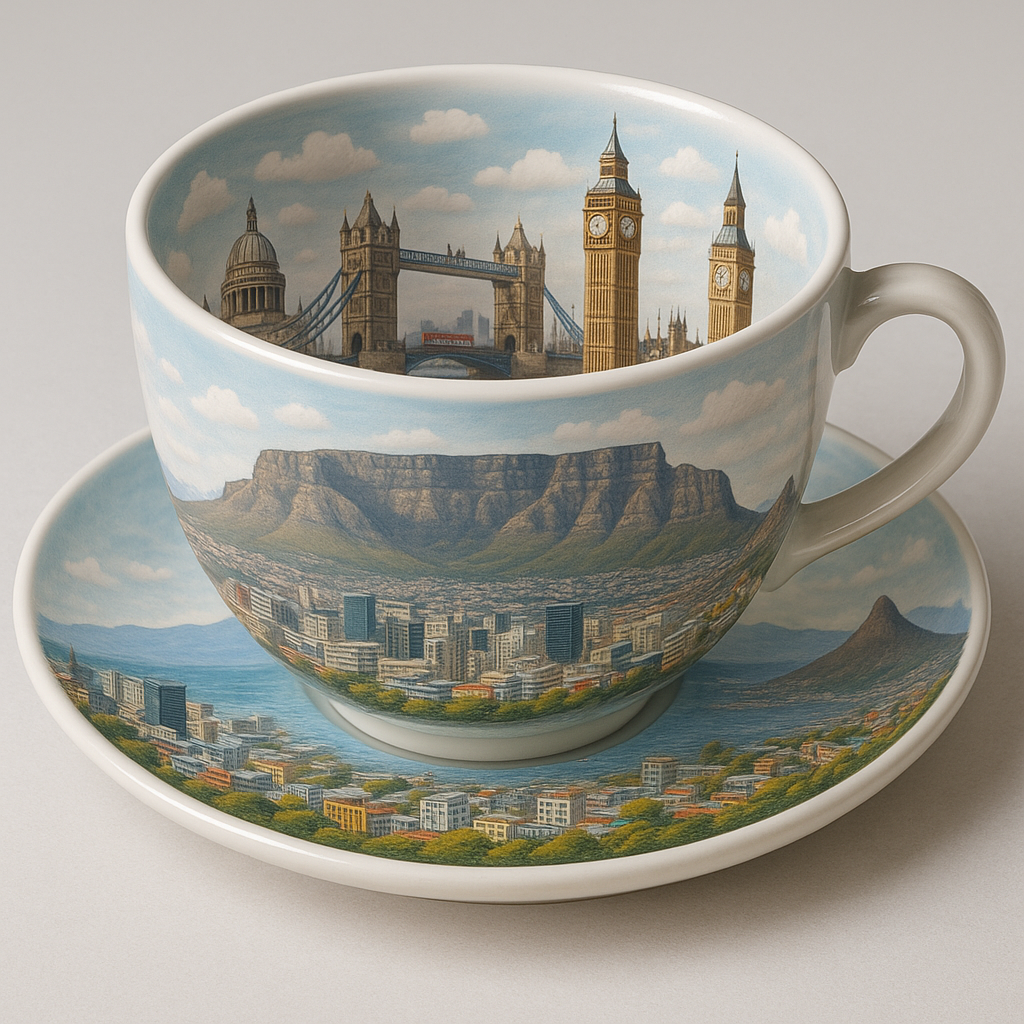
London's legendary Savoy Afternoon Tea returns to Cape Grace for an extended season. Experience transcontinental elegance from July 17 - Sept 13.
The fancy Cape Grace hotel in Cape Town is bringing back London's famous Savoy afternoon tea! It's called "From London, With Love" and runs from July 17 to September 13. You can enjoy yummy treats inspired by a famous chef, Auguste Escoffier, but made with fresh local ingredients. It's a special chance to taste a bit of London's luxury right in Cape Town!
What is "From London, With Love" at Cape Grace?
"From London, With Love" is an extended collaboration between Cape Grace, a Fairmont Managed Hotel in Cape Town, and The Savoy in London. It brings The Savoy's legendary afternoon tea experience to Cape Town, featuring a menu inspired by Auguste Escoffier, reinterpreted with local ingredients, and runs from July 17 to September 13.
Get Cape Town news in your inbox
Stay updated with the latest stories from the Mother City.
A Second Chapter in Fairmont's Cross-Continental Collaboration
The maritime silhouette of Cape Town's V&A Waterfront will once again serve as the unlikely southern terminus of one of London's most cherished culinary traditions when Cape Grace, a Fairmont Managed Hotel, reopens its doors to From London, With Love. This sophisticated collaboration, which proved so successful in its inaugural year that demand outstripped availability, returns with expanded ambition and deeper integration between two properties separated by nearly 10,000 kilometers yet united by the Fairmont heritage of uncompromising hospitality.
Running from 17 July to 13 September, this limited engagement transforms Heirloom, Cape Grace's signature dining venue, into a temporary outpost of British culinary aristocracy. The timing proves particularly astute, capturing the winter months when Cape Town's mild Mediterranean climate offers a compelling alternative to London's unpredictable summer, and when the dramatic interplay of Atlantic storms and clearing skies creates the theatrical backdrop against which this ritual of refined indulgence unfolds.
The Architecture of an Afternoon Tea: From Thames to Table Bay
The physical journey undertaken by members of The Savoy's team - from the Strand entrance of London's first purpose-built luxury hotel to the marina-facing terraces of the Mother City - represents more than mere logistical coordination. It constitutes a deliberate transplantation of institutional memory, the carrying forward of practices refined across 137 years of continuous operation.
The Savoy's afternoon tea service, which has occupied its place in London's social calendar since the hotel's opening in 1889, emerged from the creative ferment of the Gilded Age, when the boundaries between public and private entertainment dissolved and the hotel lobby became a stage for the performance of social distinction. What began as a practical solution to the extended gap between luncheon and fashionably late dinner has evolved into an art form, governed by protocols that The Savoy's staff have elevated to near-theatrical precision.
For this second iteration, the collaboration has matured beyond simple replication. Where the 2023 edition established the feasibility of transposing London's tea culture to African soil, the 2024 programme pursues something more ambitious: a genuine synthesis that allows each location's identity to inform the other.
Escoffier's Shadow: Culinary Lineage and Creative Reinterpretation
The menu's conceptual anchor lies in the figure of Auguste Escoffier, whose tenure at The Savoy between 1890 and 1898 established the template for modern restaurant cuisine. Escoffier's systematic approach to kitchen organization, his codification of the five mother sauces, and his insistence on seasonality and regional sourcing created the foundation upon which contemporary fine dining rests. That his influence should extend to a 2024 collaboration in Cape Town demonstrates the remarkable portability of his principles.
The Peach Melba, perhaps Escoffier's most enduring creation, exemplifies this continuity. Conceived in 1892 or 1893 to honour Australian soprano Dame Nellie Melba during her Covent Garden residency, the dessert originally paired poached peaches with vanilla ice cream and raspberry purée - a study in temperature contrast and chromatic drama. The Cape Grace interpretation preserves this essential architecture while substituting local stone fruit varieties and incorporating regional botanical elements that shift the flavour profile toward the Cape's distinctive terroir.
This approach - honouring the structural integrity of canonical dishes while permitting regional adaptation - mirrors Escoffier's own methodology. The legendary chef was himself a relentless innovator, continuously refining his preparations in response to available ingredients and evolving taste. His presence in this collaboration is thus appropriately invoked: not as constraint but as permission, the granting of authority to experiment within established frameworks.
Scoff: The Scone as Canvas
The traditional scone's reputation suffers from decades of institutional abuse: the desiccated triangular wedges of motorway service stations, the leaden discs of inferior hotel buffets. Scoff's corrective begins with technical precision - the proper ratio of fat to flour, the minimal handling that preserves delicate lamination, the precise baking temperature that ensures exterior caramelization without interior desiccation - before proceeding to imaginative elaboration.
The Tiramisu Scoff, miniaturized for the Cape Grace collaboration, demonstrates the conceptual range of this approach. The Italian dessert's characteristic stratification of coffee-soaked ladyfingers, mascarpone cream, and cocoa powder translates surprisingly effectively to scone architecture, the coffee infusion permeating the crumb while the cream assumes a piped presentation. That this preparation should travel from London to Cape Town, only to reference a third European culinary tradition, suggests the cosmopolitan circulation that defines contemporary luxury hospitality.
The Savoury Dimension: Cape Ingredients, International Technique
The savoury selection reveals the collaboration's most successful integration of local and international elements. Smoked snoek pâté acknowledges the Cape's distinctive fishing heritage, the snoek (Thyrsites atun) being a species found nowhere else in commercially viable quantities. Its preparation as pâté - smoked, flaked, bound with butter and perhaps a touch of local chenin blanc - demonstrates the application of classical technique to indigenous material.
The free-range chicken roulade and braised leek tartlet speak to the Western Cape's increasingly sophisticated small-scale agriculture, the region's Mediterranean climate having fostered a generation of producers working in deliberate opposition to industrial scale. The finger sandwiches, that non-negotiable element of any proper afternoon tea, maintain their traditional fillings - cucumber, egg, smoked salmon - while benefiting from the superior bread culture that has developed in Cape Town over the past decade.
Tea as Narrative: Curated Pairing and Bespoke Blending
The beverage programme extends beyond mere accompaniment to become a storytelling device in its own right. The exclusive blend created for Cape Grace - presumably incorporating African tea components alongside traditional Assam and Ceylon bases - offers guests a liquid metaphor for the collaboration itself: the meeting of established tradition and regional specificity.
The optional champagne pour, available as upgrade, maintains the connection to The Savoy's most famous liquid association. The hotel's American Bar claims invention of the Champagne Cocktail, and the Savoy Cocktail Book, compiled by head bartender Harry Craddock in 1930, remains a foundational text of mixological literature. This lineage, though not explicitly invoked in the afternoon tea service, contributes to the atmosphere of cultivated sophistication that surrounds all Savoy operations.
Presentation and Place: Reimagining the Tiered Stand
The decision to depart from the traditional three-tiered stand - that vertical architecture of silver-plated strata - marks the collaboration's most visible assertion of contemporary identity. The classic presentation, with its implicit hierarchy (savoury below, sweet above, scones occupying the middle ground), carries associations of Victorian formality that may feel constraining to modern sensibilities.
The alternative plating developed for Heirloom presumably distributes elements across the table surface in a more organic arrangement, perhaps incorporating local ceramic traditions or other material references to the Cape setting. This spatial reorganization subtly shifts the temporal experience of the meal: rather than the sequential progression implied by vertical arrangement, guests encounter a field of possibilities, the eye traveling between points of interest according to individual preference.
The Competitive Dimension: Anticipation and Exclusivity
The announcement's concluding tease - "something more is coming... an upcoming competition" - demonstrates sophisticated marketing psychology. The limited duration of the collaboration, already established as a scarcity mechanism, receives additional amplification through this deferred revelation. Such competitions in luxury hospitality typically offer experiential prizes: the opportunity to extend the afternoon tea into a full stay, perhaps, or to travel in reverse, experiencing the Cape Grace interpretation before encountering its London original.
This strategy of managed anticipation transforms the booking process itself into a narrative experience, guests becoming participants in a story whose resolution remains temporarily suspended. It reflects broader trends in experience economy marketing, where the value of access increasingly competes with the value of anticipation.
Practical Particulars
From London, With Love operates daily from 17 July to 13 September at Heirloom, Cape Grace, V&A Waterfront. The experience is priced at R750 per person, inclusive of welcome beverage (champagne or iced tea). Reservations, strongly recommended given limited capacity and demonstrated demand, may be secured through the hotel's website or telephonic booking at +27 21 410 7100.
What is "From London, With Love"?
"From London, With Love" is a special collaboration between Cape Grace, a Fairmont Managed Hotel in Cape Town, and The Savoy in London. It brings The Savoy's famous afternoon tea experience to Cape Town for an extended season, featuring a unique menu inspired by legendary chef Auguste Escoffier but reinterpreted with fresh, local South African ingredients.
When does "From London, With Love" take place?
The event runs from July 17th to September 13th. This limited engagement is perfectly timed to capture Cape Town's mild winter months, offering a beautiful backdrop for this refined culinary experience.
Where is the afternoon tea served?
The afternoon tea is served at Heirloom, Cape Grace's signature dining venue, located at the V&A Waterfront in Cape Town. This transforms the venue into a temporary outpost of British culinary aristocracy.
What makes the menu special?
The menu is inspired by Auguste Escoffier, a pivotal figure in modern cuisine who worked at The Savoy. It features classics like the Peach Melba, but creatively adapted with local Cape ingredients. There are also unique items like the Tiramisu Scoff (a scone interpretation of tiramisu) and savory selections utilizing local produce like smoked snoek pâté.
How much does the experience cost and how can I book?
The experience is priced at R750 per person, which includes a welcome beverage (either champagne or iced tea). Reservations are strongly recommended due to limited capacity and high demand. You can book through the Cape Grace hotel's website or by calling +27 21 410 7100.
What is a scone, and what is a "Scoff"?
A scone is a traditional British baked good, typically made with wheat or oatmeal and baking powder, and often served with jam and clotted cream during afternoon tea. The document mentions "Scoffs," which appear to be an innovative reinterpretation of the scone, moving beyond its traditional form with imaginative elaborations like the Tiramisu Scoff, which infuses the scone with flavors of coffee and mascarpone cream.

Amanda Wilson is a Cape Town-born journalist who covers the city’s evolving food scene for national and international outlets, tracing stories from Bo-Kaap spice shops to Khayelitsha micro-breweries. Raised on her grandmother’s Karoo lamb potjie and weekend hikes up Lion’s Head, she brings equal parts palate and pride to every assignment. Colleagues know her for the quiet warmth that turns interviews into friendships and fact-checks into shared laughter.
View all articles →