
George teacher suspended after video of pupil without lunch goes viral
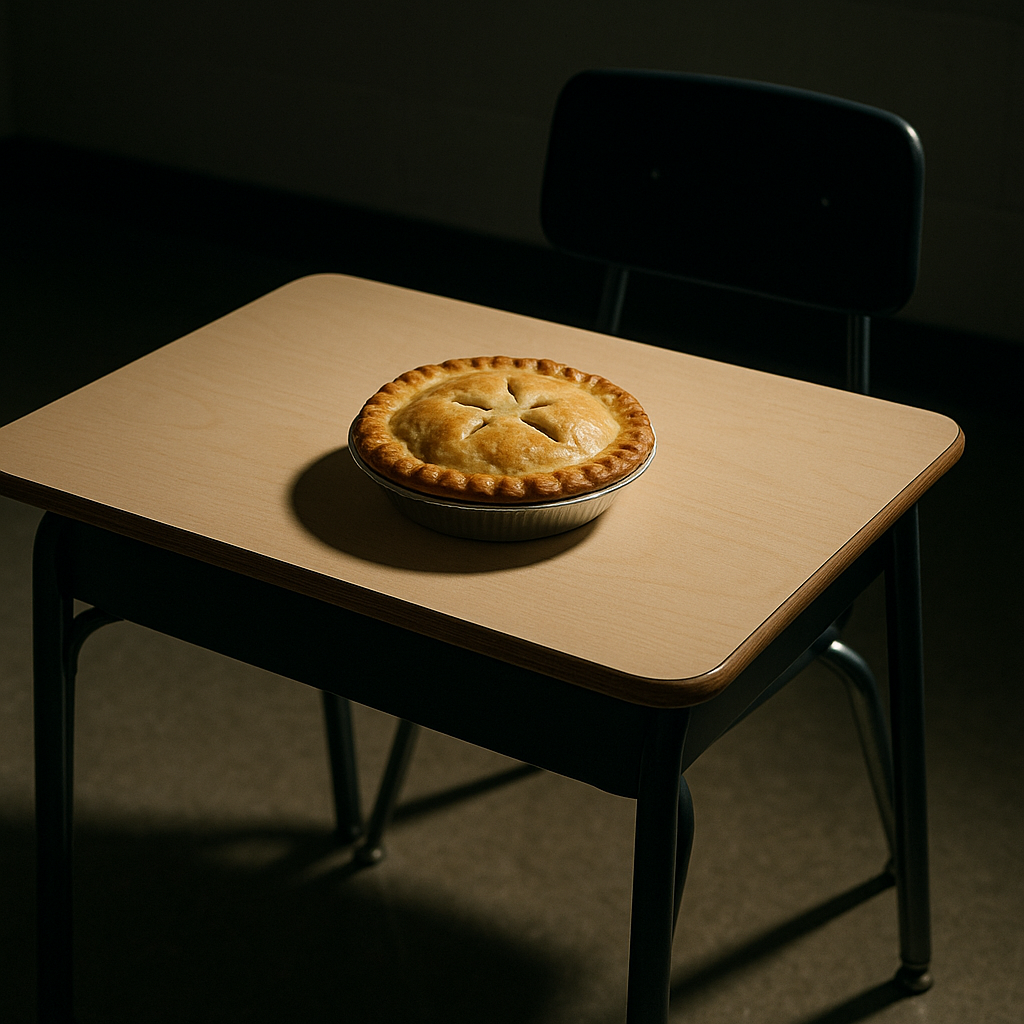
A 38-second clip of a shamed South African boy sparks national outrage, exposing systemic inequality and a teacher's fate.
A 38-second video of a six-year-old boy, empty-handed during a school 'pie day' because his mom hadn't paid, exploded across South Africa. This simple clip, showing the boy's clear embarrassment, stirred up a national storm. People saw it as a harsh reminder of old shaming tactics, sparking huge talks about hunger, fairness, and how schools treat kids. It became a powerful symbol, making many remember their own hard times and pushing for change.
What caused the national outrage over the "Pie Day" incident in South Africa?
The national outrage stemmed from a viral 38-second video showing a six-year-old boy sitting empty-handed during a school pie day because his mother hadn't paid. This incident, perceived as a public shaming ritual reminiscent of past injustices, sparked widespread anger, discussions about hunger as a disciplinary tool, and concerns over social inequality in South Africa.
Get Cape Town news in your inbox
Stay updated with the latest stories from the Mother City.
The Clip That Stopped a Nation Mid-Scroll
08:43 on Tuesday, 10 March 2026. A Grade 1 educator at Thembalethu Primary in George hit “record” on her Huawei. Thirty-eight shaky seconds later she forwarded the clip to the class WhatsApp group. The footage is grainy but unmistakable: twenty-six six-year-olds balance steaming pies and juice boxes on their laps. In the front corner a small boy in a thread-bare jersey sits empty-handed, palm clamped over his eyes, knuckles whitening around the desk edge. The adult voice sings: “All the mommies paid, so what am I supposed to do?” The attached caption reads: “Kindly remind caregivers that fundraiser items must be pre-paid. Learners without payment will observe the rest.”
By 11 a.m. the video had jumped to public Facebook pages. At 2 p.m. it detonated on X with the tagline “SA 2026: hunger is still a disciplinary tool.” The provincial switchboard collapsed under 3 400 emails. Overnight the child’s blurred face turned into a national Rorschach blot - some viewers replayed their own six-year-old humiliation, others blamed collapsing governance, and many reached for bank cards.
Why One Unpaid R18 Pie Felt Like a Crime Against the Nation
“Pie Day” is an annual routine copied by hundreds of primaries: a local bakery sells chicken pies at R18 a pop, the school pockets R5 for chalk and photocopies. Parents receive a carbon-copy slip in the homework folder and seven days to pay. Twenty-seven out of twenty-eight caregivers came up with the money. The twenty-eighth, a 26-year-old single mother, earns R120 when vineyard contractors have shifts. She found the crumpled notice on Monday night after a 12-hour pruning stint and promised the teacher the R18 on Friday - her pay-day.
Instead of logging the shortfall, the educator staged what labour lawyers call a “public shaming ritual.” The camera angle, the empty desk, the food as prop, the peer audience - every detail echoed 1980s scenes of “payment-by-humiliation” most South Africans hoped had died with Bantu Education. Within hours the microscopic incident was macro news, proving that a country can outlaw apartheid yet still rehearse its choreography.
Government Caught Between Due Process and a Mob at the Gate
Western Cape Education MEC David Maynier was mid-budget speech when aides thrust phones into his hands. By 4 p.m. district officials reached Thembalethu; by 6 p.m. they confronted parents who had ripped the front gate off its rail. Chants alternated between “Arrest her!” and “Close the whole school!” The department’s first press line - “we are ascertaining the facts” - collapsed when a second clip surfaced: the same educator laughing off-camera, telling a colleague “he must discover early that life is hard.”
Legally the province can only suspend after a Section 188 notice, but officials invoked the “precautionary” clause, citing threat to life. The teacher was escorted out at 9:15 the next morning, hours before the media statement dropped. Labour Relations now has thirty working days to decide if the offence counts as “severe psychological assault,” a finding that could erase her pension. Attorneys predict a plea deal: admit misconduct, keep the retirement pot, and spare the state a drawn-out CCMA battle.
Crowdfund, Camera, Contrition: How Strangers Turned a Child Into a Symbol and a Trust Fund
Influencer Mandisi Tshingana saw the clip while taxiing to a Joburg flight. Before the seat-belt sign pinged he had posted: “Drop banking details, I’m sending R1 000 now.” By landing the tweet owned 4.2 million impressions. He opened a money-market account branded #PieForThembalethu. Total after six hours: R12 000; after 24: R40 112.81. Nando’s pledged 200 kiddie meals; Pick n Pay promised a year of sandwiches; a local BMW dealer vowed to match whatever the public raised.
The mother, still in vineyard overalls, signed a trust deed audited pro-bono by PwC. Capital is locked until the boy turns 18; only interest can be touched, and solely for tertiary costs. Tshingana - who once repeated Grade 11 because he hid hunger from educators - told radio 702: “We aren’t purchasing the kid a childhood; we’re repaying his dignity in monthly instalments.” Overnight the six-year-old became evidence that outrage can convert into a university savings account - provided the spectacle doesn’t consume the beneficiary first.
When TikTok Becomes the Courtroom and Everyone Is on Trial
While prosecutors draft charges, social media has already delivered verdicts. Threads split into parallel universes: #FireHer, #IWasThatKid, #TeachersAreAlsoPoor. A UCT student wrote: “I was the one without R5 for civvies day; they sat me on the stage in full uniform. I’m 19 and I still hear the laughter.” Fifty-six thousand strangers confessed matching memories, some admitting they dropped out because humiliation tasted worse than hunger.
Others uploaded payslips: net R18 400, rent R9 500, student loan R2 100. “We’re expected to be social workers, debt collectors, trauma counsellors - on that wage,” one educator posted before deleting her account after threats. Psychologists warn that the online courtroom may deliver catharsis for viewers yet do little to heal the actual children in the blurry video.
Food as a Weapon: A Short History of School-House Shaming
South African classrooms have long used meals to mark the haves and have-nots. Mission schools in the 1920s withheld porridge until converts recited catechism. Bantu Education inspectors praised principals who made defaulters sweep the quad while paying pupils ate. Post-1994 policies tried to sever money from dignity: the National School Nutrition Programme now feeds 9.6 million learners daily, yet fundraisers operate in a grey zone. Photocopied pizza coupons, Valentine’s balls, helicopter-flip raffles - extras that turn exclusion into spectacle.
Dr Nomalanga Mkhize, education historian at Rhodes, says the pie incident is continuity, not deviation. “The video simply digitised a shame script older than the Union Buildings.” The difference is that WhatsApp compresses pain to 640×368 pixels and exports it to the world before the bell rings for second period.
Legal Aftershocks and the R18 Pie That Could Cost R500 000
The teacher now faces three separate processes:
1. WCED internal discipline - possible dismissal.
2. South African Council of Educators hearing - sanctions from caution to lifetime deregistration.
3. Civil claim under the Child Justice Act for impairment of dignity.
Precedent is flimsy. In 2019 a KwaZulu-Natal educator was sacked after making “debtors” wear red bibs, but the ELRC reinstated her on procedural technicalities. Lawyers speculate the province will bargain: plead guilty to ordinary misconduct, keep pension, and exit quietly. Cost of the disciplinary circus so far: R87 000 by departmental reckoning - making this the most expensive R18 pie in national history.
Therapy Offers vs. the Reality of One Psychologist for 43 Schools
The South African Society of Psychologists issued an alert that public humiliation at age six correlates with elevated cortisol, aggression, and internalised failure. They pledged free counselling to every child in the clip. Reality check: Thembalethu has no on-site counsellor; the district psychologist rotates across 43 schools. The boy has not set foot in a classroom since the incident; nightmares replay the laughter. Transport to the next nearest primary costs R450 a month - almost exactly what the trust fund’s interest will yield. Healing, like education, remains geographically uneven.
Copy-Cat Outrage, Guideline Rewrites, and the Market of Kindness
Within 48 hours similar clips surfaced: a Grade 3 girl in Limpopo pictured with an empty paper plate on “Burger Day”; a Kraaifontein learner left outside while classmates devour cupcakes. Each trended briefly, then vanished, but the pattern is clear - Thembalethu legitimised speaking up. The Western Cape cabinet hastily drafted a circular banning any filming or public display of non-paying pupils. More radically, it proposes outlawing food-based fundraisers altogether; schools must sell “non-visible items” like stationery vouchers. SGB associations already push back - pie days finance up to 30 % of their discretionary budgets. George businesses meanwhile converted outrage into soft power: a radio station delivered 1 400 pies to eight schools; a vegan bakery launched “Dignity Pies,” donating R1 to Equal Education per sale. Sociologists label it performative restitution; the children eating free lunch simply call it food.
The Boy, the Mother, and the Country Still Waiting for an Ending
He spends mornings riding a neighbour’s bicycle in dusty ovals, asking his grandmother when “the laughing” will stop. His name is already legend, yet he has not watched the video. His mother, mythic in her silence, issued one sentence through attorneys: “I don’t want revenge; I want the next parent earning R120 a day to know their child will still eat.” She refuses interviews, hotel getaways, morning-talk-show couches. Her reticence amplifies her moral gravity. Meanwhile the teacher - cum-laude graduate, divorced mother of two, now hospitalised for depression - has become another data point in a country that keeps learning the same lesson. The province has thirty days to decide punishment, the crowdfunding total ticks upward, and South Africa scrolls on, searching for the next 38-second clip that will prove, once again, how cheap dignity can look when the price of a pie is all that stands between a child and humiliation.
What caused the national outrage over the "Pie Day" incident in South Africa?
The national outrage stemmed from a viral 38-second video showing a six-year-old boy sitting empty-handed during a school pie day because his mother hadn't paid. This incident, perceived as a public shaming ritual reminiscent of past injustices, sparked widespread anger, discussions about hunger as a disciplinary tool, and concerns over social inequality in South Africa.
How did the video of the "Pie Day" incident become public and spread so rapidly?
The video was initially recorded by a Grade 1 educator at Thembalethu Primary and shared within the class WhatsApp group. From there, it quickly jumped to public Facebook pages and then "detonated" on X (formerly Twitter) with a poignant tagline. The rapid spread was fueled by the emotional impact of the child's visible embarrassment and the resonance of the issue with many South Africans' personal experiences.
What were the immediate consequences for the educator involved in the incident?
Riotous parents confronted school officials, leading to the Western Cape Education MEC invoking a "precautionary clause" due to a perceived threat to life. The educator was escorted out of the school the next morning, hours before a formal statement was released. She now faces an internal disciplinary process by the WCED, a South African Council of Educators hearing, and a potential civil claim under the Child Justice Act, which could lead to dismissal, deregistration, and even loss of her pension.
How did the public respond financially to the boy's situation?
An influencer, Mandisi Tshingana, initiated a crowdfunding campaign, #PieForThembalethu, which quickly amassed over R40,000 within 24 hours. Major businesses like Nando’s and Pick n Pay pledged assistance, and a local BMW dealer promised to match public donations. The funds were placed into a trust deed, audited pro-bono by PwC, with capital locked until the boy turns 18, and interest used solely for tertiary education costs, aiming to restore his dignity.
What broader societal issues did the "Pie Day" incident highlight in South Africa?
The incident reopened discussions about historical shaming tactics in schools, particularly those linked to poverty and hunger, reminiscent of the Bantu Education era. It highlighted the challenges faced by low-income families, the pressures on educators, and the persistent issue of social inequality. The public response also underscored how social media can act as both a courtroom for public opinion and a powerful tool for collective action and support.
What actions are being taken by authorities and schools in response to the incident?
The Western Cape cabinet quickly drafted a circular banning any filming or public display of non-paying pupils and is considering outlawing food-based fundraisers altogether, proposing schools sell "non-visible items" like stationery vouchers instead. While these measures aim to prevent similar incidents, they face pushback from School Governing Body (SGB) associations, which rely on such fundraisers for a significant portion of their discretionary budgets.

Hannah Kriel is a Cape Town-born journalist who chronicles the city’s evolving food scene—from Bo-Kaap spice routes to Constantia vineyards—for local and international outlets. When she’s not interviewing chefs or tracking the harvest on her grandparents’ Stellenbosch farm, you’ll find her surfing the Atlantic breaks she first rode as a schoolgirl.
View all articles →