
Good Hope Centre sale in doubt as Cape Town reviews R135 million property deal
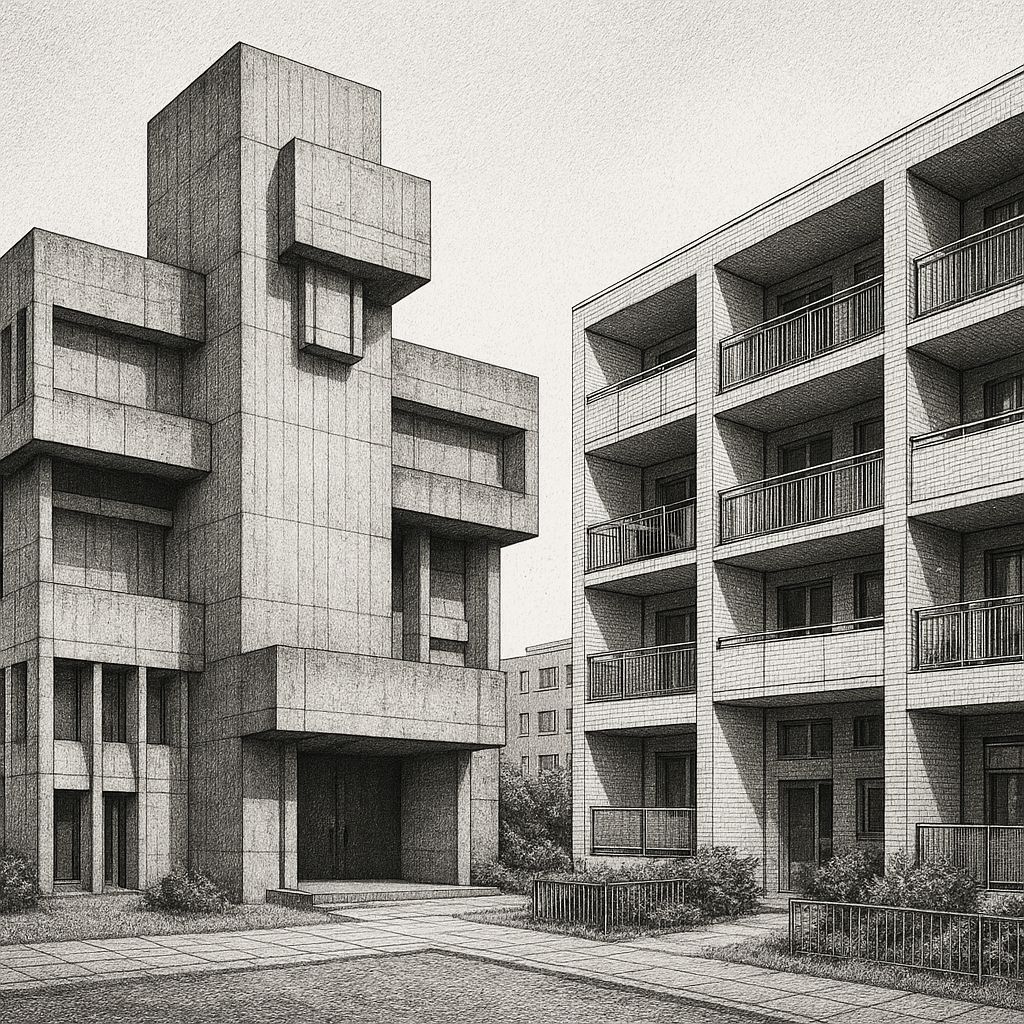
Failed bid for Cape Town's Good Hope Centre ignites debate over public land, housing justice, and the city's future.
The sale of Cape Town's Good Hope Centre is in chaos! A Nigerian church's winning bid of R135 million for the iconic building is now questionable because they might not have the money. Cape Town is now looking at a second offer from a Muslim community group, which includes plans for affordable homes. This all comes after a big court ruling said the city must think about housing for everyone when selling public land. It's a huge fight over who gets prime land and who gets a roof over their head in Cape Town.
What is the current controversy surrounding the Good Hope Centre sale in Cape Town?
The sale of Cape Town's Good Hope Centre is controversial because the initial winning bid of R135 million by a Nigerian church is in doubt due to financial verification issues. The city is now evaluating a runner-up bid from a Muslim community organization, which proposes integrating affordable housing, aligning with a recent Constitutional Court ruling emphasizing housing justice in public land sales.
Get Cape Town news in your inbox
Stay updated with the latest stories from the Mother City.
A R135 Million Deal in Doubt
The future of Cape Town's landmark Good Hope Centre has become shrouded in uncertainty after Mayor Geordin Hill-Lewis revealed that the auction's apparent victor - a Nigerian church that pledged R135 million - might not possess the financial means to finalize the acquisition. The disclosure, which came during a Radio 786 broadcast, has compelled municipal authorities into an unplanned reversal: instead of launching a fresh auction, they are now evaluating the second-place contender in a process that has dragged on for nearly five months past the February sale date.
This verification breakdown represents a serious setback for the City's asset disposal framework. When public properties of this scale transfer ownership, comprehensive financial vetting customarily happens prior to auction completion, not months later. The prolonged timeline has laid bare weaknesses in Cape Town's auction procedures while simultaneously opening doors for an entirely alternative vision to surface for the aging convention complex.
Two Visions, One Site: Church versus Community-Integrated Development
The disparity between rival proposals could hardly be more pronounced. The initial frontrunner imagined a direct conversion: transforming the Brutalist architectural gem into a house of worship with accompanying community amenities. The runner-up - a Muslim community organization whose name stays confidential during vetting - has put forward something markedly more expansive: weaving affordable housing into its revitalization strategy.
This R5 million gap in purchase offers (the secondary bid reached R130 million) masks a far deeper rift in how each party understands public benefit. The first concept essentially transforms a public asset into private religious domain. The second explicitly ties the location's destiny to one of Cape Town's most pressing policy dilemmas: the acute scarcity of affordable dwellings in centrally positioned neighborhoods.
The City's present stance, as Hill-Lewis outlined, entails applying matching financial examination to the runner-up. "We now have to make sure they have the financial resources to complete the transaction," he remarked - a statement that tacitly concedes the initial verification round fell short while providing scant justification for why comparable guarantees were seemingly accepted too hastily in February.
Constitutional Court Ruling Casts Long Shadow
The timing of these events could hardly be more significant. Barely days before Hill-Lewis's radio appearance, South Africa's Constitutional Court issued a historic ruling striking down the 2015 disposal of the former Tafelberg School property in Sea Point. The bench determined that authorities had illegally neglected to weigh the parcel's capacity for affordable housing and spatial restructuring before offloading it to private builders.
The Tafelberg verdict carries direct implications for the Good Hope Centre circumstances. Both instances involve state-held land in sought-after Cape Town precincts. Both sales mechanisms favored short-term income over extended public welfare considerations. And both have drawn fierce attention from housing campaigners and political rivals who contend that the City habitually discounts affordable housing possibilities when unloading strategic holdings.
The Constitutional Court's decision cemented an unambiguous legal standard: local governments cannot relegate affordable housing to incidental status in land-use choices. They must proactively explore and record such prospects before settling on alternative applications. This benchmark now overshadows every outstanding public land transfer in Cape Town, generating both juridical hazard and political vulnerability for administrators who advance without evident housing option assessment.
GOOD Party Intervention: Housing as Spatial Justice
Brett Herron, Secretary-General of the GOOD Party and contender for Cape Town's mayoralty, has placed himself at the vanguard of opposition to the Good Hope Centre proceedings. His involvement signals both authentic policy commitment and calculated political maneuvering ahead of municipal polls, yet his reasoning warrants analysis on its substantive grounds.
Herron's central argument - that the location offers a chance to merge public amenities with affordable dwellings - speaks directly to the spatial inheritance of apartheid-era planning. Cape Town endures as one of South Africa's most divided urban centers, with lower-income populations largely barred from central districts boasting superior connectivity to jobs, services, and infrastructure. The Good Hope Centre sits squarely within such a prime position: adjacent to the CBD, accessible via public transit, and encircled by developed residential zones.
The housing deficit Herron cites is not theoretical. Cape Town's formal housing queue surpasses 300,000 households, with projections indicating true demand may considerably exceed this figure. Market forces alone cannot bridge this divide, since private builders lack motivation to erect homes affordable to families earning under R15,000 per month - the bracket covering most queue registrants.
Blended developments embedding affordable housing elements on public land constitute one recognized approach to tackling this market breakdown. Such initiatives can subsidize dwellings through commercial or institutional income flows while concurrently hitting density benchmarks and transit-centered development goals that match current urban planning standards.
Herron's censure of the five-month postponement also holds merit. Protracted ambiguity surrounding major asset transfers benefits no party: not the City, which cannot access expected sale revenues; not prospective buyers, whose funds stay tied to indeterminate deals; not community members seeking clarity on neighborhood directions. The length suggests either administrative malfunction or political indecision that officials have failed to properly account for.
Broader Questions About Public Land Management
The Good Hope Centre situation throws light on structural conflicts in how South African municipalities handle public resource stewardship. Three specific difficulties warrant scrutiny.
First, auction systems - though ostensibly open - may chronically undervalue public land by handling it as fungible merchandise rather than strategic asset. The R135 million top offer, even if collected, amounts to a sliver of the location's possible worth if developed for optimal public gain rather than single-purpose transformation. Alternative transfer methods, encompassing extended lease agreements with performance stipulations or collaborative ventures preserving public ownership shares, might better secure continuing value while guaranteeing affordable housing incorporation.
Second, vetting protocols seem unevenly enforced. The disclosure that post-sale due diligence exposed fiscal shortcomings naturally prompts inquiry into what advance screening took place. Municipal administrators owe citizens clarification on how such circumstances arose and what procedural adjustments will avert repetition.
Third, the episode underscores insufficient community dialogue preceding substantial land-use shifts. Neither contender's concept appears to have undergone genuine public participation before auction commitment. This diverges from evolving international norms stressing deliberative engagement in public land allocation, ensuring that area inhabitants and prospective recipients influence results rather than discovering decisions post-implementation.
The Brutalist Elephant in the Room
Beyond pressing transactional matters, the Good Hope Centre's architectural stature complicates every redevelopment conversation. Crafted by Pier Luigi Nervi and finished in 1976, the structure stands as a significant instance of structural expressionism in South African civic design - its striking concrete vaults and elevated interior volumes encapsulating forward-looking modernist aspirations of apartheid's closing decades.
Conservation proponents have consistently cautioned against razing or insensitive modification. Any viable revitalization must thread between heritage safeguarding demands and present-day operational needs - a hurdle that neither contender's public outline has sufficiently tackled. The affordable housing alternative may actually yield benefits here: residential adaptation typically demands less severe structural change than institutional reassignment, potentially conserving more of Nervi's initial spatial vision.
What Happens Next
The near-term course hinges on financial vetting results for the runner-up. Should this procedure conclude successfully, Cape Town will confront weighty choices regarding sale terms - whether to mandate affordable housing quotas through contractual instruments, and how to secure adherence across development periods that may span numerous political administrations.
Should vetting collapse, the City must decide between relaunching auction proceedings (bringing attendant additional postponement) or keeping the property for public functions. The latter path, though politically demanding given budget constraints, would harmonize with emerging international perspectives on "land banking" - strategic public retention of well-positioned sites for forthcoming affordable housing construction as funding and organizational capability develop.
Either trajectory unfolds within an altered juridical landscape following the Tafelberg decision. The Constitutional Court has effectively required that affordable housing consideration shift from marginal worry to core duty in public land administration. How Cape Town administrators absorb this duty - and whether political leadership welcomes or opposes it - will determine not simply the Good Hope Centre's destiny but the municipality's wider course toward spatial restructuring or persistent division.
[{"question": "
What is the current controversy surrounding the Good Hope Centre sale in Cape Town?
", "answer": "The sale of Cape Town's Good Hope Centre is controversial because the initial winning bid of R135 million by a Nigerian church is in doubt due to financial verification issues. The city is now evaluating a runner-up bid from a Muslim community organization, which proposes integrating affordable housing, aligning with a recent Constitutional Court ruling emphasizing housing justice in public land sales."}, {"question": "Why is the initial R135 million bid in doubt?
", "answer": "Cape Town Mayor Geordin Hill-Lewis revealed that the Nigerian church, which was the apparent victor in the auction, might not possess the financial means to finalize the R135 million acquisition. This has raised questions about the city's financial vetting process, as comprehensive verification should ideally occur before an auction is finalized."}, {"question": "What alternative vision has emerged for the Good Hope Centre?
", "answer": "A Muslim community organization, the second-place contender with a R130 million bid, has proposed a significantly different vision. Their plan includes weaving affordable housing into the revitalization strategy for the site, in contrast to the initial winner's intention to convert it into a house of worship with accompanying amenities. This aligns with Cape Town's urgent need for affordable housing in centrally located areas."}, {"question": "How does a recent Constitutional Court ruling impact this sale?
", "answer": "Just before the financial issues with the first bid came to light, the Constitutional Court struck down the 2015 sale of the Tafelberg School property. This ruling established a legal precedent that local governments must proactively consider and explore opportunities for affordable housing when selling public land. This means the City of Cape Town is now legally obligated to prioritize affordable housing in the Good Hope Centre sale, creating both legal and political pressure."}, {"question": "What is the significance of the Good Hope Centre's location for affordable housing?
", "answer": "The Good Hope Centre is located in a prime position adjacent to Cape Town's Central Business District (CBD), with good public transport access. This central location makes it ideal for addressing spatial inequality and providing affordable housing options to lower-income populations who are often pushed to the city's periphery due to historical apartheid-era planning. Integrating affordable housing here would connect residents to jobs, services, and infrastructure."}, {"question": "What are the broader implications of this situation for public land management in Cape Town?
", "answer": "The Good Hope Centre controversy highlights several systemic issues in Cape Town's public land management: the potential undervaluation of strategic public assets by auction systems, inconsistencies in vetting protocols leading to financial uncertainties, and insufficient community dialogue before major land-use decisions. It also underscores the need for alternative transfer methods, like long-term leases or collaborative ventures, to ensure long-term public benefit and the proactive incorporation of affordable housing."}]
A Russian-Spanish journalist and Cape Town native, channels his lifelong passion for South Africa into captivating stories for his local blog. With a diverse background and 50 years of rich experiences, Serjio's unique voice resonates with readers seeking to explore Cape Town's vibrant culture. His love for the city shines through in every piece, making Serjio the go-to source for the latest in South African adventures.
View all articles →