
Heart and Stroke Foundation warns over undiagnosed hypertension
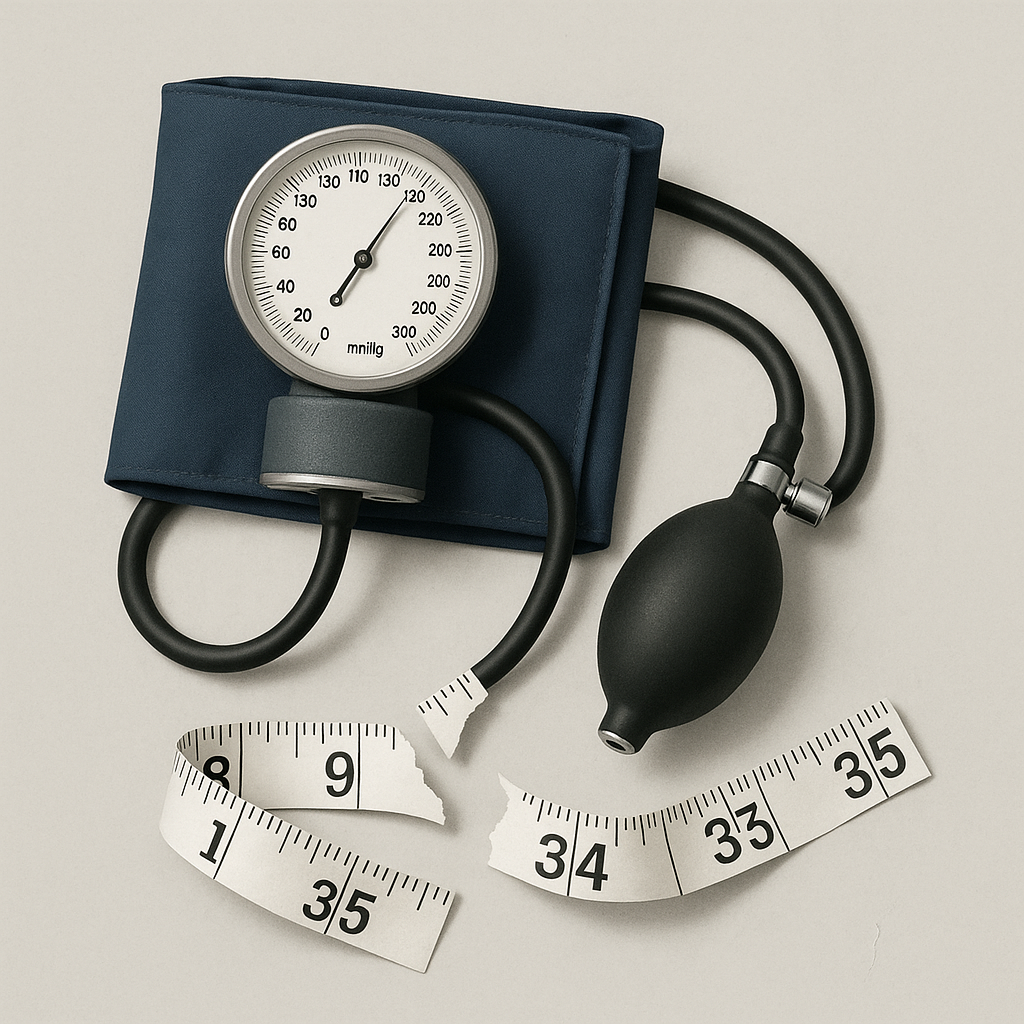
Understanding South Africa's hypertension risk in 2026: From single readings to a lifetime of vigilance. Check, know, act for heart health.
This guide reveals the secret to truly knowing your blood pressure in South Africa, moving beyond single readings. It explores how everyday life, from salty foods to city smog, silently pushes up numbers. But don't despair! Smart tech, community efforts, and simple daily changes are building a future where everyone can spot, prove, and tame high blood pressure, making South Africa healthier, one correct reading at a time.
How is high blood pressure diagnosed in South Africa?
High blood pressure (hypertension) in South Africa is not diagnosed by a single reading. Global guidelines and local research emphasize the need for at least two elevated readings on three separate days, or a 24-hour trace averaging \u2265130/80 mmHg. A solitary high reading is a red flag, prompting further tracking rather than an immediate diagnosis.
Get Cape Town news in your inbox
Stay updated with the latest stories from the Mother City.
1. Think Twice Before You Label: The Science of a Reliable Reading
A flashing 148/94 on the pharmacy kiosk can feel like a medical verdict, but biology and behaviour conspire to make that number jump. A quarrel in the queue, two espressos, a full bladder or the mere sight of a white coat can puff the systolic value by 20–30 mmHg. Researchers at the University of Cape Town’s Electronic Health Laboratory insist that hypertension is never decided by one visit. Global rules demand at least two elevated encounters on three separate days, or a full 24-hour trace that averages ≥130/80 mmHg while you sleep, work or watch TV.
Different bodies deserve different thresholds. A teenage footballer, a woman three months after giving birth, or a security guard on night shifts each carries a unique cut-off point. Ignoring these nuances sentences some people to pills they do not yet need and tells others they are safe when they are not. The upshot: a solitary high figure is a red flag, not a diagnosis. Treat it as the starter pistol for proper tracking, not the finish line for lifelong drugs.
2. The Country in Numbers: Who is Missed and Where
Statistics South Africa’s latest demographic and health survey shows the coastal provinces leading the uncontrolled-blood-pressure league. KwaZulu-Natal tops the chart with 34 % of adults affected and 52 % of them untreated, while the Eastern Cape and Johannesburg metros hover just behind. Cape Town looks slightly better at 29 % prevalence, yet still leaves almost half of those people without regular care.
Fold in the citizens who have never slid an arm into a cuff and the picture darkens. Modelling by the South African Medical Research Council suggests another 7.3 million hypertensive adults are completely off the grid. Rural districts such as OR Tambo and Alfred Duma screen fewer than four in ten adults within a calendar year, turning community halls and taxi ranks into rare, random lotteries of detection rather than reliable safety nets.
3. Myths, Memes and Misplaced Files: Why Confusion Persists
Language itself trips people up. Phrases like “high blood” in isiZulu, Sesotho, Afrikaans and Xhosa all suggest a short-lived spike instead of a lifelong condition. Social media worsens the distortion: thirty-second TikTok challenges film buddies gulping energy drinks before a cuff squeeze, leaving the impression that a single dramatic number equals disease.
Bureaucratic fragmentation does the rest. A community health worker may capture a first reading at a roadside wellness day, but the clinic four kilometres away uses a different patient code. Paper registers, stand-alone Excel files and half-synced DHIS-2 builds cannot talk to one another, so the vital second and third readings fall through the cracks. The result is a population equally split between the falsely reassured and the prematurely medicated.
4. Pressure cookers of Everyday Life: Salt, Stress and Smog
South Africa’s 2016 salt ceilings were expected to save 7 400 lives every year, yet a 2025 spot-check of spaza shops found two out of five loaves still above the 380 mg/100 g limit, mostly from small bakeries that regulators rarely visit. Meanwhile, the Human Sciences Research Council links shacks perched next to 24-hour taverns to a 70 % higher chance of night-time blood pressure that refuses to dip, a proven stroke trigger.
Air pollution adds its own squeeze. CSIR scientists matched daily PM2.5 surges in the Highveld Priority Area to same-day systolic jumps of 2–4 mmHg. With local coal-belt towns clocking annual particle levels four times the WHO limit, the atmosphere itself becomes an invisible tourniquet around the nation’s arteries.
5. Gadgets, Bots and Barbershops: Tech That Closes the Gap
Help is arriving in duffel bags and data packets. The South African Bureau of Standards has cleared two Bluetooth cuffs calibrated for African arm sizes; they sell for under R600 at mainstream pharmacies, turning living rooms into triage bays. In uMgungundlovu District an AI WhatsApp bot named Noxolo reviews uploaded photos of readings and books clinic slots for users whose numbers stay high, boosting second-visit rates by more than a third.
Hair salons and gyms are now hosting “BP cafés” run by nursing students. A quiet corner, a calibrated device and an app-generated WhatsApp reminder transform Saturday morning braids or post-work squats into lifesaving checkpoints. By March 2026, 65 such pop-ups were active in Gauteng and the Western Cape, funded by social-impact bonds that reward every confirmed follow-up visit.
6. From Reading to Registry: A Modern Care Pathway
The ideal journey starts with a calm, correctly seated measurement encoded instantly into a provincial Hypertension Registry. Within 72 hours, an SMS directs the client to the closest facility for confirmatory checks. Two verified highs (≥140/90 mmHg) enrol the person in the CCMDD network, allowing monthly medicine pick-up at a petrol station or supermarket instead of a packed clinic. Quarterly WhatsApp surveys flag adherence gaps early, while pharmacists use crowd-sourced WhatsApp groups to dodge local stock-outs of enalapril, amlodipine or hydrochlorothiazide.
7. Talking Side Effects and Staying on Track
Almost one in three Diepsloot patients quoted in a 2025 study quit pills once their heads stopped pounding, mistakenly assuming “no symptoms equals no problem.” Picture-based counselling cards now contrast a red, narrowed artery with a clear one to prove the invisible benefit of nightly tablets. A cadre of 300 “Blood Pressure Champions” who themselves have kept readings below 130/80 mmHg for years earn community-wellness credits by mentoring newcomers, translating clinical advice into kitchen-table vernacular.
8. Meals, Muscles and Micro-Routines You Can Start Tonight
Celebrity chef Lorna Maseko’s community classes replace salt with citrus rubs and herb blends, shaving 0.6 g of sodium from participants’ daily totals within six months. Park-Run SA’s “BP Runs” strap cuffs on joggers before and after 5 km loops, recording an average 7–9 mmHg drop in systolic pressure even among first-timers. Shift workers at Sibanye-Stillwater mines are experimenting with amber glasses and 20-minute nap pods, a combo that nudged nocturnal pressure down by 12 mmHg in early trials.
9. Voices from the Floor: Three People Who Changed the Story
Nurse Thandi Mthembu in rural Eshowe used to battle smudged carbon copies; today she waves a QR-coded card that uploads 160 daily readings before the patient stands up. Uber driver Sipho Dlamini ignored a one-off 150/100 mmHg until a chatbot urged two more visits; his average settled at 124/82 after he ditched kota lunches and walked his daughter to school. Nephrologist Lindiwe Mabena still starts every dialysis session by asking healthy-looking 25-year-olds when they last checked their pressure; the answer, almost invariably, is “never.”
10. Laws, Taxes and Algorithms Being Written Today
From 2026, every Grade 8 learner must undergo annual screening, feeding the DHIS-2 school-health module in a bid to intercept adolescent hypertension driven by energy drinks and obesity. The national treasury wants to expand the health-promotion levy to fruit juices and sweetened dairy, a move projected to cut new hypertension cases by 8 % over the coming decade. Once the National Health Insurance fully rolls out, all citizens will earn an annual risk score that automatically issues a voucher for a 24-hour ambulatory monitor if their summed metrics flash red.
11. Tomorrow’s Tools: Implants, DNA and Green Prescriptions
A rice-grain subcutaneous sensor made by Swiss-American firm Sensirion will enter Cape Town trials in 2027, streaming real-time pressures to any NFC phone. Pharmacogenomic panels at the SAMRC aim to predict who will develop the dreaded enalapril cough, cutting discontinuation by roughly a quarter. Cape Town’s Green-Heart project already prescribes park visits; 30 minutes among fynbos earns fresh-produce vouchers and has trimmed systolic readings by 4–5 mmHg in early pilots.
12. Your Personal and Community Battle Plan
- Verify before you classify: insist on repeat readings or a 24-hour tape.
- Buy a SABS-approved home cuff, measure daily for two weeks, calculate the average.
- Read every food label; if sodium tops 380 mg/100 g, leave it on the shelf.
- Sneak movement into micro-moments: squats while the kettle boils, push-ups against the counter, a brisk walk to fetch the children.
- Never walk away without a dated referral; ask for a barcode or QR code that links every measurement to your name.
- Lobby local councillors for shaded BP stations at taxi hubs and libraries, and make clinics sign up for HSFSA colour-coded risk cards.
South Africa’s hypertension story is no longer just about pills and pamphlets. It is about data-smart citizens, AI-guided appointments, salt-savvy kitchens and parks that double as pharmacies. Check. Know. Act - then check again, because a lifetime of vigilance starts with understanding that one reading is only the opening line, not the whole book.
1. How is high blood pressure diagnosed in South Africa?
High blood pressure is not diagnosed by a single reading. Global guidelines and local research in South Africa emphasize the need for at least two elevated readings on three separate days, or a 24-hour trace averaging \u2265130/80 mmHg. A solitary high reading should be seen as a red flag prompting further tracking, rather than an immediate diagnosis.
2. What factors can influence a single blood pressure reading?
Many everyday factors can cause a temporary spike in blood pressure, making a single reading unreliable for diagnosis. These include stress (like a quarrel or the sight of a doctor), consumption of stimulants like coffee, a full bladder, and even the type of environment (e.g., a noisy pharmacy kiosk). These elements can elevate systolic values by 20-30 mmHg, highlighting the importance of multiple readings in a calm setting.
3. Why does confusion about high blood pressure persist in South Africa?
Confusion persists due to several factors. Language barriers, where terms like \"high blood\" suggest a temporary spike instead of a chronic condition, contribute to misunderstanding. Social media amplifies misinformation through viral challenges. Additionally, bureaucratic fragmentation within the healthcare system, with different patient codes and incompatible record-keeping systems (paper registers, stand-alone Excel files, half-synced DHIS-2), means vital follow-up readings often fall through the cracks, leading to misdiagnosis or missed opportunities for care.
4. What everyday elements in South Africa contribute to high blood pressure?
Beyond individual lifestyle choices, broader environmental and societal factors contribute significantly to high blood pressure in South Africa. These include the continued prevalence of high-sodium foods, particularly from small bakeries, despite national salt ceilings. Stress from living conditions, such as shacks near 24-hour taverns, can lead to elevated night-time blood pressure. Air pollution, especially PM2.5 surges in areas like the Highveld Priority Area, has also been linked to same-day systolic blood pressure jumps, effectively making the atmosphere an \"invisible tourniquet\".
5. How is technology and community effort helping to manage high blood pressure?
South Africa is leveraging technology and community initiatives to bridge gaps in hypertension management. This includes SABS-cleared Bluetooth cuffs for home use, making self-monitoring more accessible. AI WhatsApp bots like Noxolo in uMgungundlovu District help review readings and book clinic slots, significantly boosting follow-up rates. Community-based \"BP caf\u00e9s\" in salons and gyms, run by nursing students, offer convenient screening points. Furthermore, the development of provincial Hypertension Registries and the CCMDD network for medicine pick-up at accessible locations are streamlining care pathways.
6. What proactive steps can individuals take to manage their blood pressure?
Individuals can take several proactive steps: 1) Always insist on multiple readings or a 24-hour trace for accurate diagnosis. 2) Purchase a SABS-approved home blood pressure cuff and monitor daily for two weeks to get an average. 3) Scrutinize food labels, avoiding products with over 380 mg/100g of sodium. 4) Incorporate micro-movements into daily routines, like squats while waiting or brisk walks. 5) Ensure every measurement is linked to your name with a barcode or QR code. 6) Engage with community initiatives and advocate for accessible screening points and standardized patient records.

Kagiso Petersen is a Cape Town journalist who reports on the city’s evolving food culture—tracking everything from township braai innovators to Sea Point bistros signed up to the Ocean Wise pledge. Raised in Bo-Kaap and now cycling daily along the Atlantic Seaboard, he brings a palpable love for the city’s layered flavours and even more layered stories to every assignment.
View all articles →