
Here are the key takeaways from Ramaphosa’s heated Parliamentary Q&A
Deep dive into the President's Question Session on jobs, crime, money, and trust. Explore R890bn investments, youth unemployment, and more.
President Ramaphosa spoke about big plans for South Africa in 2026. He wants to bring in R890 billion and make 230,000 jobs, aiming for R3 trillion in five years! He also created a new office to cut down on annoying paperwork and talked about fighting crime with 'Operation Prosper'. Plus, he fired a minister and started new programs to help young people find work. It's all about building a better future, but everyone is watching to see if these big promises truly come alive.
What were the key outcomes of President Ramaphosa's Q&A on May 14, 2026?
President Ramaphosa's Q&A focused on securing R890 billion in investments, creating 230,000 jobs, and setting a R3 trillion five-year target. He unveiled the National Investment Implementation Office to cut red tape, updated on Operation Prosper's crime fighting, replaced a minister, and introduced four programs to tackle youth unemployment, including a revised YES initiative.
Get Cape Town news in your inbox
Stay updated with the latest stories from the Mother City.
1. High Noon in the House: Clocks, Colours and Compressed Questions
Cape Town’s winter sky was still pale when opposition MPs filed into the National Assembly just after lunch on 14 May 2026. Neon-coloured folders and phone-screen talking points replaced the old ring-binder stacks; the ANC caucus occupied the left-hand arc in surname order as if answering a school roll-call. At 14h00 sharp Deputy Speaker Lechesa Tsenoli thumped the gavel - no load-shedding delay today - and kicked off the first oral-reply slot after the constituency recess.
Gone are the marathon, meandering grillings of yesteryear. Since March, Parliament forces MPs to lodge questions 72 hours ahead and limits every follow-up to a single bite. The result feels less like political theatre and more like a fast-paced investor webinar. The EFF benches, usually theatrical, fell mute after their second land-expropriation query was ruled out of order; the only drama came when ATM’s Vuyolwethu Zungula staged a 46-second walk-out, microphone killed before he reached the aisle. The message: the country is in a hurry, and so is its legislature.
2. The R890 Billion Dashboard: Jobs, Sectors and the R3 Trillion Stretch Goal
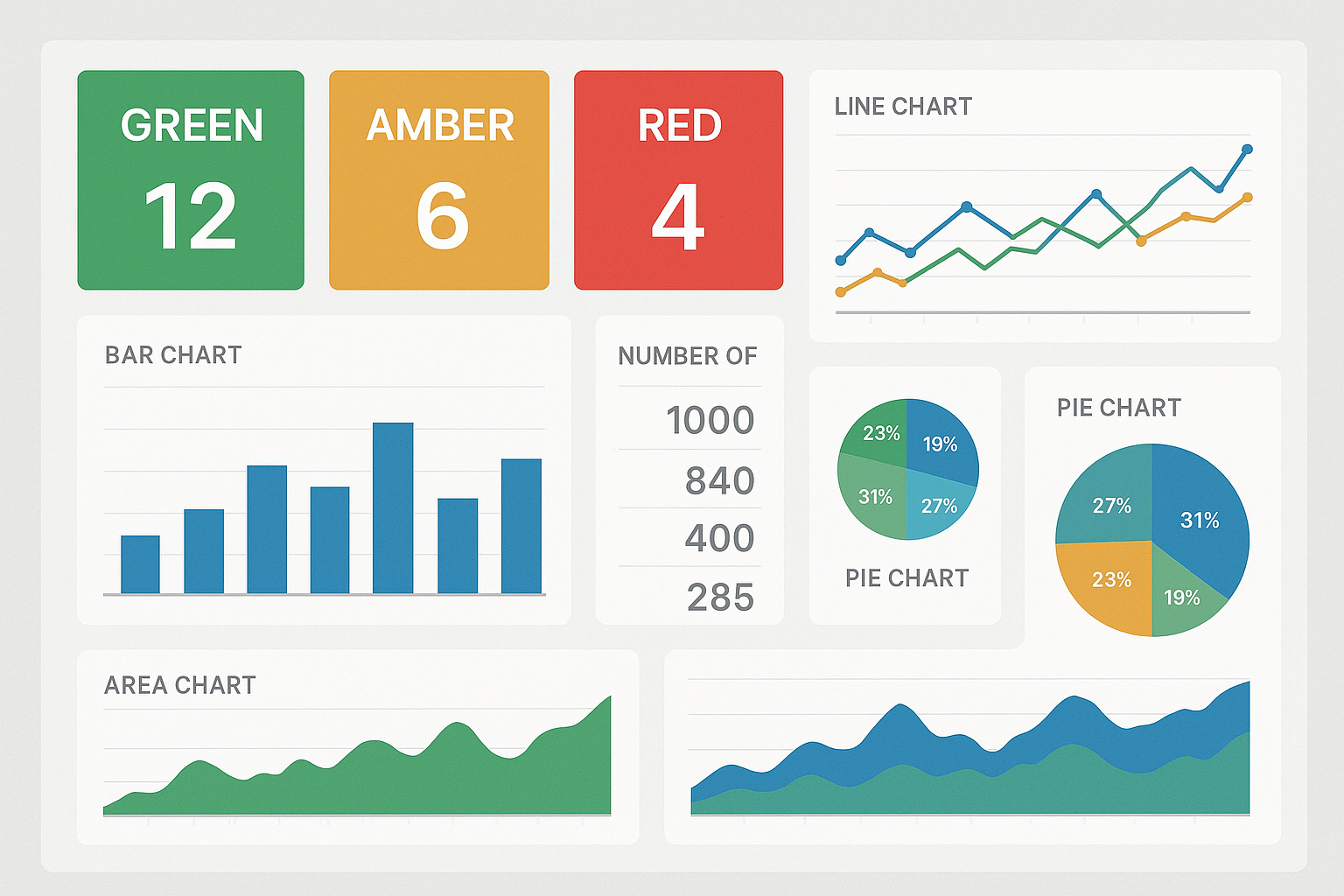
President Cyril Ramaphosa reached the dispatch box armed with a clicker and a pair of giant LED screens. A mosaic of green, amber and red tiles tracked every pledge signed since the first Investment Conference in 2018. The headline figure - R890 billion - has been recited so often it risks sounding like folklore. What caught the chamber off-guard was the granularity:
- 230 000 permanent posts once projects ramp up: roughly 81 000 in factories, 62 000 in food-processing hubs, 47 000 in plants that build solar-panel parts, plus 40 000 across data barns, logistics parks and tourism estates.
- A new R3 trillion five-year target, implying an annual haul of R600 billion - almost double the 2023-25 run-rate. About R1.4 trillion already sits at “term-sheet” stage, so the number lives in the realm of possibility rather than fantasy.
Yet Ramaphosa conceded the obvious: “A R4 billion server hall offers 80 full-time posts, while a R400 million blueberry estate keeps 1 200 seasonal pickers busy.” Labour intensity is now an official scoring item in the refreshed Public-Private Growth Initiative incentives rolled out quietly in March. The pledge, in short, is huge; the proof will be counted in pay-slips, not pixels.
3. From Red Tape to Red Dockets: The New Machine That Must Unlock Payroll
Promises crowd the air every year; this time the President revealed the plumbing meant to stop good ideas from drowning in paperwork. The engine is the National Investment Implementation Office (NIIO), parked inside the Presidency rather than the Department of Trade, Industry and Competition. Think of it as a traffic-light war-room:
- Every stalled venture gets a colour-coded “red-tape docket” with a QR tag.
- If nothing moves for 35 days it lands on the relevant Deputy Minister’s desk.
- After a further 20 days the file jumps to the Minister.
- Hit 70 days and the paperwork is sandwiched between the President’s Monday-night “J-Set” pack, a standing huddle with Treasury and the Special Investigating Unit.
The single biggest hold-up? Section 34(1)(a) of the Spatial Planning and Land Use Management Act, which forces renewable or logistics projects larger than 100 hectares to win approval from both district and provincial tribunals - often duplicating effort. Draft amendments out next month promise one-stop “conformity certificates” intended to cut the loop.
4. Guns, Guts and Cabinet Culls: Crime Stats, Drones and the Sacking No One Saw Coming
On 1 February the state stitched police, army, metro cops and even traffic wardens into “Operation Prosper,” a joint command echoing the 2021 “Gold Command” used during July’s unrest. The President’s tally for the first 96 days:
- 1 084 arrests, more than half foreign nationals tied to cross-border syndicates.
- 38 174 coordinated actions - roadblocks, drone sweeps, riverine patrols, cordon-and-search raids.
- 2 487 illegal mining holes sealed with polyurethane foam and fitted with seismic sensors.
- 14 high-value kidnapping cases cracked, including a Sandton executive rescued from a Diepsloot crypto-ransom gang.
Privacy activists grumble about IMSI-catcher vans prowling the N3 and N4, yet DA policing spokespersons admit that “at 3 a.m. in Benoni the public cheers every blue light.”
Just before the sitting started, the Pretoria press gallery’s phones buzzed: the President had axed Minister Sisisi Tolashe at 12h34 p.m., the fifth Cabinet casualty since mid-2024. The trigger was a leaked SIU dossier on R364 million blown on inflatable ECD classrooms - some delivered to schools that already had bricks for walls. Deputy Minister Ganief Hendricks steps in as caretaker until a reshuffle expected after the June mid-term budget.
5. Young, Skilled and Stuck? Four Tracks Meant to Move the Needle on Youth Unemployment
South Africa’s expanded jobless rate for people aged 15-24 still hovers near 59 %. Ramaphosa’s quartet of programmes is meant to attack the number from every angle:
Track 1 – Boots, Boilers and Code
Last year 584 rural matriculants finished the naval-style NARYSEC boot camp at SAS Saldanha; 200 are now artisans-in-training at foundries and diesel labs. A pilot “Sea Cadet Cyber Stream” launches in July, aiming to mint 120 marine-engineering coders annually.
Track 2 – YES with Teeth
The Youth Employment Service has placed 187 000 young people. A tweak to B-BBEE Regulation 9(2) now hands bonus points to firms that convert at least 30 % of YES interns into permanent staff within 24 months, up from 18.
Track 3 – Micro-Franchise in a Box
Treasury has locked down R3.2 billion over the Medium-Term Expenditure Framework for turnkey kits - barber shops, laundromats, solar-kiosks - planted at taxi hubs. After a five-day FASA boot camp, recruits get a QR-coded stock card linked to wholesale credit.
Track 4 – Karoo Co-Working Constellation
SKA’s fibre-to-farm build has opened a quirky niche: 600 subsidised desks inside converted barns for digital nomads craving dark-sky silence. Local residents receive hospitality upskilling to run the sites, keeping tourism rands in the veld.
6. Universities, Smart IDs and the Carbon Border Shock: Data Nuggets That Flew under the Radar
Outstanding tuition debt officially tops R23 billion, but only R4.8 billion is owed by NSFAS-qualifying students. The “missing middle” - households earning R350 k–R600 k a year - shoulders the rest. A task-team led by former Eskom CEO André de Ruyter is stress-testing an income-contingent loan model via the Development Bank of Southern Africa: zero real interest (CPI minus 2 %), automatic PAYE claw-back once salary crosses R250 k, and a 15-year write-off for public-service or NGO workers. Universities would receive 70 % of the loan book up-front, easing cash-flow headaches.
Other crumbs of future-shaping news never reached the podium:
- From 1 January 2027 the EU’s Carbon Border Adjustment Mechanism hits full stride. Treasury reckons a duty of €67 per tonne of South African steel billet could erase the entire 3 % export margin; Pretoria wants transitional rebates in return for expanding the Just Energy Transition plan from $8.5 billion to $12 billion.
- Home Affairs has inserted a QR code into the 28 million new Smart IDs. Employers who scan it land on a “Skills Passport” micro-site that instantly verifies artisan qualifications.
- Last week’s 5G spectrum auction bagged R14.9 billion - R3.1 billion above reserve. The surplus is ring-fenced for drones and sensors along the Beitbridge and Lebombo border posts, feeding fresh intelligence to Operation Prosper.
7. Rand, Ratings and Real Life: How the Speech Landed Outside the House
Exactly one hour before Ramaphosa spoke, Moody’s nudged South Africa’s outlook from “stable” to “positive,” praising “improving revenue integrity and a narrowing primary deficit.” The rand strengthened 0.8 % against the dollar; bond yields stayed put, a sign investors will wait for the June mini-budget. In Washington the IMF’s Africa chief urged faster logistics and electricity reform - “show us, don’t tell us.”
Meanwhile, real people processed the headlines in real time:
- Busi Makhanya, 20, University of Zululand: “The loan scheme sounds great, but I still can’t register for semester two - the bursary office says the DBSA portal isn’t live yet.”
- Lindokuhle Dube, 31, Katlehong Uber driver: “Operation Prosper makes the roads safer, but officers forced me to delete Waze because they thought I was flagging roadblocks.”
- Willem van der Merwe, 47, Columbus Stainless: “CBAM is coming. Channel part of that R3 trillion pipeline into green-hydrogen furnaces and we can save 4 000 Mpumalanga jobs.”
As MPs spilled into the drizzle of the Good Hope foyer, the President’s closing line lingered: “We are not merely chasing numbers, we are building the foundation.” Whether that foundation ends up supporting a generation of artisans, freelancers and steelworkers - or collapses under the weight of red tape and Cabinet churn - will depend on dashboards turning amber tiles green faster than headlines can turn them red.
[{"question": "What were the key outcomes of President Ramaphosa's Q&A on May 14, 2026?", "answer": "President Ramaphosa's Q&A focused on securing R890 billion in investments, creating 230,000 jobs, and setting a R3 trillion five-year target. He unveiled the National Investment Implementation Office to cut red tape, updated on Operation Prosper's crime fighting, replaced a minister, and introduced four programs to tackle youth unemployment, including a revised YES initiative."}, {"question": "How is the government addressing red tape and bureaucratic delays for new investments?", "answer": "President Ramaphosa established the National Investment Implementation Office (NIIO) within the Presidency to streamline investment processes. This office uses a 'red-tape docket' system where stalled ventures are color-coded and escalated if not resolved within set timeframes. For example, if a case remains unresolved for 35 days, it goes to the Deputy Minister, then to the Minister after another 20 days, and finally to the President's 'J-Set' after 70 days. Draft amendments are also underway to simplify land-use approvals for large projects, introducing 'conformity certificates' to cut duplication."}, {"question": "What are the details of the R890 billion investment and job creation goals?", "answer": "The R890 billion investment is projected to create 230,000 permanent jobs. These jobs are distributed across various sectors: approximately 81,000 in factories, 62,000 in food-processing hubs, 47,000 in solar-panel component manufacturing plants, and 40,000 in data centers, logistics parks, and tourism estates. The President also announced a new R3 trillion five-year investment target, aiming for an annual intake of R600 billion. The government is now prioritizing 'labour intensity' as an official scoring item in its Public-Private Growth Initiative incentives."}, {"question": "What initiatives are being implemented to combat crime and improve safety?", "answer": "Operation Prosper, launched on February 1, 2026, is a joint command integrating police, army, metro cops, and traffic wardens. In its first 96 days, it led to 1,084 arrests (over half being foreign nationals linked to cross-border syndicates), 38,174 coordinated actions (including roadblocks, drone sweeps, and riverine patrols), and the sealing of 2,487 illegal mining holes. The operation also successfully cracked 14 high-value kidnapping cases. Additionally, the R14.9 billion generated from the recent 5G spectrum auction will be ring-fenced for drones and sensors at border posts to enhance intelligence for Operation Prosper."}, {"question": "How is the government tackling high youth unemployment rates?", "answer": "The President introduced four key programs to address youth unemployment, which is near 59% for those aged 15-24: 1. NARYSEC Boot Camps: Expanding naval-style training for rural matriculants in artisan trades and launching a 'Sea Cadet Cyber Stream' for marine-engineering coders. 2. YES with Teeth: Modifying B-BBEE Regulation 9(2) to provide bonus points to companies that convert at least 30% of their Youth Employment Service (YES) interns into permanent staff within 24 months. 3. Micro-Franchise in a Box: Allocating R3.2 billion for turnkey business kits (e.g., barber shops, laundromats) located at taxi hubs, complemented by FASA boot camps and QR-coded stock cards. 4. Karoo Co-Working Constellation: Subsidizing 600 co-working desks in converted barns for digital nomads, leveraging the Square Kilometre Array's fibre infrastructure and creating hospitality jobs for local residents."}, {"question": "What is being done about the outstanding university tuition debt and future student funding?", "answer": "A significant portion of outstanding tuition debt, R23 billion, is owed by the 'missing middle' (households earning R350,000-R600,000 annually), not NSFAS-qualifying students. A task team, led by former Eskom CEO André de Ruyter, is developing an income-contingent loan model through the Development Bank of Southern Africa (DBSA). This model proposes zero real interest (CPI minus 2%), automatic PAYE claw-back once salaries exceed R250,000, and a 15-year write-off for public service or NGO workers. Universities would receive 70% of the loan book upfront to alleviate cash-flow issues. The DBSA portal for this scheme is still under development, causing some students to face registration issues."}]

Amanda Wilson is a Cape Town-born journalist who covers the city’s evolving food scene for national and international outlets, tracing stories from Bo-Kaap spice shops to Khayelitsha micro-breweries. Raised on her grandmother’s Karoo lamb potjie and weekend hikes up Lion’s Head, she brings equal parts palate and pride to every assignment. Colleagues know her for the quiet warmth that turns interviews into friendships and fact-checks into shared laughter.
View all articles →