
Here is how Mohamed Esa shattered records at the Cape Town Marathon
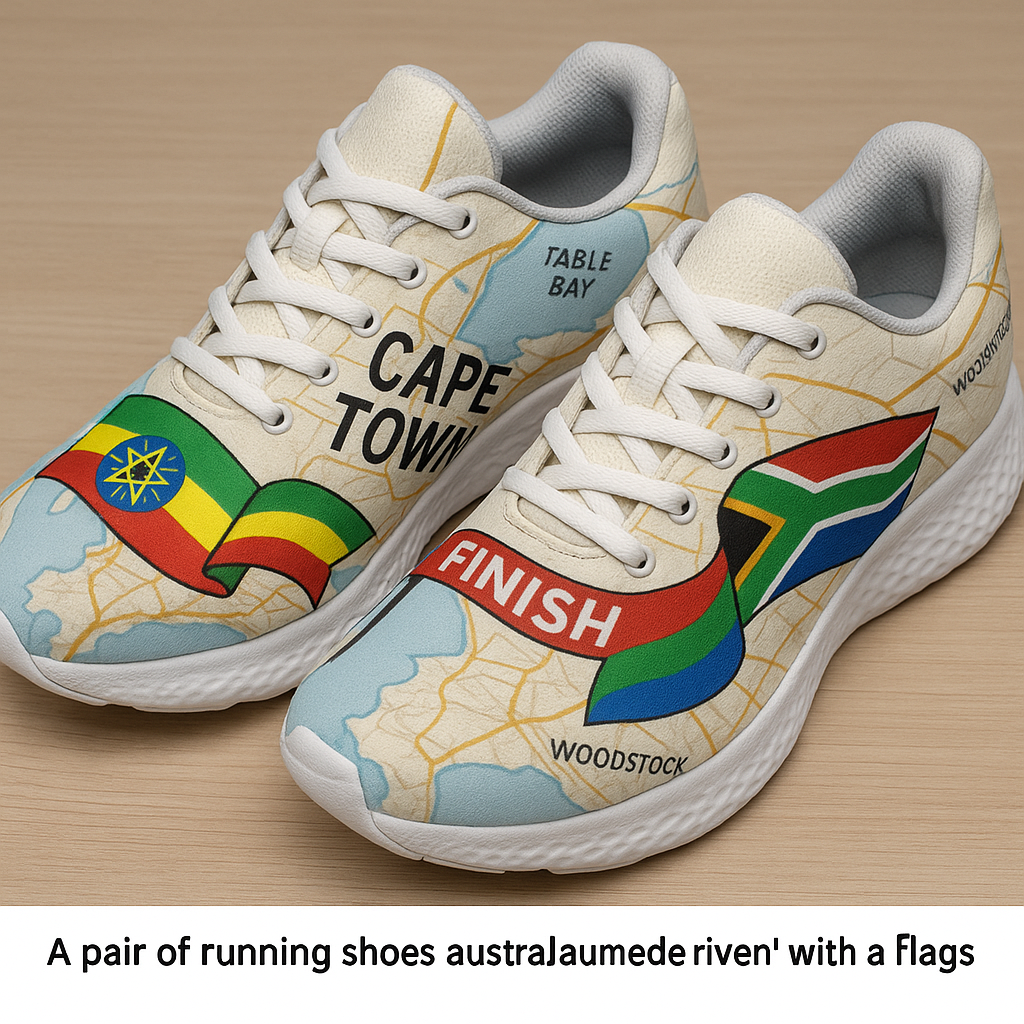
Ethiopian runners dominated the Cape Town Marathon, setting new course records. Discover race highlights, tech, and economic impact.
In 2026, Mohamed Esa of Ethiopia blazed through the Sanlam Cape Town Marathon, setting a new record for the fastest marathon ever run on African soil. He finished in an astonishing 2 hours, 4 minutes, and 55 seconds, smashing the old record by over three minutes. Starting earlier to beat the sun, Esa and his fellow Ethiopian runners dominated the race with clever tactics and new technology. This historic win wasn't just about speed; it showed the world Ethiopia's rising power in long-distance running, hinting at even more amazing races to come.
What was the fastest marathon ever run on African soil?
Ethiopian Mohamed Esa ran the fastest marathon ever on African soil at the 2026 Sanlam Cape Town Marathon, finishing in 2:04:55. This time broke the previous record by 3:20 and marked the quickest 42.195 km race held between Cairo and Cape Town.
Get Cape Town news in your inbox
Stay updated with the latest stories from the Mother City.
Dawn of Destruction – How a 15-Minute Head-Start Rewrote History
A violet sunrise peeled over the Atlantic and the 2026 Sanlam Cape Town Marathon pulse began at 05:30, a quarter-hour earlier than ever before. Race boss Renee Jordaan rolled the dice to outrun the notorious mid-morning glare; the payoff arrived before breakfast. By the time the sun climbed high enough to bleach the city’s pastel facades, Mohamed Esa had already hammered a 2:04:55 line across the Castle of Good Hope. One stroke of the clock obliterated the old mark by 3:20 and, more importantly, delivered the quickest 42.195 km ever staged between Cairo and Cape Town.
The first 10 km felt almost pedestrian. A chunky pack of thirty-eight clipped the seaside promenade in 29:28, slowed by a wet ocean breeze that curled around Green Point Stadium. Eliud Kipchoge, racing south of the equator for the first time since 2018, floated in the middle, joking with Ethiopia’s Yihunilign Adane as if they were on a Sunday long run. Neither suspected the elastic was about to snap.
At 10 km the road tilts upward into Bo-Kaap’s postcard quarter. Wale Street rises five per cent for six hundred metres, trimming the group to nineteen. Leonard Langat threw in a 2:53 kilometre past the brightly painted houses, yet Esa glided across the surge without shifting gears. Intent now flashed sky-blue and bottle-green: Ethiopia was done shadow-boxing.
The Men’s Race – Chess, Then Chaos
Half-way chimed in 1:02:51, ripping the tape off every continental pace chart. Course-record math turned simple: stay upright and 2:08:15 would look antique. Esa spent the next eleven kilometres practicing what he rehearses in Sululta forest: alternating injections, one click fast, one click smooth. Kipchoge’s famous composure cracked at 28 km when a hip-flexor twinge forced him to choose pride over pace. He yielded, watching the Ethiopian train recede toward the city bowl.
The kill shot landed on Buitengracht, a dead-flat freight track that funnels runners between century-old warehouses. Esa uncorked a 2:48 split at 37 km, carving a seven-second moat. His 40 km reading - 1:58:31 - telegraphed 2:04:4x, cold maths that screamed new course best. Crossing the line he raised one finger: one race, one continent, one rewritten ledger. Adane, Kalipus Lomwai, Langat and Andualem Belay followed inside 2:06, the first time five African athletes dipped under that barrier on home roads in a single morning.
Behind the headlines, tiny details told the tale. GPS traces show Esa’s cadence never dipped under 190 spm after 30 km; symmetry indexes stayed sub-one per cent, proof that the mid-race surges were tactical, not desperate. Esa later admitted he targeted the Castle’s cobbled straight once he heard the public announcer bellow “2:04 pace” at 38 km. “I smiled,” he said. “Then I stopped looking at my watch.”
Women’s Triumvirate – The Unbreakable Triangle
If the men’s duel was fireworks, the women’s contest resembled a perfectly executed team time-trial. Dera Dida Yami, Mestawut Fikir and Waganesh Mekasha rolled through 5 km in 16:40 and never allowed a foreign vest into their rotating echelon. By half-way - 1:11:13 - the Kenyan chase sat fifteen seconds adrift and hemorrhaging hope.
The elastic finally snapped on the Waterfront’s short climb at 34 km. Dida injected a 3:15 kilometre, a burst that looked almost casual on broadcast splits yet spat Fikir clear and left Mekasha marooned twelve metres back. No further moves were required; the podium order had been drafted in those thirty seconds. Dida strode home in 2:23:18, the second-quickest women’s mark ever achieved on the continent. Fikir (2:23:46) and Mekasha (2:23:57) completed the sweep, while Kenya’s Sharon Chelimo waved the lonely fourth-place flag nearly a minute behind.
Post-race the trio revealed a mantra - “one rhythm, one nation” - drilled by coach Tadelech Girma in the thin air of Addis Ababa. Each athlete memorised a 5 km segment she would boss, then peeled off politely. The tactic looked generous; the scoreboard screamed dominance.
Tech, Timing and Tail-Winds – Anatomy of a Perfect Day
Weather stations at the start arch logged 12 °C, 66 % humidity and a dew point of 7 °C - textbook evaporative cooling. More importantly, a gentle northerly breeze funnelled down Nelson Mandela Boulevard, gifting roughly twenty-five seconds over the final eight kilometres. Combine that with 3-D-printed LED pacing wands locked on 2:05 and 2:23 splits, and the course morphed into a green carpet of momentum.
Shoes told their own sub-plot. Esa and Dida laced unbranded “EthioPlate v4” prototypes cooked up in Addis Ababa’s Hawassa industrial park. A full-length carbon blade sits inside a 38 mm stack that nudges the World Athletics ceiling, yet locally sourced sisal fibres trim four grams off regular Pebax foam. The athletes insist the difference is mental as much as physical: “We’re running on home technology,” Esa grinned.
Logistics matched the speed. Biodegradable seaweed pods replaced 125,000 plastic cups; runners bite, drink and discard a film that oceanic bacteria digest within four weeks. RFID shoelace chips provided live-gap data accurate to 1.3 metres, letting broadcasters render ghost-images of Esa’s lead in real time. Even the water tables got faster: redesigned troughs cut five seconds off average bottle-grab splits, according to post-race analytics.
Behind the science stood an economic ripple. First place pocketed USD 70,000 for the record plus appearance fees; the Ethiopian federation triggered a 20 % “team bonus” clause that pumps an extra USD 50,000 into youth development. Cape Town hotels reported an 11 % occupancy jump over 2024, and Ethiopian Airlines will add a second daily Addis-Cape service through October 2026. Fast times are fun; foreign exchange is forever.
Legacy also has a name. Eliud Kipchoge’s 2:13:29 - his slowest legitimate marathon - proved he can still command a continent’s attention without standing on the podium. After posing for selfies with hundreds of local learners, he explained the maths: “Two-thirteen is the lesson I could give today. Control what you can.” The statement felt less like consolation and more like a passing of the baton in front of 47 African television markets.
From Green Point’s lavender dawn to the Castle’s ancient stones, Cape Town 2026 delivered more than a record; it unveiled a production line. Ethiopian athletes logged 220 km weeks toggling between 3,000 m hypoxic huts in Entoto and oxygen-rich sessions on the Awash flats - an altitude-to-sea carousel that mirrors Kenya’s Iten-Nairobi shuffle yet never leaves national borders. Their science, shoes and surges combined to paint the streets in green, yellow and red. If World Athletics ratifies the promised Gold Label upgrade, the 2027 edition becomes an Olympic qualifier, raising the tantalising prospect of an all-African podium striding toward Los Angeles. The Cape revolution is only beginning.
[{"question": "What record did Mohamed Esa break at the 2026 Sanlam Cape Town Marathon?", "answer": "Mohamed Esa broke the record for the fastest marathon ever run on African soil, completing the race in an astonishing 2 hours, 4 minutes, and 55 seconds. This time smashed the previous record by over three minutes, specifically 3 minutes and 20 seconds."}, {"question": "When and where did Mohamed Esa achieve this record?", "answer": "Mohamed Esa achieved this record in 2026 at the Sanlam Cape Town Marathon in Cape Town, South Africa. The race started at 05:30 AM, 15 minutes earlier than usual, to mitigate the effect of the mid-morning sun."}, {"question": "What were some of the key tactical elements that contributed to the Ethiopian success?", "answer": "The Ethiopian runners employed clever tactics, including mid-race surges and alternating injections of speed, especially from Mohamed Esa. In the women's race, Dera Dida Yami, Mestawut Fikir, and Waganesh Mekasha executed a team time-trial strategy, rotating leadership and maintaining a high pace, guided by their coach's mantra of 'one rhythm, one nation'."}, {"question": "How did technology and environmental factors play a role in the record-breaking performances?", "answer": "Several factors contributed: the early start time to avoid heat, a gentle northerly breeze providing a tail-wind for the final 8 km, 3-D-printed LED pacing wands, and prototype 'EthioPlate v4' shoes developed in Ethiopia. Logistics improvements also included biodegradable seaweed pods for hydration and RFID shoelace chips for real-time race data."}, {"question": "What was Eliud Kipchoge's role in the 2026 Sanlam Cape Town Marathon?", "answer": "Eliud Kipchoge participated in the marathon, his first race south of the equator since 2018. While he did not finish on the podium, clocking 2:13:29, his presence still commanded attention. He used the race as an opportunity to impart a lesson, stating, 'Two-thirteen is the lesson I could give today. Control what you can,' and posed for selfies with local learners, symbolizing a passing of the baton."}, {"question": "What broader impact did the 2026 Sanlam Cape Town Marathon have beyond the race results?", "answer": "The marathon highlighted Ethiopia's rising dominance in long-distance running. Economically, it generated a USD 70,000 prize for the record-breaker, a 20% team bonus (USD 50,000) for youth development, an 11% increase in Cape Town hotel occupancy, and an additional daily Ethiopian Airlines flight. It also set the stage for the Sanlam Cape Town Marathon to become an Olympic qualifier, potentially leading to an all-African podium at future international events."}]
Thabo Sebata is a Cape Town-based journalist who covers the intersection of politics and daily life in South Africa's legislative capital, bringing grassroots perspectives to parliamentary reporting from his upbringing in Gugulethu. When not tracking policy shifts or community responses, he finds inspiration hiking Table Mountain's trails and documenting the city's evolving food scene in Khayelitsha and Bo-Kaap. His work has appeared in leading South African publications, where his distinctive voice captures the complexities of a nation rebuilding itself.
View all articles →