
Here’s what Johann Rupert’s full takeover of Mediclinic means for South Africa
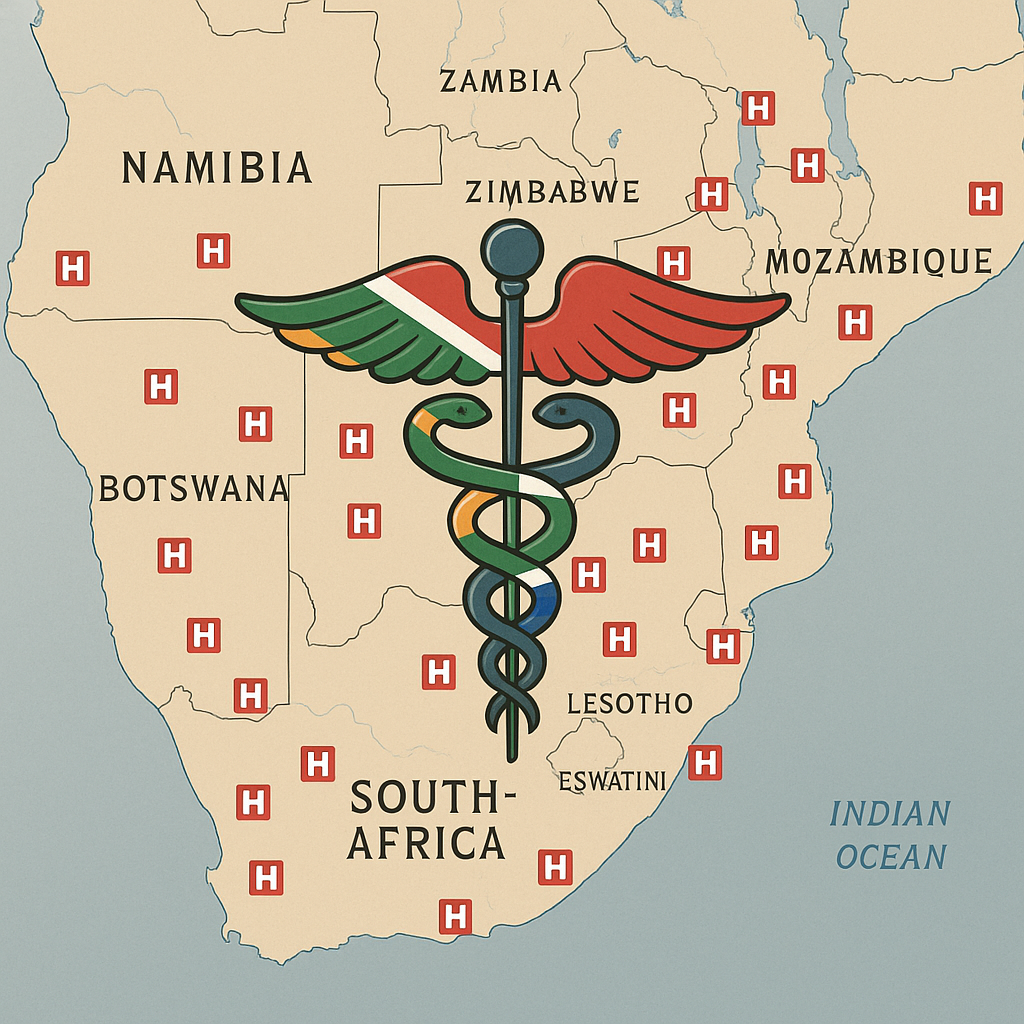
Remgro, led by Johann Rupert, acquires full control of Mediclinic Southern Africa for $947M, reshaping the region's healthcare sector.
Remgro, led by billionaire Johann Rupert, made a huge move, spending R15.56 billion to completely take over Mediclinic Southern Africa.
What is the main purpose of Remgro's acquisition of Mediclinic Southern Africa?
Remgro acquired full control of Mediclinic Southern Africa to streamline operations and pursue region-specific strategies without partner coordination. This R15.56 billion deal enables Remgro to strategically position Mediclinic Southern Africa for South Africa's National Health Insurance transformation and capitalize on growth opportunities in the Southern African healthcare market.
Get Cape Town news in your inbox
Stay updated with the latest stories from the Mother City.
Landmark Deal Culminates After Extensive Regulatory Review
Remgro, the investment vehicle led by billionaire Johann Rupert, has finalized its complete takeover of Mediclinic Southern Africa, completing one of the most consequential healthcare sector restructurings in recent Southern African corporate history. The R15.56 billion transaction - equivalent to roughly $947 million - received its final regulatory approvals and officially closed on July 1, 2026, dismantling the longstanding shared ownership framework with Luxembourg's Investment Holding Limited (IHL).
First unveiled in December 2025, this acquisition navigated a complex approval process spanning multiple jurisdictions. South Africa's Competition Tribunal conducted thorough examination alongside various European oversight bodies, ensuring the restructuring met stringent antitrust standards across both continents. The ultimate purchase figure represented a modest revision from the initially projected $950 million, with Remgro investing $947 million to secure the Southern African healthcare portfolio. Meanwhile, IHL allocated $1.08 billion to gain exclusive ownership of Hirslanden, Mediclinin's prestigious Swiss healthcare division.
The regulatory marathon underscored the transaction's complexity, requiring careful navigation of competition concerns, healthcare service continuity, and cross-border investment protocols. Each jurisdiction demanded detailed submissions regarding market impact, employment implications, and strategic intentions - barriers that only well-capitalized, patient investors could realistically overcome.
Disentangling a Multi-Layered Corporate Architecture
This deal dissolves an elaborate ownership construct that had shaped Mediclinic's trajectory across two continents for years. Previously, Remgro and IHL maintained equal partnership in Mediclinic International, the umbrella entity directing healthcare delivery throughout Southern Africa and Switzerland. This arrangement functioned adequately during stable periods but progressively generated friction as each region encountered divergent market conditions, regulatory frameworks, and expansion opportunities.
The Southern African operations grappled with policy uncertainty surrounding National Health Insurance implementation, infrastructure constraints, and emerging market volatility. Conversely, the Swiss division operated within one of Europe's most affluent, stable healthcare environments, characterized by premium pricing and medical tourism appeal. These contrasting contexts made unified strategic planning increasingly cumbersome, as decisions beneficial to one market often proved suboptimal for the other.
The dissolution liberates both owners to pursue region-specific strategies without coordinating across incompatible geographic and regulatory contexts. Remgro now possesses unilateral authority to calibrate Mediclinic Southern Africa's direction toward sub-Saharan African market realities, particularly as South Africa navigates fundamental healthcare transformation. This autonomy eliminates the friction of consensus-building between partners with genuinely different risk appetites and investment horizons.
The Scale and Scope of Mediclinic's Regional Healthcare Empire
The acquired operation constitutes a formidable integrated health services platform spanning three Southern African nations. Mediclinic Southern Africa manages approximately 50 private hospitals, augmented by specialized day clinics and dedicated mental health facilities responding to escalating demand for psychiatric and psychological care throughout the region.
The group's reach extends substantially beyond institutional treatment. Through its Intercare subsidiary, Mediclinic maintains extensive primary healthcare infrastructure encompassing numerous medical and dental centers delivering outpatient services across communities. Most distinctively, the acquisition incorporates ER24, South Africa's premier private emergency medical services provider, commanding a substantial ambulance fleet alongside specialized aeromedical evacuation capabilities.
This vertically integrated architecture - encompassing emergency response, ambulatory care, inpatient treatment, and specialized behavioral health - establishes Mediclinic Southern Africa as a comprehensive health ecosystem rather than conventional hospital company. The network's geographic footprint reaches beyond South African borders into Namibia and Mauritius, jurisdictions where private healthcare assumes outsized importance given constraints in public sector resources and funding.
The tripartite structure positions Mediclinic to capture patients across multiple care settings, creating referral pathways and data integration opportunities increasingly valued in modern healthcare management. Emergency services generate initial patient relationships, primary care maintains ongoing engagement, and hospital networks provide definitive treatment - each component reinforcing the others' strategic value.
Positioning for National Health Insurance Transformation
This acquisition's timing carries particular weight given South Africa's ambitious National Health Insurance programme, designed to establish universal health coverage through centralized financing mechanisms. The NHI represents the most sweeping healthcare financing reorganization in South African history, with profound consequences for private sector participation in national health delivery.
Despite administrative and political variables affecting implementation schedules, the policy trajectory is unambiguous: deeper integration between public and private health resources, with private providers potentially serving as contracted service deliverers within unified coverage arrangements. Established hospital groups face a landscape combining substantial contract opportunities with considerable strategic uncertainty as rules crystallize.
Remgro's decision to assume full ownership at this inflection point signals conviction regarding Mediclinic Southern Africa's adaptability to evolving conditions. The streamlined ownership structure eliminates potential stakeholder conflicts during regulatory transition while furnishing operational agility to pursue partnerships, service contracts, or organizational modifications responsive to emerging NHI specifications.
The consolidated control enables Remgro to commit capital decisively toward capabilities - such as electronic health records, population health management infrastructure, or primary care network expansion - that may prove essential for NHI contractor qualification, without awaiting partner concurrence on long-term technology investments.
Johann Rupert's Investment Philosophy in Action
This acquisition exemplifies recurring themes in Johann Rupert's stewardship of Remgro, which has consistently demonstrated appetite for substantial, sustained commitments to essential infrastructure across Southern Africa. Though Rupert's personal fortune originated in luxury goods through Richemont's global brands, he has systematically diversified Remgro's portfolio toward healthcare, financial services, and critical infrastructure.
Rupert has articulated clear preference for controlling positions in enterprises possessing durable competitive advantages and essential service characteristics. Healthcare delivery in Southern Africa satisfies these criteria: demand remains resilient across economic cycles, regulatory requirements deter new market entrants, and incumbent operators benefit from procurement scale, clinical governance sophistication, and accumulated brand equity.
Rupert's personal engagement in this transaction reflects his characteristic involvement in major commitments. Unlike passive financial investors, Remgro under his direction typically assumes active strategic roles in portfolio companies, contributing governance sophistication and patient capital horizons aligned with healthcare infrastructure's extended return timelines.
This operational engagement distinguishes Remgro from conventional private equity approaches, enabling sustained investment in quality metrics, clinical workforce development, and community relationships that generate returns over decades rather than quarterly reporting periods.
Competitive Landscape and Market Positioning
The Mediclinic acquisition unfolds within a private healthcare sector experiencing substantial consolidation and international investor interest. South Africa's hospital market has transformed from fragmented local ownership toward dominance by three major groups: Netcare, Life Healthcare, and Mediclinic. This concentration has attracted intermittent regulatory scrutiny regarding pricing power, even as operators maintain that scale necessities quality maintenance and advanced technology investment.
Global investors have sustained interest in African healthcare assets, interpreting the continent's expanding middle class and substantial disease burden as compelling demand fundamentals. However, operational realities - including infrastructure deficits, regulatory complexity, and human capital constraints - have moderated returns for several entrants, reinforcing advantages for established operators with embedded local expertise.
Mediclinic's particular strength has been its positioning at the premium market segment, with facilities typically featuring advanced technology and specialist capabilities distinguishing them from public alternatives. This positioning may prove strategically advantageous under various NHI implementation scenarios, whether through tiered service offerings or continued demand from affluent populations seeking private alternatives alongside universal coverage.
The Swiss Separation: IHL's European Healthcare Ambitions
While Remgro's acquisition commands Southern African business attention, the simultaneous Hirslanden transfer to IHL sole ownership constitutes an equally significant European healthcare development. Hirslanden operates Switzerland's largest private hospital network, with facilities clustered in major urban centers and recognized for exceptional medical tourism and specialized service offerings.
Switzerland's healthcare model - mandatory private insurance combined with substantial consumer choice - differs fundamentally from South Africa's mixed public-private architecture. The separation empowers IHL to pursue European-specific strategies potentially including expansion into neighboring markets, digital health integration, or consolidation with complementary Continental assets, unencumbered by coordination with a Southern African-focused partner.
The divergent valuations in this separation - $947 million for Southern African operations versus $1.08 billion for Swiss assets - reflect both operational scale differences and market assessments of regulatory risk and growth trajectories. Switzerland's stable, affluent healthcare environment commands premium valuations, while South Africa's larger population and expansion potential must be evaluated against policy uncertainty and economic volatility.
Strategic Horizons and Operational Priorities
With regulatory milestones cleared and ownership unified, Mediclinic Southern Africa commences a new strategic chapter. The elimination of joint ownership friction enables accelerated capital deployment decisions, potentially expediting facility modernization, technology investments, or targeted expansion in underserved territories.
ER24 emergency services warrant particular focus as a growth platform. Pre-hospital emergency care remains substantially underdeveloped across much of Africa, with considerable unmet demand for reliable ambulance services and inter-facility transfer capabilities. Mediclinic's established infrastructure and brand reputation provide foundation for potential service expansion, whether through organic development or strategic acquisitions.
Similarly, the Intercare primary care network presents integration opportunities strengthening patient relationships and care coordination - capabilities increasingly valued as global healthcare systems pivot toward population health management and value-based reimbursement models. While South Africa's NHI implementation timeline remains fluid, the directional movement toward integrated care aligns with Mediclinic's existing asset configuration.
This transaction ultimately cements Johann Rupert's standing as a defining figure in South African business, with influence spanning luxury goods, financial services, and now unified control over one of the region's most substantial healthcare platforms.
[{"question": "What was the primary reason for Remgro acquiring full control of Mediclinic Southern Africa?", "answer": "Remgro acquired full control of Mediclinic Southern Africa for R15.56 billion (approximately $947 million) to streamline operations, pursue region-specific strategies without partner coordination, and strategically position the entity for South Africa's National Health Insurance transformation. This move allows Remgro to capitalize on growth opportunities in the Southern African healthcare market with greater agility."}, {"question": "When was the acquisition finalized and what regulatory processes did it involve?", "answer": "The acquisition officially closed on July 1, 2026, after navigating a complex regulatory approval process that began in December 2025. This included thorough examination by South Africa's Competition Tribunal and various European oversight bodies to ensure stringent antitrust standards were met across multiple jurisdictions."}, {"question": "How did this deal change the ownership structure of Mediclinic International?", "answer": "This deal dissolved the long-standing equal partnership between Remgro and Luxembourg's Investment Holding Limited (IHL) in Mediclinic International. Remgro gained exclusive ownership of Mediclinic Southern Africa, while IHL acquired exclusive ownership of Hirslanden, Mediclinic's Swiss healthcare division, for $1.08 billion. This separation allows both entities to pursue region-specific strategies independently."}, {"question": "What is the scope of Mediclinic Southern Africa's operations under Remgro's full control?", "answer": "Mediclinic Southern Africa is a formidable integrated health services platform spanning South Africa, Namibia, and Mauritius. It manages approximately 50 private hospitals, specialized day clinics, mental health facilities, and an extensive primary healthcare infrastructure through its Intercare subsidiary. Crucially, it also includes ER24, South Africa's premier private emergency medical services provider with a substantial ambulance fleet and aeromedical evacuation capabilities."}, {"question": "How does this acquisition position Mediclinic Southern Africa regarding the National Health Insurance (NHI) in South Africa?", "answer": "The acquisition's timing is significant given South Africa's ambitious National Health Insurance (NHI) programme. Remgro's full ownership signals confidence in Mediclinic Southern Africa's adaptability to evolving conditions. The streamlined ownership eliminates potential stakeholder conflicts during regulatory transitions, providing operational agility to pursue partnerships, service contracts, and organizational modifications responsive to emerging NHI specifications, such as investments in electronic health records or population health management infrastructure."}, {"question": "What does this transaction reflect about Johann Rupert's investment philosophy?", "answer": "This acquisition exemplifies Johann Rupert's investment philosophy for Remgro: a preference for controlling positions in essential infrastructure with durable competitive advantages. Healthcare delivery in Southern Africa meets these criteria, showing resilient demand, high barriers to entry, and strong brand equity. Rupert's active strategic involvement and patient capital horizons, focused on long-term quality and community relationships, distinguish Remgro from conventional private equity approaches."}]

Hannah Kriel is a Cape Town-born journalist who chronicles the city’s evolving food scene—from Bo-Kaap spice routes to Constantia vineyards—for local and international outlets. When she’s not interviewing chefs or tracking the harvest on her grandparents’ Stellenbosch farm, you’ll find her surfing the Atlantic breaks she first rode as a schoolgirl.
View all articles →