
Hidden bias & algorithmic exclusion: Rising tide of ageism in AI recruitment
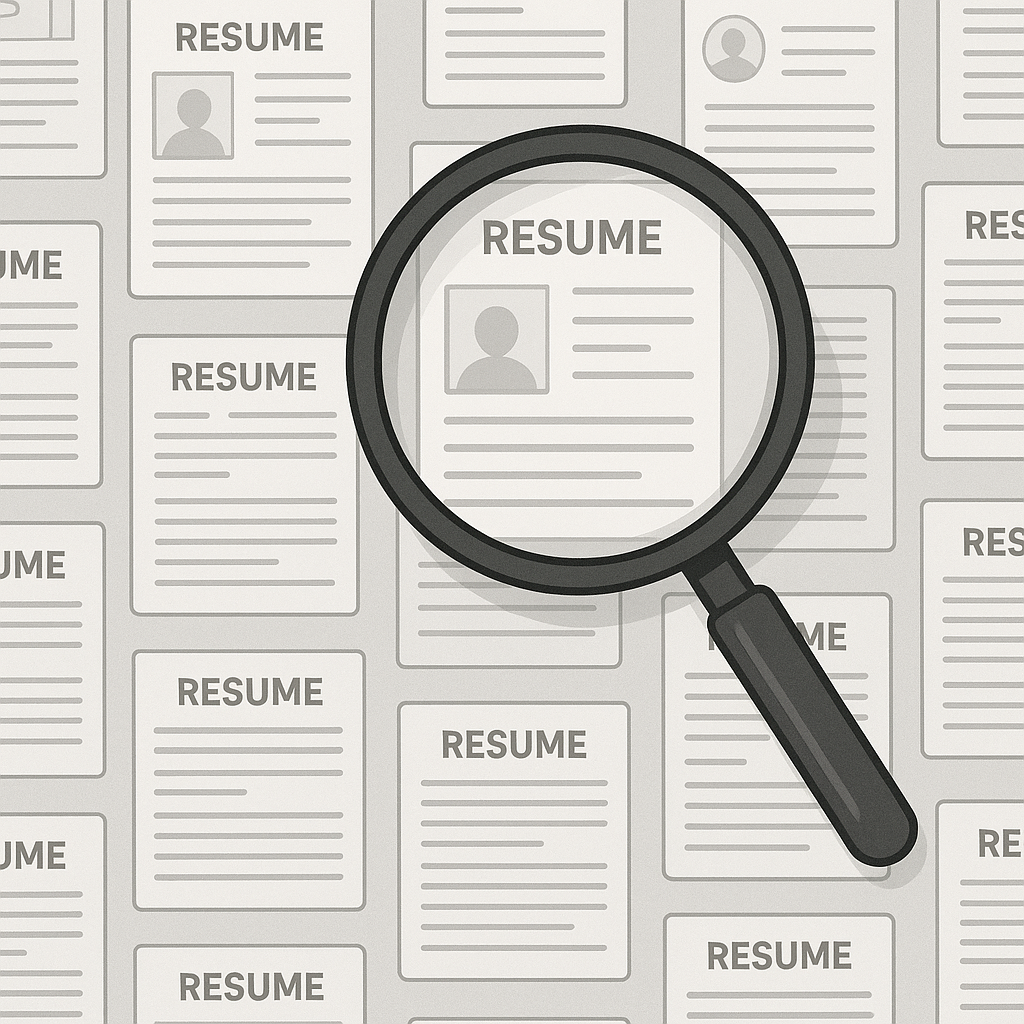
AI-powered recruitment is codifying age discrimination. Learn how algorithms reject experienced candidates and what organizations can do.
Hiring software often unfairly screens out older, experienced job applicants. These systems favor recent graduates and penalize terms common among seasoned professionals. They even misinterpret subtle facial cues in video interviews, leading to "invisible rejection" before a human even sees the application. This quiet bias is now facing legal challenges, pushing for fairness and accountability in hiring practices.
How does hiring software discriminate against older job applicants?
Hiring software discriminates against older job applicants through several mechanisms. It often prioritizes recent graduates, uses lexical analysis that penalizes terms common among experienced professionals, and analyzes video interviews for micro-expressions that can be misinterpreted as lack of drive in older candidates. This leads to "invisible rejection" before human review.
Get Cape Town news in your inbox
Stay updated with the latest stories from the Mother City.
Section 1 – The Invisible Rejection at 08:47
Every dawn, Lindiwe Mokoena, 52 and once a COO, hits “submit” on another retailer’s portal. By 08:48 the platform’s risk engine has stamped her “culture match” at 37/100, well under the secret 72-point bar reserved for “born digital” applicants. No recruiter glimpses her file; at 09:03 a chatbot politely claims her skills “dazzled us” yet “other trajectories align better.” She is not paranoid - she is trapped inside a decade-old feedback loop that grows tighter with every click.
From Gauteng to California, the script plays out thousands of times an hour. Age bias has migrated into the codebase; vendors call it “operational efficiency” while HR calls it “the system.” Yet the legal floor is shifting. In California, a sprawling class action now targets Workday, insisting the SaaS vendor qualifies as an “employment agency” under the 1967 ADEA. Internal slides already in discovery list “pre-1995 graduation” and @aol addresses as “low-adapt” proxies. If the court certifies the case, liability will climb the stack all the way to algorithm authors - an earthquake the whole HR-tech world is watching.
Across the Atlantic, the EU AI Act (enforceable from mid-2025) labels CV-scoring engines “high-risk.” Article 14 bans black-box excuses: employers must keep humans “competent to detect and override bias” in the loop. Fines hit €30 million or 6 % of worldwide revenue - whatever hurts more. Brussels lawyers confirm that two JSE-listed banks using London-hosted hiring clouds have already received draft compliance notices. The message is clear: outsource the decision, not the duty of care.
Section 2 – How Code Learns to Fear Grey Hair
-
The Data Cliff*
Most applicant-tracking systems slurp three to five years of past hires. If 78 % of last year’s “winners” sat between 27 and 38, the math treats birth year as a feature of success. Stack gradient-boosting, random forests and neural nets and the signal amplifies: graduation date, first job title, even double spaces after periods become 400,000 weighted nodes no hiring manager can unpack without a PhD in statistics. Once baked in, the bias is not a line item - it is the oven. -
Lexical Ageism*
Text-mining tools now score “energy” from word choice. “Spearheaded,” “overhauled,” “disrupted” litter the profiles of 29-year-old product managers; “seasoned,” “veteran,” “steadfast” belong to 55-year-old engineers. One Fortune-500 engine docks “Yours faithfully” 0.22 standard deviations below “Cheers,” branding the sign-off as low collaboration. Applicants catch on, delete decades of wins and bleach their résumés - an anxious ritual sociologists call “algorithmic passing.” -
Video-Bot Bias*
HireVue and rivals measure micro-eye motion, blink cadence and vocal pitch. A 2023 paper found that slower saccades in over-50 candidates dropped their “drive” percentile from 58th to 41st - enough to miss most cut-offs. Even after netting out bandwidth and accent, age explained 11 % of personality variance. Vendors plead neutrality, but neutrality toward wrinkles still triggers disparate-impact lawsuits on both continents.
Section 3 – South Africa’s Fault Lines and Global Ripples
South Africa’s Employment Equity Act outlaws age discrimination, yet claims lag behind race and gender cases because proof is scarce. Draft amendments, however, would label over-50 workers a “designated group,” letting ministers set hiring targets. A 59-year-old actuary recently lodged a Section 10 CCMA referral after a Cape Town fintech’s AI down-ranked his 1985 degree. If conciliation collapses, the Labour Court could deliver the Global South’s first AI-ageism verdict in 2025.
-
Carrots, Then Sticks*
Microsoft’s disability unit retooled an Azure model to reward cross-generational mentoring, lifting over-50 hires 34 %. Standard Bank audits 5 % of rejected CVs each quarter with an interpretable model; since 2022, external risk hires’ median age has risen from 33 to 39 and turnover in that group has fallen 18 %. The CFO notes that every avoided re-hire saves nine months of onboarding spend - proof that fairness can pay for itself. -
Insurance and Governance-as-a-Service*
Lloyd’s now sells “algorithmic-bias liability” policies starting at 0.35 % of cover, but premiums double without annual fairness audits. FairNow, Holistic AI and Johannesburg’s Naledi Analytics offer continuous model monitoring; early pilots cut age-related adverse impact 60 % within two hiring cycles. Their dashboards translate Shapley values into HR English so recruiters can act before lawyers arrive.
Section 4 – Future-proofing Talent Pipelines
-
Ten Corporate Moves*
1. Contract for model cards, feature plots and age-bracket impact stats - trade-secret pleas no longer wash.
2. Automate the four-fifths rule inside your ATS; let a red flag appear before the rejection mail.
3. Rebalance training data quarterly; oversample successful mature hires or synthesise them.
4. Run language-neutralisers such as Textio to swap “spearheaded” for “led.”
5. Make every shortlist include at least one 45-plus candidate; track age diversity like race and gender.
6. Offer human-only interview opt-outs; older talent completion rates jump 19 % when given the choice.
7. Store audit logs on tamper-proof drives - foreign courts are subpoenaing Slack chats and hyper-parameters.
8. Re-train, don’t just fine-tune; concept drift creeps in every graduation season.
9. Tie recruiter bonuses to age-inclusive KPIs - what gets paid gets done.
10. Budget for bias insurance now; the policies are cheap before the first plaintiff knocks. -
What Candidates Can Do Today*
Swap chronological CVs for hybrid formats that foreground evergreen skills; drop graduation dates. Mine Google Trends to swap “client service” for “customer success,” a phrase ATS lexicons rank higher. Record video interviews at 50 fps to smooth micro-expressions that bots misread as lethargy. Most importantly, keep rejection emails; US age-bias settlements have hit $49 million, and South African advocates are quietly assembling affidavit banks. Your ignored application could become the evidence that forces reform. -
Countdown to Regulation*
Q4 2024 – EU AI Act final text
Q2 2025 – Workday certification ruling
Q3 2025 – Draft South African age-equity codes
Q1 2026 – JSE adopts ISO 30414 human-capital disclosure
Q3 2027 – First CCMA age-bias precedents expected
Between now and those dates, every funnel that silently discards Lindiwe accumulates liability at compound interest. The tooling for fairness is already on the shelf; the only missing patch is the human will to install it.
[{"question": "
How does hiring software discriminate against older job applicants?
\nHiring software often unfairly screens out older, experienced job applicants by prioritizing recent graduates, penalizing terms common among seasoned professionals through lexical analysis, and misinterpreting subtle facial cues in video interviews. For instance, systems might flag pre-1995 graduation dates or email addresses like '@aol.com' as indicators of 'low adaptability.' This leads to an 'invisible rejection' where qualified candidates like Lindiwe Mokoena, a 52-year-old former COO, are dismissed by automated systems before their application is ever seen by a human recruiter.
\n","answer": null},{"question": "What are the legal implications of age bias in hiring software?
\nThe legal landscape regarding age bias in hiring software is rapidly evolving. In California, a class action lawsuit targets Workday, claiming it acts as an 'employment agency' under the 1967 ADEA, potentially making algorithm authors liable. Across the Atlantic, the EU AI Act, enforceable from mid-2025, labels CV-scoring engines as 'high-risk' and mandates human oversight to detect and override bias, with fines up to €30 million or 6% of worldwide revenue. South Africa's Employment Equity Act outlaws age discrimination, and draft amendments could label over-50 workers a 'designated group,' potentially leading to the Global South's first AI-ageism verdict in 2025.
\n","answer": null},{"question": "How can hiring software 'learn' to fear grey hair?
\nHiring software learns age bias through its training data and algorithmic design. Most applicant-tracking systems are trained on three to five years of past hires. If the majority of successful hires were between 27 and 38, the algorithms treat age or graduation year as a feature of success. This bias is amplified by techniques like gradient-boosting and neural nets. Lexical analysis also plays a role, with terms like 'spearheaded' favored over 'seasoned,' and video interview bots misinterpreting slower saccadic eye movements in older candidates as a lack of 'drive.'
\n","answer": null},{"question": "What steps can companies take to combat algorithmic bias and promote age-inclusive hiring?
\nCompanies can take several proactive steps to combat algorithmic bias. These include contracting for model cards that detail age-bracket impact stats, automating the four-fifths rule for bias detection in ATS, and regularly rebalancing training data to oversample successful mature hires. Other strategies involve using language-neutralizers, ensuring every shortlist includes at least one 45-plus candidate, offering human-only interview opt-outs, and tying recruiter bonuses to age-inclusive KPIs. Microsoft's disability unit, for example, retooled an Azure model to reward cross-generational mentoring, increasing over-50 hires by 34%.
\n","answer": null},{"question": "What can job applicants do to navigate biased hiring software?
\nJob applicants can adapt their strategies to navigate biased hiring software. This includes swapping chronological CVs for hybrid formats that highlight evergreen skills and omitting graduation dates. Mining Google Trends can help identify modern keyword equivalents, such as replacing 'client service' with 'customer success.' When recording video interviews, using a higher frame rate (e.g., 50 fps) can smooth micro-expressions that bots might misinterpret. Crucially, applicants should retain rejection emails as these can serve as evidence in potential age-bias settlements, which have reached significant amounts in the US.
\n","answer": null},{"question": "Are there market-driven solutions or services available to help companies ensure fairness in their hiring algorithms?
\nYes, there are emerging market-driven solutions and services. Lloyd's now offers 'algorithmic-bias liability' insurance policies, with premiums doubling if annual fairness audits are not conducted. Companies like FairNow, Holistic AI, and Johannesburg's Naledi Analytics provide continuous model monitoring services. These services offer dashboards that translate complex algorithmic insights (like Shapley values) into understandable HR language, helping recruiters identify and mitigate age-related adverse impacts before legal issues arise. Standard Bank, for instance, audits 5% of rejected CVs quarterly, leading to an increase in the median age of their external risk hires and a reduction in turnover.
\n","answer": null}]
Kagiso Petersen is a Cape Town journalist who reports on the city’s evolving food culture—tracking everything from township braai innovators to Sea Point bistros signed up to the Ocean Wise pledge. Raised in Bo-Kaap and now cycling daily along the Atlantic Seaboard, he brings a palpable love for the city’s layered flavours and even more layered stories to every assignment.
View all articles →