
Home Affairs embraces Khoi-San traditional names on identity documents
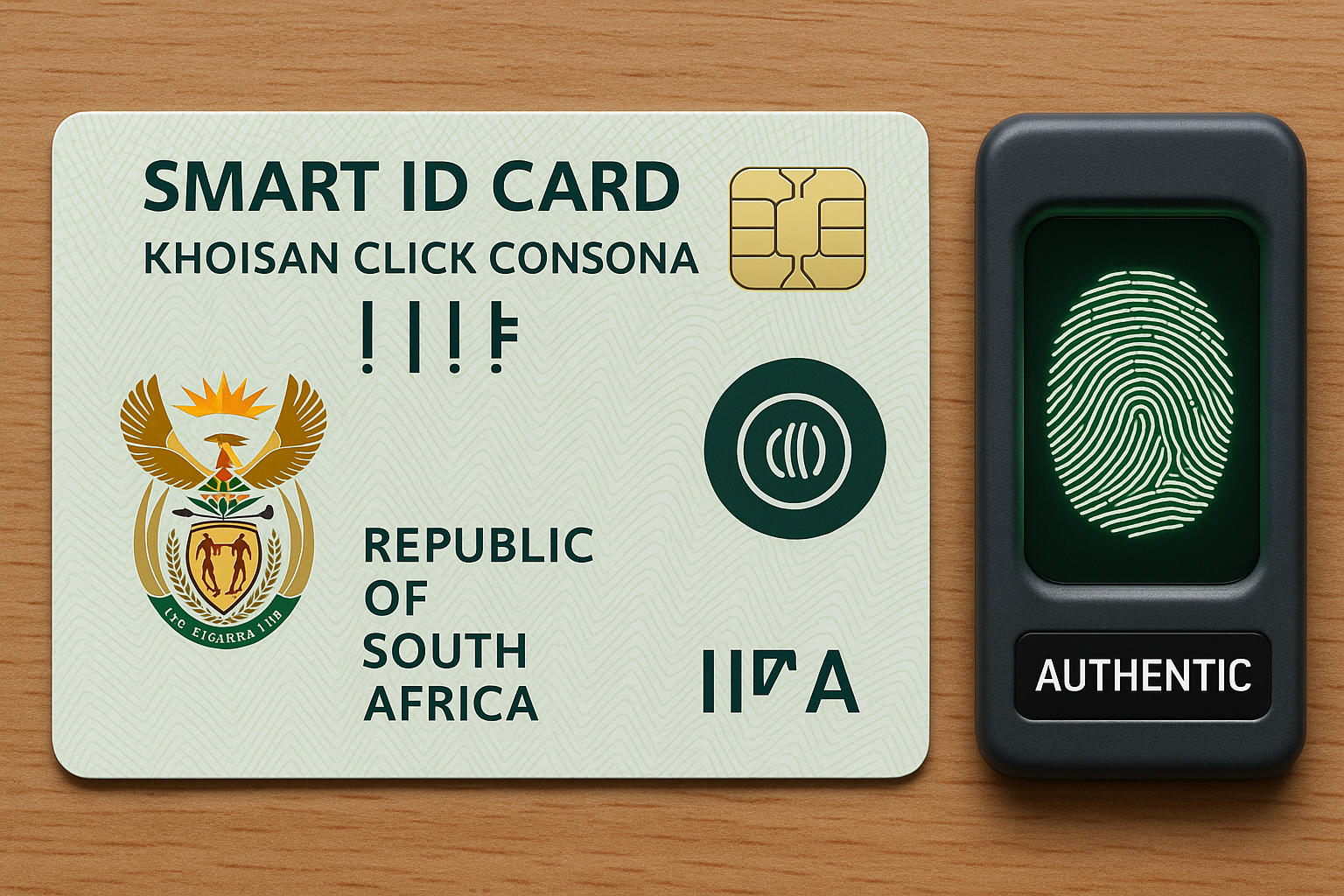
South Africa's Home Affairs now prints Smart ID cards with Khoi-San click consonants, ending decades of name truncation for First Peoples.
South Africa now lets people put Khoi-San click sounds on IDs! This big change happened because a student named !Khūboab Lawrence fought for 18 years to get his full name, with all the clicks, on his ID card. They even had a special tech event to update old computer systems. Now, everyone can have their true names on their documents. It's a huge step for showing respect to old languages and cultures.
How did South Africa begin to officially recognize Khoi-San click consonants on identity documents?
South Africa began officially recognizing Khoi-San click consonants on identity documents after a student, !Khūboab Oedasoua Lawrence, received a Smart-ID with his full name, including the “!” and “ᵑǀ” clicks. This change was the result of 18 years of advocacy and a dedicated hackathon to update the state's mainframe and printing systems.
Get Cape Town news in your inbox
Stay updated with the latest stories from the Mother City.
Section 1 – The Three-Second Halt That Changed an Alphabet
At 09:47 on a gust-blown Tuesday, the laminate drum inside Stellenbosch Civic Centre froze for the length of a heartbeat. When it started again, a first-year student lifted a still-warm Smart-ID and watched the security foil ignite into tiny rainbows. For the first time since 1994, a Home Affairs card carried the alveolar pop “ǃ” and the nasal click “ᵑǀ” in official raised lettering. !Khūboab Oedasoua Lawrence slipped the card into his wallet, leaving behind the mutilated surrogate “Khoab” that had stalked him through report cards, driver’s-licence forms and university login screens. In that flicker of plastic, the state’s mainframe crossed from the colonial Latin-1 desert into the world’s oldest phonetic oasis.
The silence inside the civic hall was louder than applause. Elderly attendees from Calvinia farms leant forward, reading the name aloud and letting the consonants ricochet off the marble walls. A 14-year-old girl filmed the scene on her phone, captioned it “My tongue fits in the Union database,” and sent it viral before lunchtime. Nobody had promised fireworks, yet everyone sensa shift as tangible as the first post-office stamp in 1853 or the inaugural democratic ballot in 1994. A bureaucratic gadget had finally agreed to chew on a Khoi-San click without gagging.
News desks scrambled for superlatives, but the moment resisted grand headlines. It was small, almost banal: a printer paused, then obeyed. Yet every journalist in the room knew the country had stepped over an invisible line where technology either protects heritage or erases it. The green card now burning fingerprints into !Khūboab’s thumb was the passport back to phonetic selfhood, and it had arrived 29 years after political freedom.
Section 2 – Eighteen Years of Misspelled Existence
!Khūboab’s biography could be told as a string of character-encoding failures. Inside a Calvinia clinic in 2004, the attending nurse typed the birth notice on a 1980s DOS terminal; the keyboard had no pipe-exclamation combination, so she saved the entry as “Khoab Lawrence,” hit print, and shrugged. From that instant, the boy’s legal shadow was lighter by two phonemes. Primary-school rosters called him “Ko-abb,” the traffic-licence server trimmed him to “KHBOAB,” and a job-portal algorithm once flagged the truncated string as probable spam. The family archive bulged with rejection slips blaming “legacy code pages,” “ICAO incompatibility,” or simply “INVALID GLYPH.” Each letter was a paper cut in the larger wound of invisibility.
High-school graduation almost turned comical. The principal rehearsed the surname for days, yet when the big screen flashed “Khoab,” relatives groaned while teachers clapped politely. !Khūboab walked across the stage feeling split in two: the mouth that spoke clicks at home and the certificate that denied they ever existed. His grandmother whispered that ancestors would still recognise him, but he noticed she folded the programme so the misspelling disappeared. Linguistic exile, he learnt, is hereditary.
University registration brought fresh humiliation. The online portal accepted only 26 Latin letters; the help-desk adviser suggested “maybe use your first name plus initials.” Instead, !Khūboab wrote to every dean, posted screenshots, started a Change.org petition and, crucially, joined a WhatsApp group that funnelled complaints straight to the newly appointed Minister of Home Affairs. Eighteen years of erasure finally collided with a political inbox that replied in minutes, not months.
Section 3 – How a 1972 Mainframe Learnt New Tricks
South Africa’s population engine is a COBOL giant encased in Java scarves. Written when punch-cards still ruled, it inherited IBM’s code page 437, a char-set happier with box-drawing characters than with dental clicks. Unicode arrived only at the passport veneer, leaving the core register shackled to Latin-1. Adding a single glyph meant rewriting airline scanning tables, police fingerprint links, visa-reciprocity spreadsheets and even the chevron guilloche on security paper. Engineers chose the cheaper fix: discard exotic symbols, compress the applicant.
Enter acting-CIO Nontobeko Makhanya. Within 72 hours of the minister’s request, she convened a virtual hackathon nicknamed the “ǃKhara-thon.” Home Affairs coders, Bytes Technology integrators and University of the Western Cape linguists formed squads that attacked three choke points: mainframe collation, printer OCR templates and card-layout firmware. They built a micro-service wrapper that converts UTF-8 queries into COBOL-safe transliterations at runtime, and they licensed DinaSans-Khoi, a font forged by a Namibian foundry that had already solved click kerning for road signs. The patch weighed 847 lines of code plus a 4 MB font; regression tests swallowed one frantic weekend. By day 26, OR Tambo’s gates swallowed a test card without a hiccup. The printer that once choked now clicked - literally - into gear.
Section 4 – From One Green Card to National Policy Cascade
Leon Schreiber, minister and former bureaucratic-failure scholar, knew a lone triumph could ossify into tokenism. He tabled a 27-slide deck, “Click-Consonant Compliance,” before the digital-governance cluster. Price tag: R 78 million; savings: immeasurable litigation and a reputational dividend for inclusive tourism. Cabinet approved three binding clauses:
- All future IDs, passports, birth, marriage and death certificates must swallow the full Latin Extended-F plus the African reference alphabet.
- Citizens may swap old, truncated documents free of charge; Home Affairs must clear the backlog within five years.
- Mobile units will spend 24 months roaming remote villages, recording elderly speakers in sound-proof booths, ensuring no one dies with an Anglicised ghost for a name.
Parallel departments rushed to stay relevant. Basic Education announced click-key layouts for 500 Raspberry-Pi labs in the Northern Cape; the Land Bank offered lower interest for farms whose title deeds carry geo-names in original orthography; even the national mint hinted at commemorative coinage bearing a ǃ symbol. A technical tweak detonated a policy avalanche.
Internationally, South Africa’s ICAO delegation tabled Working Paper 46, urging machine-readable zones to accept clicks via Latin Extended-F. Kenya and Namibia seconded it; Botswana urged caution. If adopted, every border gate on earth would surrender the right to mangle a Nama surname. The laminate roller in Pretoria keeps spinning, but its rhythmic click now echoes in Montreal corridors where the next standard is being drafted.
What prompted South Africa to officially recognize Khoi-San click consonants on identity documents?
South Africa officially recognized Khoi-San click consonants on identity documents due to the persistent 18-year advocacy of a student named !Khūboab Oedasoua Lawrence. His struggle to have his full name, including the “!” and “ᵑǀ” clicks, accurately represented on his ID card highlighted the systemic issues and ultimately led to this significant change.
How did !Khūboab Lawrence's personal experience illustrate the problem with previous identity document systems?
!Khūboab Lawrence's life was a series of

Emma Botha is a Cape Town-based journalist who chronicles the city’s shifting social-justice landscape for the Mail & Guardian, tracing stories from Parliament floor to Khayelitsha kitchen tables. Born and raised on the slopes of Devil’s Peak, she still hikes Lion’s Head before deadline days to remind herself why the mountain and the Mother City will always be her compass.
View all articles →