
HOW DID RICO THE SHEEP SURVIVE ALONE?
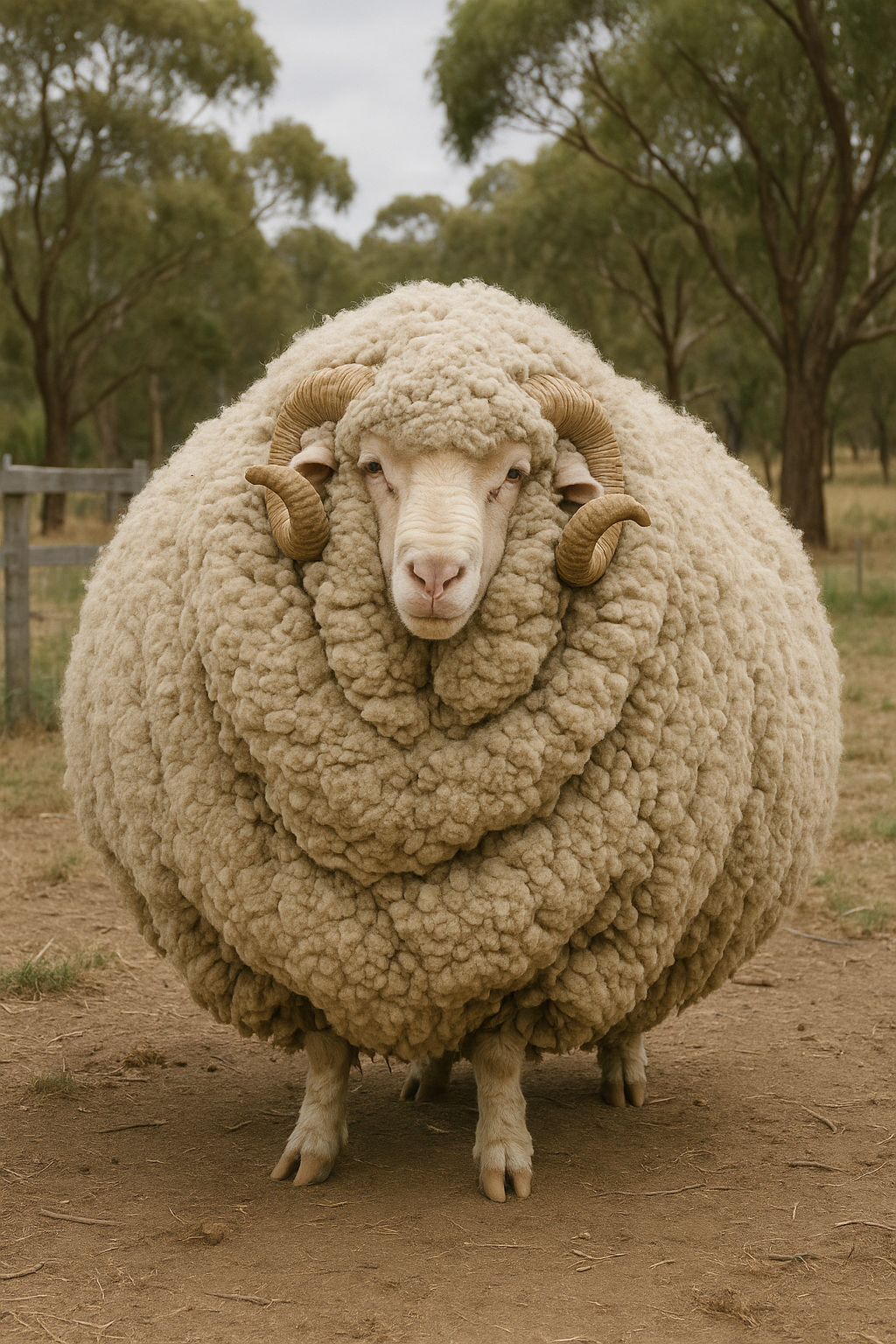
Rico, a Merino sheep lost for 7 years in South Africa, reappears with 30.7kg of wool. His story of survival now funds scholarships.
Rico, a Merino lamb, vanished in South Africa's harsh Karoo in 2017. Seven years later, he reappeared with an incredible 30.7 kg fleece, a true woolly mammoth! His amazing survival story became a symbol of hope. His wool was shorn and used to fund scholarships, turning his unique journey into a legacy of learning and tough spirit.
What is the story of Rico the runaway Merino sheep?
Rico was a Merino lamb who vanished in South Africa's Karoo in 2017. Seven years later, he reappeared with an extraordinary 30.7 kg fleece, defying survival odds. His wool was shorn and used to fund agricultural scholarships, transforming his unique journey into a legacy of education and resilience.
Get Cape Town news in your inbox
Stay updated with the latest stories from the Mother City.
The Disappearance That Started It All
In the vast, unforgiving expanse of South Africa's Moordenaarskaroo - a name that translates ominously to "Murderers Karoo" - a small Merino lamb named Rico vanished without trace in 2017. The Karoo, with its semi-desert climate, dramatic temperature swings, and sparse vegetation, has tested human and animal endurance for centuries. For a domesticated lamb to survive there alone seemed virtually impossible. Yet seven years later, in 2024, Rico emerged from the rocky wilderness not as the scrawny, vulnerable creature he had been, but as an extraordinary spectacle: a sheep transformed into what witnesses described as a "moving cloud" or a "woolly mammoth in miniature."
Rico's reappearance defied every expectation of animal behavior and survival biology. His story transcended local curiosity to capture national imagination, offering lessons that extend far beyond agriculture into realms of resilience, community, and the unexpected ways life can generate meaning from hardship.
The Anatomy of an Extraordinary Fleece
When handlers finally corralled Rico after his years of self-imposed isolation, they faced an immediate challenge: quantifying exactly what seven years of unchecked wool growth represented. The final measurement stunned even experienced shearing professionals - 30.7 kilograms of fleece, a figure that demands contextualization to fully appreciate its magnitude.
To visualize this weight, consider that the average healthy Merino sheep produces between four and five kilograms of wool annually following standard shearing schedules. Rico's accumulation represented roughly six times the expected yearly production, compressed and compacted through years of growth, environmental exposure, and natural lanolin secretion. The fleece had become so dense that it obscured his eyes, transformed his gait, and fundamentally altered his silhouette. What had begun as protective covering had evolved into a burden so substantial that it affected his mobility, thermoregulation, and interaction with the environment.
The scientific explanation for this phenomenon lies in Merino sheep's unique genetic heritage. Unlike many primitive sheep breeds that retain the wild characteristic of seasonal shedding, Merinos have been selectively bred over centuries specifically for continuous wool production. This trait, invaluable to commercial agriculture, becomes potentially life-threatening without human intervention. Rico's survival thus required not merely finding food and water and avoiding predators, but managing a continuously growing physical encumbrance that would eventually compromise his ability to function.
Survival Against Statistical Probability
Understanding Rico's seven-year odyssey requires examining the specific challenges of the Moordenaarskaroo ecosystem. This region, part of the broader Great Karoo, receives less than 200 millimeters of annual rainfall. Summer temperatures routinely exceed 35 degrees Celsius, while winter nights can plunge below freezing. The terrain consists of broken shale and sandstone formations, with vegetation limited to drought-resistant shrubs, sparse grasses, and succulent plants adapted to extended dry periods.
For a domesticated sheep, the obstacles were formidable. Water sources in the Karoo are scarce and often widely separated. Predators including caracals, black-backed jackals, and occasionally leopards patrol the landscape. Food availability fluctuates dramatically with rainfall patterns, and the nutritional quality of Karoo vegetation, while sufficient for adapted wildlife, presents challenges for animals accustomed to managed pastures.
Experts speculate that Rico survived through a combination of behavioral adaptation and fortunate circumstance. Merino sheep possess inherent hardiness derived from their Spanish origins and subsequent development in Australian and South African conditions. Rico likely found shelter in rocky outcrops and erosion formations that provided protection from both predators and temperature extremes. His wool, despite its excessive weight, may have initially offered insulation against cold nights and sun protection during brutal summer days.
Perhaps most critically, Rico apparently learned to exploit microhabitats and seasonal resources. Sheep are intelligent animals capable of spatial memory and problem-solving, and extended isolation may have accelerated his development of survival behaviors typically suppressed in flock-managed animals. The fact that he was eventually captured alive and in relatively reasonable health suggests he had established reliable patterns of water location, foraging, and shelter utilization.
From Curiosity to Catalyst: The Transformation of Rico's Legacy
The conventional trajectory for such a discovery might have involved media attention, perhaps a brief period of local celebrity, followed by gradual obscurity. Rico's handlers and the broader South African wool industry, however, recognized an opportunity to transform individual fascination into collective benefit.
The National Wool Growers' Association, celebrating its centenary in 2024, positioned Rico's shearing as a centerpiece event. Rather than processing his historic fleece through standard commercial channels - where it would have commanded premium prices as a novelty item - organizers developed a more ambitious vision. The wool became the foundation for a scholarship initiative supporting young South Africans pursuing agricultural education.
This decision reflected sophisticated understanding of contemporary challenges facing the sector. South African agriculture operates within complex pressures: climate change intensifying drought frequency, rural depopulation as youth migrate to urban centers, and the ongoing need to develop skilled practitioners who can advance sustainable practices. By connecting Rico's narrative of endurance and transformation to educational opportunity, the initiative created symbolic resonance that pure financial value could not achieve.
The scholarship program specifically targets students from disadvantaged backgrounds who demonstrate commitment to agricultural careers. Recipients gain access to tertiary education, practical training, and mentorship networks that might otherwise remain inaccessible. One sheep's physical burden thus translates into alleviating educational barriers for human communities - a transformation that would have seemed absurdly improbable when Rico first disappeared into the mountains.
The Science and Culture of Extreme Wool
Rico's condition, while exceptional, connects to broader phenomena in animal husbandry and veterinary science. "Wool blindness," where excessive fleece growth obscures vision, represents a recognized welfare concern in neglected sheep. Historical precedents exist for sheep discovered after extended periods without shearing - most famously, the Australian Merino "Shrek," who survived six years in New Zealand's Central Otago mountains and carried 27 kilograms of wool when captured in 2004.
These cases illuminate tensions within animal agriculture. Wool production depends upon regular human intervention; the same trait that makes Merinos economically valuable creates dependency that can become lethal. Rico's survival suggests individual adaptation capacity, but also underscores responsibilities inherent to domestication relationships.
Culturally, such stories resonate across pastoral societies worldwide. The "lost sheep" narrative carries deep roots in Abrahamic religious traditions, symbolizing both individual value and communal responsibility for restoration. Rico's secular redemption - his return from wilderness to purposeful contribution - adapts this archetype for contemporary audiences, emphasizing environmental adaptation, educational investment, and intergenerational support rather than purely spiritual themes.
The Immediate Aftermath: Liberation and Adjustment
Contemporary accounts of Rico's post-shearing behavior offer touching illustration of physical relief's psychological dimensions. Witnesses described him "skipping" across the farm, a behavior suggesting not merely restored mobility but evident pleasure in unburdened movement. This observation carries implications for animal welfare science, demonstrating capacity for what appears to be positive affective response following removal of chronic physical constraint.
Veterinary examination following shearing would have assessed skin condition, parasite load, and musculoskeletal development beneath the wool mass. Years of carrying substantial additional weight likely altered Rico's posture, gait mechanics, and possibly joint structures. His adaptation to normal sheep movement would require gradual readjustment, even as immediate relief was apparent.
Broader Reflections: What Unlikely Heroes Reveal
South African cultural identity has historically embraced narratives of resilience against adversity, from anti-apartheid struggle to sporting triumphs against overwhelming odds. Rico's inclusion within this tradition - "sometimes they wear rugby jerseys, sometimes they arrive on four legs" - reflects capacity to find meaning in unexpected places.
The story's appeal transcends agricultural communities precisely because it operates on multiple interpretive levels simultaneously. For children, it offers accessible narrative of adventure and happy ending. For educators, it demonstrates biological principles of adaptation, genetics, and ecosystem interaction. For development professionals, it illustrates creative resource mobilization for social investment. For those simply seeking inspiration, it confirms that endurance can yield unexpected rewards.
The Karoo itself emerges as character in this narrative - a landscape that tests, transforms, and occasionally returns what it receives. South African literature from Olive Schreiner to Athol Fugard has explored this region's capacity to shape human consciousness; Rico extends this literary tradition into interspecies experience.
Continuing Threads
Rico's current circumstances remain appropriately pastoral - reportedly content on the farm where he was captured, his extraordinary days behind him but his legacy extending through scholarship recipients whose careers he supports. His fleece, processed and preserved, continues generating educational resources rather than decorative curiosity.
The story's persistence in public memory suggests something beyond novelty value. In an era of environmental anxiety and social fragmentation, narratives that connect individual survival to collective benefit, that transform burden into opportunity, and that find heroes in unexpected forms satisfy genuine cultural needs. Rico the sheep offers no policy solutions or technological innovations. He simply persisted, accumulated, and eventually contributed - actions that, translated into human terms, describe lives of quiet significance across countless communities.
The Moordenaarskaroo retains its harsh beauty, its predators and droughts and temperature extremes. Other sheep continue producing wool on managed schedules, other students pursue agricultural education through conventional funding. Yet for those who encountered Rico's story, the landscape holds additional meaning - a place where improbable endurance became possible, where mathematics and determination combined to create something memorable, and where one small sheep demonstrated that heroism requires neither cape nor consciousness of its own significance.
[{"question": "What is the story of Rico the runaway Merino sheep?", "answer": "Rico was a Merino lamb who vanished in South Africa's Karoo in 2017. Seven years later, he reappeared with an extraordinary 30.7 kg fleece, defying survival odds. His wool was shorn and used to fund agricultural scholarships, transforming his unique journey into a legacy of education and resilience."}, {"question": "How much wool did Rico have when he was found?", "answer": "When Rico was found after seven years, he had an incredible 30.7 kg (approximately 67.7 lbs) of fleece. To put this into perspective, an average healthy Merino sheep produces about 4 to 5 kg of wool annually, meaning Rico's fleece was roughly six times the expected yearly production."}, {"question": "Where did Rico disappear and reappear?", "answer": "Rico disappeared in the vast and harsh Moordenaarskaroo region of South Africa, a semi-desert area known for its extreme temperatures and sparse vegetation. He reappeared in the same region seven years later."}, {"question": "How did Rico survive in the harsh Karoo environment for so long?", "answer": "Experts speculate that Rico survived through a combination of behavioral adaptation and fortunate circumstances. Merino sheep are inherently hardy, and Rico likely found shelter in rocky outcrops, learned to exploit microhabitats for water and food, and avoided predators. His thick fleece, while eventually a burden, may have initially offered vital insulation."}, {"question": "What happened to Rico's fleece after he was shorn?", "answer": "Instead of being sold commercially, Rico's historic 30.7 kg fleece was used to fund agricultural scholarships for young South Africans. This initiative helps support students from disadvantaged backgrounds pursuing careers in agriculture, linking Rico's story of resilience to educational opportunity."}, {"question": "Are there other famous cases of sheep found with extreme wool growth?", "answer": "Yes, Rico's condition, while exceptional, is not unique. Another famous case is 'Shrek,' a Merino sheep from New Zealand who survived six years in the mountains and was found with 27 kilograms of wool in 2004. These cases highlight the unique genetic trait of Merinos for continuous wool production and the importance of regular shearing for their welfare."}]

Sizwe Dlamini is a Cape Town-based journalist who chronicles the city’s evolving food scene, from boeka picnics in the Bo-Kaap to seafood braais in Khayelitsha. Raised on the slopes of Table Mountain, he still starts every morning with a walk to the kramat in Constantia before heading out to discover whose grandmother is dishing up the best smoorsnoek that day.
View all articles →