
How does this Starlink expansion contrast with South Africa?
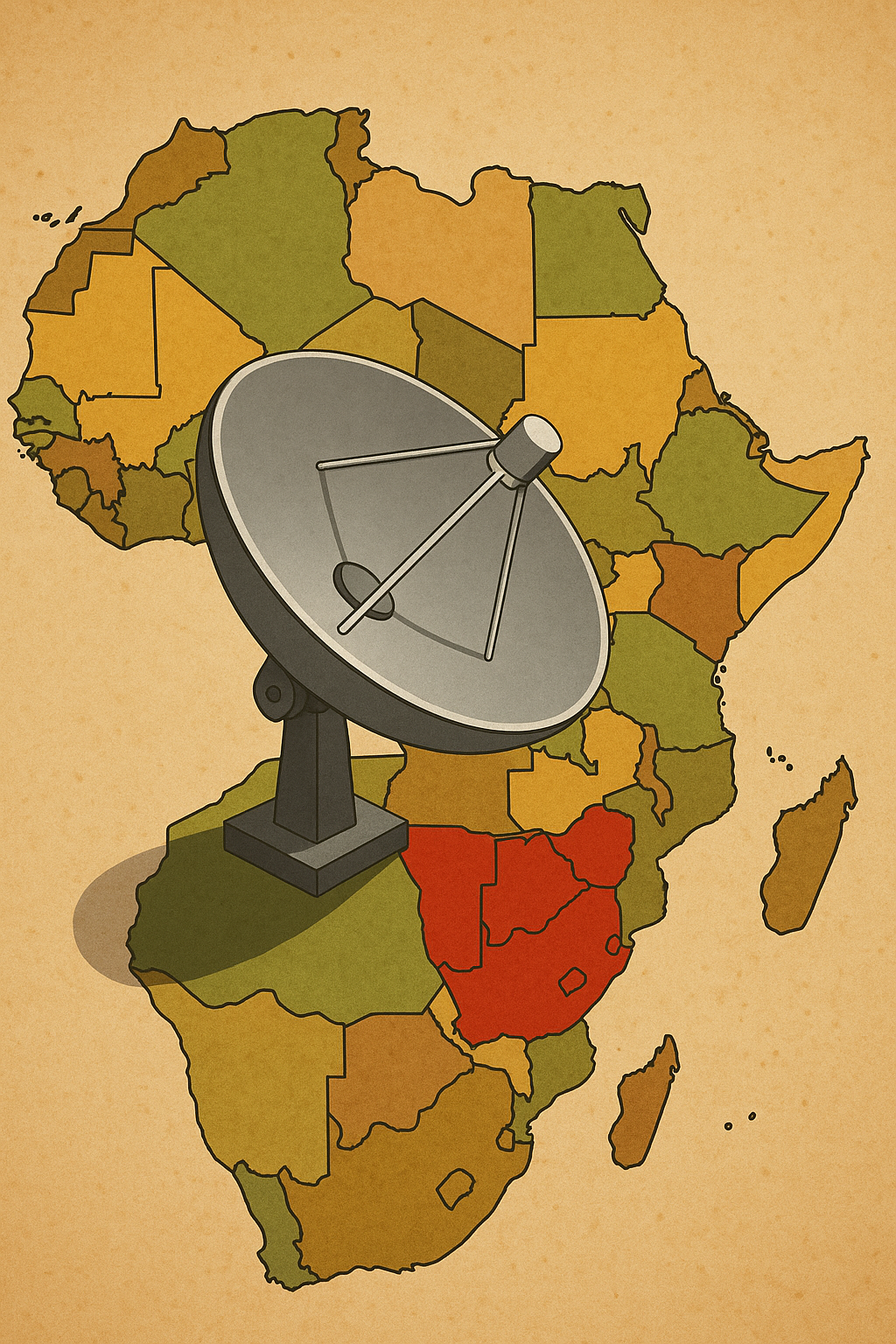
Uganda becomes Starlink's East African hub while Musk faces setbacks in Southern Africa due to ownership disputes.
Uganda has made a big deal with Starlink, a company owned by Elon Musk, to bring super-fast internet to their country. But it's not a free ride for Starlink; they have to follow strict rules like sharing customer information and making sure internet traffic stays within Uganda. This move is like a chess game on a global scale, with other African countries watching closely, some accepting Starlink, and others like South Africa saying 'no' because of different rules. It's an exciting time, but also a bit scary, as everyone wonders if this new internet is a good thing for Africa or if there are hidden problems.
What is Starlink's operating agreement in Uganda?
Starlink's operating agreement in Uganda grants SpaceX rights to offer internet services, but with strict conditions. These include mirroring customer data, routing domestic traffic through a Ugandan landing point for lawful-intercept orders, submitting cybersecurity audits, and proving annual local investment.
Get Cape Town news in your inbox
Stay updated with the latest stories from the Mother City.
Entebbe Dawn: The Moment Uganda Rewired the Continent
Just after sunrise on a Friday in Entebbe, Lake Victoria’s breeze carried the faint smell of grilled tilapia and the fizz of a continent-wide network being born. On the granite steps of State House, President Yoweri Museveni - wide-brimmed hat casting a dramatic shadow - stood between Uganda Communications Commission chairperson Irene Kaggwa Sewankambo and Starlink’s Africa market-access chief, Ryan Goodnight. With a flourish of fountain pens, they converted eighteen months of hushed Dubai meetings, lockdown-era Zoom marathons, and a frantic thirty-six-hour legal sprint in a hotel nicknamed “Bird’s Nest” into one decisive operating licence.
That single sheet of paper hands SpaceX the right to blanket Uganda in Ku- and Ka-band beams, sell consumer dishes, lease enterprise backhaul, and erect a gateway earth-station complex on the Lake Victoria shoreline. In return, Starlink must:
• Mirror every customer identity record inside Uganda’s 2023 Data Protection vault.
• Tunnel all domestic traffic through a Ugandan landing point so lawful-intercept orders can be executed within sixty minutes.
• Submit quarterly penetration-test audits to the Joint Cybersecurity Taskforce chaired by the Chieftaincy of Military Intelligence.
• Prove every year that at least twenty per cent of its Ugandan venture is either locally owned or replaced dollar-for-dollar with STEM scholarships, rural-clinic connectivity programmes, or joint satellite R&D projects.
Museveni framed the bargain as a triple victory - security, revenue certainty, and transparent accountability - yet it also ignites a broader continental argument: are foreign mega-constellations harmless infrastructure, or stealthy Trojan horses for espionage and capital flight?
Southern Crossroads: Closed Doors, Back Alleys
Less than forty-eight hours later, two thousand kilometres to the south, South Africa’s regulator ICASA issued a four-line press release slamming the door on any operator that cannot satisfy the thirty per cent black-economic-empowerment rule. The rebuke landed one day after Communications Minister Solly Malatsi’s last-ditch attempt to secure an Equity Equivalent Investment Programme waiver for Starlink. The EEIP mechanism - once used to coax pharmaceutical giants into spending R1.7 billion on local science bursaries instead of equity handovers - split the cabinet. Mining-backed ministers applauded cash-for-equity swaps; liberation veterans condemned them as “PayPal-style digital colonialism.” When the waiver disappeared from the docket, a presidential spokesperson told reporters, “Mr. Musk must move on,” a quote that rocketed across X - the very platform Musk owns.
Namibia followed suit within the week. Director-General Emilia Nghikembua at the Communications Regulatory Authority of Namibia issued a brisk five-page rejection, reiterating that “local ownership is non-negotiable.” Starlink had offered an eighteen per cent slice to a trio of universities and seven per cent to a women-owned ICT cooperative, still five points shy of the statutory thirty. Analysts now predict Namibia’s offshore diamond fleet will keep paying up to US$5,000 per gigabyte on legacy VSAT while neighbours shift to low-latency satellite fibre.
Then the script flipped. Land-locked Lesotho, surrounded on all sides by South Africa, quietly invoked a dormant 2003 clause originally designed for a Kuwaiti investor, awarding Starlink a decade-long licence with zero equity demands. Towering basalt cliffs make terrestrial fibre ruinously expensive; Starlink’s flat antennas pop onto stone rondavel roofs like solar tiles. Eight weeks in, seventeen thousand dishes had shipped, including a batch for the Lesotho Defence Force, which became the first African military to encrypt battlefield traffic over Starlink. South Africa’s regulator reacted by ordering customs officers at the Maseru Bridge to x-ray every container for contraband dishes.
Lake Victoria’s Gateway: Speed, Cost, and Rural Conquest
Ugandans will tap a sky-borne network orbiting 540 kilometres above Earth. Shell four of the second-generation satellites beams median speeds of 120 Mbps down and 40-ms round-trip latency to Kampala, Gulu, and Fort Portal. In a five-week pilot, engineers strapped a solar-powered dish to a Nile ferry at Pakwach; an HD video that took fourteen minutes over 3G uploaded in twenty-two seconds via Starlink.
Price is the sticking point. Hardware lists at US$499 plus US$60 freight, and the monthly plan drains US$43 - steep in a country where annual GDP per capita is roughly US$850. Museveni’s cabinet is dangling a Universal Service Fund subsidy targeting 200 000 rural households, yet the finance ministry - short on cash - has not signed off.
To protect the fiscus, every imported dish must sport a tamper-proof QR sticker that binds the terminal’s IMEI to the buyer’s passport or national ID. Retailers reconcile sales in real time with Uganda Revenue Authority’s e-receipt portal; any activated unit lacking a matching tax record is blacklisted like a stolen SIM card. The World Bank labels the mechanism “customs integration on steroids.” Civil-society groups retort that the same registry could geofence opposition strongholds, remembering the 2021 internet shutdown during anti-government protests.
Uganda’s revenue playbook also serves as a security linchpin. Museveni’s administration already marries biometric face and fingerprint templates to SIM registration. Starlink now adds a mandatory three-step on-boarding ritual: NFC scan of the national ID, liveness selfie matched against the national biometric vault, and one-time-password verification through a Ugandan mobile number. Each active terminal must ping its GPS coordinates to the regulator’s GeoHub every fifteen minutes. Activists call it “dual-SIM lock-in.” Fin-tech lenders claim the same data set can generate the credit scores Uganda’s unbanked majority sorely need.
Astronomy at 1.420 GHz, the Kibo Cube, and the Regional Domino
East Africa shelters some of the world’s most radio-quiet astronomy real estate. To shield South Africa’s MeerKAT and Kenya’s proposed Longonot Array, Uganda’s licence imposes “radio silence hours” from 1 a.m. to 4 a.m., forcing Starlink to notch-filter within 100 MHz of the hydrogen line. NASA’s Tracking and Data Relay Satellites adopt similar quiet windows over the Indian Ocean, but compliance is voluntary; Uganda’s edict is Africa’s first enforceable clause.
Meanwhile, Uganda’s own nano-satellite dream is on the launchpad. PearlAfricaSat-2, a three-unit cubesat, rides a SpaceX Falcon 9 rideshare in January 2027. Ironically, the Starlink constellation now blanketing the country will also provide free ground-station links for the mission - serving both as enabler and potential source of radio interference.
Across borders, Rwanda, Kenya, and Tanzania are dissecting Uganda’s template. Nairobi’s Communications Authority weighs cloning the identity-tracker rule against Benin’s lighter 2025 roaming model. Nigeria’s minister, Dr. Bosun Tijani, dusted off dormant regulations capping foreign satellite spectrum leases at forty per cent of total bandwidth, signalling Abuja’s intent not to cede the West-African gateway role without a fight. Eutelsat-OneWeb, Amazon’s Project Kuiper, and China’s nascent Guowang constellation are lining up, aiming at 1.4 billion Africans still slipping through the connectivity cracks.
At 21:45 East Africa Time each night, shell-four satellites glide overhead in a luminous train. Kampala street vendors call it “musana mukyamu,” the iron rain. Children wonder whether the streaking lights can read their homework; elders swap Sputnik memories from 1957. Under that silver arc, Uganda has chosen not to watch history unfold but to pitch a tent inside it - staking a claim to who gets knowledge, how fast, and on whose terms.
[{"question": "What are the key conditions Starlink must meet to operate in Uganda?", "answer": "Starlink's operating agreement in Uganda includes several strict conditions. They must mirror all customer identity records within Uganda's data protection vault, route all domestic internet traffic through a Ugandan landing point for lawful intercept orders, submit quarterly cybersecurity audit reports to the Joint Cybersecurity Taskforce, and annually prove that at least 20% of their Ugandan venture is locally owned or replaced with equivalent investments in STEM scholarships, rural connectivity programs, or joint satellite R&D projects."},
{"question": "Why did South Africa and Namibia reject Starlink's operating proposals?", "answer": "South Africa rejected Starlink due to its inability to meet the country's Black Economic Empowerment (BEE) rules, specifically the 30% local ownership requirement. Namibia followed suit, reiterating that local ownership was non-negotiable, even after Starlink offered an 18% stake to universities and 7% to a women-owned ICT cooperative, which still fell short of their 30% statutory requirement."},
{"question": "How does Lesotho's approach to Starlink differ from South Africa's and Namibia's?", "answer": "In contrast to South Africa and Namibia, Lesotho awarded Starlink a decade-long license with zero equity demands. This was made possible by invoking a dormant 2003 clause, likely due to the prohibitive cost of terrestrial fiber in its mountainous terrain. This move has allowed Lesotho to rapidly adopt Starlink's low-latency satellite internet."},
{"question": "What are the main benefits and challenges of Starlink for Ugandan users?", "answer": "Ugandan users can benefit from high-speed internet (median speeds of 120 Mbps down and 40-ms latency) even in remote areas where terrestrial infrastructure is lacking. However, the main challenges are the cost, with hardware priced at US$499 plus US$60 freight, and a monthly plan of US$43, which is substantial in a country with an annual GDP per capita of approximately US$850. There are also concerns about privacy and potential government surveillance due to strict data and location tracking requirements."},
{"question": "What security and surveillance measures are in place for Starlink users in Uganda?", "answer": "Uganda has implemented stringent security and surveillance measures. Every imported Starlink dish must have a tamper-proof QR sticker linking its IMEI to the buyer's passport or national ID. Retailers must reconcile sales in real-time with the Uganda Revenue Authority. Additionally, customer onboarding requires an NFC scan of the national ID, a liveness selfie matched against the national biometric vault, and OTP verification via a Ugandan mobile number. Each active terminal must also ping its GPS coordinates to the regulator's GeoHub every fifteen minutes."},
{"question": "How is Uganda's Starlink agreement impacting other African nations and global satellite providers?", "answer": "Uganda's agreement is serving as a template for other African nations. Rwanda, Kenya, and Tanzania are examining its terms, with some considering similar identity-tracker rules. Nigeria is re-evaluating its regulations, capping foreign satellite spectrum leases to maintain control over its digital infrastructure. This dynamic environment is attracting other global satellite providers like Eutelsat-OneWeb, Amazon's Project Kuiper, and China's Guowang constellation, all vying to connect the 1.4 billion unserved Africans, turning the continent into a competitive 'satellite chessboard'."}]

Liam Fortuin is a Cape Town journalist whose reporting on the city’s evolving food culture—from township kitchens to wine-land farms—captures the flavours and stories of South Africa’s many kitchens. Raised in Bo-Kaap, he still starts Saturday mornings hunting koesisters at family stalls on Wale Street, a ritual that feeds both his palate and his notebook.
View all articles →