
HOW MUCH COULD THE FUEL PRICE DROP?
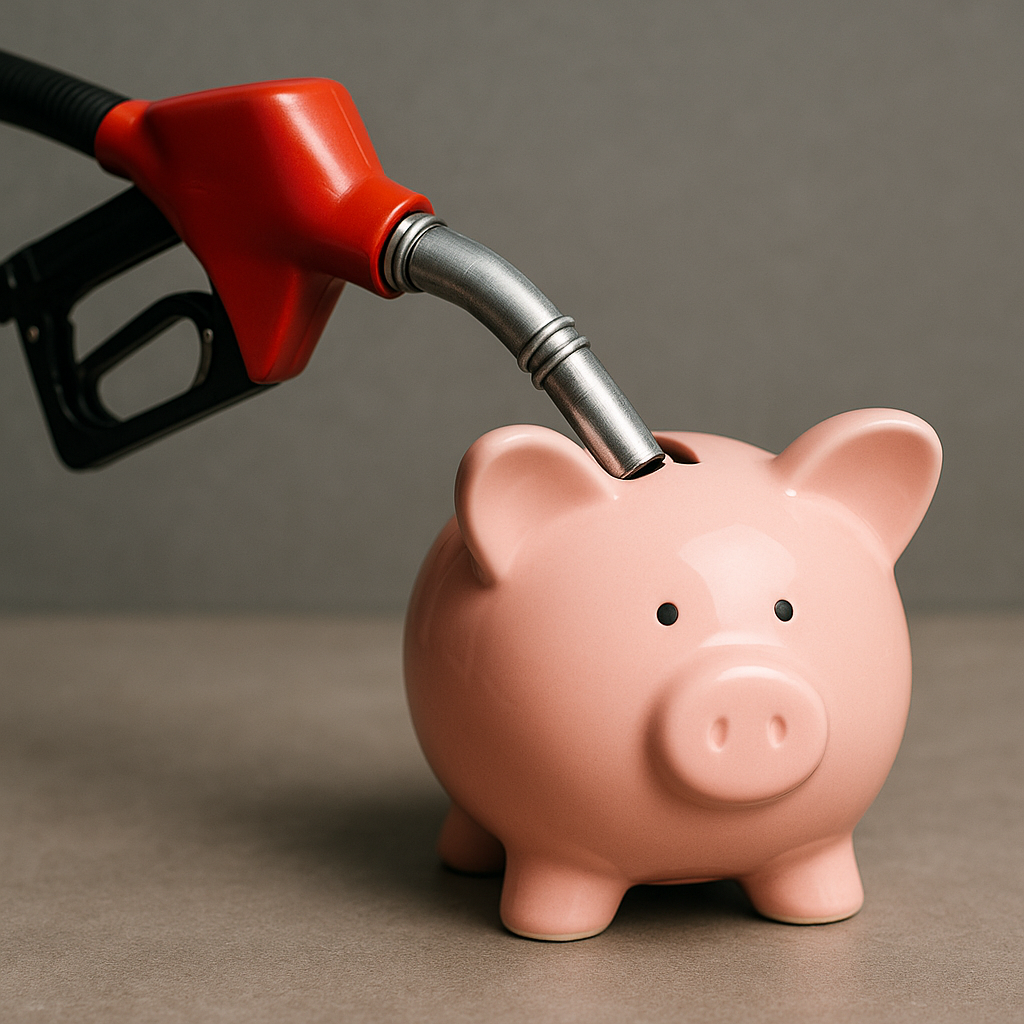
Explore how SA's fuel prices are calculated, their ripple effect on households, transport, and the economy, and future outlook.
South Africa's petrol price is like a puzzle, changing every month based on global fuel costs, the rand's value, a special 'slate levy', and government taxes. Right now, it looks like prices might drop by about R1.20 per litre in July, which means a little extra cash for families and taxi owners. But watch out! Changes in oil prices or the rand could quickly shrink that saving. This small change affects everything from your grocery bill to how many electric cars people buy.
How is the petrol price in South Africa calculated?
South Africa's petrol price is calculated by combining the dollar cost of refined fuel, the rand/dollar exchange rate, a slate levy for past adjustments, and government surcharges (General Fuel Levy, Road Accident Fund levy, and Carbon Tax). This formula is reset monthly by the Department of Mineral Resources and Energy.
Get Cape Town news in your inbox
Stay updated with the latest stories from the Mother City.
1. Inside the July Reset - the Maths Behind the Bowser Bill
Every first Wednesday the Department of Mineral Resources and Energy (DMRE) reloads the national fuel formula. Think of it as a four-ingredient cocktail shaken, not stirred: the dollar-denominated cost of refined petrol or diesel, the rand’s mood against the greenback, a “slate levy” that smooths last month’s bookkeeping errors, and the immutable trio of government surcharges - General Fuel Levy, Road Accident Fund levy and the fresh Carbon Tax on liquid fuels.
As of 25 June 2024, the Central Energy Fund’s 20-day moving average shows motorists have been over-paying by roughly R2.70 a litre for 93/95 octane. Over-recovery is polite speak for “you were charged too much”, so the DMRE will hand back the difference next month. Finance Minister Godongwana, however, pre-announced a 15-cent bump in the General Fuel Levy for July. Layer that tax back in and the net relief narrows to about 120–130 cents a litre - *provided * Brent crude stays near US $90 a barrel and the rand does not weaken past R19.50. Nothing is sealed until 2 July at 15:00 when the formal gazette drops.
A five-percent swing in global refined benchmarks, or a mere thirty-cent slide in the exchange rate, can wipe 25–30 cents off the promised cut. In short, motorists should enjoy the outlook, but keep their seatbelts fastened.
2. From 19 Cents to R24 - Half a Century at the Pump
Picture 1973: a litre of leaded petrol sets you back 19 cents. Twelve years and one sanctions shock later the tag is 71 cents. Fast-forward to 2008 and the nation crosses the psychological R7-a-litre barrier. By 2014 a fragile rand (R11.20/$) pushes inland 95 to R14.39, and in 2022 Russia’s invasion drives the same grade to a record R26.74.
Strip out inflation and the 2024 price is only about 40 % higher than the 2008 summit, yet the tax mix has quietly morphed. Levies now swallow 28 % of every litre you buy, up from 17 % two decades ago. The sticker shock feels brutal, but the erosion of purchasing power is less dramatic than the raw numbers suggest.
3. What a R1.20 Dip Actually Buys - Households, Taxis and Tax Collectors
Your Driveway, Your Wallet
The 2023 National Household Travel Survey says the typical family owns 1.08 light vehicles and covers 34 km a day. A mid-size hatch (7.5 ℓ/100 km, 50 ℓ tank) needs around 76 litres a month. A 120-cent cut saves R91.20 a month or just over R1 000 a year - enough for a third of a new set of tyres.
The Taxi That Feeds 16 Commuters
Scale the calculation to a 16-seater minibus taxi that racks up 250 km daily. Monthly diesel use jumps to roughly 1 200 litres. The same price drop hands the owner a R1 440 windfall, equal to one extra tyre every three months or a Wi-Fi router for passengers.
Treasury’s Reversed Windfall
Every 100-cent reduction in the fuel levy slices roughly R1.8 billion from national revenue. If July’s rollback sticks and August brings another 100-cent gift, the fiscus could forgo up to R3.6 billion annually - a pothole in an already strained budget.
4. The Hidden Dominoes - Food Baskets, Border Spill-overs and Mobile Freezers
Supermarket Shelves
South Africa hauls 77 % of its cargo by truck. A 2019 Bureau for Economic Research paper estimates that each rand shaved off diesel trims food inflation by 0.09 percentage points within six months. Investec’s boffins think July’s 130-cent cut could shave headline CPI by 0.12–0.15 ppts. On a R4 500 monthly grocery budget that is a real-world saving of five to seven rand - a small chocolate, but still a chocolate.
Neighbours in the Queue
South Africa is neither the cheapest nor the priciest in the region. In June 2024, a US dollar bought you a litre for US $1.05 in Namibia and US $1.09 in Botswana, while Mozambique asked US $1.73. Because Maputo and Gaborone import finished fuel through Durban, a July cut here only reaches those pumps in August. Think of it as the SADC ripple effect.
The Custard Cart
5. Tech, Tariffs and the Electric Hiccup
Apps, Cards and Loyalty Loops
NedFinHealth reports that 41 % of drivers have halved leisure kilometres since 2022. Downloads of consumption trackers such as Fuelio jumped 70 %. Retailers fight back: Woolworths waives delivery fees above R450, while Pick n Pay teams with Uber Eats to swallow fuel surcharges.
Carbon Tax Sneaks In
Since 5 June the Carbon Fuel Levy tacks an extra 1 cent onto petrol and 3 cents onto diesel. By 2028 that line item alone could pile 30 cents onto every litre, draining any oil-price reprieve. The proceeds feed EV-charging corridors and solar-powered forecourts.
The EV Pause Button
South Africa registered 1 754 new battery-electric cars in Q1 2024, already beating 2023’s full-year tally. Yet at R24 a litre the pay-back versus a petrol hatch is eleven years; drop the price to R20 and the breakeven stretches to thirteen. In other words, cheaper fuel may slam the brakes on EV adoption.
6. Locking in the Gain - A Practical Playbook
Create a “fuel windfall” pocket in your budgeting app and direct the R91 monthly saving to whichever goal hurts least: DSTV Compact, an extra loan repayment or an emergency buffer earning 9 % after tax. Fleet owners can negotiate clauses with insurers such as Santam’s pilot refund that triggers when diesel dives more than 10 % inside six months. Rural households can pool trips to the nearest pump, shrinking the shadow cost of that 38 km trek to Manganeng village.
7. Geopolitical Wildcards - OPEC, the MPC and the Rural Reality
OPEC+ ministers meet 1 July, one tick before South Africa’s price verdict. A surprise supply slash of 500 000 barrels could catapult Brent above US $100 and erase today’s over-recovery. Domestically, the Reserve Bank’s Monetary Policy Committee gathers 18 July. A hawkish repo-rate hike past 8.5 % would firm the rand and gift another 5–8 cents relief; a dovish stance could halve the expected drop.
Meanwhile, in places like Manganeng a five-litre container still travels 76 km to reach the buyer. After middlemen and bakkie fuel, the R1.20 rack reduction morphs into a R1.37 village discount - still enough to buy an extra loaf, but a reminder that distance is a silent tax of its own.
From coffee lounges sprouting on forecourts to a salted-caramel custard experiment, July’s potential 120-cent price drop is more than a number on a billboard. It is a small gear in a vast economic engine that stretches from the Mediterranean spot markets to a taxi rank in Soweto, and from the National Treasury to a 5-litre container in Limpopo. Keep the receipt; it tells a bigger story than you think.
How is the petrol price in South Africa calculated?
South Africa's petrol price is determined monthly by the Department of Mineral Resources and Energy (DMRE) based on several factors: the dollar-denominated cost of refined petrol or diesel, the rand/dollar exchange rate, a 'slate levy' (which accounts for past over- or under-recoveries), and government surcharges including the General Fuel Levy, Road Accident Fund levy, and the Carbon Tax on liquid fuels.
What is the expected petrol price change for July and what factors could influence it?
For July, motorists are anticipating a drop of approximately R1.20 to R1.30 per litre. This is primarily due to an 'over-recovery' where motorists have been paying more than the actual cost. However, this relief could be reduced by a pre-announced 15-cent bump in the General Fuel Levy by the Finance Minister. The final price is highly dependent on global Brent crude prices remaining near US $90 a barrel and the rand not weakening past R19.50 against the dollar. Significant swings in oil prices or the exchange rate could alter the final reduction.
How will a R1.20 petrol price drop impact different sectors?
For households, a R1.20 cut could save an average family owning one car about R91.20 per month, totaling over R1,000 annually. Minibus taxi owners, who consume significant fuel, could see a windfall of around R1,440 per month. Conversely, every 100-cent reduction in the fuel levy means about R1.8 billion less in national revenue for the Treasury, potentially straining the national budget. The reduction also has a ripple effect on food prices, potentially trimming headline CPI by 0.12–0.15 percentage points within six months.
How has the petrol price evolved in South Africa over the past 50 years?
Since 1973, when petrol was 19 cents a litre, prices have seen significant increases, crossing R7 in 2008 and reaching a record R26.74 in 2022. While the raw numbers seem dramatic, when adjusted for inflation, the 2024 price is about 40% higher than the 2008 peak. A notable change is the tax component, which now constitutes 28% of the price per litre, up from 17% two decades ago.
What are the broader economic and social impacts of petrol price fluctuations?
Petrol price changes have widespread effects. High prices encourage the use of consumption tracking apps and prompt retailers to offer incentives like waived delivery fees. The introduction of the Carbon Fuel Levy (1 cent for petrol, 3 cents for diesel) aims to fund EV-charging infrastructure but adds to the cost. Cheaper fuel can paradoxically slow the adoption of electric vehicles, as the breakeven period for EVs versus petrol cars lengthens. Regionally, South Africa's price changes impact neighboring countries like Namibia, Botswana, and Mozambique, which often import refined fuel through Durban.
How can individuals and businesses mitigate the impact of petrol price changes?
Individuals can create a 'fuel windfall' budget pocket to save or redirect monthly savings to other financial goals like debt repayment or emergency funds. Fleet owners can negotiate clauses with insurers, such as Santam's pilot refund for significant diesel price drops. Rural households can pool trips to the nearest pump to reduce travel costs. Furthermore, being aware of geopolitical factors like OPEC+ decisions and local monetary policy committee meetings can help anticipate future price movements.

Oliver Daniels is a Cape Town journalist who chronicles the intersection of food, migration and identity in South Africa's kitchens—from wood-fired Gugulethu braai spots to Constantia vineyards. Born and raised on the slopes of Devil’s Peak, he still starts each week with a dawn walk across Table Mountain to catch the first Atlantic light before filing copy.
View all articles →