
How registered counsellors are strengthening mental health support in South Africa
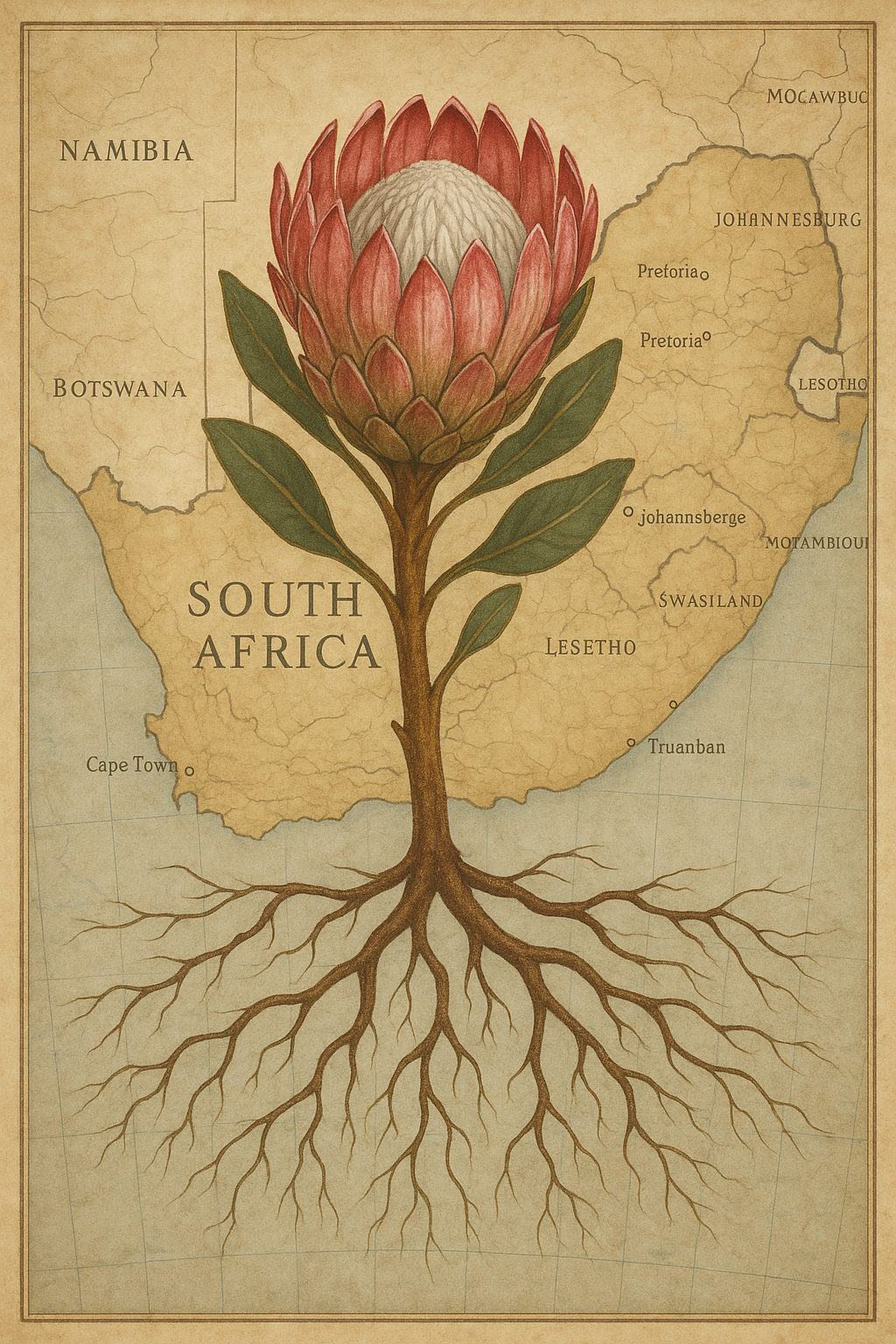
South Africa's registered counsellors are revolutionizing mental health by integrating emotional support into workplaces, schools, and communities.
South Africa's registered counsellors are like mental-health superheroes, bringing emotional support to everyday places. They help people in factories, schools, and even taxi ranks, making it easy for everyone to get help. These counsellors teach simple ways to handle stress and big feelings, proving that a little bit of care can make a huge difference in how a nation feels. They are changing lives, one quick chat at a time, showing that mental health can be found everywhere, not just in fancy clinics.
What is the role of registered counsellors in South Africa's mental health strategy?
Registered counsellors in South Africa provide accessible mental health support through screening, education, and referral, particularly in underserved communities. Operating outside traditional clinical settings, they offer brief interventions and support to address common mental health concerns, bridging the significant treatment gap in the country and empowering individuals.
Get Cape Town news in your inbox
Stay updated with the latest stories from the Mother City.
Dawn Briefings in a Feather-Dust Factory
The night shift at a Western-Cape chicken plant clocks off at 07:15, boots still clagged with down. Instead of shuffling home, forty-odd workers duck into an old storeroom now labelled “Mind-Shift – 15 min.” Thandeka Mbotho, clipboard in hand, greets them in three tongues inside a single sentence. She is not here to dish out diagnoses or file insurance claims; she is here to give a name to the nameless tiredness that keeps showing up in absentee sheets and disciplinary slips. In twelve minutes the group invents a four-breath “pressure pause” that anyone can slip in when the red “line-full” lamp blinks. It is the first time the company has paid people to exhale on its time.
Word spreads to the day shift. Within a month the same micro-break is written into the pre-start safety talk, right after the glove check. Production data stay flat, but HR reports half the grievances and nurse visits for “tension headache” dry up. The union safety rep, a woman who used to mock “soft stuff,” now opens every meeting with: “Let’s breathe like we do at the line.” A four-breath ritual has done what endless memos could not: it turned mental noise into a shared, manageable object.
The plant manager, originally sceptical, extends the experiment. Once a quarter Mbotho is given the entire 6 a.m. safety slot to co-design a new “tiny habit” with workers. The latest is a two-word check-in partners shout before lifting a 25 kg crate: “Ready?” “Solid.” Costs: zero. ROI: fewer back strains and, more startling, a 38 % drop in overtime refusal slips that usually signal quiet quitting.
Policy, Poverty and the 2005 Milestone
Registered counsellors slipped into South African law in 2005, but for almost a decade they were the country’s invisible clinicians. Clinical psychologists guarded billing codes; nurses asked why another cadre was needed. The game changer arrived in 2012 when the National Mental Health Policy Framework stamped “task-shifting” as official strategy. A three-year BPsych or equivalent suddenly became the quickest route for a Black woman without an honours degree to enter a regulated mental-health profession. By early 2023 the Health Professions Council head-count showed 4 872 names – 73 % Black, 81 % female, 60 % younger than 35. Their legal tool-kit: screen, support, educate, refer. Their super-power: they can set up almost anywhere.
The new cohort is paid to move. Unlike psychologists, who are tethered to consulting rooms for 50-minute hours, registered counsellors take 15-minute bites in corridors, taxi queues, church halls. Scope limits matter: they cannot diagnose major disorder or bill medical aid at specialist rates. Yet those same limits became an advantage in a country where the treatment gap for common mental disorder hovers at 75 %. Mobility beats modality when the nearest clinic is a two-hour walk and the queue starts at dawn.
Still, policy lag hurts. Government bursaries are scarce; most graduates carry debt between R80 000 and R120 000 and start on NGO salaries of R15 000–R18 000 a month. Britain’s wellness-industry recruiters know the stats and hover at graduation fairs. To plug the leak, the Department of Health is piloting a “counsellor-to-prescriber” track: after 2 000 supervised hours and a pharmacology add-on, select counsellors will initiate generic SSRIs under psychiatrist oversight. If the law passes, South Africa will join India and parts of Brazil in letting non-doctors prescribe psychotropics, a move projected to shrink the depression treatment gap by almost one third.
Broom-Cupboards, Taxi-Ranks and Climate Marches
Lindelani Senior Secondary in Umlazi has 1 300 learners, one nurse, zero psychologists. What it does have is a former cleaning cupboard now labelled “Feelings Factory.” Inside, Nombuso Shezi runs 15-minute emotional check-ins during long break. Learners drop colour-coded cards into a shoebox: red means “I need talk-time today.” Last year 312 red cards appeared; 68 % of those teens screened positive for anxiety or depression yet had never approached a clinic. Shezi’s tools are simple: triangle breathing, worry journaling, “name-it-to-tame-it” games. Teachers noticed fewer doors slammed, more homework in. Grade-11 enrolment rose 14 % and principal Mthembu credits “the cupboard that taught us to notice.”
In OR Tambo District the nearest psychiatric hospital is 180 km away. Counselwella Nokawusana parks a retro-fitted Toyota Quantum between the taxi rank and the cattle dip every Friday. She calls the service “Pop-Up Psyche.” A client gets 20 minutes of counselling after writing three coping statements on a grocery list. The lists become wallpaper inside the van, a living library of local wisdom. Traditional leaders now send boys who struggle with initiation-school assessments; they leave with coping lines, not labels. Data show 58 % of adults who stepped into the van had never before spoken to any professional about “heart pain.”
When Cyclone Freddy’s remnants drowned parts of KwaZulu-Natal in 2023, youth climate organisers saw hopelessness spike. A volunteer corps of registered counsellors set up “climate-emotion stations” at protest sites. Marchers scribbled eco-grief on dissolvable paper, dropped the sludge into grey-water buckets, then pressed the pulp into seed paper for community gardens. The ritual shrank existential dread into something that could be held, dissolved, regrown. Early tracking shows volunteers who visited a station were 2.4 times likelier to stay involved in adaptation projects six months later.
Measuring Moments and the Road Ahead
Because they cannot diagnose, counsellors live or die by quick, repeatable screens. The SRQ-20 and the four-item PHQ-4 are favourites, but innovation is everywhere. On the Cape Flats a youth NGO photographs the door of a shipping container painted with a single traffic-light question: green OK, orange wobbly, red not OK. A 30 % red spike in weekly photos triggers extra counsellor hours. The container has become a crowd-sourced early-warning system, cheaper than any app.
Training is equally pragmatic. Every SACAP second-year must rack up 100 practicum hours in “resource-constrained, high-risk” sites – shack settlements, prisons, stokvel meetings – and must master at least two indigenous languages. External examiners include taxi-association chairmen and church elders; cultural validity outweighs academic polish. One in four students drops out, but graduates leave with “resilient humility,” the knowledge that sometimes a goat kraal or a gospel choir, not the counsellor, is the true vessel of healing.
The unfinished symphony plays out daily. At 13:00 the loudspeaker at Mankgaile Primary crackles with Grade-6 learner Oratilwe: “Big feelings are not bad feelings; they are messengers.” Scriptwriter Kgomotso Selowa could have recorded the line herself, but she handed the mic to Oratilwe because, she says, “ownership is intervention.” Across provinces, registered counsellors keep turning up where policy and budgets have not: at dawn in feather-dust factories, noon in taxi-ranks, dusk in climate-march car parks. Each brief encounter chips away at the old script that equates survival with silent endurance, replacing it with something more dangerous and more hopeful: the right to feel, to speak, and to be witnessed.
[{"question": "
What is the role of registered counsellors in South Africa's mental health strategy?
", "answer": "Registered counsellors in South Africa serve as crucial mental health 'foot-soldiers,' providing accessible support through screening, psychoeducation, and referral. They operate in non-traditional settings like factories, schools, and taxi ranks, bridging the significant treatment gap by offering brief, focused interventions for common mental health concerns. Their aim is to empower individuals and promote emotional well-being where professional psychological services are often scarce."}, {"question": "How are registered counsellors making mental health services more accessible in South Africa?
", "answer": "Unlike clinical psychologists who are often tied to traditional consulting rooms, registered counsellors are mobile and flexible. They conduct brief interventions (as short as 15 minutes) in everyday locations such as workplaces (like the feather-dust factory), schools (the 'Feelings Factory' in a former cleaning cupboard), and even taxi ranks ('Pop-Up Psyche' services). This approach brings mental health support directly to communities, making it easier for people to access help without needing to travel long distances or attend formal clinic appointments."}, {"question": "What specific interventions do registered counsellors use to support individuals?
", "answer": "Registered counsellors use practical, brief, and easily implementable interventions. Examples include teaching 'pressure pauses' (like a four-breath technique) to manage stress in workplaces, encouraging 'tiny habits' for improved well-being (e.g., 'Ready? Solid?' check-ins), and using simple tools like 'triangle breathing,' worry journaling, and 'name-it-to-tame-it' games in schools. They also facilitate rituals like 'climate-emotion stations' where individuals can process eco-grief. These methods are designed to be immediate, effective, and integrateable into daily life."}, {"question": "What is the history and demographic profile of registered counsellors in South Africa?
", "answer": "The role of registered counsellors was established in South African law in 2005. A significant turning point was the 2012 National Mental Health Policy Framework, which endorsed 'task-shifting,' making a three-year BPsych degree a viable route into a regulated mental health profession. As of early 2023, there were 4,872 registered counsellors, with a strong demographic representation of 73% Black individuals, 81% women, and 60% under the age of 35. This makes the profession notably diverse and representative of the South African population."}, {"question": "What challenges do registered counsellors face, and how might their role evolve?
", "answer": "Despite their crucial role, registered counsellors face challenges such as scarce government bursaries, significant student debt (R80,000–R120,000), and relatively low starting salaries in NGOs (R15,000–R18,000 per month), leading to potential brain drain. To address the treatment gap further, the Department of Health is piloting a 'counsellor-to-prescriber' track, which would allow select counsellors, after extensive supervised hours and pharmacology training, to initiate generic SSRIs under psychiatrist oversight. If passed, this would significantly expand their scope and impact on mental health care."}, {"question": "How do registered counsellors measure their impact and ensure cultural relevance?
", "answer": "Since they cannot diagnose, counsellors rely on quick, repeatable screening tools like the SRQ-20 and PHQ-4. They also innovate with community-based monitoring, such as the 'traffic-light' system on a shipping container, which provides an early-warning system for mental distress. Training emphasizes practical experience in 'resource-constrained, high-risk' sites (like shack settlements and prisons) and requires mastery of at least two indigenous languages to ensure cultural validity. External examiners often include community leaders, reinforcing the importance of culturally appropriate and community-rooted interventions."}]
Oliver Daniels is a Cape Town journalist who chronicles the intersection of food, migration and identity in South Africa's kitchens—from wood-fired Gugulethu braai spots to Constantia vineyards. Born and raised on the slopes of Devil’s Peak, he still starts each week with a dawn walk across Table Mountain to catch the first Atlantic light before filing copy.
View all articles →