
Iconic Muizenberg beach huts to be removed for upgrade
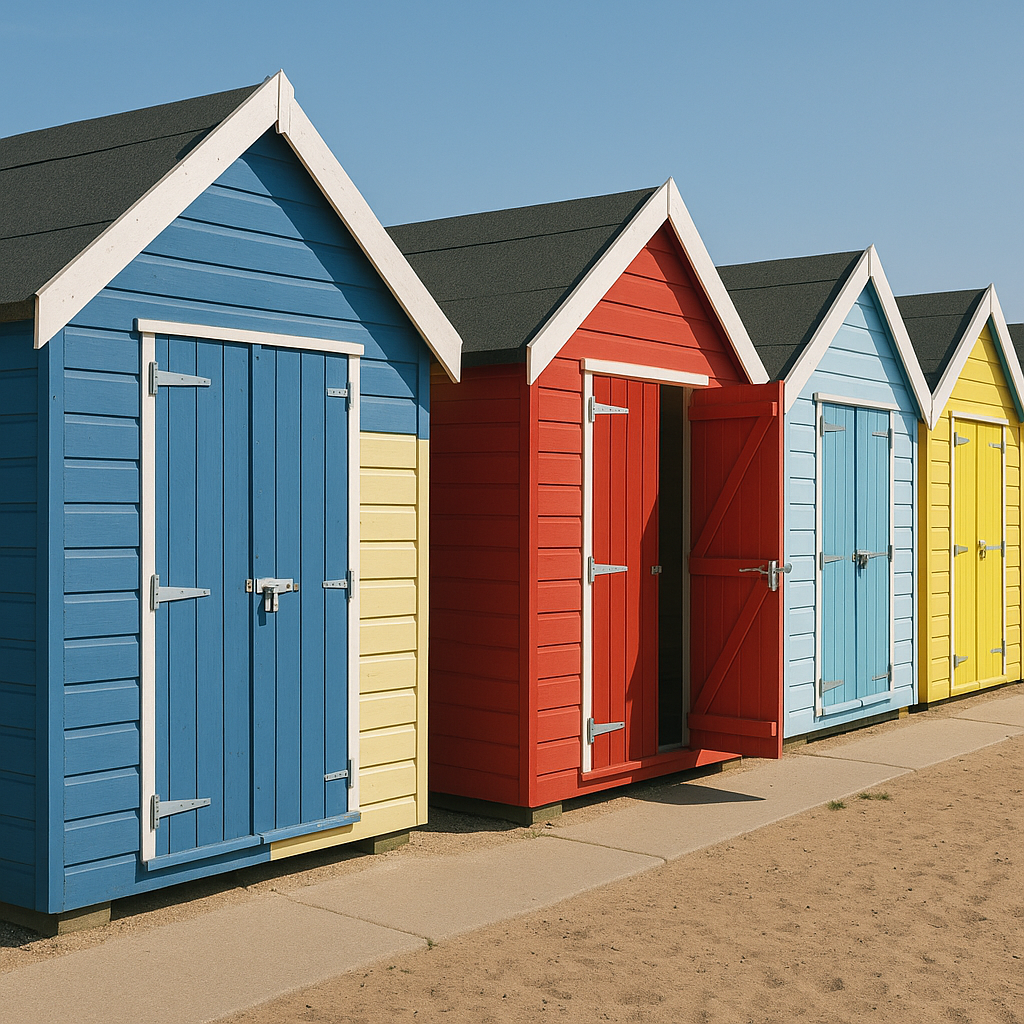
Muizenberg's iconic candy-striped beach huts are temporarily removed for a R480m coastal overhaul, sparking nostalgia and climate adaptation insights.
Muizenberg's iconic, bright beach huts are being moved for a big project! The city is spending R480-million to make the beach ready for climate change, like rising seas and strong storms. They'll make the boardwalk bigger and move it back, and add lots of sand to protect the road and shops. Locals are sad to see the huts go, but they will come back, even more special, after about a year and a half. This big change is all about making the beach safe and strong for the future.
Why are the Muizenberg beach huts being removed?
The iconic Muizenberg beach huts are being temporarily removed for a R480-million climate-ready foreshore upgrade. This project aims to relocate the boardwalk two meters landward, widen the beach, and protect Atlantic Drive, the railway, and shopfronts from rising sea levels and more frequent, fiercer storms.
Get Cape Town news in your inbox
Stay updated with the latest stories from the Mother City.
1. Four Shuttered Cubes and a City Holding Its Breath
The western arc of Muizenberg beach will soon lose its kaleidoscopic welcome mat. In a matter of days, contractors will loosen the first quartet of candy-bright change-huts, winch them off their shallow pads, and roll them inland before sunrise. Before winter ends, the remaining four on the eastern bend will follow, erasing the grid that has framed selfies since dial-up internet. Generators will replace giggling couples, yellow tape will stand in for tangerine walls, and the postcard shot - twelve rectangles of lime, cerulean, fuchsia, and orange - will disappear for at least a year and a half.
Officials call the hiatus temporary, a R480-million down-payment on a climate-ready foreshore. They warn that today’s once-a-century storm could arrive every decade within twenty years, chewing metres of dune before the spring tide even wakes. The plan shifts the new boardwalk two metres landward, gifting the ocean a sacrificial strip so Atlantic Drive, the railway, and the art-deco shopfronts can breathe easier when the next black south-easter arrives.
Yet the announcement has ignited a quiet fever among locals. Grandparents who taught toddlers to body-board between those walls now trade WhatsApp voice notes of protest. Surfers measure paddle distances by hut numbers; photographers swear the afternoon light bends differently when it ricochets off painted timber. In coffee shops, arguments flare over whether the stripes should be frozen forever or allowed to evolve. The huts may be leaving, but the debate they spark is staying right here.
2. Engineering a Shoreline That Dances With the Sea
Behind the colour, a bigger script is rolling: the False Bay coastline is being rewritten grain by grain. Satellite altimetry shows the local ocean rising 3.2 mm each year, while the Cape Flats aquifer - drained for generations - sinks like a deflating mattress. Add fiercer storm tracks spinning off a warmer Antarctic, and Muizenberg’s gentle slope becomes a textbook exposure hotspot.
The response borrows Dutch wisdom: promenade planks made of corrosion-proof stainless lattice, capped with basalt grit that takes the glare out of midsummer. Beneath each slab, a neoprene gasket lets the walkway flex when the dune migrates, swallowing seasonal swells without cracking a single tile. Engineers call it “soft-hard” infrastructure; surfers just want to know the wave will still peel long and forgiving.
To buy time, fifty thousand cubic metres of harbour-mouth sand will gush ashore through a roaring pipe, widening the upper beach by roughly eighteen metres. Bulldozers will sculpt a shallow runnel that doubles as a toddlers’ splash pad and a storm-water sponge. Bitou, sea rocket, and sour-fig seedlings will follow, their roots stitching the new sand together while feeding the last colony of the False Bay blue butterfly. The break itself - Cape Town’s gentlest learn-to-surf classroom - has been mapped by drone so the nourishment will not lop off the friendly shoulder that beginners worship.
3. A Museum Truck for Every Stripe and Hinge
Do not picture the huts flung like garden-shed panels onto a scrapyard pallet. Each cube is treated like an imperial relic. Conservators photograph every facade, then pin the exact hue onto the CIE La b* colour map so future paint machines can recreate the same squeal of tangerine. Warps and bruises in the original Oregon pine are tagged; irreparable boards will re-emerge as signposts or public benches, carrying salt scars like honour medals.
Fresh cladding will come from thermally-modified African beech, a home-grown timber that refuses to twist even when marinated in salt spray. Bronze latches, scalloped valances, and the playful pineapple roof finials - now riddled with rot - will be recast in low-lead alloy, their templates stored in the cloud. When the convoy creeps to a dehumidified marquee on a Zandvlei football pitch, every hinge will know its future address within a thirty-centimetre radius, preserving the sight-lines Ansel Adams wannabes have chased since the Great Depression.
Oral historians ride shotgun. They collect rent receipts inked in 1958, record grandmothers who scheduled wedding shoots around low tide, and archive the marker-pen hearts that teenagers scratched into the cerulean door. Schoolkids are painting replacement panels with protea blooms, shark silhouettes, and Khoi-san geometries - possible inserts that will let the rebuilt huts read like a palimpsest rather than replica.
4. Empty Rectangles, Full Hearts
The first absence will feel like a pulled tooth: a darker rectangle of cement where the cerulean hut once framed countless sunrise portraits. Surfers will pause mid-paddle, searching for a landmark that no longer interrupts the horizon. Yet the soundtrack survives - gulls, the hiss of foam, the clatter of cobbles in the backwash, the mountain train rattling home at dusk.
Traders are adapting. A twilight food market - think Durban’s Florida Road squeezed into a seaside car park - will trade jollof for gelato while DJs spin lounge beats from repurposed shipping containers. The 1913 sandstone station will host pop-up galleries selling GoPro stills, proceeds funding shark-spotters who still scan the bay with polarised binoculars. Scientists will thread fibre-optic cables through the naked dune, turning the whole beach into a living laboratory that tracks temperature, moisture, and sand-grain migration in real time.
By the time the huts return - weather-tight, colour-true, yet layered with new stories - the ocean will already have tested the wider beach. A winter storm may gulp half the new sand, but that was always part of the bargain. The stripes will rise again, perhaps angled a fraction inland, their shadows pointing toward a future where memory and resilience share the same changing room. And the pulse that turned a simple wooden box into Cape Town’s collective mirror will keep beating, louder than the generators, steadier than the tide.
[{"question": "
Why are the Muizenberg beach huts being removed?
", "answer": "The iconic Muizenberg beach huts are being temporarily removed for a R480-million climate-ready foreshore upgrade. This project aims to relocate the boardwalk two meters landward, widen the beach, and protect Atlantic Drive, the railway, and shopfronts from rising sea levels and more frequent, fiercer storms."}, {"question": "When will the Muizenberg beach huts be removed?
", "answer": "The removal will happen in phases. The first four huts on the western arc of Muizenberg beach will be moved within days, and the remaining four on the eastern bend will follow before winter ends. The entire grid of twelve huts will be gone for at least a year and a half."}, {"question": "How long will the Muizenberg beach huts be gone?
", "answer": "The beach huts are expected to be absent for approximately a year and a half while the climate change adaptation project is underway. They are planned to return after this period."}, {"question": "What will happen to the beach huts during their removal?
", "answer": "Each hut will be treated with extreme care, like an \"imperial relic.\" Conservators will photograph and document every facade, color, and imperfection. Irreparable boards will be repurposed, and new cladding will come from thermally-modified African beech. All components, including latches and finials, will be re-created with durable materials, and stored in a dehumidified marquee on a Zandvlei football pitch."}, {"question": "What is the purpose of the R480-million upgrade project?
", "answer": "The R480-million project is a climate change adaptation initiative to make Muizenberg beach resilient to rising sea levels and more intense storms. It involves moving the boardwalk further inland, widening the beach with 50,000 cubic meters of sand, and using 'soft-hard' infrastructure to protect Atlantic Drive, the railway, and local businesses."}, {"question": "Will the Muizenberg beach huts look the same when they return?
", "answer": "While the goal is to recreate the iconic look, the huts will return \"even more special\" and \"weather-tight, colour-true, yet layered with new stories.\" They will be rebuilt with more durable, locally sourced materials and may incorporate new designs and stories from the community, such as panels painted by schoolchildren. The aim is for them to read like a 'palimpsest rather than replica.'"}]
Amanda Wilson is a Cape Town-born journalist who covers the city’s evolving food scene for national and international outlets, tracing stories from Bo-Kaap spice shops to Khayelitsha micro-breweries. Raised on her grandmother’s Karoo lamb potjie and weekend hikes up Lion’s Head, she brings equal parts palate and pride to every assignment. Colleagues know her for the quiet warmth that turns interviews into friendships and fact-checks into shared laughter.
View all articles →