
If the Guptas were looking for anonymity, Dubai wasn’t far enough.
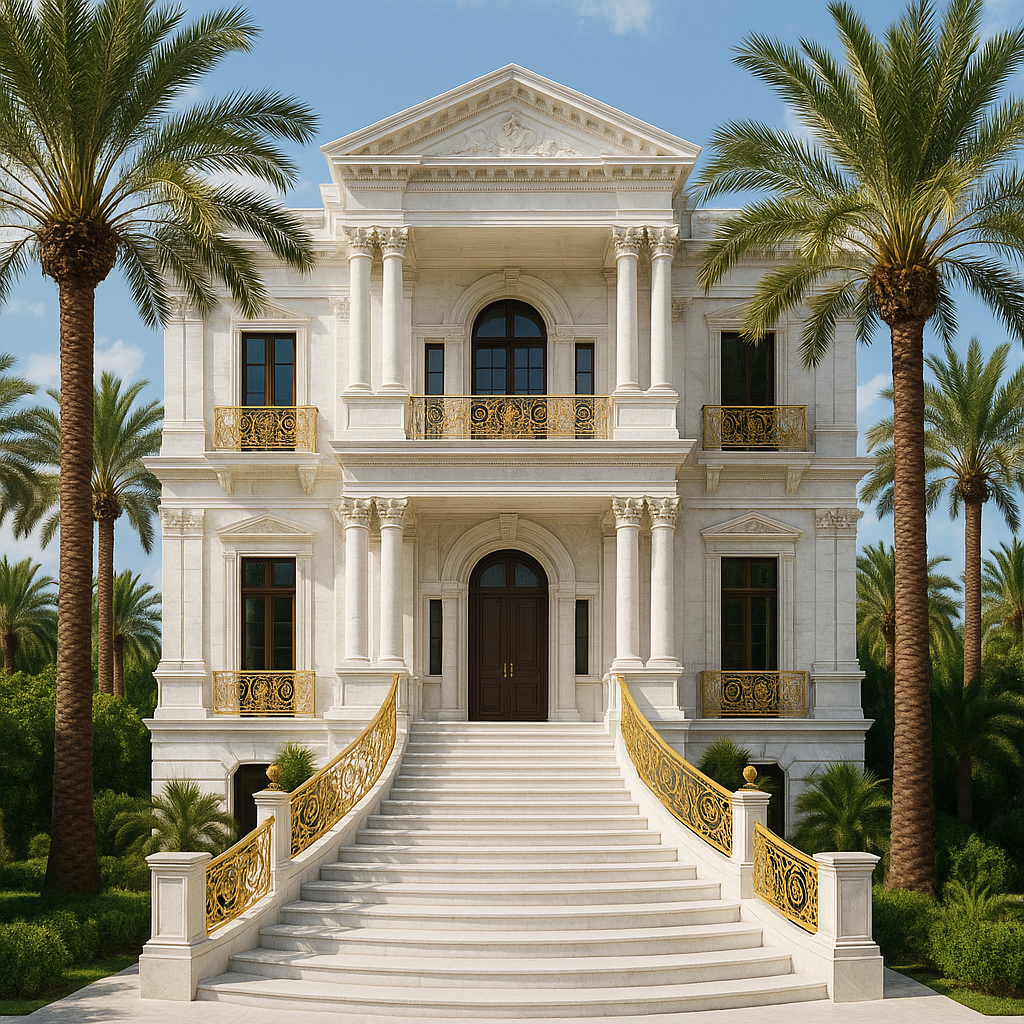
Uncover the opulent Dubai hideout of the Guptas, detailing state capture, illicit finances, and an empty vault awaiting new riches.
The opulent Villa L-35 in Dubai's Emirates Hills is a key piece of evidence in South Africa's state-capture investigation, linked to roughly R49 billion in misappropriated state funds. This mansion in Dubai became the operational headquarters for a network deeply involved in corrupt activities. It was acquired through a complex web of Gupta-controlled shell companies. The villa even featured a special vault for rhino horns and ivory. This saga shows how South Africa's stolen money built a lavish desert fortress.
What is the significance of Villa L-35 in Dubai?
Villa L-35 in Dubai's Emirates Hills is a key piece of evidence in South Africa's state-capture investigation, linked to roughly R49 billion in misappropriated state funds. This opulent mansion, acquired through a complex web of Gupta-controlled shell companies, served as the operational headquarters for a network deeply involved in corrupt activities.
Get Cape Town news in your inbox
Stay updated with the latest stories from the Mother City.
The White Marble Fortress on Lailak Street
When the first blacked-out Range Rover glided through the gates of Emirates Hills, nobody on the adjacent Montgomerie golf course paid much attention. Golfers simply noted another oversized mansion with gilded railings, another monument to Gulf excess on a quiet, palm-lined street 6,500 kilometres from Pretoria. Yet Villa L-35 would soon transform into something far more significant than an architectural curiosity. South Africa's National Treasury now regards this property as the most expensive single piece of evidence in an sprawling investigation into roughly R49 billion in misappropriated state funds.
The acquisition marked the beginning of a new geographical chapter in South Africa's state-capture saga. Where once the drama unfolded in Saxonwold's leafy Johannesburg suburbs, it now played out in Dubai's most exclusive enclave. The cul-de-sac where L-35 sits, surrounded by petunia beds and manicured fairways, became the operational headquarters for a network that reached deep into Pretoria's corridors of power.
Knight Frank's marketing materials paint a picture of opulence: 1,765 square metres of Italian marble, a twenty-metre infinity pool, dumb-waiters descending to an underground garage accommodating eleven vehicles. What the glossy brochure deliberately omits is the identity of the purchaser. Behind the Jebel Ali offshore vehicle listed on the July 2015 deed lies a labyrinth of Gupta-controlled shelf companies stretching across the British Virgin Islands, Mauritius and Dubai itself. Documents obtained through the #GuptaLeaks reveal the sophistication of the acquisition strategy. Within minutes of registration, the property was mortgaged back to a Gupta shell company for the entire purchase price, stripping the holding entity of all equity. This manoeuvre represents classic asset protection: creditors might successfully sue, yet discover nothing remains to seize.
Construction Secrets and Concealed Transactions
The interior design brief dated 3 October 2015 opens with an extraordinary requirement. "The owner requires a vault that will satisfy a CITES permit for twelve rhino horns and six hundred kilograms of ivory," the document states. By December, sanitised language replaced these specifics with "rare collectables," though the physical specifications had expanded considerably. The final design called for a four-metre-long chamber, two and a half metres high and one metre deep, protected by a German Mauer vault door with dual time-lock mechanisms, biometric fingerprint access, and what designers termed a "discreet ballistic escape corridor."
The design consultancy alone commanded R4.3 million. The construction contract went to Rautenbach Projects, the same firm that had renovated the Saxonwold shebeen two months earlier. Email correspondence demonstrates how every invoice was fragmented into tranches below R100,000, deliberately evading South Africa's exchange control reporting thresholds. These payments flowed through a Dubai company called JG décor, where Ashish Gupta's wife Surbhi held signing authority.
Other specifications illuminate the scale of expenditure. The lighting plan demanded 320 gold-plated wall sconces at 900 Emirati dirhams apiece. The supplier, an obscure Sharjah trading house, subsequently provided bulk LED fittings for five Transnet locomotive depot upgrades. The parastatal paid quadruple market rates for these fittings, with investigators alleging that inflated margins returned to Gupta accounts in Dubai. Such patterns reveal how infrastructure projects across South Africa directly furnished luxury appointments in the Emirates.
Hospitality Arrangements for Compromised Officials
Between October 2015 and March 2016, Oberoi Hotel's Executive Suite 801 maintained continuous occupancy. The register records forty-two nights for Matshela Koko, thirty-eight for Anoj Singh, twenty-seven for Siyabonga Gama, and eighteen for Daniel Mantsha. Sahara Computers' Dubai branch settled the total bill of 3.2 million dirhams. Interpoint Mail & Logistics, a courier retained by Sahara, delivered room keys to OR Tambo airport timed precisely for each official's arrival.
The #GuptaLeaks contain particularly revealing documentation regarding Mantsha. His passport stamp shows entry on 19 January 2016, identical to the date when the Guptas forwarded Duduzane Zuma a draft "Letter of Intent to Relocate" for President Jacob Zuma. Chauffeur logs record four separate journeys conveying Mantsha to L-35, with two visits exceeding three hours in duration. The circumstances raise troubling questions. Why would a Denel chairperson require such extensive private meetings while his board evaluated the irregular Asia Aerospace procurement contract?
Duduzane Zuma maintained his own Emirates residence. His two-bedroom apartment on the sixty-fifth floor of Burj Khalifa, the world's tallest structure, was registered on 30 September 2015, five weeks before the L-35 acquisition. Title documentation lists his particulars: occupation businessman, nationality South African, passport number 420134567. Service bills continue arriving at Gupta servers in Midrand, potentially establishing the apartment as an undeclared asset under South Africa's Executive Ethics Code. Dubai Land Department records indicate financing through the state-owned Bank of Baroda's local branch. Indian authorities now examine whether this arrangement violated their foreign lending restrictions on UAE real estate exposure.
The Aborted Escape and Digital Traces
Four separate drafts of President Zuma's relocation letter circulated during January 2016 among Tony Gupta, attorney Salim Essa, and Duduzane. The version eventually couriered to the Union Buildings bore the presidential electronic letterhead yet never acquired his signature. Within a fortnight, UAE Foreign Minister Anwar Gargash publicly declared that South Africa was "a friendly nation" that did not harbour foreign nationals facing domestic legal jeopardy. Privately, Emirati officials expressed concern about precedent. Offering sanctuary to an African head of state might complicate their campaign to host the newly established African Prosecutors Association.
Though the presidential relocation stalled, the family exodus proceeded. On 6 April 2016, a chartered Jet Airways Boeing 777-300ER collected forty-four Gupta family members, domestic staff, and luggage totalling 4,300 kilograms of "household effects" from Lanseria airport. The departure occurred at 23:47 under a manifest falsely listing "medical tourists."
Digital forensic analysis of Ashu Chawla's iPhone reconstructs that evening's communications. At 21:12, Essa confirmed: "All passports cleared, special services at terminal." Thirty-six minutes later, Atul Gupta instructed: "Make sure the big fridge goes, documents inside." Chawla responded at 22:03 that "vault contents packed in Tupperware, 78 kg, will carry as hand luggage." Finally, at 23:11, Essa reported: "Fuel paid, pilot tipped, no customs on arrival." The aircraft filed no return flight plan for seventy-two hours, suggesting extended offloading activities in Dubai. French publication Le Monde obtained UAE customs data showing the manifest stamped "diomatic" - a classification normally restricted to embassy shipments.
Financial Architecture and Enforcement Challenges
South African banks terminated Gupta accounts during 2016-2017, yet Dubai's private banking sector rapidly filled the void. Through Habib Bank and Bank of Baroda's local operations, the family allegedly constructed a two-stage laundering mechanism. Export invoices for computer equipment were inflated by as much as 600 percent, with UAE entities paying these exaggerated amounts while the surplus accumulated in Dubai fixed deposits. Subsequently, import invoices for services issued by UAE shell companies to South African parastatals were offset against these earlier surpluses, manufacturing the appearance of legitimate commercial activity.
Real estate professionals in Dubai indicate that L-35 no longer represents the family's most extravagant local holding. That distinction shifted to a seven-bedroom palm-leaf villa on the World Islands, acquired for 185 million dirhams in 2018. Yet Emirates Hills retains unique political significance. Security consultants identify two additional African presidential families maintaining properties there: a former Angolan head of state and a recently departed East African leader. The neighbourhood has acquired a nickname among risk advisors: "dictator row." Each compound reportedly maintains satellite phones pre-programmed to a fixed-wing charter company operating from Al-Maktoum International. Should Pretoria ever negotiate a UAE extradition treaty, the Guptas could relocate within six hours to jurisdictions lacking South African bilateral agreements.
Until such developments materialise, the routines at L-35 continue undisturbed. Fountains activate punctually at 18:30. The golf cart garage maintains constant temperature at twenty-two degrees Celsius. And somewhere within the marble interior, an empty vault stands with door slightly ajar, awaiting whatever the next great African plunder might bring, perhaps arriving in a private jet laden with currency.
What is the significance of Villa L-35 in Dubai?
Villa L-35 in Dubai's Emirates Hills is a central piece of evidence in South Africa's state-capture investigation. It is linked to approximately R49 billion in misappropriated state funds and served as the operational headquarters for a network involved in corrupt activities, acquired through a complex web of Gupta-controlled shell companies.
Who acquired Villa L-35 and how was it financed?
Villa L-35 was acquired by Gupta-controlled shell companies, utilizing a complex network spanning the British Virgin Islands, Mauritius, and Dubai. The property was immediately mortgaged back to a Gupta shell company for the full purchase price, a tactic to protect assets from potential creditors.
What unusual features did Villa L-35 include?
The villa's interior design brief specifically requested a vault designed to satisfy a CITES permit for twelve rhino horns and six hundred kilograms of ivory. This vault, later described as for "rare collectibles," was a substantial, secure chamber with biometric access and a "discreet ballistic escape corridor."
How were expenses for Villa L-35 and associated activities concealed?
Construction invoices were fragmented into amounts below R100,000 to evade South Africa's exchange control reporting thresholds. Payments flowed through a Dubai company called JG décor, where Ashish Gupta's wife Surbhi held signing authority. Additionally, inflated invoices for computer equipment exports and services were used to launder money through Dubai's private banking sector.
Which South African officials were linked to activities at Villa L-35?
Several prominent South African officials, including Matshela Koko, Anoj Singh, Siyabonga Gama, and Daniel Mantsha, had their luxury hotel stays in Dubai paid for by Sahara Computers' Dubai branch. Daniel Mantsha, specifically, was recorded visiting Villa L-35 multiple times, raising questions about his involvement while his board evaluated an irregular procurement contract.
What was the "aborted escape" related to President Jacob Zuma?
During January 2016, several drafts of a "Letter of Intent to Relocate" for President Jacob Zuma to Dubai circulated among the Guptas and their associates. Although the letter never received Zuma's signature, the Gupta family, along with staff and substantial luggage, departed South Africa on a chartered Jet Airways flight on April 6, 2016, under a manifest falsely listing "medical tourists."

Sarah Kendricks is a Cape Town journalist who covers the city’s vibrant food scene, from township kitchens reinventing heritage dishes to sustainable fine-dining at the foot of Table Mountain. Raised between Bo-Kaap spice stalls and her grandmother’s kitchen in Khayelitsha, she brings a lived intimacy to every story, tracing how a plate of food carries the politics, migrations and memories of the Cape.
View all articles →