
In photos: Organisations step in to save Langa’s second Pride festival
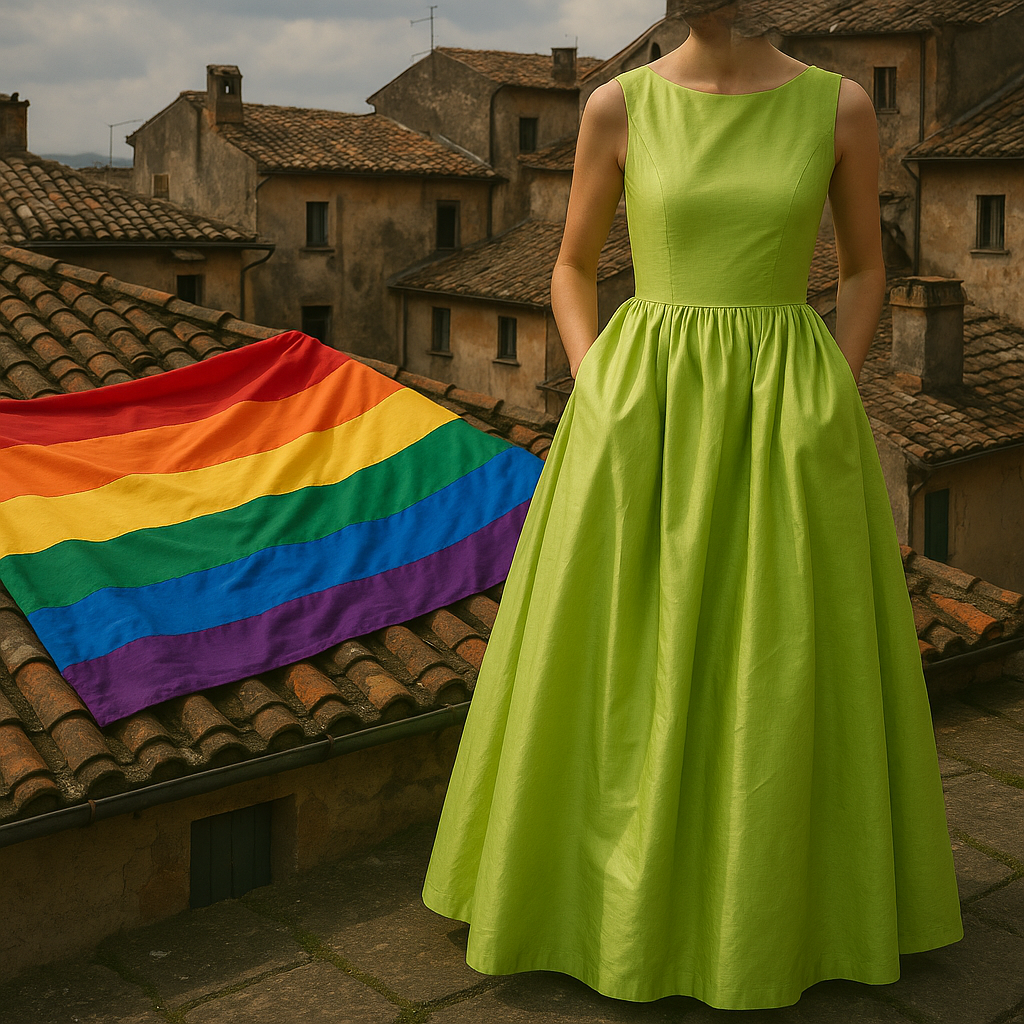
Langa's Pride: A vibrant look at how a township celebrates LGBTQIA+ identity, community, and future through unique grassroots efforts.
Langa Pride is a super cool celebration in South Africa that brings together LGBTQIA+ folks. It's like a big party with a march, music, and lots of love. People in Langa work together to make it happen, even when things are tough, showing everyone how strong and proud they are. It's all about making sure everyone feels welcome and can be themselves.
What is Langa Pride?
Langa Pride is an LGBTQIA+ celebration in the Langa township, Cape Town, South Africa, characterized by a vibrant march, community-led crowdfunding, and events that blend cultural heritage with queer affirmation. It serves as a powerful testament to resilience, memory, and the community's collective effort to create inclusive spaces.
Get Cape Town news in your inbox
Stay updated with the latest stories from the Mother City.
Morning Light on Washington Street
Zone 17 stirred before sunrise. A toaster snapped in a nearby kitchen; a taxi driver tapped his horn in that familiar two-tone rhythm; dogs answered the first thump of bass from a rented speaker. By half past seven, a cobalt-blue sound-system truck idled outside the old Anglican church, its mirrors wrapped in foil that caught the early light. Rainbow bunting hung from telephone wires like prayer flags that had swapped salvation for the present moment.
Jackye Latrice Majawie emerged from a white Hyundai H100 at five past eight, lime taffeta cascading behind her like liquid neon. Officially she holds the Miss Drag South Africa 2025/26 crown, but here she answers to "uMam'selle wethu" - our lady. A Gugulethu designer, accustomed to sewing First Communion gowns, had crafted this piece four weeks prior, adding concealed pockets sized for pepper spray, lip gloss, and a laminated emergency contact list. "Drag functions as armour," Jackye explained to volunteers tightening her laces. "Yet armour deserves haute couture treatment."
Anele Gqasana, who leads Langa LGBTQIA+ Pride, carried last year's planning files on his phone: 1.2 gigabytes spanning posters, rejected sponsorship proposals, and voice memos. The 2025 celebration had collapsed when funders redirected resources toward election oversight and flood response. "We returned to square one," Anele laughed, displaying 28 ignored emails on his screen. Then, on March 12th, a thirty-second clip from the 2024 march - edited to Beyoncé's "Energy" - gained local traction. Within hours, five restaurants pledged lunch vouchers; a logistics firm contributed 200 branded ponchos ("for rain, butch"); a church congregation committed to delivering 300 vetkoeks each Friday until Pride arrived. "Township crowdfunding arrives as groceries, not bank transfers," Anele noted. By April 30th, resources totalled R87,430 - half liquid cash, half material contributions.
The March as Living History
At nine o'clock, marshals in reflective vests assembled roughly two hundred participants into formation stretching the length of a commuter train. Organisers had chosen the 1.7-kilometre route from Washington Street to Guga S'Thebe for its concentrated symbolism. Marchers passed the municipal pool where queer youth once faced expulsion for "wasting water"; a corner shop formerly belonging to David Olyn's mother, whose son lost his life in 2014; and the intersection where, during 1987, a transgender sex worker known only as "Beyoncé" staged a solitary sit-in after police seized her wig. Four amaPantsula dancers in pink balaclavas high-stepped ahead of the truck, transforming potholes into percussion instruments.
Volunteers raised a temporary plywood structure mid-route: four panels painted in the expanded flag's hues - brown, black, light blue, and pink joining the traditional six. By 10:30, the surface held Polaroids, laser prints, and lipstick pressed into heart shapes. Imam Muhsin Hendricks grinned in a 2023 photograph outside Al-Fitrah mosque; beside him, Andile "Lulu" Ntuthela wore a graduation cap and the green jersey his sister preserves in her wardrobe. A stranger slipped R50 beneath Liyabona Mabishi's image - "for airtime to contact ancestors."
Nosakhe Silangwe, seventy-nine, perched on a plastic chair beyond her gate, her apron powdered with maize meal. She has called Langa home since the forced removals of 1962. "I spotted feathers and assumed the circus had arrived," she smiled. Upon learning these were "amalungu okudinga uthando" - those requiring love - she retrieved two five-litre kettles to boil water for volunteers. Her grandson Akha, eighteen, sported his first mesh top. "Gogo, you'll watch me on television," he joked. She answered: "I'll watch you alive at supper - that suffices as television."
Health, Memory, and Celebration
At 12:45, the amphitheatre dimmed for the Cape Town premiere of Mirror Him, directed by Zimbabwean filmmaker Tariro Matasva. The twenty-eight-minute documentary tracks Tatenda, a trans man navigating township maternity wards that still issue pink wristbands labelled "mothers." Attendees received popcorn in cones fashioned from outdated census forms; within moments, the space echoed like rainfall on corrugated iron - simultaneous weeping and chewing. When credits appeared, only a hadeda ibis scolding from the rafters remained audible.
Nearby, a pop-up thrift rail - operated by Langa's inaugural gender-fluid modelling agency, "Soft Serve" - displayed sheer blouses alongside 1980s mine-worker overalls repurposed as jumpsuits. Each garment carried a QR code linking to its previous owner's narrative. Scanning a denim jacket revealed its history: dancer and choreographer Juan Moltino owned this piece, having secretly hosted the township's first vogue ball in 1998 within what now serves as a karate hall.
At 13:20, Anele called for "one minute of noise" rather than silence. Whistles, vuvuzelas, church handbells, and a lone saxophone merged into a sound mass dense enough to trigger two car alarms across the street. Somewhere within that chord, a woman shouted her sister's name - an exorcism no camera captured out of respect.
Voices Across Generations
A circle of grass mats hosted a discussion titled "What Did You Call Yourselves Before Alphabet Soup?" Participants spanned from Gcotyelwa Mpongo, twenty-three, who identifies as trans non-binary, to Mama Nowinile, seventy-four, who employed "injonga" in 1976 - a Xhosa umbrella term for gender-nonconforming healers. No microphone served the gathering; speakers raised a hand-carved wooden spoon to claim their turn. The audience spilled onto steps, some recording notes on condom flyer reverses.
In an adjacent room, Andile "King Lux" Jezile demonstrated crepe-hair application with spirit gum while maintaining skin hydration - "because suffocated pores cannot dismantle patriarchy." Eight teenagers practised sideburns on doll heads donated by a primary school. One boy, Siba, wore school trousers rolled to mid-calf; the hem now brushed there because, he explained, "I'm expanding into the man I'm becoming."
The main stage - constructed from reclaimed shipping pallets - alternated performances. The Langa Baptist Youth Choir opened with a seSotho version of "Lean on Me," substituting "Love" for "Lord." Ninety minutes later, DJ KATA unleashed gqom forceful enough to make the pallets bounce. In the front row, Anglican priest Rev. Nokuzola Cossie removed her clerical collar and brandished it like a banner.
By seventeen hundred hours, sunlight seeped into old hostel barracks, staining graffitied surfaces amber. Marshals gently guided crowds toward exits; minibus taxis rumbled their engines. Yet people remained, photographing shoeprints embedded in spilled glitter. A neighbourhood watch security guard locked the main gate while keeping a side entrance open "for anyone requiring prayer or restroom access." At 18:10, two teenage girls kissed beneath the maroon sky, indifferent to a church youth group stacking chairs nearby.
The Sound That Outlasts Footsteps
At twenty hundred hours, organisers emailed a single-page "care menu" to every signatory: WhatsApp support circles, complimentary Wi-Fi vouchers, and a schedule of queer-affirming churches, mosques, and traditional healer appointments. By midnight, 312 individuals had activated the link; ninety-seven requested ongoing counselling.
Long after crews dismantled the stages, the truck's subwoofer rested in storage, still trembling faintly whenever trains passed. Somewhere in Site B, Khayelitsha, a fourteen-year-old hearing that bass through inexpensive earphones searched "how to start a Pride in my yard." The response, he would learn, commences with converting shame into playlist, then playlist into procession - one lime dress, one kettle of boiled water, one borrowed saxophone at a time.
What is Langa Pride?
Langa Pride is an annual LGBTQIA+ celebration held in the Langa township of Cape Town, South Africa. It's a vibrant event featuring a march, music, performances, and community gatherings, all aimed at fostering inclusivity, visibility, and support for the queer community within the township.
How does Langa Pride get organized and funded?
Langa Pride is largely community-driven and relies heavily on

Emma Botha is a Cape Town-based journalist who chronicles the city’s shifting social-justice landscape for the Mail & Guardian, tracing stories from Parliament floor to Khayelitsha kitchen tables. Born and raised on the slopes of Devil’s Peak, she still hikes Lion’s Head before deadline days to remind herself why the mountain and the Mother City will always be her compass.
View all articles →