
Inverdoorn: Escape to the Karoo for an unforgettable Big 5 safari
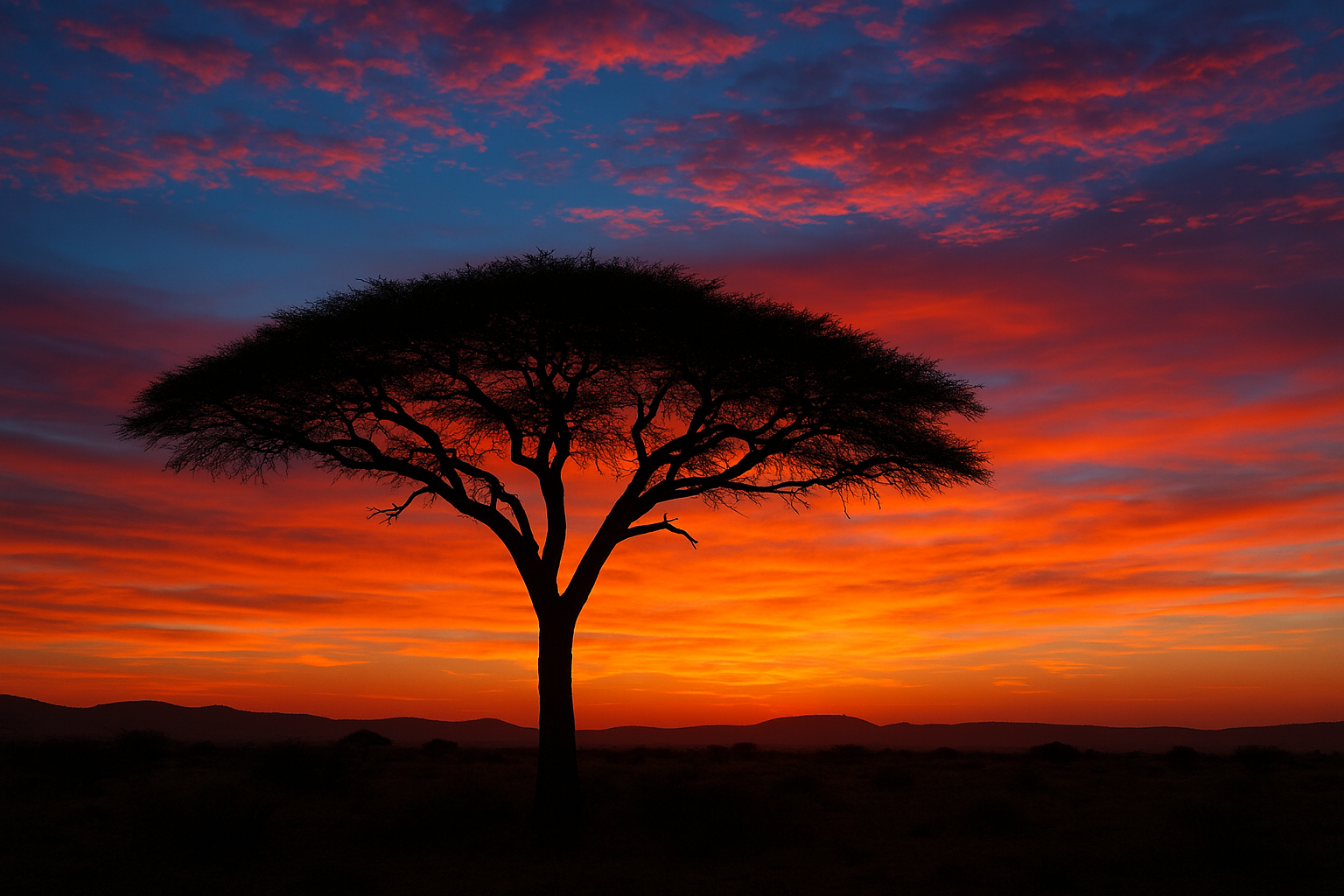
Experience Inverdoorn Private Game Reserve: Big Five safaris, cheetah conservation, and stargazing in the Tankwa Karoo.
Inverdoorn Private Game Reserve is a magical place where the wild Karoo whispers its secrets. You'll see the amazing Big Five animals and even cheetahs they've helped get better. Stay in fancy rooms and ride bikes or horses while helping to stop poachers. It's a special adventure where every moment is a memory waiting to happen.
What makes Inverdoorn Private Game Reserve a unique safari destination?
Inverdoorn Private Game Reserve offers a unique safari experience through its stunning Tankwa Karoo landscape, Big Five encounters, and commitment to conservation, including a cheetah rehabilitation facility. Visitors can enjoy intimate wildlife sightings, luxurious accommodations, and diverse activities like electric mountain biking and equestrian safaris, all while contributing to vital anti-poaching efforts.
Get Cape Town news in your inbox
Stay updated with the latest stories from the Mother City.
The Awakening of the Wild
Dawn breaks over the Tankwa Karoo with remarkable gentleness, a gradual brightening rather than any dramatic arrival. Light spills across the horizon, transforming distant Cederberg summits into silhouettes of violet cardboard while bathing the flat-topped hills in shades of honey and copper. Across Inverdoorn Private Game Reserve's sprawling 10,000 hectares, the landscape stirs like a predator completing its nocturnal prowl. From somewhere past the acacia groves comes a single lion cough - resonant, cavernous, impossible to mistake - and the magic takes hold. Visitors abandon their beds, pulling on safari jackets and grabbing cameras whose batteries absorbed power through the night in readiness for morning spectacle. Caffeine proves unnecessary here; the atmosphere alone, crisp and biting with wild rosemary fragrance, delivers all the stimulation required.
The central lodge nestles unobtrusively on elevated ground, its stone, timber and reed construction keeping it low against the terrain. Below lies a dry riverbed where elephant traffic has carved sandy routes through the terrain, their massive footprints cratered into grey clay like marks from another geological era. By six in the morning, the expedition fleet stands ready - open Toyota Land Cruisers finished in Kalahari sand tones, their canvas coverings rippling in early breezes. Field guides welcome visitors personally, an intentional practice that renders the reserve intimate before wildlife encounters restore its magnificent scale. Motors hum. Safety restraints fasten. Optics dangle like decorations against padded vests. The procession moves forward, rubber grinding on loose stone, communication devices alive with Shona and Afrikaans exchanges revealing yesterday's activity: paired male cheetahs feeding on springbok, white rhino mother and offspring near reservoir three, leopard signs tracking west toward ancient lava fields.
Inverdoorn's reputation for Big Five encounters precedes it, yet the reserve's deeper achievement lies in its seamless delivery of smaller wonders between major sightings. A secretary bird crosses open grassland with the bearing of an impatient Victorian educator, inky limbs visible above vegetation. An emerald boomslang threads through sweet-thorn branches, forked tongue sampling rising warmth. Minute finches - scaly-feathered, violet-eared, black-throated - flit between termite constructions, their wingbeats generating a gentle hum resembling faraway clapping. Even the guides, disciplined to maintain forward focus, occasionally pivot to appreciate the chromatic display.
Encounters That Define Memory
Static interrupts the calm: "Central, central, vehicle two reporting large male leopard visible, Grid C5, southbound along ridgeline." The operator accelerates. Dust billows behind in burnt-orange sheets. Passengers brace against support bars, pulses accelerating to match tyres hammering across erosion channels. Within moments the vehicle halts at a schist formation where the leopard - heavy-necked, rosette-coated - reclines beneath shepherd's tree cover. His golden eyes assess the interruption without distress; Inverdoorn's felines generally accept vehicle presence, evidence of generations of thoughtful guiding practice. Shutters release in rapid sequence. The cat gapes, revealing teeth extending to juvenile finger length, then dissolves into shadow as if merely an optical illusion.
Morning advances, the sun climbing until the Karoo becomes an oven. Excursions halt at a reservoir where hippopotami emit deep grunts, their surfaces gleaming like polished dark stone. Close by, a bachelor buffalo group - aged males with shields marked by countless conflicts - stand nearly motionless apart from perpetual tail-swishing against insect harassment. A fish eagle wheels overhead, and when it calls, the cry captures Africa's essence in one penetrating tone. Visitors drink rooibos chilled with honey and estate-grown mint; moisture gathers on glass containers, falling onto thirsty ground that swallows it immediately, leaving dark patterns in the powdery soil.
The lodge welcomes returning parties for relaxed late-morning dining beneath deck umbrellas. Surfaces strain beneath offerings of charred Karoo lamb cutlets, bobotie tartlets, roasted beetroot with citrus, and miniature milk-tart portions dusted with cinnamon. Chef Petrus obtains most ingredients within 120 kilometres; tomatoes retain solar warmth, while goat cheese arrives fig-leaf-wrapped from a Ceres-area producer. Between servings, warthog families trot past, indifferent to human conversation, tails erect like portable antennae. When one visitor wondered if such moments seemed arranged, the guide responded: "We cannot convene staff punctually; coordinating warthog appearances exceeds our capabilities."
Sanctuary and Purpose
Afternoon hours surrender to stillness. Heat waves rise from metal roofing; reptiles perform push-ups on stone surfaces. Some visitors withdraw to Ambassador Collection accommodations - individual structures following hillside contours where masonry walls extend to rooftop observation areas accessed via artistic steel stairways. From these elevations, complete panoramas unfold: boundless terrain interlaced with wildlife paths, the snow-capped Winterhoek in the distance, and overarching sky so expansive it suggests the template for every horizon conceived. Plunge pools shimmer in air currents; seating hewn from storm-cast jacaranda invites midday rest. Hearths stand prepared, stacked with kameeldoring that will later blaze with such intensity that core flames shift to lilac tones.
Alternative activities draw other participants. Electric mountain bicycles - broad-tyred, virtually noiseless - glide along dusty routes past prehistoric Khoi-San tool scatterings. The accompanying leader transports a portable charging unit operated by unfolding solar fabric; at a giraffe-favoured drinking spot, he pauses to replenish power while walkers stretch among ultramarine lizards and desiccated Karoo violet blossoms. Equestrian safaris trace identical paths more meditatively. Thoroughbred-Percheron crosses, rescued from Western Cape racing facilities, have adapted to zebra vocalisations and abrupt korhaan flight. Traversing shoulder-high vegetation aboard them resembles entering a kinetic canvas: each stem sways, each gust carries resin and wild sage, each hoof-fall absorbs into the terrain's own pulse.
However, Inverdoorn transcends mere recreation. Under its aesthetic surface runs unyielding commitment. During 2001, the reserve collaborated with Western Cape authorities to create a cheetah rehabilitation facility that subsequently saved, rewilded or transferred more than fifty individuals. The initiative's signature representative, a female called Diamond, entered as an undernourished confiscation from an Eastern Cape illicit pet enterprise. Currently she pursues native prey, raises independent offspring, and instructs captive-raised juveniles in pursuit techniques. Observers may attend feeding presentations at the enclosure where conservation staff detail procedures from semen preservation - samples maintained in liquid nitrogen at negative 196 degrees - to Anatolian shepherd deployment on surrounding properties for conflict reduction. Every visitor conservation contribution finances anti-poaching operations; single-night accommodation equals three kilometres of boundary fence maintenance or two hours of unmanned aerial observation.
Evening's Grand Finale
Late afternoon excursions commence at four o'clock, angling into that enchanted period when Karoo colouring cycles through antique jewellery tones. Expeditions originating among russet plains may conclude atop the Roggeveld escarpment where black eagles soar on rising warmth like vigilant spirits. Guides silence motors, allowing quiet to accumulate. Somewhere beneath, the reserve's solitary black rhino female and her offspring feed among succulents; their grasping lips enclose Euphorbia stalks with clinical precision. Black rhino demonstrate considerably more aggression than white counterparts, yet Inverdoorn patrols have protected them for nine straight years - remarkable in a region where the species vanished by 1850. The calf, product of twenty-six months' gestation, embodies modest triumph recorded in dung deposits and tracks.
Night descends rapidly across the Karoo. By the time vehicles reach camp, the Milky Way has spread like scattered sugar across dark fabric. Personnel arrange telescopes on lodge grass: a thirty-centimetre Dobsonian reflector for distant cosmic targets and a ninety-millimetre refractor on stand for planetary observation. Saturn's ring system elicits audible wonder; novices insist the planet appears artificial, a decal affixed to the heavens. Staff distribute red-light headlamps and moisture-resistant star charts. They recount San narratives - the giraffe transformed into the Southern Cross, the envious lion who cast the envious youth skyward where he still glares as Aldebaran. Above the reserve, atmospheric dryness and absent light pollution render sixth-magnitude stars naked-eye visible; orbital craft appear every several minutes, their photovoltaic arrays glinting like signal mirrors. During particular August evenings, Perseid meteors slice through at fifty-nine kilometres per second, leaving ionised paths that outlast most commitments.
Optional nocturnal drives frequently produce the most personal performances. Beams sweep grassland, exposing reflective eyes: emerald for herbivores, crimson for hunters. A Cape fox crosses the track, limp gerbil hanging from mouth. An aardvark, all auricle and scapula, shuffles through termite construction, nose attuned to subterranean larvae vibrations. The vehicle halts at a reservoir where crocodile eyes shine like cigarette rows. The guide silences power again; visitors clutch coverings against dropping temperature. Overhead, the firmament executes its gradual rotation, Orion emerging sideways, Magellanic formations drifting like phantom vessels. Time stretches; mobile devices remain ignored. The sole rhythm derives from the desert itself cooling, quartz fragments clicking through contraction.
Yet sunrise will restart the pattern, for wilderness never duplicates itself. Overnight tracks will have encountered wind, ungulate movement, claw marks. Fresh cheetah offspring may have exited the rehabilitation enclosure. Somewhere along boundaries, Belgian Malinois anti-poaching animals will begin morning rounds, muzzles dropped to interpret nocturnal narratives written in odour. And past the riverbed, the lion will cough once more, reminding all beings - human visitors included - that the Karoo maintains its own temporal system, measured not in hours but in pulses beneath infinite sky.
What makes Inverdoorn Private Game Reserve a unique safari destination?
Inverdoorn Private Game Reserve offers a unique safari experience through its stunning Tankwa Karoo landscape, Big Five encounters, and commitment to conservation, including a cheetah rehabilitation facility. Visitors can enjoy intimate wildlife sightings, luxurious accommodations, and diverse activities like electric mountain biking and equestrian safaris, all while contributing to vital anti-poaching efforts.
What kind of wildlife can I expect to see at Inverdoorn?
Inverdoorn is home to the renowned Big Five (lion, leopard, elephant, rhino, and buffalo), as well as cheetahs, which are part of the reserve's rehabilitation program. Beyond these iconic species, you can also spot a variety of other animals such as hippos, warthogs, various bird species like the secretary bird and fish eagle, and smaller creatures like finches, boomslangs, and nocturnal animals like Cape foxes and aardvarks during night drives.
What types of accommodation are available at Inverdoorn Private Game Reserve?
Inverdoorn offers luxurious accommodations, including individual structures in the Ambassador Collection which feature masonry walls and rooftop observation areas for panoramic views. These accommodations are designed to blend with the natural environment and provide an exclusive and comfortable stay.
What activities are available for guests at Inverdoorn?
Guests can enjoy a variety of activities including traditional game drives in open Toyota Land Cruisers, electric mountain biking, and equestrian safaris on rescued horses. The reserve also offers guided walks, stargazing with telescopes, and optional nocturnal drives to spot elusive creatures. Visitors can also learn about the cheetah rehabilitation program and anti-poaching efforts.
How does Inverdoorn Private Game Reserve contribute to conservation?
Inverdoorn is deeply committed to conservation. It operates a successful cheetah rehabilitation facility that has saved and rewilded over fifty cheetahs. The reserve also implements anti-poaching operations, utilizing trained animals like Belgian Malinois and contributing to fence maintenance and aerial observation. Visitor contributions directly support these vital conservation efforts.
What is the best time of day for wildlife viewing?
Dawn breaks over the Tankwa Karoo with remarkable gentleness, offering a magical start to morning game drives. Late afternoon excursions, starting around four o'clock, are also highly recommended as the Karoo's colours shift, and animals become more active as temperatures cool. Optional nocturnal drives provide a unique opportunity to see nocturnal animals and experience the spectacular Karoo night sky.

Amanda Wilson is a Cape Town-born journalist who covers the city’s evolving food scene for national and international outlets, tracing stories from Bo-Kaap spice shops to Khayelitsha micro-breweries. Raised on her grandmother’s Karoo lamb potjie and weekend hikes up Lion’s Head, she brings equal parts palate and pride to every assignment. Colleagues know her for the quiet warmth that turns interviews into friendships and fact-checks into shared laughter.
View all articles →