
Investec Cape Town Art Fair crowns rising stars
Explore the Investec Cape Town Art Fair 2026: a hub of art, capital, and ambition, featuring prize winners and groundbreaking works.
The 2026 Cape Town Art Fair wasn't just a show; it was a revolution! Five amazing prizes changed the art world forever. We saw art made from hair and fiber optics that glitched phones, and huge paintings showing city history with gold leaf. There were sculptures from trash that spoke with children's voices, stunning photos of truckers at night, and even plaster fingers that archived old crafts. This fair wasn't just about looking at art; it was about feeling it, living it, and seeing how it could really change the world and make us think differently.
What were the five major prizes awarded at the Cape Town Art Fair in 2026?
The five major prizes awarded at the Cape Town Art Fair in 2026 were the Tomorrows/Today Prize, the RDC Art Collection Award, the Investec Emerging Artist Award, the ORMS International Photography Prize, and the Materiality Prize. These awards recognized artists for their innovative works and significant contributions to the art world, ranging from fiber-optic tapestries to plaster finger archives.
Get Cape Town news in your inbox
Stay updated with the latest stories from the Mother City.
Dawn of Speculation: Winter Light, VIP Wristbands, and the First Shockwave
Cape Town’s winter dawn had just glazed the harbour on 20 February 2026 when the Silo District began to pulse like a trading pit dressed in concrete and glass. By eleven sharp, the VIP preview felt less like cultural indulgence and more like a commodities sprint: earpiece LEDs winked like lures, gallerists muttered wait-lists like mantras, and collectors from Lagos to Shenzhen compared Red Sea freight detours between sips of single-origin. The real jolt arrived at half-past two, when fair director Laura Vincenti climbed the Zeitz MOCAA mezzanine and fired five names into the echoing atrium - names now set to reroute shipping crates, grant spreadsheets, and discovery algorithms for the next eighteen months.
First to detonate was the Tomorrows/Today Prize, the fair’s self-styled “speculation engine” since 2019. Jurors Elvira Dyangani Ose, Jochen Zeitz, and Cassi Namoda channelled a USD 25,000 acquisition purse plus a guaranteed 2027 solo booth to Lagos-born, London-based Chidirim Nwaubani. Her winning triptych “Ancestral Bandwidth” looms three metres high, stitched from barbershop hair and discarded fibre-optic strands that still leak red diagnostic pulses. Igbo cosmograms braid the cables into living circuits, forcing gallery-goers’ phone screens to glitch whenever they aim a shot. Nwaubani, once a network engineer, calls the piece “a refusal to let the Cloud stay metaphorical - my people archived thunder in braids long before servers hummed.”
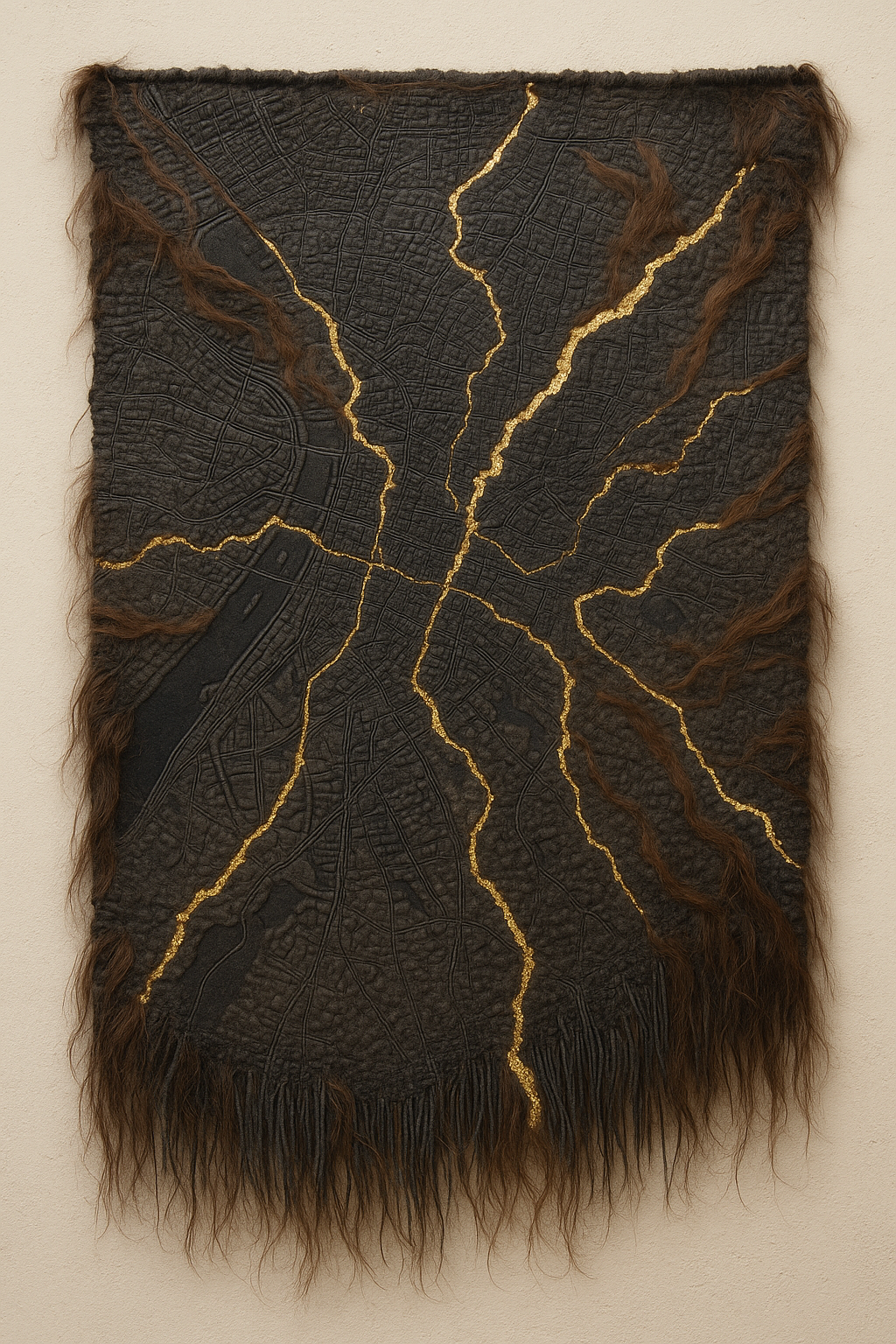
The RDC Art Collection Award followed minutes later. Sponsored by the corporation rebuilding the city’s post-2030 Olympic footprint, the prize plants Mitchells Plain painter Mellaney Roberts inside the new RDC headquarters on the Foreshore. Her 6 × 12-metre aerial oil-and-beeswax map “District H” compresses a century and a half of forced removals into one topographic skin: 1960s Group Areas roads slice across pre-colonial wetlands, while present-day drone-tracked turf wars glimmer as gold-leaf lesions. Roberts, who still teaches in her grandmother’s garage, told the crowd the painting “belongs to every auntie who cooleddusty streets with grey water.” The purchase price - rumoured north of ZAR 2 million - carries a 15 % resale royalty earmarked for township high-school art cupboards.
Landfill Liturgies, Spectral Highways, and the Finger Archive
Investec’s Emerging Artist Award doubled its cash to ZAR 500 000 and handed it to Warren Maroon, a 29-year-old sculptor from Elsie’s River who welds redemption from refuse. His bunker-like booth centres on “Flats Ark,” a four-metre skeletal boat lashed from chicken mesh, bread clips, and sun-bleached fuel cans known locally as blikkies. Inside the ribcage, three hundred bag-plastic houses glow like embers while motion sensors release children’s voices reciting streets erased from Google Maps. Maroon, who learned welding repairing burglar bars, labels the work “a reverse auction - selling disappearance back to the city that built it.” Investec clients queued for QR codes unlocking an AR overlay that floods the floor with a 1948 aerial image, revealing the wetland underneath their neighbourhoods.
The ORMS International Photography Prize - freshly fattened with a Phase-One camera, a year of cloud storage, and USD 10 000 - went to Sibusiso Bheka for “Ghost Labour,” a three-year portrait of an N3 petrol station shot at 03:47 a.m., the hour when undocumented Zimbabwean truckers swap manifests. Eight-minute exposures erase human bodies into phosphorescent smears, leaving only rigs and coal stoves glowing like x-rays of continental trade. Printed on matte aluminium, the series feels colder than the Highveld night that birthed it. Bheka, whose freelance sports gigs kept his family fed, quipped that the win “ends my Saturday wedding sentence.” ORMS instantly offered 25 box sets at USD 3 500 apiece; the first ten were scooped by a Beijing NFT syndicate plotting soul-bound tokens pegged to carbon offsets.
The Materiality Prize, bankrolled by Venice’s Fondazione dell’Arte Tattile, dispatched Stellenbosch-born industrial designer Amy Rusch to a deposed 14th-century convent on Giudecca Island for eight months. She emerged with “Grandmother’s Index,” 1,200 hand-cast plaster fingers dipped in rooibos and beeswax. Each digit maps an interview with an elder craftswoman - basket weavers, tanners, bead-workers - pinpointing the instant industrial standardisation erased their bodily yardsticks. Visitors wearing nitrile gloves reorder the archive by touch; overhead scanners translate the drifting taxonomy into a living dataset bound for the Venice Biennale. Weekly open studios for Venetian pensioners are mandatory, pushing back against the city’s art-priced geriatric exile.
Pop-Up Futures: Scaffold Cities, Sugar Vapour, and the Brunch That Never Was
While prize headlines detonated across WhatsApp, the Tomorrows/Today section - 900 square metres of raw drywall curated like a building site - kept the real gamble alive. Ghanaian architect DK Osseo-Asare’s movable scaffolds force galleries to rehearse spatial arguments overnight; inventory alone won’t survive the reconfiguration. Last year a Brazzaville dealer swapped three canvases for Angolan hardwood; this cycle a Dakar gallerist traded a video piece for twelve months of crypto-mining fans, cooling rigs humming with offshore-data poetics.
Circle Gallery from Nairobi unveiled Wanjiku Mwawasi’s thermal matatu-exhaust projections cast across refrigerated sugarcane. As stalks warm, caramel vapour rises like a carbon-budget confession. Next door, SMAC Gallery parked a soundproof booth where an AI voice recites the 1913 Natives Land Act in isiXhosa, Afrikaans, and Python. Visitors leave with aloe-laced printouts; legislation must now be tasted, not skimmed. By dusk the parallel economy ignited: the Pan-African Crypto Council ferried 120 collectors to a decommissioned grain silo where Senegalese collective HAKKUNDA auctioned dancers’ biometric data in cUSD stablecoin. Each bid triggered a strobe, the silo acting as a camera shutter recording its own voyeurs. The 40-gigabyte strobe file was minted instantly, fractionalised into 1,000 shares at USD 450 a pop; dancers kept 51 % governance, vetoing any future resale that forgets retrenched silo workers.
Morning-after metabolising started early. Nontsikelelo Mutiti printed counterfeit auction paddles reading “I CAN’T AFFORD TO LIKE THIS,” scattering them like social currency. By noon the paddles bought cappuccinos, Uber hops, even a small Walter Battiss gouache. NFC tags inside each paddle logged every swap, compiling a shadow ledger that revealed women of colour bartered 3.7 times more often, proving informal exchange still underwrites survival inside hyper-capital fairs.
Ghost Tags, MIT Tickets, and the Momentum That Skips Mimosas
While critics sipped recovery coffee, Geneva insurer YASARA’s crew RFID-tagged every winning piece, streaming micro-climate data to collectors’ phones - ownership as remote meteorology. Nwaubani’s tapestries rejected the chips; stray current scrambled them into broadcasting random South-Atlantic coordinates. Underwriters chalked it up to “electromagnetic hauntology” and hiked the premium 18 %, accidentally boosting the work’s market aura.
By Sunday’s final press walk-through the five laureates had already boarded new orbits: Nwaubani scored a last-minute MIT Media Lab residency; Roberts huddled with Cape Town’s climate-justice department to turn the RDC façade into a civic thermometer; Maroon fielded Documenta scouts hunting off-site Athens venues; Bheka flew to Shenzhen to lens automated port cranes; Rusch argued excess-baggage fees for sixty kilograms of plaster digits at the cargo terminal. None showed for the ceremonial closing brunch. As Laura Vincenti reminded the trailing journalists, “Momentum doesn’t pause for mimosas,” and the harbour light slid into another winter cycle, already indexing next year’s speculation.
What were the five major prizes awarded at the Cape Town Art Fair in 2026?
The five major prizes awarded at the Cape Town Art Fair in 2026 were the Tomorrows/Today Prize, the RDC Art Collection Award, the Investec Emerging Artist Award, the ORMS International Photography Prize, and the Materiality Prize. These awards recognized artists for their innovative works and significant contributions to the art world, ranging from fiber-optic tapestries to plaster finger archives.
Can you tell me more about the Tomorrows/Today Prize winner and their artwork?
The Tomorrows/Today Prize, described as the fair's "speculation engine," was awarded to Lagos-born, London-based artist Chidirim Nwaubani. She received a USD 25,000 acquisition purse and a guaranteed solo booth in 2027. Her winning triptych, "Ancestral Bandwidth," is three meters high and crafted from barbershop hair and discarded fiber-optic strands that emit red diagnostic pulses. The work incorporates Igbo cosmograms and causes gallery-goers' phone screens to glitch when they attempt to photograph it. Nwaubani, a former network engineer, views the piece as a challenge to the metaphorical nature of the Cloud, asserting that her ancestors archived information in braids long before servers existed.
Who won the RDC Art Collection Award and what was their creation?
The RDC Art Collection Award went to Mellaney Roberts, a painter from Mitchells Plain. This prize ensures her artwork will be displayed within the new RDC headquarters on the Foreshore. Her winning piece, "District H," is a massive 6 × 12-meter aerial oil-and-beeswax map. It condenses 150 years of forced removals in Cape Town, depicting 1960s Group Areas roads intersecting pre-colonial wetlands, with present-day drone-tracked turf wars represented by gold-leaf lesions. The purchase price for this piece was rumored to be over ZAR 2 million, with a 15% resale royalty allocated to township high-school art programs.
What distinguished Warren Maroon's winning work for the Investec Emerging Artist Award?
Warren Maroon, a 29-year-old sculptor from Elsie's River, received the Investec Emerging Artist Award, which carried a ZAR 500,000 prize. His compelling work, "Flats Ark," is a four-meter skeletal boat constructed from chicken mesh, bread clips, and sun-bleached fuel cans (blikkies). Inside this structure, three hundred bag-plastic houses glow like embers, and motion sensors activate children's voices reciting the names of streets erased from Google Maps. Maroon, who learned welding by repairing burglar bars, describes it as a "reverse auction – selling disappearance back to the city that built it." An augmented reality (AR) overlay, accessible via QR codes for Investec clients, revealed a 1948 aerial image of the wetland beneath the depicted neighborhoods.
Tell me about the ORMS International Photography Prize winner and their project.
The ORMS International Photography Prize was awarded to Sibusiso Bheka for his three-year project, "Ghost Labour." This prize included a Phase-One camera, a year of cloud storage, and USD 10,000. "Ghost Labour" is a series of portraits taken at an N3 petrol station at 03:47 a.m., capturing undocumented Zimbabwean truckers swapping manifests. Bheka used eight-minute exposures, which resulted in human bodies appearing as phosphorescent smears, leaving only the rigs and coal stoves glowing like X-rays of continental trade. Printed on matte aluminum, the series evokes the coldness of the Highveld night. The ORMS instantly offered 25 box sets for USD 3,500 each, with the first ten quickly acquired by a Beijing NFT syndicate.
What was the concept behind Amy Rusch's Materiality Prize-winning artwork?
Stellenbosch-born industrial designer Amy Rusch won the Materiality Prize, funded by Venice’s Fondazione dell’Arte Tattile. Her project, "Grandmother’s Index," was developed during an eight-month residency in a 14th-century convent on Giudecca Island. It consists of 1,200 hand-cast plaster fingers, each dipped in rooibos and beeswax. Each finger represents an interview with an elder craftswoman (basket weavers, tanners, bead-workers), marking the moment industrial standardization rendered their traditional bodily measurements obsolete. Visitors wearing nitrile gloves can reorder this archive by touch, and overhead scanners translate these arrangements into a living dataset destined for the Venice Biennale. Rusch also conducted mandatory weekly open studios for Venetian pensioners, aiming to counter the city's art-priced geriatric displacement.
Thabo Sebata is a Cape Town-based journalist who covers the intersection of politics and daily life in South Africa's legislative capital, bringing grassroots perspectives to parliamentary reporting from his upbringing in Gugulethu. When not tracking policy shifts or community responses, he finds inspiration hiking Table Mountain's trails and documenting the city's evolving food scene in Khayelitsha and Bo-Kaap. His work has appeared in leading South African publications, where his distinctive voice captures the complexities of a nation rebuilding itself.
View all articles →