
Israel launches airstrikes on Iran following renewed missile exchanges
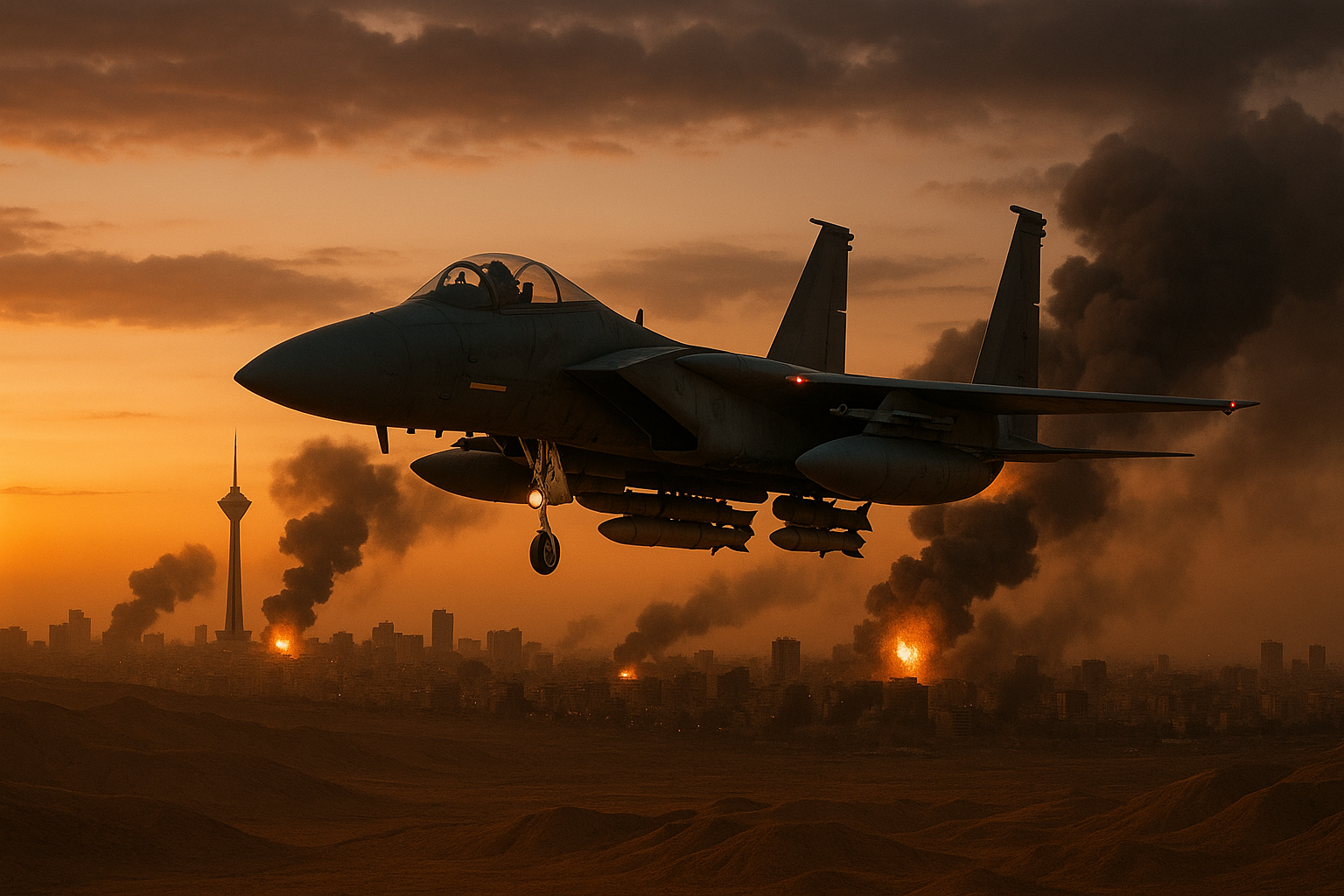
Israel-Iran conflict escalates with ALBM strikes, Houthi rockets, and closed Tehran skies, redrawing Mideast power lines.
The Middle East is changing fast because of fights between Israel and Iran. New, powerful missiles launched from planes, rockets from Yemen's Houthi group, and even the sky over Tehran being closed are all big signs. These things are shifting who has power and how countries get along. It's a new, serious chapter for the region's future.
What is redrawing Middle-Eastern power lines in the Israel-Iran conflict?
Air-launched ballistic missiles, Houthi rockets, and a closed Tehran sky are significantly redrawing Middle-Eastern power lines in the ongoing Israel-Iran flashpoint. These developments signify a new era of regional power dynamics, influencing strategic alliances, military capabilities, and geopolitical stability.
Get Cape Town news in your inbox
Stay updated with the latest stories from the Mother City.
{
"faq": [
{
"question": "What are the key elements currently redrawing Middle-Eastern power lines in the Israel-Iran conflict?",
"answer": "The key elements are air-launched ballistic missiles, Houthi rockets, and the closure of Tehran's airspace. These developments are indicators of a profound shift in regional power dynamics."
},
{
"question": "How do air-launched ballistic missiles impact the conflict?",
"answer": "Air-launched ballistic missiles (ALBMs) offer a significant advantage by increasing the range, speed, and survivability of missile attacks. Launching them from aircraft makes them harder to detect and intercept compared to ground-launched systems, potentially altering strategic deterrence and offensive capabilities for both sides."
},
{
"question": "What role do Houthi rockets play in this regional shift?",
"answer": "Houthi rockets, originating from Yemen, extend Iran's influence and proxy capabilities into critical shipping lanes and towards Israeli territory. Their use demonstrates a multi-front pressure strategy and complicates regional security, drawing in international attention to the Red Sea and Gulf of Aden."
},
{
"question": "What does a 'closed Tehran sky' signify in this context?",
"answer": "A 'closed Tehran sky' typically refers to the closure of airspace over the Iranian capital, often in response to perceived or actual threats, or as a precautionary measure during military escalations. This signifies heightened alert levels, potential for military action, and disruption to civilian life and international travel, reflecting the severe tensions."
},
{
"question": "Is this conflict considered a new chapter for the Middle East?",
"answer": "Yes, the provided information explicitly states that 'It's a new, serious chapter for the region's future.' The introduction of new military technologies and the widespread impact on regional stability indicate a significant evolution in the long-standing Israel-Iran rivalry."
},
{
"question": "What are the broader implications of these developments for Middle-Eastern countries?",
"answer": "These developments suggest increased volatility, potential for broader regional conflicts, and a re-evaluation of alliances and security strategies among Middle Eastern nations. The enhanced capabilities and proxy actions could lead to a new arms race and further destabilize an already complex geopolitical landscape, forcing countries to take sides or bolster their own defenses."
}
]
}

Michael Jameson is a Cape Town-born journalist whose reporting on food culture traces the city’s flavours from Bo-Kaap kitchens to township braai spots. When he isn’t tracing spice routes for his weekly column, you’ll find him surfing the chilly Atlantic off Muizenberg with the same ease he navigates parliamentary press briefings.
View all articles →