
Jeremy Clarkson reveals cancer diagnosis
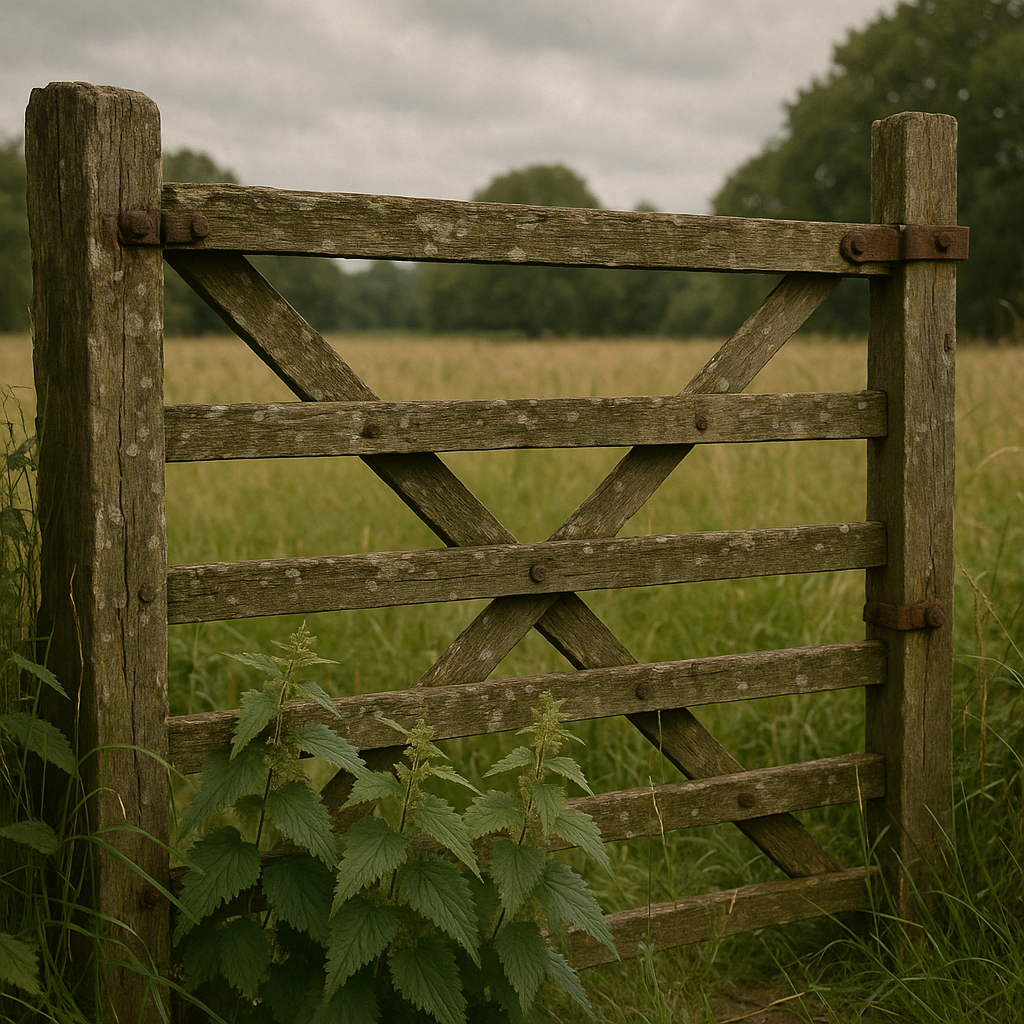
Clarkson's Farm season 5 takes an unexpected turn: Jeremy faces an early cancer diagnosis, documented with raw honesty amidst farm life.
Jeremy Clarkson's latest farming series takes an unexpected turn when he faces a cancer diagnosis. The show bravely captures his journey through treatment, including chemotherapy, revealing the raw honesty of his battle against the illness while managing Diddly Squat Farm. It's a surprisingly unfiltered look at a usually private man, showing his struggle with vivid, simple moments. The series blends his health updates with farm life, making the landscape a metaphor for his fight. His cancer was caught early, giving hope for a full recovery.
What is Jeremy Clarkson's medical condition in the latest Diddly Squat Farm series?
Jeremy Clarkson was diagnosed with cancer, specifically a "tumour." The series documents his journey through treatment, including chemotherapy, with the diagnosis being Stage 1B, showing clear margins and no nodal involvement. The show captures his battle against the illness while managing Diddly Squat Farm.
Get Cape Town news in your inbox
Stay updated with the latest stories from the Mother City.
1. A Camera Nobody Expected to Keep Rolling
Spring 2024 looked routine when Amazon’s crew returned to Diddly Squat Farm near Chipping Norton. The brief, pinned to the call sheet, read like every other year: follow the seed drills, film the lambing bales, chase the usual collisions between man and machine, and - if the sky behaved - grab pretty shots of the greening Cotswolds. Everyone knew which boxes to tick.
Instead, raw footage landed in the edit bay looking like medical surveillance. The left-of-frame tremor, the gravel-voiced coughing fits, and one drone pass that froze above the presenter’s head all pointed to something else. Sunlight caught a fresh, silver-white scar curling just under Clarkson’s hairline, impossible to crop out. By the time the first assembly cut was ready, the production office had already fielded a summons from the oncology department at the Churchill Hospital in Oxford.
The team confronted a stark fork in the road: bin an entire year of filming or stay locked on. They stayed. No trailers, no press releases, no tasteful spoiler interviews; just twelve unannounced minutes in episode seven that turned the season into the most unfiltered thing Clarkson has ever signed off on.
2. “Headlands” – The Scene That Broke the Format
Episode seven carries the innocuous title “Headlands.” The plan is simple: Clarkson, farm manager Charlie Ireland and resident tractor prodigy Kaleb Cooper are supposed to eyeball a collapsed wall that has just released twenty ewes into a neighbour’s oil-seed rape. That agenda lasts exactly thirty seconds. Ireland’s green Discovery eases to a stop and finds Clarkson propped against a five-bar gate, staring at a stand of stinging nettles as if they might display future odds.
An open lapel mic steps on the director’s usual fade-down and broadcasts the word “tumour” across living rooms everywhere. Lifelong fans who first met Clarkson in 1989 on the original Top Gear suddenly find themselves eavesdropping on a private, unscripted intake of breath. The handheld camera - operated that day by a sound recordist pressed into focus-pulling duty - backs off just enough to keep all three men in frame.
Seated on an up-turned feed bucket, Clarkson tells Cooper that the May blood work showed “something aggressive, but still this side of the bell-ringing hour.” Charlie asks whether the mass is nicely wrapped. Clarkson nods once, then tips the bucket so the lip leaves a pale dent across the back of his Barbour. A lamb bleats off-camera and no orchestral sting arrives to rescue the moment. Ambient farmyard noise fills the void: crow scarer, skylark, distant tractor idle. Amazon’s cutters leave every second intact, trading dramatic polish for raw honesty.
3. Behind the Lancia’s Steering Wheel and the Consultant’s Clipboard
Clarkson keeps driving, though the style dial has been turned down several notches. A bottle-green 1979 Lancia Fulvia HF snakes along the farm track at a law-abiding twenty-five miles per hour. Viewers used to tyre-smoking theatrics instead hear him mutter, “First-gear torque aplenty - none of it useful against carcinoma.” The same car appears later under the beige brick arch of the Churchill Hospital, bonnet speckled with Oxford summer grit, keys surrendered to a consultant who remains off camera.
Inside, the film crew halts at the ward door. Audio only: pulse-oximeter click, paper towel rustle, Clarkson asking whether the anaesthetist minds a quick voice memo for “the lad who thinks chemo is a fertiliser.” A male West-Midlands voice lists side-effects as if reciting rain probability: twelve percent taste distortion, a quarter chance of crushing fatigue, zero chance of finishing the hedge before first frost. The sentence that sticks is delivered like a footnote: “Early catch, survival curve as straight as a ploughed furrow - pointless if you forget to drop the drill behind.” Clarkson leaves the phone on speaker, so the fragment becomes public record.
Back at Diddly Squat, daylight returns without an establishing shot of any hospital. The only clock is a strip of white elastoplast peeking above Clarkson’s collar and a faint tremor in the teacup hand. Cooper, astride a quad bike, wonders whether chemo sessions will clash with the autumn barley auction. Clarkson’s answer lands dry: “If luck holds, the only early harvest will be the tumour.” The lower-left caption supplies the clinical fine print - Stage 1B, clear margins, no nodal involvement - while the camera holds a medium close-up on a wind-burned face that suddenly looks its age.
4. Farming Season, Chemo Season, and the Land in Between
The narrative now splits like a divided paddock. Tuesday drop-days show Clarkson in the oncology wing; Friday releases plant him back in the barn arguing whether a CT scan counts as field telemetry. Amazon’s numbers say casual viewers binge the tractor scenes, while the over-55 crowd replay the hospital interludes. Editors therefore let a single pivotal moment - the razoring of trademark stubble - run twice: once under fluorescent ward lights where the moustache survives, once beside the farmhouse stove where it does not. Reddit sleuths spot the mismatch; producers refuse to tidy it, citing a contract with documentary truth.
Agriculture refuses to press pause. A regenerative-barley trial in the west pasture marches in lockstep with the chemo calendar. When Charlie frets that soil acidity will scupper next year’s wheat, Clarkson fires back, “So is my blood, but we’re still drilling.” A swear word earns the season’s solitary bleep. Drone footage looking straight down on harrow stripes dissolves into a translucent PET-scan grid, rust blotches on a grain-store roof morph into post-op imagery. Landscape and pathology become interchangeable metaphors without a hint of voice-over guidance.
Guests are few. Hammond and May, tied up filming Eurocrash in Slovenia, mail a 3-D-printed Morgan three-wheeler with a note: “Can’t oversteer into remission.” Clarkson sets the toy on the office windowsill where condensation beads inside the cockpit - a visual jest on secondary tumours. The trio never appears in person, underscoring that Diddly Squat now exists behind a velvet rope of its own.
Episode four, “Margins,” opens on a sunrise sequence delayed forty-three minutes because anti-nausea tablets knocked Clarkson cold. The slate-grey sky stays, the skylark still sings, and Cooper shrugs: “Can’t improve on clear margins, can’t film around them either.” The phrase is silk-screened onto grey hoodies that sell out in a weekend, each emblazoned with the single white stripe of healing tape still riding Clarkson’s neck.
By harvest end, viewers have learned to read topography as biopsy. As Clarkson locks the barn, a text from “Oncology secretary” lights his eyes; the camera stays tight on indeterminate pupils, then fades to black on the soft tread of boots across gravel. No music swells, no narrator reassures. The illness is real, the land remains tilled, and the only footage left is the sound of footsteps retreating through a yard that, for now, still belongs to the man who once insisted speed fixes everything and has now discovered that, occasionally, the fix prefers to idle in first gear.
[{"question": "
What is Jeremy Clarkson's medical condition in the latest Diddly Squat Farm series?
", "answer": "Jeremy Clarkson was diagnosed with cancer, specifically a 'tumour.' The series documents his journey through treatment, including chemotherapy, with the diagnosis being Stage 1B, showing clear margins and no nodal involvement. The show captures his battle against the illness while managing Diddly Squat Farm."}, {"question": "How was Jeremy Clarkson's cancer diagnosis handled in the series?
", "answer": "The series took an unfiltered approach, integrating Clarkson's cancer journey directly into the farm's narrative. Unlike typical productions, there were no trailers or press releases about his illness. The raw footage, including his physical symptoms and a visible scar, was kept intact. A pivotal moment revealing the diagnosis occurs in episode seven, titled 'Headlands,' where he discusses his 'tumour' with farm manager Charlie Ireland and Kaleb Cooper, demonstrating the show's commitment to 'documentary truth.'"}, {"question": "What details are revealed about Clarkson's treatment?
", "answer": "The series shows Clarkson undergoing chemotherapy. Scenes depict him visiting the Churchill Hospital in Oxford, with audio capturing moments from his consultations, including discussions about side-effects and the positive prognosis due to an 'early catch.' He continues to manage the farm during treatment, often contrasting his medical appointments with agricultural duties, highlighting the blend of his personal health battle with the demands of farm life."}, {"question": "How does the series use the farm as a metaphor for Clarkson's battle?
", "answer": "The show expertly intertwines the agricultural narrative with Clarkson's health journey. Concepts like 'clear margins' (from his diagnosis) are echoed by Kaleb Cooper in the context of farm planning, and the 'divided paddock' metaphor illustrates the split between his oncology appointments and farm work. Drone footage of harrow stripes dissolves into PET-scan grids, and rust blotches on a grain-store roof morph into post-op imagery, making the landscape and pathology interchangeable metaphors without explicit voice-over."}, {"question": "Did any of Clarkson's Top Gear co-stars appear in the series during this time?
", "answer": "No, Richard Hammond and James May did not appear in person. They were reportedly filming 'Eurocrash' in Slovenia. However, they sent a 3-D-printed Morgan three-wheeler with a note: 'Can’t oversteer into remission,' which Clarkson placed on his office windowsill, providing a small, poignant moment of their support from afar."}, {"question": "What is the overall tone and message of the series regarding his illness?
", "answer": "The series adopts a raw, honest, and unfiltered tone. It portrays Clarkson's vulnerability and struggle without dramatic embellishment, allowing ambient farmyard noises to fill voids rather than orchestral stings. Despite the seriousness of his condition, there are moments of dry humor, and the narrative emphasizes hope due to the early detection of his cancer, suggesting a 'survival curve as straight as a ploughed furrow.' The series concludes with the illness being real, the land remaining tilled, and a sense of quiet resilience."}]
Liam Fortuin is a Cape Town journalist whose reporting on the city’s evolving food culture—from township kitchens to wine-land farms—captures the flavours and stories of South Africa’s many kitchens. Raised in Bo-Kaap, he still starts Saturday mornings hunting koesisters at family stalls on Wale Street, a ritual that feeds both his palate and his notebook.
View all articles →