
Jurassic judges: the saga continues
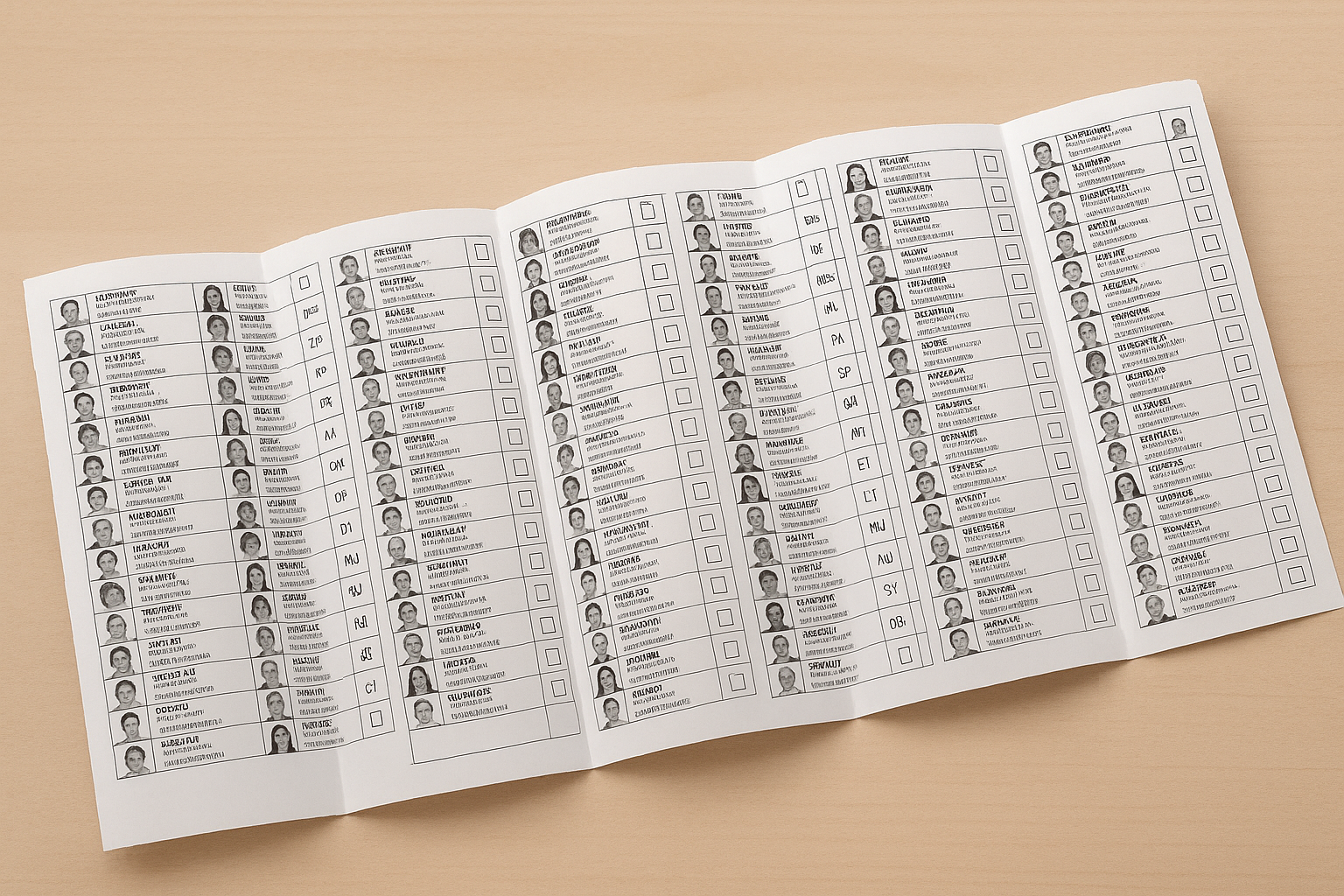
Mexico's judicial election debacle offers lessons for South Africa, highlighting the need for transparency and accountability in judicial appointments.
Mexico and South Africa are struggling to make their courts fair and honest. Mexico, after a wild election for judges, saw political friends get powerful jobs, even some with shady pasts. South Africa is trying to make its judges look more like its diverse people but is worried about losing experienced leaders. Both countries are trying new ideas to let people have a say in who judges are, but they need to be careful not to let politics completely take over the courts.
What challenges do Mexico and South Africa face in ensuring judicial independence and accountability?
Mexico and South Africa grapple with ensuring judicial independence and accountability. Mexico's recent judicial lottery led to concerns about political influence and corruption, while South Africa faces pressure to diversify its judiciary to reflect the nation's demographics. Both nations are exploring reforms to balance public participation with judicial integrity, navigating a path between secrecy and transparency.
Get Cape Town news in your inbox
Stay updated with the latest stories from the Mother City.
Mexico’s Lottery Day: 84 Faces, Zero Pedigree
A folded strip of paper the length of a diner menu landed in thirteen million hands on 1 June 2025. Eighty-four unfamiliar faces stared back, each boxed in a passport-sized photo and the same eight-point label: propuesta ciudadana. No party logo, no résumé line, no QR code - just a name and a smile. Voters picked nine future Supreme Court justices the way office workers pick lunchtime numbers for the office raffle. Turnout tanked - one in seven registered citizens bothered - and the winners all wore the same invisible badge: sympathy from Morena, the party in power. None broke five percent of the national count, yet the overhaul was complete; the old guard left the palace before dusk.
Foreign headlines screamed “narco-coup” and “judicial kidnapping.” The horror was real: twenty hopefuls carried open files linking them to organised crime, one still graced a U.S.-Treasury sanctions poster, and party volunteers distributed palm cards inside the legal buffer zone. Still, the caricature of noble temples sacked by populist vandals skipped a longer back-story. For thirty years Mexico cloned the U.S. model - president nominates, senate confirms - then poisoned it with Third-World salaries. A mid-level Uber driver in the capital earned more than a federal trial judge. “La plaza o la plata” became courthouse slang: take the post and the envelope, or step aside. By 2023 almost every citizen believed gavels were auctioned on the cheap, and even insiders admitted one fifth of appointments smelled of laundered money. Independence sounded like a punch-line.
The spark arrived in October 2024 when leaked spyware recordings hit YouTube. A dozen appellate judges hawked amparos - custom-made constitutional injunctions - for two-hundred grand each. Within hours #QueSeVayanTodos topped national trends; Claudia Sheinbaum, then Mexico City mayor, declared the bench had “coup-ed itself.” Three months later Congress voted 447-0 to blow up life tenure and stage elections. Opposition legislators walked out, but fury had already rewritten the rules.
Populism Without Guardrails: A Cartel Called Instituto
Copy-pasting campaign laws written for three-month presidential races onto 4,000 judicial hopefuls was the first design flaw. Spending caps froze at roughly seven thousand U.S. dollars per Supreme Court hopeful - barely enough for flyers, let alone fact-checking teams. Serious candidates faced a trilemma: self-fund and look like oligarch puppets, drop out, or lean on party logistics. Meanwhile the National Electoral Institute, overwhelmed, outsourced credential checks to private universities. One tech-savvy trafficking syndicate invented the “Instituto de Estudios Jurídicos de Occidente,” a pop-up law school whose site flicked on in February and vanished in July after rubber-stamping seven nominees. The punch-line lands harder when you remember the homicide rate hovered at twenty-five per hundred thousand.
Still, writing off elected benches as automatic liberal-democracy obituaries collides with awkward comparatives. Bolivia has chosen its Constitutional Tribunal since 2011; Uruguay lets partisan caucuses draw short-lists, then subjects them to public yes-no votes. Both countries outscore Mexico on corruption indices. The difference is not elections versus appointments; it is the thickness of guardrails - disclosure rules, bar-association vetting, investigative journalism, post-service audits. Mexico version-2025 scored zero on all four items, yet each is fixable. Congress has already green-lighted round-two reforms: twenty-candidate shortlists, three televised debates, and compulsory release of ten-year tax returns - transparency even the U.S. Supreme Court refuses.
Pretoria’s Beige Room: Interviews as Reality TV
South Africa watches from the opposite ditch. The Judicial Service Commission will reopen hearings on 13 April 2026 inside a colourless Midrand convention hall. The décor is beige, the coffee atrocious, the agenda existential. The Government of National Unity - an alliance stretching from Marxist red to boardroom blue - agreed on a single non-negotiable: new judges must “mirror the republic in race, gender, and class experience.” The miners’ union inserted the clause and dangles a 300,000-member strike if the bench stays pale and male.
Back-stage, battle lines mirror Mexico’s dilemma in eleven official tongues. Retired Chief Justice Dikgang Moseneke warns that “institutional memory” can’t be googled on day one; transformative constitutions need elders fluent in their own grammar. The EFF and Rhodes-Must-Fall graduates counter that memory without morality is a how-to manual for state capture. They want rookies: land-rights activists, public-interest litigators, even the attorney who once torched a cardboard constitution outside Constitutional Hill. Commission staff now confront a 42-page questionnaire that forces every applicant to “list one case you lost and explain how the defeat served social justice.” A 34-year-old hijab-wearing lawyer from Limpopo described defending a chief against platinum miners, losing in the High Court, yet seeding a campaign that cost the Australian investor its licence. Is that institutional memory or insurgent common sense? The commissioners must decide before the TikTok clips go viral.
The Narrow Ridge Between Secrecy and Show Trial
Mexico and South Africa share one revelation: judicial independence is a verb, not a safe-deposit box. Lock robes away in lifetime appointee clubs and you court gerontocracy, where draft opinions swap hands over wine debates about grape harvests. Throw benches to open plebiscites without armour and the gown becomes another campaign T-shirt, traded in back alleys. The viable track lies on a razor ridge that keeps civil society’s oxygen flowing.
South Africa is edging toward radical openness. Dedicated fact-checkers sit in the JSC overflow room, laptops tethered to company-registry servers, ready to expose any claim of “no state contracts.” Spouses’ tax returns join the public record, a disclosure level that would sink half the U.S. federal bench. Live-streams hit TikTok, where two-million-view clips roast judges who dodge land-expropriation hypotheticals. Mexico, meanwhile, back-tracks toward technocracy. A freshly minted Oversight Board - half chosen by law-school deans, half by civic lottery - can oust judges who fib on asset forms. Its debut docket features a justice who forgot to list a beach condo registered to his 26-year-old daughter, bought days after an ayahuasca decriminalisation vote.
Neither nation has reached the high plateau, yet both prove the issue is never voters versus experts; it is whether citizens keep the muscle to interrogate every answer power gives. When that muscle atrophies, ridge turns to cliff, and nations tumble - into a June Sunday where only thirteen percent show up, or into a hearing room so hushed the coffee urn seems to gurgle louder than the future of land reform.
What challenges do Mexico and South Africa face in ensuring judicial independence and accountability?
Both Mexico and South Africa are struggling with significant challenges in their judiciaries. Mexico recently experienced a controversial election for judges, leading to concerns about political appointments and corruption, with some elected individuals having questionable pasts. South Africa is striving to diversify its judiciary to better represent its population but is wary of losing valuable institutional memory and experienced legal minds. Both nations are exploring new approaches to involve the public in judicial selection, but they must carefully balance public participation with maintaining the integrity and independence of the courts.
How did Mexico's judicial election process unfold and what were its immediate consequences?
On June 1, 2025, Mexico held an unprecedented election where voters chose nine Supreme Court justices from a list of 84 propuesta ciudadana candidates, presented without party affiliations or detailed résumés. Turnout was low, and all winning candidates were perceived to have ties to the ruling Morena party, with none securing more than five percent of the national vote. This overhaul led to accusations of a "narco-coup" and "judicial kidnapping" internationally, especially since several candidates had links to organized crime or U.S. Treasury sanctions. The election was a direct response to widespread public distrust and leaked recordings exposing judicial corruption, leading Congress to abolish life tenure for judges.
What were the design flaws in Mexico's judicial election system and how are they being addressed?
The initial design flaws in Mexico's judicial election system included the application of campaign laws meant for presidential races to 4,000 judicial hopefuls. Spending caps were extremely low, making it difficult for serious candidates to campaign without party support or self-funding, which could lead to accusations of being an oligarch puppet. The National Electoral Institute, overwhelmed, outsourced credential checks, leading to instances like the fraudulent "Instituto de Estudios Jurídicos de Occidente" rubber-stamping nominees. Mexico is now addressing these flaws with reforms for round-two elections, including 20-candidate shortlists, three televised debates, and mandatory release of ten-year tax returns, aiming for greater transparency.
What is South Africa's approach to judicial reform and what are its main objectives?
South Africa is focusing on diversifying its judiciary to reflect the nation's racial, gender, and class demographics. This objective is strongly supported by various political and social groups, including miners' unions. The Judicial Service Commission (JSC) is implementing rigorous interview processes, including a 42-page questionnaire that requires applicants to explain how a lost case served social justice. The goal is to move towards a bench that embodies a broader range of experiences and perspectives, even if it means bringing in less experienced judges, to ensure the judiciary more accurately mirrors the

Isabella Schmidt is a Cape Town journalist who chronicles the city’s evolving food culture, from Bo-Kaap spice merchants to Khayelitsha microbreweries. Raised hiking the trails that link Table Mountain to the Cape Flats, she brings the flavours and voices of her hometown to global readers with equal parts rigour and heart.
View all articles →