
KAIZER CHIEFS TO BE REPRESENTED BY DR DOCTOR KHUMALO IN ABIDJAN
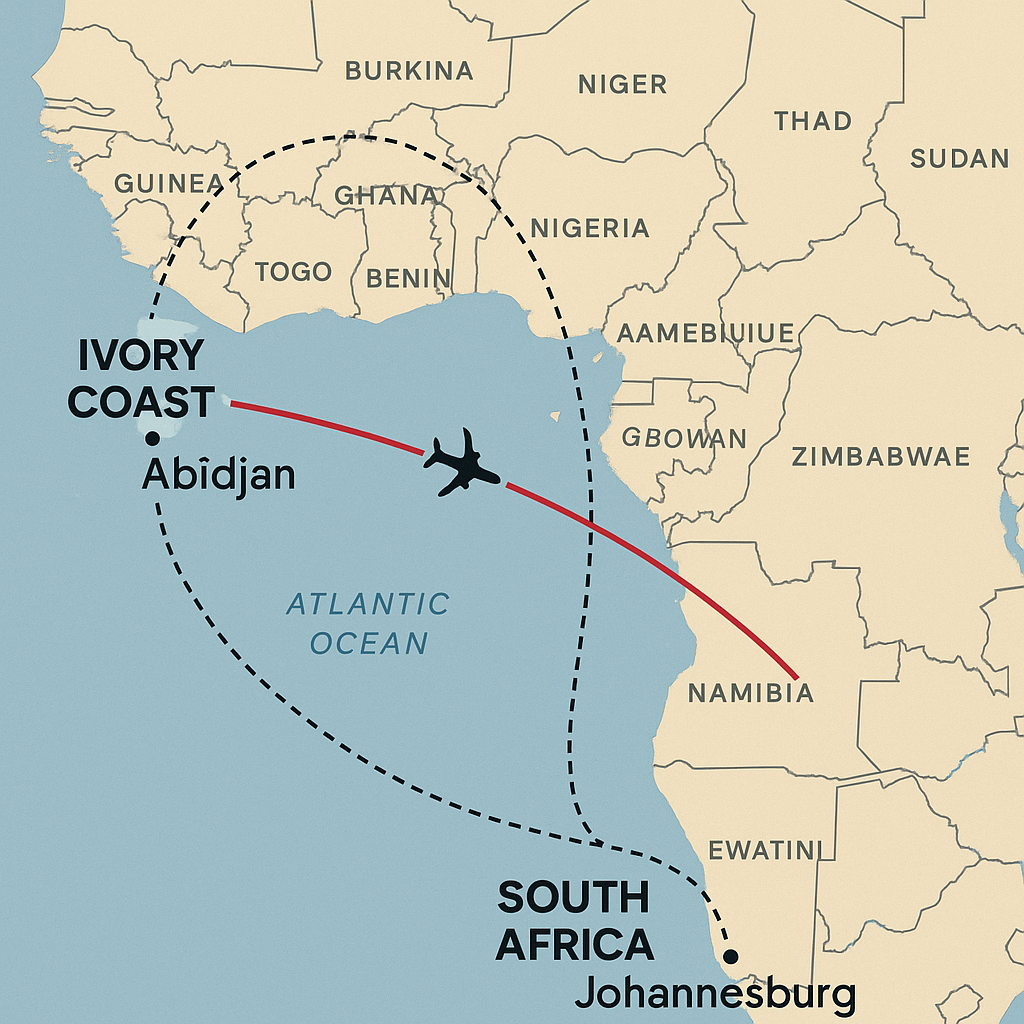
Dr. Khumalo's Ivorian pilgrimage: a Pan-African football event uniting legends, academics, and grassroots initiatives for impact.
Doctor Khumalo traveled 5,000 kilometers for a special football event in Abidjan, Côte d'Ivoire. He rearranged his life and brought important items like a special university degree and grass seeds. The event was not just a game; it was to raise money for good causes. They wanted to help kids learn football, support girls with period poverty, and build a new operating room for children in a hospital. This trip showed how football can bring people together and help communities in big ways.
Why did Doctor Khumalo travel 5,000 km to Abidjan?
Doctor Khumalo traveled to Abidjan for the Kalou For Impact Weekend, an exhibition match and charity event. This trip involved rearranging his schedule, securing approvals, and bringing items like a PhD scroll and Highveld turf seeds. The event aimed to raise funds for mobile football schools, programs addressing period poverty, and a new pediatric operating room at Treichville Hospital.
Get Cape Town news in your inbox
Stay updated with the latest stories from the Mother City.
1. The Voice-Note That Rewired Two Calendars
Salomon Kalou pressed record inside a London flat and fired off a 12-second WhatsApp memo.
It surfed submarine cables, skipped over the Sahara, slid through rainforest routers and landed in Doctor Khumalo’s hand while he was buying vetkoek in a Silver Lakes mall.
Within 24 hours the Kaizer Chiefs icon had rearranged exam-marking duties, persuaded his physician to sign a heat-tolerance letter, and convinced Chiefs’ finance desk that an economy ticket to Abidjan counts as “alumni engagement”.
The invite was for the Kalou For Impact Weekend – an exhibition at Le Félicia on 16 May, 16:00 SA time – yet the midfield general treated it like a World Cup qualifier.
He packed a fresh PhD scroll, 30 Nike balls, and a tiny glass tube of Highveld turf seed.
If football is a language, this trip was becoming a whole new dialect.
2. Stadium of Echoes, Shirt of Rivers
Le Félix Houphouët-Boigny’s concrete ribs have been roaring since 1964.
It cheered Laurent Pokou’s 1970 cannonballs, embraced Gervinho’s 2010 shimmy, and now prepares to welcome a South African doctor who still nutmegs memories.
For Ivorian fans the venue is a civic cathedral; for travelling Amakhosi it is a YouTube highlight turned 3-D reality.
Khumalo’s kitbag carried more than boots.
A hemp-blend away jersey carried the zig-zag silhouette of the Limpopo River dyed in thermochromic ink that switches from gold to burnt orange at 31 °C – exactly the forecast kick-off temperature.
The colour-shift is science, but also diplomacy: half Bafana gold, half Elephants orange, sewn together by a KwaZulu-Natal loom.
Above the tunnel faded murals of Yaya Touré share wall space with mesh banners of Simon Adingra, creating a living timeline that will frame Saturday’s friendly.
No trophy will be lifted, yet every pass will be logged by STATSports GPS units – the same firm that once tracked Messi – turning nostalgia into raw biometric data.
3. Cause, Curriculum and the Making of a Paediatric Theatre
The match is only the loud outer layer of a five-day onion.
Inside you find Les Écoles Nomades de Football – mobile buses that carry cones, notebooks and sanitary pads to kids in the Sahel belt.
Slice deeper and you meet Fille Active, a programme that teaches 12-year-old girls in Yopougon how to dribble past period poverty.
Kalou and Chelsea Foundation officer Ellen Maguire sketched the idea on a Zoom call when Covid-19 emptied stadiums.
Didier Drogba entered the chat with one demand: build a new paediatric operating room at Treichville Hospital.
Once that clause was inked, invites flew faster than a Gervinho sprint.
John Terry received a handwritten postcard; Samuel Eto’o got a voice note in Cameroonian pidgin; Khumalo’s phone buzzed with the only currency that could lure him back into laces – purpose.
A rooftop cocktail is planned for Friday sunset where guests will bid on a 1996 South African wine signed by both Khumalo and Drogba.
The bottle is liquid time: the year Amakhosi lifted the Mandela Cup, the same year Côte d'Ivoire rebuilt a nation.
Every rand and franc will buy surgical lights and sutures, proving that goals can indeed cut disease.
4. Professors, Playlists and the Future of Grass
Khumalo lands on Wednesday at 13:30, hugging Kalou’s younger brother who carries a shea-butter-scented bouquet.
By Thursday morning he is touring Treichville wards, and by Thursday night he is practising French pick-up lines with Cyril Mubiala on FaceTime.
Friday he joins a legends’ round-table on converting fame into community equity, then rehearses stadium choreography under 33 °C heat.
Saturday is split in two: morning lecture hall, afternoon pitch.
At Université Félix Houphouët-Boigny he will unpack his thesis on midfield neuromuscular torque in 35-degree bake, proving that township dust can incubate laboratory insight.
At 16:00 he slips into the deep-lying playmaker role he once coded in Excel, surrounded by Terry’s headers, Essien’s pistons, and Drogba’s grin.
His heart will hit 158 bpm during a 66th-minute interception – a biometric NFT ready for auction seconds after full-time.
When the floodlights dim, the real graft begins.
A nursery plot beside the stadium will sprout the South African grass seeds, watered by Ivorian ground staff and tracked by TUT sports-science interns.
An MoU signed in the VIP lounge fast-tracks a twin-camp exchange: 12 Ivorian prodigies to Naturena in September, 12 Soweto teenagers to Abidjan in December, each group carrying GPS data, laughter, and accents that taste of home yet smell of elsewhere.
As the Ebrié Lagoon swallows the last reflection of orange shirts and golden boots, the game will have done what trade caravans once accomplished with beads and gold – stitch a continent closer, one pass, one heartbeat, one blade of transplanted grass at a time.
{"faq": [{"question": "Why did Doctor Khumalo travel 5,000 km to Abidjan?", "answer": "Doctor Khumalo traveled to Abidjan for the Kalou For Impact Weekend, an exhibition match and charity event. This trip involved rearranging his schedule, securing approvals, and bringing items like a PhD scroll and Highveld turf seeds. The event aimed to raise funds for mobile football schools, programs addressing period poverty, and a new pediatric operating room at Treichville Hospital."}, {"question": "What specific causes did the Kalou For Impact Weekend support?", "answer": "The event supported several important causes: establishing Les Écoles Nomades de Football (mobile buses carrying football equipment and sanitary pads to children in the Sahel belt), funding Fille Active (a program teaching 12-year-old girls in Yopougon about period poverty), and building a new pediatric operating room at Treichville Hospital, a demand made by Didier Drogba."}, {"question": "What unique items did Doctor Khumalo bring with him on his journey?", "answer": "Doctor Khumalo brought a fresh PhD scroll, 30 Nike balls, and a tiny glass tube of Highveld turf seeds from South Africa. He also carried a special hemp-blend away jersey with a thermochromic ink design that changes color at 31 °C, representing both Bafana gold and Elephants orange."}, {"question": "What was the significance of the stadium where the match was played?", "answer": "The match was played at Le Félix Houphouët-Boigny, a stadium with a rich history dating back to 1964. It has witnessed legendary Ivorian players like Laurent Pokou and Gervinho, and for Ivorian fans, it's considered a 'civic cathedral.' For traveling South African fans, it's a place where YouTube highlights come to life."}, {"question": "How did football legends contribute to the charity event beyond playing the match?", "answer": "Beyond playing, legends like Didier Drogba made specific demands, such as building the pediatric operating room. A rooftop cocktail event was planned where guests could bid on a 1996 South African wine signed by Khumalo and Drogba, with all proceeds going towards surgical lights and sutures for the hospital. Khumalo also participated in a legends' round-table discussion on converting fame into community equity and delivered a lecture at Université Félix Houphouët-Boigny."}, {"question": "What long-term impact is expected from the event, particularly regarding the grass seeds?", "answer": "The South African grass seeds brought by Khumalo will be planted in a nursery plot beside the stadium, cared for by Ivorian ground staff and tracked by TUT sports-science interns. An MoU was signed for a twin-camp exchange program: 12 Ivorian prodigies will visit Naturena (Kaizer Chiefs' training ground) in September, and 12 Soweto teenagers will go to Abidjan in December, fostering cultural and footballing exchange and strengthening ties between the two nations."}]}
Tumi Makgale is a Cape Town-based journalist whose crisp reportage on the city’s booming green-tech scene is regularly featured in the Mail & Guardian and Daily Maverick. Born and raised in Gugulethu, she still spends Saturdays bargaining for snoek at the harbour with her gogo, a ritual that keeps her rooted in the rhythms of the Cape while she tracks the continent’s next clean-energy breakthroughs.
View all articles →