
Karl Bremer Hospital celebrates 70 years of dedicated service to the community
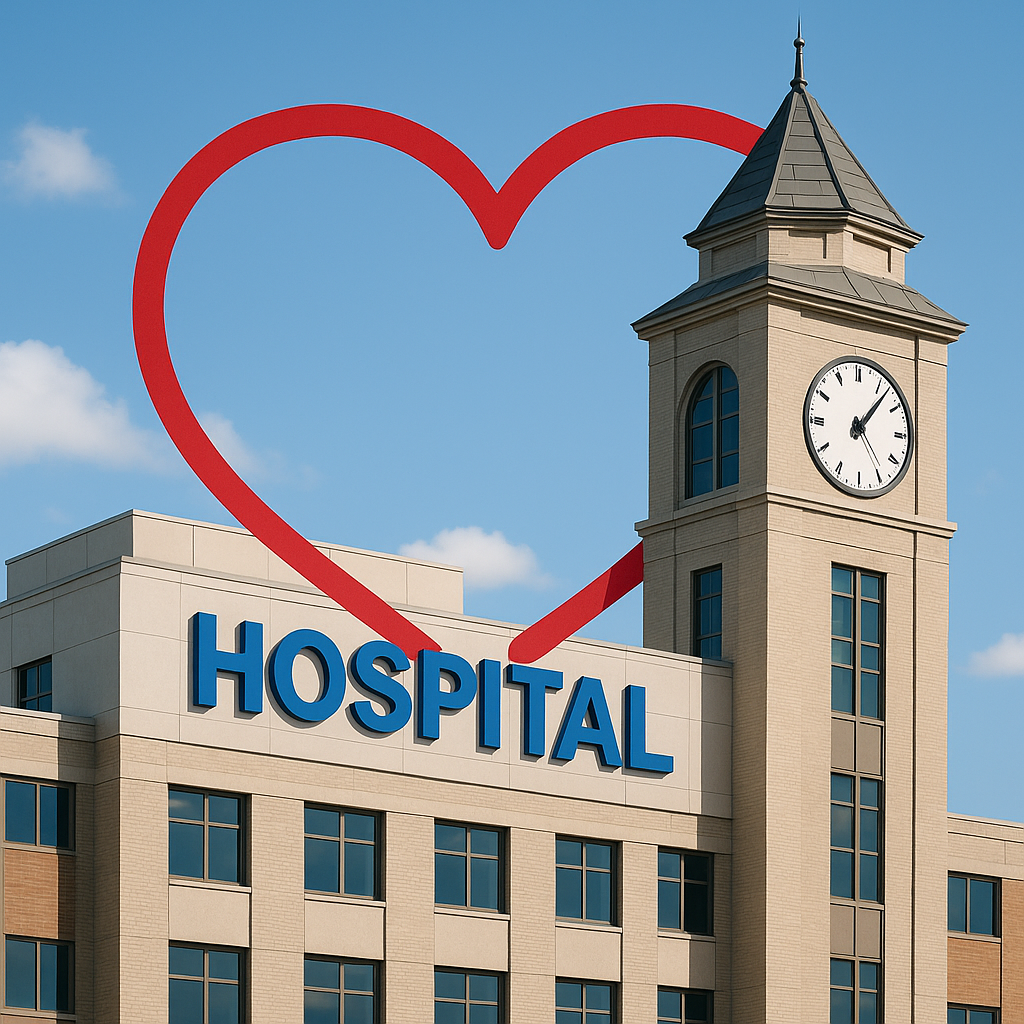
Karl Bremer Hospital: A quietly remarkable public hospital in South Africa, delivering over 250,000 babies, training doctors, and saving stroke patients. A testament to district-level care.
Don't be fooled by its modest looks; Karl Bremer Hospital is a hidden gem! This cinnamon-colored building, often mistaken for an old college, is actually a bustling hub of life-saving medical care. It's famous for treating strokes super fast, educating doctors, and keeping infections at bay. This hospital proves that clever solutions can beat big budgets, making a huge difference in the lives of many.
What is Karl Bremer Hospital known for?
Karl Bremer Hospital is known for its high-quality, cost-effective district-level care, particularly in stroke treatment, with a door-to-needle time of 38 minutes. It also excels in medical education, despite losing official teaching hospital status, and has a low surgical-site infection rate of 1.2%.
Get Cape Town news in your inbox
Stay updated with the latest stories from the Mother City.
How Modest Bricks Mask a Medical Marvel
Approach the corner of Mike Pienaar Boulevard and Carl Cronjé Drive and you will spot a flat-roofed, cinnamon-coloured building that looks more like an old technical college than a life-saving centre. Salt streaks trace the walls, the railway hums nearby, and fast-food signs blink from across the street. Step through the automatic doors, however, and the humdrum façade dissolves into a hive of purposeful energy that has welcomed more than 250 000 newborns, schooled thousands of health professionals and, in the last ten years alone, snatched roughly 1 400 stroke victims from death or permanent paralysis.
Karl Bremer opened its doors on 11 October 1956, during the optimistic early years of apartheid’s “modernisation” drive. Seventy years later the corridors still carry the scent of Dettol and fresh coffee, but they also echo with history: the moment in 1968 when a home-made heart-lung machine whirred to life in Theatre 2; the 1985 blackout when nurses manually squeezed ventilator bags until dawn; the spring of 2020 when makeshift “Covid huts” sprouted in the parking bays and, once the surge passed, were upgraded into a permanent 18-bed high-care annex. Each episode left physical marks - plaques, murals, a slightly crooked ramp - but, more importantly, a mindset that stubborn improvisation can outwit bigger budgets and shinier towers.
Today the hospital is simultaneously archive and laboratory: it guards institutional memory while testing whether district-level care can still outperform its price tag. The metrics speak loudly. Surgical-site infection rates sit at 1.2 %, half the national mean. Stroke patients receive clot-busting drugs 38 minutes after arrival, inside the international “door-to-needle” target. Midwives handle three-quarters of normal births, yet perinatal mortality rivals that of far richer countries. These numbers do not appear on any billboard, yet they shape daily life in Cape Town’s northern suburbs more decisively than many marquee private wings.
Education Without a Lecture Hall
The Dawn Chorus of Learning
At 07:00 every Wednesday wooden chairs scrape across the faded linoleum of the 180-seat auditorium. Registrars wheel in recent admissions, project CT scans onto a chipped screen and debate blood-gas values while coffee cups circulate. The gathering is called “grand rounds”, yet there are no ivory-tower hierarchies here: community doctors, rural clinic sisters and Tygerberg Hospital professors argue shoulder-to-shoulder. The session streams to 15 distant sites - Worcester, Vredenburg, even a mining clinic in Kathu - feeding roughly 1 200 clinicians a month with bite-size, real-time lessons.
Stellenbosch University quietly nicknames the facility its “clinical backyard”. Fourth-year students spend a fortnight in the 20-bed high-care cubicles, wrestling septic shock with the bare minimum of gadgetry. Dietetics post-graduates run a soft-food tasting table for head-and-neck-neck cancer survivors every Tuesday, because texture, not calories, is often the decisive factor in post-radiation recovery. Pharmacy interns recalculate warfarin scripts under the watch of a grey-haired clinical pharmacist; alumni surveys show they leave with 40 % higher confidence in independent prescribing than peers trained elsewhere. Karl Bremer may have lost official “teaching hospital” status in the late 1990s, yet its educational footprint has grown wider and deeper.
Anatomy of an Ordinary Tuesday
Six Snapshots from Dawn to Dusk
-
06:45 – Theatre 3*
Cleaner Sarah Mtyobile polishes terrazzo until it gleams like liquid marble. Infection-control nurses later swab the floor; results feed into a database that has kept surgical-site infections at 1.2 %. Sarah shrugs: “A shiny floor helps a surgeon think straight.” -
08:03 – Outpatient Corridor B*
Sister Leticia April clips red pegs onto diabetic folders, blue for hypertension, yellow for new diagnoses. She copied the low-tech triage system from a São Paulo favela clinic; it trims average waiting time from 84 to 61 minutes without extra staff or software. -
11:20 – Short-Stay Unit*
Once a linen cupboard, now a six-bed observation bay. A 78-year-old stroke survivor is declared safe for discharge after a 14-minute huddle between doctor, son and social worker. Median length-of-stay has fallen to 5.6 hours, unlocking 4 500 high-care bed-hours annually. -
14:15 – Pharmacy*
A donated Danish robot rattles out 1 500 ARV tablets per minute. Pharmacist Zuleiga Ryland teaches a 17-year-old to sync her nightly dose with the theme song of her favourite telenovela. Viral suppression, she says, can arrive within three months if the rhythm never slips. -
19:45 – Main Passage*
Night porter Jerome Pietersen wheels an oxygen cylinder past the Daisy Project mural: 3 000 bright daisy petals, each bearing the name of a local donor who paid for pulse oximeters, portable ultrasounds or a single box of latex gloves.
The Stroke Cascade – From Happy Accident to Global Model
Rewiring Emergency Pathways
In 2014 a burst pipe at a larger referral centre forced ambulances to divert stroke alerts to Karl Bremer. When the first scans landed, the clock already read 92 minutes; clot-busting alteplase was nearly useless. Instead of shrugging, emergency physician Vernon September, radiographer Morné October and nursing manager Elna Swart sketched the patient journey on butcher paper. Applying lean “Kaizen” principles borrowed from Toyota, they scrapped duplicate forms, premixed thrombolytics and placed a pharmacist inside resuscitation bay 3. By 2022 door-to-needle time averaged 38 minutes - seven minutes inside the international target - while complication rates stayed flat.
The European Angels Initiative took notice. Karl Bremer became the first African recipient of “Diamond” certification, granted when 85 % of eligible stroke cases meet strict benchmarks. Eighteen rural hospitals now beam CT scans and vitals directly to Karl Bremer’s stroke team; real-time advice cuts tertiary referrals by 30 % and saves an estimated R42 million in annual transfer costs. Patients in Piketberg or Ceres receive the same evidence-based care as those wheeled through Bellville’s main entrance - proof that geography need not decide destiny.
Births, Backlogs and Belonging
Deliveries and Waiting Lists
The obstetric wing squeezes 16 births a day from 23 labour beds. Midwife-led care has jumped from 48 % to 72 % of normal deliveries in just over a decade. Despite 38 % of mothers arriving with HIV, hypertension or obesity, the perinatal mortality rate hovers at 7.3 deaths per 1 000 births - comparable to Turkey or Mexico.
Elsewhere, the orthopaedic and general-surgery queues refuse to shrink; 1 800 names currently wait for hips, hernias or cataracts. CEO Jonathan Lucas has pried 26 extra after-hours theatre slates per month out of the provincial treasury. Early projections suggest the backlog could fall by 60 % within fourteen months - provided the anaesthetic and nursing overtime lines survive next year’s budget slash.
The Community as Co-Worker
Volunteers, Veggies and Victory
The Daisy Project germinated when Dr Lizann Victor spotted patients napping on the floor while queuing for X-rays. Today 650 volunteers drive discharged elders home, knit compression stockings and reconcile pharmacy spreadsheets in a repurposed stationery cupboard. During the 2023 taxi strike they piloted a minibus shuttle so staff could reach their shifts; emergency services never dropped a beat. Victor’s mantra: “Donors are staff members who don’t wear name badges.”
Retired accountant Koos Laubscher now balances drug-usage ledgers every Monday, freeing pharmacists to counsel teenagers on ARV adherence. A nearby church supplies surplus vegetables that become soup for overnight guardians in the paediatric ward. The hospital’s invisible workforce - grandmothers, car guards, students - creates slack in every system.
Hidden Infrastructure, Visible Impact
Power, Water and Wires
Behind the boiler room squats a 750 kVA generator installed in 2021 after a three-day blackout claimed the life of a ventilated toddler. Under the main driveway lies a 50 GB-per-second fibre optic cable laid by engineering students; it carries tele-stroke images and radiology back-ups at the speed of Netflix. Ninety per cent of roof runoff collects in underground tanks; gravity feeds toilets and theatre cooling towers, cutting the annual R1.2 million municipal water bill.
A Rhodes University carbon audit found that emissions per admission have fallen 34 % since 2017 even though patient numbers climbed 22 %. The facility’s carbon diet comes from LED lights, solar water heaters and an anaesthetic-gas recycling unit that looks like a silver fridge parked beside Theatre 4.
Future Sketch: Karl 2030
Beds in the Mall and Robots in the Ward
Treasury permitting, a vacant patch of provincial land next door will sprout a 24-bed step-down unit for stroke and orthopaedic rehab - an expansion projected to free 2 000 medical-bed days a year. Meanwhile, project “Karl 2030” wants to install a chronic-disease kiosk inside Bellville’s biggest shopping centre. Shoppers could slip an arm into an HbA1c cuff or step on a Bluetooth scale between grocery aisles. A six-week pop-up in 2022 screened 3 400 visitors; 42 % were hypertensive, 18 % had undiagnosed diabetes. The kiosk model could travel to taxi ranks, churches and university campuses - turning community spaces into extensions of the hospital waiting room.
None of these plans will succeed without institutional memory. A team of oral historians is digitising nurses’ recollections of the first paediatric AIDS ward in 1993, a janitor’s story of hiding anti-apartheid activists among the laundry carts, and a polio survivor who returns annually to thank the physio team. The recordings live in Stellenbosch University’s open archive, ready to remind future managers that Karl Bremer is not only concrete, cables and kaizen charts, but also stubborn hope made audible in corridor gossip and 07:00 grand rounds.
[{"question": "What are the key areas of expertise at Karl Bremer Hospital?", "answer": "Karl Bremer Hospital is renowned for its high-quality, cost-effective district-level care. Its primary areas of expertise include rapid stroke treatment, achieving a remarkable door-to-needle time of 38 minutes, medical education (despite losing official teaching hospital status), and maintaining a very low surgical-site infection rate of 1.2%."}, {"question": "How has Karl Bremer Hospital managed to achieve such high standards despite potential budget constraints?", "answer": "Karl Bremer Hospital operates on the principle that 'clever solutions can beat big budgets.' They achieve high standards through innovative problem-solving, such as adapting low-tech triage systems, optimizing patient flow to reduce length of stay, securing donations for equipment, and fostering a strong volunteer network. Their approach, inspired by 'Kaizen' principles, focuses on continuous improvement and efficient resource utilization."}, {"question": "What is Karl Bremer Hospital's history and how has it influenced its current operations?", "answer": "Opened in 1956, Karl Bremer Hospital has a rich history marked by challenges and innovative responses. Events like operating during a blackout, adapting to the COVID-19 pandemic by converting 'Covid huts' into a permanent high-care annex, and pioneering medical procedures like using a home-made heart-lung machine have instilled a culture of 'stubborn improvisation.' This historical resilience has shaped its current mindset, where ingenuity often outweighs financial resources."}, {"question": "How does Karl Bremer Hospital contribute to medical education?", "answer": "Despite losing its official 'teaching hospital' status in the late 1990s, Karl Bremer Hospital remains a vital educational hub. It hosts weekly 'grand rounds' that stream to numerous distant sites, educating approximately 1,200 clinicians monthly. Stellenbosch University considers it a 'clinical backyard' where fourth-year students gain practical experience, and dietetics and pharmacy post-graduates receive hands-on training, often developing higher confidence in independent prescribing than peers trained elsewhere."}, {"question": "What innovative approaches has Karl Bremer Hospital implemented for stroke care?", "answer": "In 2014, a serendipitous diversion of stroke patients led to a complete overhaul of their emergency pathways. By applying 'Kaizen' principles, they streamlined processes, reduced duplicate forms, pre-mixed thrombolytics, and even placed a pharmacist in the resuscitation bay. This resulted in an average door-to-needle time of 38 minutes, surpassing international targets. This model has earned them 'Diamond' certification from the European Angels Initiative and serves as a global model, with 18 rural hospitals now beaming scans to their stroke team for real-time advice."}, {"question": "How does Karl Bremer Hospital engage with its community and maintain its infrastructure?", "answer": "The hospital actively engages its community through initiatives like 'The Daisy Project,' which mobilizes 650 volunteers for various tasks, from driving patients to reconciling pharmacy spreadsheets. A nearby church supplies vegetables, and retired professionals volunteer their skills, creating an 'invisible workforce.' For infrastructure, they've installed a 750 kVA generator, a high-speed fiber optic cable, and harvest 90% of roof runoff for non-potable uses. These efforts have reduced emissions by 34% since 2017 while patient numbers increased, demonstrating a commitment to sustainability and community partnership."}]

Isabella Schmidt is a Cape Town journalist who chronicles the city’s evolving food culture, from Bo-Kaap spice merchants to Khayelitsha microbreweries. Raised hiking the trails that link Table Mountain to the Cape Flats, she brings the flavours and voices of her hometown to global readers with equal parts rigour and heart.
View all articles →