
Karyn White talks love, loss, and Cape Town comeback
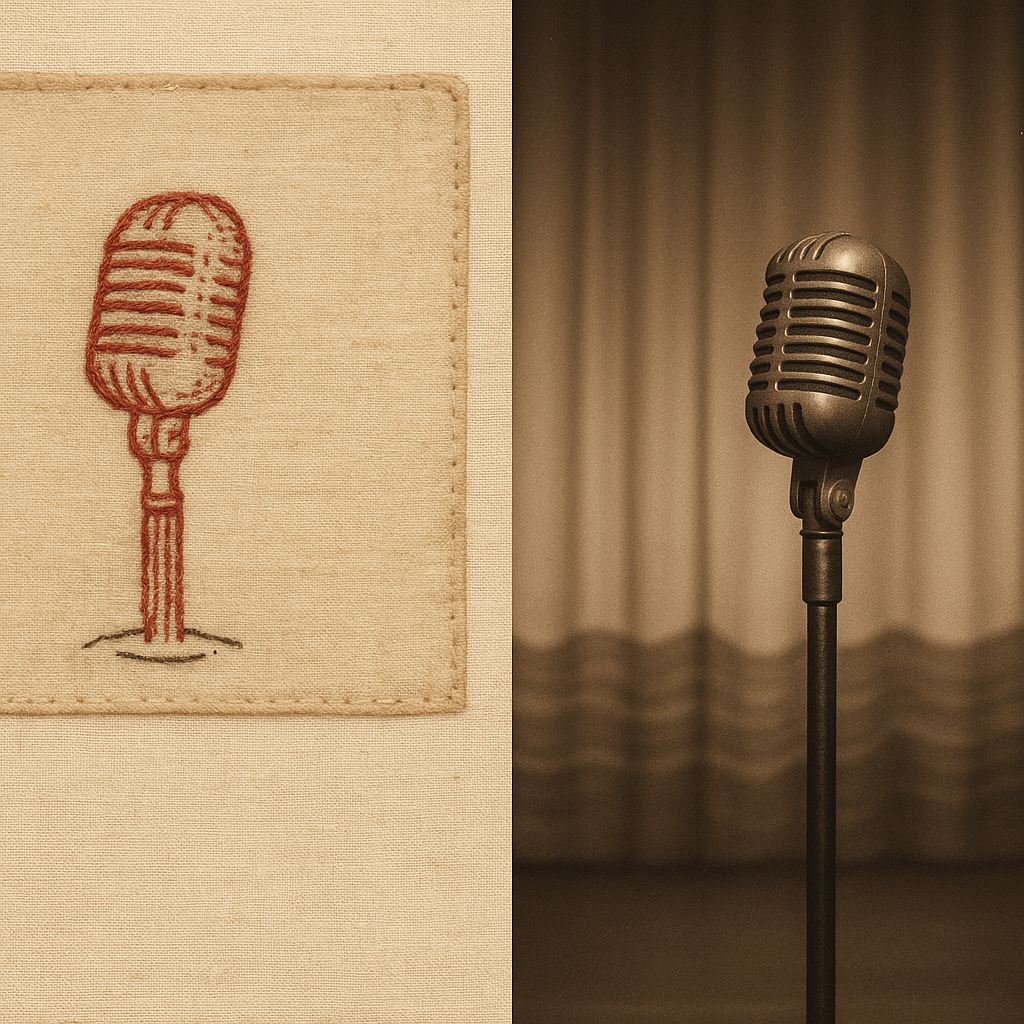
Karyn White returns to Cape Town, blending personal history and performance. Experience her soulful journey and powerful music.
Karyn White loves Cape Town, especially in April! It's super special because of a gospel choir she heard at the airport years ago. Now, she goes there to sing, feel inspired, and connect with people. It's like a spiritual and creative journey for her, making her music even more amazing.
What brings Karyn White back to Cape Town every April?
Karyn White returns to Cape Town every April for a "re-entry" that balances personal and professional obligations. Her visits, deeply spiritual and creatively rejuvenating, are influenced by a profound 2015 experience with a gospel choir at the airport, making the city a significant waypoint for her musical and personal identity.
Get Cape Town news in your inbox
Stay updated with the latest stories from the Mother City.
1. Arrivals Hall Testimony: How a Midnight Chorus Rewrote Her Compass
Karyn White still smells the waxed floor of Cape Town International whenever she sings “Superwoman.”
In 2015 she landed long after midnight, expecting silence, and found a gospel choir arranged between the baggage belts. They launched into the bridge in the exact key she still uses, clapping on the two and four until lost tourists filmed with flip-phones that glowed like vigil candles. She joined mid-phrase, suitcase rolling behind her like a reluctant backup dancer, and understood in real time that the crowd wasn’t greeting an R&B star; they were swapping verses with a sister who had shown up right on time for church.
She files that memory between the citrus snap of her mother’s Jean Naté splash and the first moment WBLS spun her debut - two other waypoints that remind her who she is when the dressing-room bulbs feel like interrogation lamps.
South Africa, she realized, listens with its whole body; shoulders, taxi hoots, and airport glass all become part of the mix. Ever since, April on the southern tip of the continent has functioned as her personal fiscal year, the month when the ledger between gift and obligation gets balanced in front of strangers who know every ad-lib.
The upcoming stand at the same jazz club where it all began is therefore billed as “one night only,” yet she has already booked the same corner suite and sent the promoter a playlist of pre-show requests heavy on Miriam Makeba and Prince - artists who taught her that exile and ecstasy share a back-beat.
She does not call the trip a tour; she calls it a re-entry, the way astronauts speak of friction and fire before touchdown.
2. The Relic, the Roof, and the Ring of Salt: Rehearsal Rituals
Tucked inside her travel Bible sits a thumb-sized square of embroidered cotton - part of a doek a stranger pressed into her hand in 2015.
The woman whispered, “It survived the bulldozers,” and walked away before security could ask questions. White slid the fragment next to a 1977 photo of her mother beaming in a pageant sash: displacement on one side, applause on the other.
Between those two scraps of cloth she locates the reason she refuses to coast through any set list; every show is a stitching job, mending separated histories with sixteenth-note precision.
Rehearsals launch in a North Hollywood bunker where the air-conditioner drones in B-flat, the home key of her 1991 chart-topper “Romantic.”
She starts each morning with thirty minutes of lip-trill descents, picturing the concrete wave that roofs the Cape Town International Convention Centre, a sight that once made her wonder how many slave ships that same water had swallowed. When her diaphragm finally feels as wide as the Indian Ocean, she signals the band to plug in.
Lethabo, the drummer born in Benoni, lands two nights early to “catch the moon chemistry,” convinced that if the Atlantic full moon blinks twice in his cymbals, every tempo sin will be pardoned.
Her rider demands three kilograms of coarse Atlantic salt harvested by a women’s collective in Kalk Bay.
Before doors open she scatters a fine circle around the stage, a trick Prince shared back in 1990 to absorb static electricity that can thin high frequencies. Whether or not the physics textbook agrees, the granules give her a chalk-line perimeter where the teenage Karyn can dance without fear of grown-up static.
Inside that ring she tests a new a-cappella piece titled “Table Mountain, Table Me,” written on a 2020 napkin while CNN showed wildflowers exploding across the Cape flats the moment lockdown exhaust vanished. The lyric braids her post-divorce silver strands with the mountain’s silver cloud cover, arguing that both women and geology need seasons of mist to hide the faults that are busy healing.
3. No Skips, Only Heartbeats: The Evolving Set List
The file name on her laptop reads “No Skips, Only Heartbeats,” a living document that mutates faster than airline baggage allowances.
The spine never changes: “Secret Rendezvous” drops a whole-step after 9 p.m. to accommodate the dusk that sneaks husk into her tone; “Love Saw It” becomes a cross-continental duet with a choir director she met on Instagram during lockdown; and midway through the night the PA dies on purpose so that the hall can become a campfire.
Phones rise like constellations while three local vocalists trade verses of “Superwoman” with her, a ritual born in 2017 when Pretoria’s grid collapsed and the audience refused to leave, singing her back to her feet until the lights blinked apology.
Between run-throughs she video-calls Nicole, her 23-year-old daughter dissecting inter-generational trauma for a Clark Atlanta dissertation.
One survey prompt asks performers to list places where their mother’s timbre noticeably shifts; South Africa tops the spreadsheet. White laughs, then saves the file beside the embroidered relic, proof that cartilage remembers oceans even when passports forget.
Nicole’s data, the salt ring, and the doek fragment form a trinity that keeps nostalgia from curdling into shtick; every night must feel slightly dangerous, like jumping rope with a live extension cord.
Climate change has nudged the Cape’s southeasterly wind three weeks ahead of schedule, rattling Langa’s corrugated roofs while she rehearses local teens on harmony stacking for “Missing You.”
One of those girls, now 21, fires off voice notes that splice Xhosa clicks into Minneapolis-style funk; White plans to haul her onstage without warning, a practice she calls “guesting the future.”
The idea is simple: the headliner becomes the backdrop, allowing a new fragment of displaced history to step into the light while vintage hooks float like safety nets underneath.
4. Wardrobe, Wind, and the War on Vanity: Preparing for Take-Off
When she rows 3,000 meters she listens to Prince’s 1988 Rotterdam board tape, studying how he trimmed “Housequake” by 22 seconds without sacrificing a single hand-clap.
She borrowed that scalpel discipline for 2019’s “Blind Woman Walkin’,” ending the final chorus mid-breath to mimic grief’s habit of arriving without cadence.
Dairy is banned after 5 p.m., alkaline water crosses the Atlantic in steel canisters because “plastic absorbs sorrow,” and speech drops to a murmur once the sun clocks out - small austerities that keep the vocal folds as supple as the day she first heard herself on WBLS.
Her stage jacket carries copper sequins arranged in the same chevron pattern as Janet Jackson’s 1988 Rhythm Nation gear, but the palette mirrors the ochre soil of Robben Island where she once pocketed a limestone pebble now rattling against her MAC blot powder.
Shoes come from a Philippi designer who crochets uppers from discarded fishing nets; when she leaps during “The Way You Love Me,” spotlights will flash on ocean clean-up stitched into choreography.
She requested the hotel remove every mirror above waist height - a trick Sade swore by - so that choreography serves narrative instead of narcissism. An antique full-length coated in kente cloth waits behind the drum riser, unveiled only after the last run-through to show the whole story: abs, posture, and the weight of embroidered history draped across hemispheres.
Reporters keep fishing for confirmation of a live album; she answers with a question: how do you compress a frequency of longing tight enough to fit on a hard-drive?
Better to let the songs migrate like European swallows that feast on midges around the stadium lamps, returning every April with new feathers while she lands with fresh vibrato scars.
The exchange is lopsided, tilted toward impermanence, which is why she keeps coming back: only in Cape Town does the moment after the final chord feel like an inhale before the next verse, the stage door opening straight into the Atlantic where the water is cold enough to remind a California girl that survival and song are both reflexes against going under.
What draws Karyn White to Cape Town every April?
Karyn White is drawn to Cape Town every April for a deeply personal and professional "re-entry." This annual pilgrimage is profoundly influenced by a transformative experience in 2015 when she encountered a gospel choir at Cape Town International Airport. This event solidified the city's role as a spiritual and creative wellspring, balancing her obligations and inspiring her music.
How did a gospel choir at the airport impact Karyn White?
In 2015, Karyn White encountered a gospel choir singing between baggage belts at Cape Town International Airport. This unexpected, late-night performance deeply moved her, reminding her of her musical roots and identity. The experience was so impactful that she likens it to other significant waypoints in her life, such as her mother's Jean Naté scent or the first time her debut song played on WBLS, reinforcing her connection to music and community.
What unique rehearsal rituals does Karyn White observe for her Cape Town performances?
Karyn White's rehearsal rituals are rich with symbolism and personal meaning. She carries a piece of embroidered cotton from a doek, a relic of resilience, which she places alongside a photo of her mother. Before every show, she scatters a circle of coarse Atlantic salt around the stage, a technique Prince shared with her to absorb static electricity and create a sacred performance space. She also incorporates new compositions, like "Table Mountain, Table Me," reflecting her personal growth and connection to the landscape.
How does Karyn White's set list evolve and connect with her audience?
Karyn White's set list, titled "No Skips, Only Heartbeats," is a dynamic and evolving document. While classics like "Secret Rendezvous" and "Love Saw It" are staples, she adapts them for the local context, often turning them into cross-continental duets. A notable ritual involves the PA system intentionally cutting out during "Superwoman," allowing the audience and local vocalists to sing with her, transforming the performance into a communal experience. She also plans to bring local talent, like a young artist from Langa, onto the stage, which she calls "guesting the future."
What is Karyn White's approach to her physical and vocal preparation?
Karyn White maintains a rigorous preparation routine. She listens to Prince's live recordings while exercising to refine her performance discipline, banning dairy after 5 pm, and ensuring she drinks alkaline water. These strict austerities keep her vocal cords supple. Her stage wardrobe is also carefully considered, featuring copper sequins mirroring Janet Jackson's style but using colors inspired by Robben Island, and shoes made from recycled fishing nets by a local Philippi designer, all designed to serve the narrative of her performance rather than vanity.
Why does Karyn White avoid mirrors backstage and what is the significance of her stage attire?
Karyn White has mirrors above waist height removed from her hotel suites, a tip she learned from Sade, to ensure her choreography serves the narrative of her performance rather than narcissism. Her stage jacket features copper sequins in a chevron pattern, reminiscent of Janet Jackson, but its colors are inspired by the ochre soil of Robben Island. She also wears shoes crafted from recycled fishing nets by a designer from Philippi. These choices ensure that every element of her presentation, from her body to her attire, tells a story and connects to the deeper themes of her music and her connection to South Africa.

Lerato Mokena is a Cape Town-based journalist who covers the city’s vibrant arts and culture scene with a focus on emerging voices from Khayelitsha to the Bo-Kaap. Born and raised at the foot of Table Mountain, she brings an insider’s eye to how creativity shapes—and is shaped by—South Africa’s complex social landscape. When she’s not chasing stories, Lerato can be found surfing Muizenberg’s gentle waves or debating politics over rooibos in her grandmother’s Gugulethu kitchen.
View all articles →