
Khayelitsha teacher turns pandemic loss into preschool success
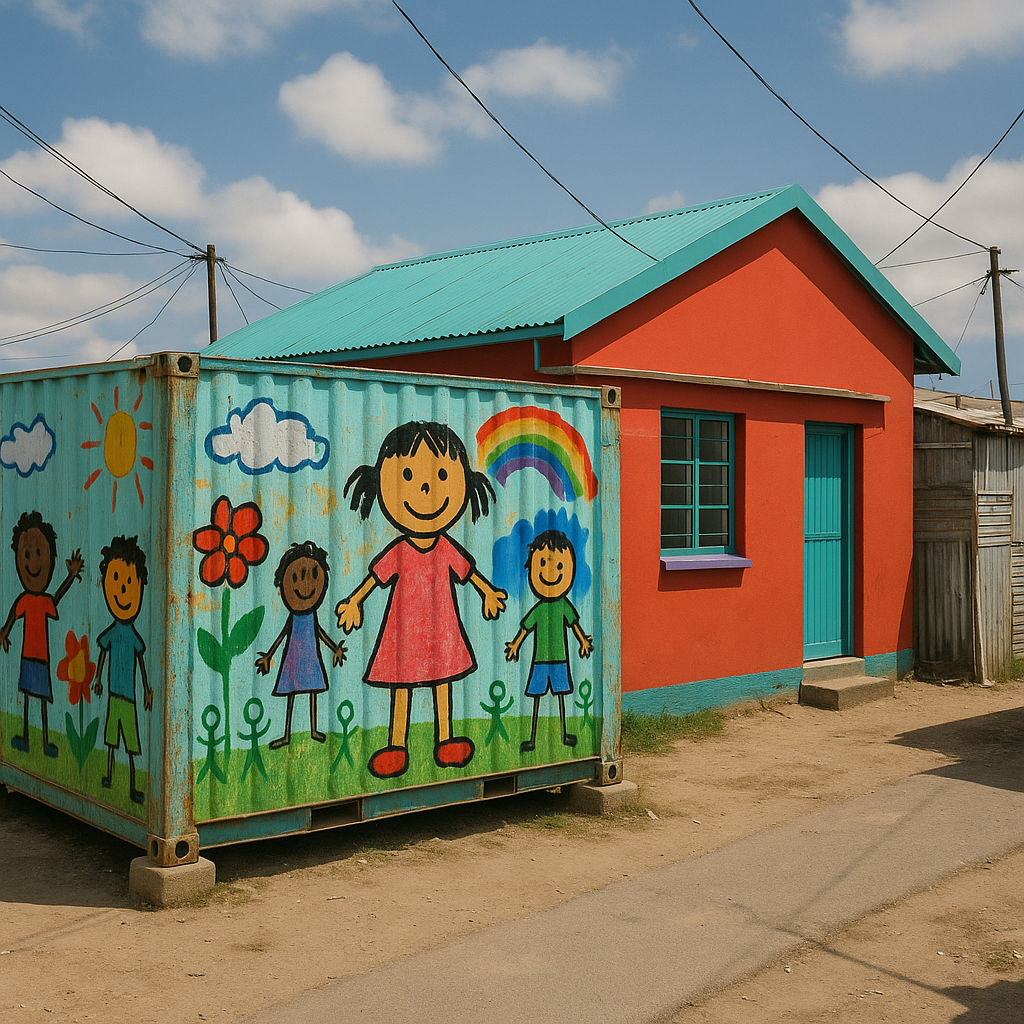
Discover how a Khayelitsha educator turned personal displacement into an innovative community-based early childhood development model.
Mthwakazi Nancy Soqaka lost her job but found a new dream, starting an early learning center in her kitchen. With six little ones, she charged less to help families. A special program taught her smart ways to grow, like using a fun phonics app. Soon, her small school grew big, helping kids learn and even creating jobs!
How did Mthwakazi Nancy Soqaka transform her kitchen into a successful early learning center?
Mthwakazi Nancy Soqaka transformed her kitchen into the Grow Buddies early learning center after losing her job. She started with six toddlers, charging half the standard rate. With support from the Grow ECD accelerator program, she implemented new strategies like a phonics app, leading to significant academic improvements and increased fees, eventually expanding to multiple sites and creating jobs.
Get Cape Town news in your inbox
Stay updated with the latest stories from the Mother City.
Lockdown Lightning Bolt
March 2020 arrived like a slammed door. The WhatsApp was brutally short: “Fetch your things by Friday, we’re not reopening.” In that instant Mthwakazi Nancy Soqaka’s fifteen-year Grade-R career at a Mitchells Plain private school vanished. No farewell, no payout timetable - just a read receipt and silence. Like thousands of other ECD practitioners she stared at an empty calendar, yet the vacuum felt oddly electric: without a salary she still had a skill, without a classroom she still had a mission.
The first move was almost cinematic: she shoved the kitchen table against a wall, rolled up the linoleum and painted the tiny room sunflower yellow while her daughters squeezed into the only bedroom. By June 2021 six toddlers were sorting bottle-top counters on crocheted squares, and gossip at the communal tap did the marketing for her. Within two months the lounge could not hold the waiting list; her nephew blurted out “Grow Buddies” after eavesdropping on a neighbourly chat, and the name stuck like sugar on wet fingers.
Goodwill alone, however, would not buy fire-safe mattresses or child-height toilets. A back-of-envelope list - R18 k for mats, R12 k for ablutions, R4.5 k for a fence - totalled more than a year’s rent. She charged R350 a month, half the going creche rate, because parents were already bleeding pandemic debt. To bridge the gap she stitched school tracksuits at night, accepted maize-meal in lieu of cash and told herself that margin was a luxury survival could not afford.
The Accelerator that Changed Everything
A friend sent her a voice note about “some Saturday classes in a shipping container” run by a Johannesburg NGO called Grow ECD. The invite sounded vague but free, and free was a price she could still afford. The first session, held in Philippi under corrugated-iron skies, exploded her assumptions: break-even charts, pricing psychology, even a tablet loaded with accounting software - all explained in isiXhosa by facilitators who had once run spaza-shop playgroups themselves.
The module that hit hardest was cheekily named “From Perception to Premium.” It presented cold data: parents will pay 30–60 % above inflation if they can read weekly WhatsApp report cards and see measurable literacy jumps. Soqaka piloted “Language Boost,” a twenty-minute daily English-immersion slot using a free UCT phonics app. One term later comprehension scores leapt 22 %; she hiked fees to R520 and waiting parents still camped on her gate. For the first time she asked for money without apologising.
Graduation day came with a R9 900 “innovation grant,” but the real prize was the network: a petrol-station cashier turned principal, a 61-year-old gogo who had taught under a tree for two decades, and Soqaka herself - now armed with a three-year growth forecast and the confidence to defend it to any sceptic.
Building Bigger, Smarter, Together
Grow ECD’s golden rule is co-investment: every owner must put up 20 % of upgrade costs, even if it is R50 a week for a year. Soqaka turned scavenging into equity: she sanded discarded pallets into toy boxes and reading corners, knocking 8 % off her payable share. Breadline SA, a faith-based partner, dropped a 12 m insulated container classroom into her yard in September 2022; solar panels on the roof kept lights and routers humming while burglar bars calmed jumpy neighbours.
The second site emerged from a derelict house three hundred metres away. An elderly pensioner owned it but lacked cash for repairs; Soqaka secured a low-interest loan guaranteed by a European impact fund and signed a five-year lease-to-own contract at R1 800 a month - well below market and contingent on her fixing the cracked walls and roof. Both parties walked away wealthier: she gained expandable space, he an asset whose value instantly rose.
Each new room triggered a jobs chain. Grow Buddies now keeps four people on permanent payroll: a Level-4 qualified teacher, a nutrition-savvy cook, a cleaner who tends the veggie patch, and a 19-year-old digital administrator who schedules parents via Google Calendar and chases late fees through WhatsApp “pay-by-link.” Monthly salaries total R31 400 - triple what Soqaka earned as a solo teacher - and 78 % of that comes from school fees, putting full sustainability within sight by 2026.
Measuring Minds, Feeding Bodies, Reaching for the Sky
Quality is tracked with the Early Learning Outcomes Measure: picture cards, tactile blocks and a traffic-light dashboard that sorts kids into targeted boosters. “Red” learners get extra one-on-one storytelling; “green” learners mentor peers, cementing empathy and leadership. LEGO-style bricks moulded from recycled milk bottles teach symmetry at 5 % of Montessori prices. Independent UCT evaluation shows Grow Buddies four- and five-year-olds scoring 0.7 standard deviations above matched controls in numeracy - on par with the top tier of suburban schools.
Nutrition follows Philani’s “Ten Local Foods” rule: morogo, amadumbe, pilchards, baobab powder and more, delivering ten micronutrient-rich items each week. A UWC dietician trains the cook to soak beans for twelve hours, boosting iron uptake by 40 %. Monthly weigh-ins flag stunting risk early; parents leave with a “Prescription to Play” sheet - tummy-time drawings and homemade toy ideas that can claw back 0.7 cm in height-for-age within six months.
Looking ahead, Soqaka envisions a three-storey “ECD plus primary” hybrid on a once-toxic corner plot the city leased to her for R1 a year. Compressed-earth bricks, rooftop aquaponics and a central courtyard theatre could create a vertical campus where tilapia fertilise spinach and weekend storytelling festivals sell R10 tickets to fund scholarships. Environmental clearances are done; vetiver grass and mushroom mycelium will finish decontamination by 2026. If cranes swivel into place by 2027, Grow Buddies will become South Africa’s first vertically integrated township school, proving that height - like hope - can grow from the most horizontal of beginnings.
How did Mthwakazi Nancy Soqaka start her early learning center?
Mthwakazi Nancy Soqaka started her early learning center, Grow Buddies, in her kitchen after losing her Grade-R teaching job during the COVID-19 lockdown in March 2020. She began by transforming her kitchen space and initially cared for six toddlers, charging a reduced fee to support families affected by the pandemic.
What challenges did Mthwakazi Nancy Soqaka face in the early stages of Grow Buddies?
Initially, Mthwakazi Nancy Soqaka faced financial challenges, as she charged only R350 a month, half the standard creche rate, to accommodate parents struggling with pandemic debt. She supplemented her income by stitching school tracksuits and even accepted maize-meal as payment. Expanding beyond her kitchen and lounge required significant investment for essentials like fire-safe mattresses and child-height toilets.
How did the Grow ECD accelerator program help Mthwakazi Nancy Soqaka?
The Grow ECD accelerator program provided Mthwakazi Nancy Soqaka with crucial business knowledge, including break-even charts, pricing psychology, and accounting software, all explained in isiXhosa. A key module, "From Perception to Premium," taught her the value of demonstrating measurable learning outcomes to parents, leading her to implement a phonics app that boosted comprehension scores by 22% and allowed her to confidently raise fees. The program also provided a R9,900 innovation grant and a valuable network.
How did Grow Buddies expand its facilities and operations?
Grow Buddies expanded by following Grow ECD's co-investment model, where Mthwakazi contributed 20% of upgrade costs, often through creative means like sanding discarded pallets into furniture. A 12-meter insulated container classroom was donated by Breadline SA. She also secured a low-interest loan to lease-to-own a derelict house nearby, transforming it into a second site and fixing its structural issues, thereby increasing its value.
What impact has Grow Buddies had on its community and employment?
Grow Buddies has significantly impacted its community by providing quality early learning. Its growth has created four permanent jobs: a qualified teacher, a cook, a cleaner, and a digital administrator. Monthly salaries now total R31,400, much higher than Mthwakazi's solo earnings, with 78% funded by school fees, putting the center on a path to full sustainability by 2026.
What are Mthwakazi Nancy Soqaka's future plans for Grow Buddies?
Mthwakazi Nancy Soqaka has ambitious plans to develop a three-story "ECD plus primary" hybrid school on a city-leased corner plot. This vertical campus will feature sustainable elements like compressed-earth bricks, rooftop aquaponics, and a central courtyard theatre. She aims for it to be South Africa's first vertically integrated township school, with environmental clearances already in progress and construction potentially starting by 2027.

Tumi Makgale is a Cape Town-based journalist whose crisp reportage on the city’s booming green-tech scene is regularly featured in the Mail & Guardian and Daily Maverick. Born and raised in Gugulethu, she still spends Saturdays bargaining for snoek at the harbour with her gogo, a ritual that keeps her rooted in the rhythms of the Cape while she tracks the continent’s next clean-energy breakthroughs.
View all articles →