
Knysna couple survive terrifying horse collision on N2 outside George
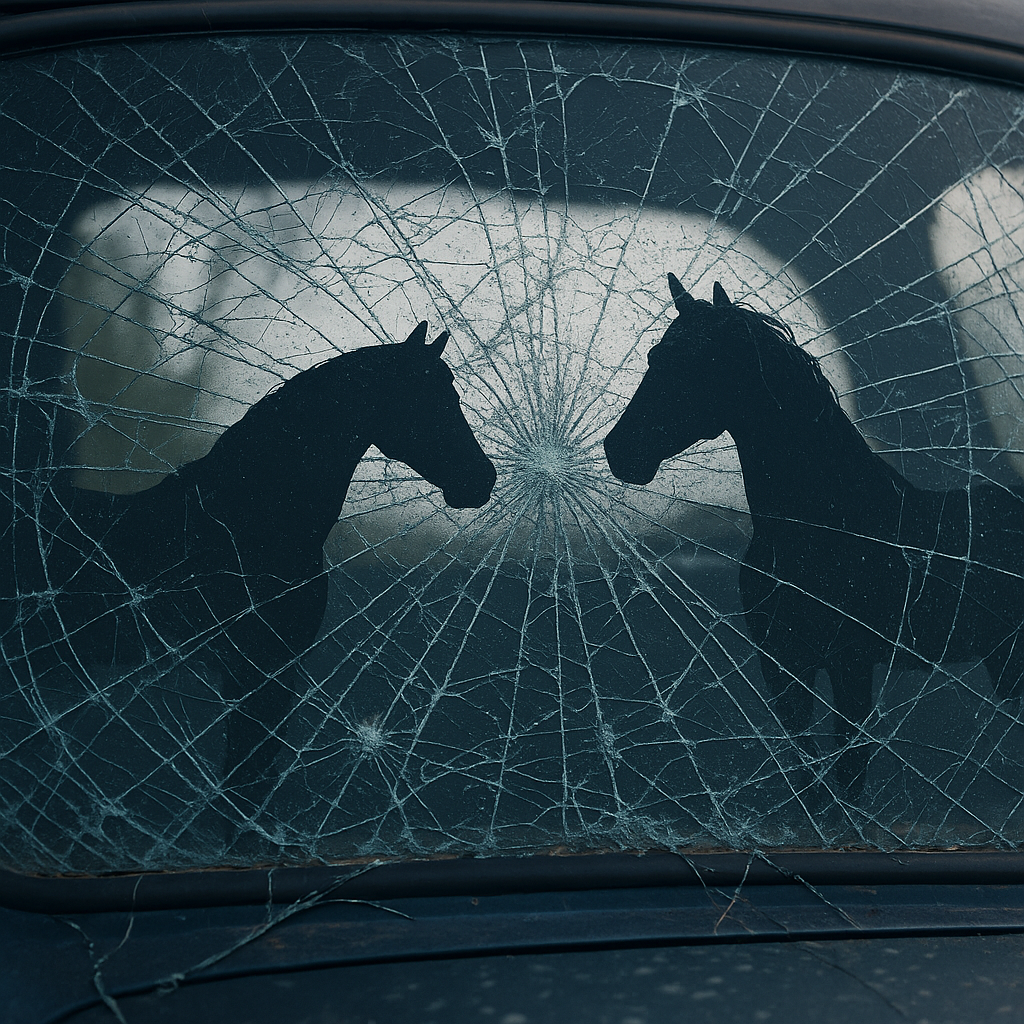
N2 Equine Strike: Two horses killed in a nighttime collision on the N2 near George, raising questions about fence maintenance.
Two horses caused chaos on the N2 freeway, bringing traffic to a halt after a devastating collision with a car. These majestic animals, escaping through a damaged fence, met a tragic end, highlighting serious issues with road safety and fence maintenance. The incident, unfolding in the dark, left drivers shaken and exposed glaring problems that need urgent fixing to prevent future nightmares on the road.
What caused the N2 freeway to be brought to a standstill?
The N2 freeway was brought to a standstill when two horses entered the road through a damaged fence, leading to a collision with a Hyundai Tucson. This incident, occurring at night, highlighted issues with fence maintenance, local grazing laws, and driver visibility, resulting in traffic delays and financial losses.
Get Cape Town news in your inbox
Stay updated with the latest stories from the Mother City.
The Stage and the Moment
East of George, the N2 stretches across four smooth lanes where the speedometer can legally kiss 110 km/h. Indigenous forest folds into dairy flats and small factory yards before the road vaults over the Kaaimans River gorge. Unlike many South African routes, no game fence flanks this corridor; local bylaws still treat the road reserve as communal grazing ground, a relic from quieter decades.
On 16 June the sun dipped at 17:46; by 19:02 a razor-thin crescent moon floated above the horizon, offering only 0.2 lux of silver light. That figure sits below the 0.3 lux threshold researchers deem necessary for drivers to spot a dark-coated ungulate in time. In short: dusk had already folded into night, yet full dark still carried a deceptive, low-contrast softness perfect for camouflage.
The Impact in Milliseconds
Traffic cameras fix the moment at 19:32:41. A white 2019 Hyundai Tucson GLS 4-Drive cruises east at 93 km/h in the second lane. The dash-cam captures two bay Cape horses - each roughly 450 kg - slipping through a 30-cm hole in the right-hand fence 240 m before the York Street on-ramp. Hooves clop onto the shoulder at walking pace, then the animals swing perpendicular to the traffic stream.
Frame-by-frame analysis shows the driver reacts in 0.9 s; ABS engages, yet only 0.7 s remain before metal meets flesh. At impact the Hyundai still barrels forward at 77 km/h. The passenger-side horse smashes the bumper beam; the driver-side animal’s torso slams the windshield header. Airbags blossom within 23 ms, topping out at 28 kPa - enough to slash occupant deceleration to 11 g rather than the 55 g an unbelted body would endure.
Physics takes over. One horse catapults 6.3 m forward, landing in lane three; the other skids 31 m rearward, sprawling across lane one. The Tucson’s passenger cell buckles inward 42 cm; the A-pillar kinks 9 cm; the laminated windshield spider-webs but holds. Behind the rear seat, two crated dogs are hurled against the tail-gate yet escape injury according to the attending SPCA officer.
Casualties - Human and Otherwise
The driver, 34, and the front-seat passenger, 31, complain of bruised lower backs and frayed nerves. Paramedics record normal vital signs; both decline hospital admission. The two horses expire on the asphalt. A municipal veterinarian arrives at 19:48 and delivers swift euthanasia. Carcass inspection shows no signs of brucellosis; stomach contents reveal only wild fescue and clover - no grain or pellets - confirming these were feral grazers rather than escaped feed-lot stock.
The Breach in the Chain of Responsibility
George Municipality admits the paddock south of the reserve was leased from 2017 to 2021 for “eco-tourism hay rides.” The lease ended in March 2021 and responsibility for fence maintenance reverted to the Roads Agency Western Cape (RAWC). An inspector’s ledger lists fourteen complaints about sagging or cut wire between 2021 and 2024; each entry ends with “repair logged” yet crew teams never arrived. RAWC blames a 2022 budget freeze under the Adjustments Appropriation Act.
The Ripple Effect
Tracker Network data shows three following cars executing emergency stops. A 14-seat Quantum taxi sideswipes debris and shreds its right-rear tyre, though it stays upright. From 19:36 to 20:04 eastbound traffic crawls; the Department of Economic Affairs values the lost minutes at roughly R 1.8 million in time-cost alone.
Who Responded and What They Found
Metro EMS, George Fire & Rescue, Traffic Services, four tow operators, the SPCA Equine Unit and Disaster Risk Management pool onto the tarmac between 19:40 and 20:10. Officers sweep glass into a meticulous 0.5 m radial grid; hairs embedded in the headlamp housing travel to the University of Pretoria’s Veterinary Genetics Lab where DNA pins the species as Equus caballus. A breathalyser and blood panel on the driver read clean; pupils at 3 mm and blood glucose at 5.2 mmol/l exclude impairment.
Legal Fallout and Financial Exposure
Western Cape Road Ordinance 19 of 1976 assigns liability to the “owner or custodian” of domestic animals. If RAWC’s fence neglect is proven causative, the agency could share the tort burden. Motorists may lodge claims under the Road Accident Fund, capped at R 2.6 million per incident. SAPS George registered docket CAS 416/6/2024 citing “culpable homicide (animal estate)” and Section 332 of the Criminal Procedure Act for obstructing a public road.
Tools Already on the Shelf
a) A Mpumalanga Parks pilot straps RIRIC 868 MHz collars with LED beacons onto horses; at R 1 800 per animal the setup warns drivers when roadside radar detects movement.
b) Buried inductive loops 50 m upstream can trigger overhead “HORSE” signs for R 350 000 per kilometre.
c) Portable IR-triggered message boards slowed traffic by 6 % in SanRAL’s 2022 KZN trial.
d) Retro-reflective ear tags made of 3M Scotchlite extended detection range by 12 m under 0.3 lux in Estonian tests.
Insurance Trends and Behavioural Quirks
OUTsurance figures show Western Cape animal-collision claims jumping 38 % from 2019 to 2023, overtaking Scandinavian reindeer incidents. Average repair invoices now hover at R 93 400; intrusion past 20 cm usually triggers a write-off. A wildlife-endorsement rider adds 2.8 % to premiums but waives the glass deductible. Dr. Marietjie Lenihan of Cape Town University notes horses interpret headlights as a “predator silhouette,” prompting flight toward rather than away from the road - classic lateral-eye ungulate panic. Early delineation therefore trumps last-second warnings.
Looking Abroad and Ahead
Montana’s SR 83 records 17 elk strikes per winter kilometre; 2.4 m game fences plus underpasses cut the carnage. Sweden’s E4 pairs rope-and-post “wildlife verges” with scented salt-lick diversion, carving moose crashes by 70 % from 2019 to 2022. Kenya’s A104 added solar LED flashers atop rumble strips and reduced zebra collisions by 31 %.
RAWC’s immediate checklist now demands:
1 Patch 1.2 km of fence within 72 hours using 2.4 mm high-tensile mesh, 1.6 m tall with a 30 cm ground apron.
2 Impose an interim 40 km/h night limit enforced by portable average-speed cameras at kilometre markers 9.2 and 9.8.
3 Hang temporary 2 Hz LED flashers synced to any virtual-collar beacons.
4 Host a multi-stakeholder summit within fourteen days to sign a Memorandum of Understanding on permanent fence custody and livestock trespass indemnity.
Without these measures, the N2 will keep luring opportunistic grazers - horses, cattle and bushbuck - to the nutrient-rich verge between May and August. Specialists calculate that a repaired fence plus virtual-collar deployment could drop strike probability by 83 % within a year, restoring the highway to a baseline risk of less than one collision per million vehicle kilometres travelled.
What caused the N2 freeway to be brought to a standstill?
The N2 freeway was brought to a standstill when two horses entered the road through a damaged fence, leading to a collision with a Hyundai Tucson. This incident, occurring at night, highlighted issues with fence maintenance, local grazing laws, and driver visibility, resulting in traffic delays and financial losses.
What were the consequences of the collision for the involved parties?
The two horses tragically died on the asphalt, requiring euthanasia by a municipal veterinarian. The driver and front-seat passenger of the Hyundai Tucson sustained bruised lower backs and frayed nerves but declined hospital admission. Two crated dogs in the rear of the vehicle miraculously escaped injury. The Hyundai Tucson suffered significant damage, with its passenger cell buckling inward and the A-pillar kinking, likely resulting in a write-off. Additionally, a 14-seat Quantum taxi sideswiped debris, shredding a tyre but remaining upright. The incident also caused significant traffic delays, estimated to have cost R 1.8 million in lost time alone.
What issues did the incident on the N2 expose regarding road safety?
The incident exposed several critical issues related to road safety. Primarily, it highlighted severe deficiencies in fence maintenance, specifically along the N2 where a 30-cm hole allowed the horses to escape. It also brought attention to outdated local bylaws that still permit parts of the road reserve to be used as communal grazing ground. Furthermore, the low light conditions at dusk (0.2 lux) underscored the problem of driver visibility, especially when encountering dark-coated animals, as this is below the threshold for timely spotting. The lack of effective animal detection and warning systems also contributed to the collision.
Who was responsible for the fence maintenance, and why was it neglected?
Responsibility for the fence maintenance along that section of the N2 reverted to the Roads Agency Western Cape (RAWC) in March 2021, after a lease for the adjacent paddock ended. Despite fourteen complaints about sagging or cut wire logged between 2021 and 2024, repairs were never carried out. RAWC attributed this neglect to a budget freeze implemented in 2022 under the Adjustments Appropriation Act.
What legal and financial implications arose from the incident?
Legal liability for the incident falls under Western Cape Road Ordinance 19 of 1976, which assigns responsibility to the owner or custodian of domestic animals. If RAWC's neglect of fence maintenance is proven to be a causative factor, the agency could share the tort burden. Motorists involved may file claims under the Road Accident Fund, with a cap of R 2.6 million per incident. The South African Police Service (SAPS) George registered a docket citing “culpable homicide (animal estate)” and obstruction of a public road. Financially, the average repair invoice for such collisions is around R 93,400, with many resulting in total write-offs. The incident also caused significant economic losses due to traffic delays.
What measures are available or being considered to prevent similar incidents in the future?
Several measures are available and being considered to prevent future incidents. These include: patching 1.2 km of fence within 72 hours using specific high-tensile mesh; imposing an interim 40 km/h night speed limit enforced by portable average-speed cameras; hanging temporary LED flashers synced to virtual-collar beacons; and hosting a multi-stakeholder summit to establish permanent fence custody and livestock trespass indemnity. Other proven tools mentioned include RIRIC 868 MHz collars with LED beacons for horses, buried inductive loops to trigger overhead warning signs, portable IR-triggered message boards, and retro-reflective ear tags. International examples like game fences and underpasses (Montana), rope-and-post wildlife verges with scented salt-lick diversion (Sweden), and solar LED flashers on rumble strips (Kenya) also offer potential solutions.

Sizwe Dlamini is a Cape Town-based journalist who chronicles the city’s evolving food scene, from boeka picnics in the Bo-Kaap to seafood braais in Khayelitsha. Raised on the slopes of Table Mountain, he still starts every morning with a walk to the kramat in Constantia before heading out to discover whose grandmother is dishing up the best smoorsnoek that day.
View all articles →