
Koeberg Nuclear Power Station contamination events contained
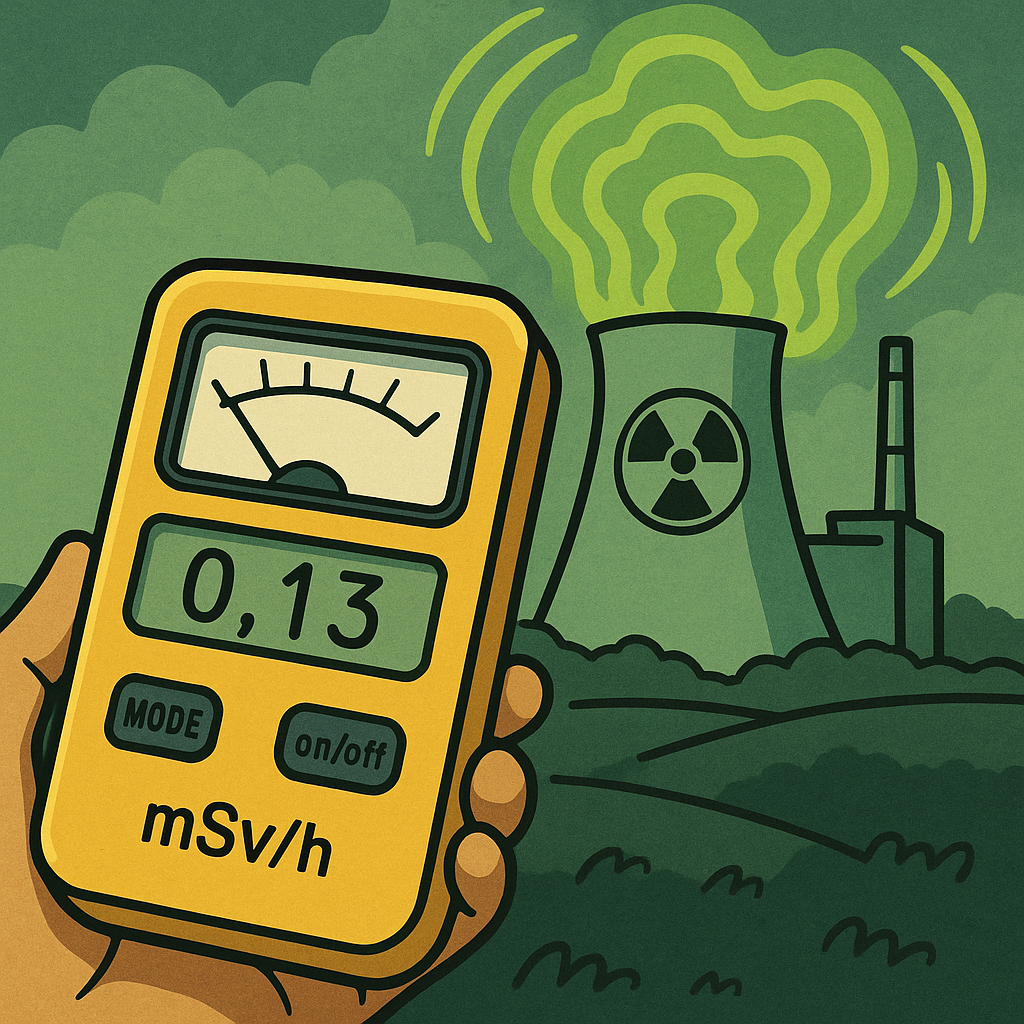
Koeberg contamination events in South Africa highlight nuclear safety protocols, effective containment, and the plant's role in energy future.
In July 2024, Koeberg Nuclear Power Plant had small issues with radioactive dust during maintenance. A fan stopped for a short time, stirring up dust inside the plant. No radiation escaped the plant, and no workers got too much radiation – it was like getting a dental X-ray. This event was not serious and shows that Koeberg is super important for keeping South Africa's lights on safely.
What happened at Koeberg Nuclear Power Plant in July 2024?
In July 2024, Koeberg experienced three "contamination occurrences" during maintenance. A ventilation fan malfunction led to re-aerosolized radioactive dust within restricted zones. No radioactivity left the site, no workers exceeded dose limits (exposures were minimal, equivalent to a dental X-ray), and the event was classified as Level 0 (no safety significance) on the International Nuclear and Radiological Event Scale.
Get Cape Town news in your inbox
Stay updated with the latest stories from the Mother City.
Setting the Scene: A Week of Unwanted Headlines
In the first week of July 2024, South Africa’s only nuclear plant, Koeberg, logged three separate “contamination occurrences” inside restricted zones.
The incidents - 30 June, 2 July and 7 July - surfaced while crews were swapping out major components during a long-planned outage.
Within hours the National Nuclear Regulator (NNR) issued a terse statement: no radioactivity had left the site fence, no worker had exceeded legal dose limits, and no emergency classification had been triggered.
For a country already jittery about blackouts, the timing was awkward: Eskom had just hailed Unit 2 for running a full year without tripping.
The juxtaposition - headline-grabbing “radioactive events” versus a plant reliability milestone - forced officials to explain why minor in-house contamination is not a Fukushima-in-waiting.
Anatomy of a Micro-Event: How Dust Got Loose
Inside containment, every bolt, gasket or valve removed during maintenance sheds a fine radioactive dust.
Normally, banks of HEPA-filtered fans suck that dust through ductwork and trap it before the air is exhausted.
When electricians switched the ventilation train to temporary supply for breaker testing, an upstream relay mis-fired; the fans coasted to a halt for less than ten minutes.
Air pressure flipped, dust that had settled on scaffolding and floors re-aerosolised, and fixed radiation monitors chirped “elevated”.
Work stopped, the building emptied, and health-physics teams scoured every surface with smear tests and gamma spectrometry.
By the time the shift ended, airborne activity had dropped back to background; no contamination crossed the personnel exit portal, no laundry left the radiologically controlled area.
People, Numbers and the “Dental X-Ray” Benchmark
Fifty-three contractors and twelve Eskom staff who were inside the controlled area queued for whole-body counting the same afternoon.
Internal dosimetry showed committed effective doses between 0.002 and 0.009 millisievert - below the dose one receives from a single panoramic dental radiograph.
To put that in perspective, a return flight between Johannesburg and Cape Town adds roughly 0.015 millisievert to a passenger’s cosmic-ray tally.
The statutory annual limit for nuclear employees in South Africa is 20 millisievert, so the highest recorded exposure represented 0.045 % of the legal ceiling.
Still, NNR has demanded repeat bioassays at six and twelve months, a precautionary move that keeps the debate anchored in data rather than emotion.
Environmental Scorecard: Zero Off-Site Release
Environmental monitors - gamma probes, tritium samplers and iodine cartridges - dot the Koeberg Nature Reserve in a ten-kilometre radius.
All probes remained flat; no isotope-specific spikes appeared in sea-water, fynbos, milk or fish samples collected over the following fortnight.
Because the radiological inventory never breached the outer containment boundary, the incident landed on the bottom rung - Level 0 - of the International Nuclear and Radiological Event Scale.
That classification matters: it signals to investors, tourists and trading partners that the event had “no safety significance” beyond the plant gate.
Why Koeberg Still Matters for Keeping the Lights On
Unit 2’s recent streak - 8 766 hours of uninterrupted baseload - delivered 8.3 TWh, enough to keep 250 000 middle-income homes powered for the entire period.
During those 365 days Eskom avoided roughly 7.5 million tonnes of CO₂ that an equivalent coal fleet would have coughed out.
With life-extension work now wrapping up, both 970 MW units are cleared to run until the mid-2040s, buying the country two decades to scale up renewables and gas-fired peakers.
Without that steady anchor, the Council for Scientific and Industrial Research estimates that load-shedding frequency could rise by another 1.5 stages on average.
Reputation, Regulation and the Road Ahead
South Africa’s nuclear regulator is funded by Parliament, not by Eskom, a firewall meant to prevent “regulatory capture.”
The July flurry showed the system working: the operator self-reported, the watchdog probed, and results were published online within 72 hours - faster than many European agencies manage.
Globally, minor airborne contamination during outages is common; the World Association of Nuclear Operators logs dozens of such events yearly, most rated below Level 1.
Koeberg’s open-data approach strengthens its case when lobbying development banks for future plant finance, a key point as the Department of Mineral Resources and Energy mulls 2 500 MW of new nuclear build.
Take-aways for Citizens, Critics and Policy Makers
For residents along the West Coast, the numbers are reassuring: radiation exposure from the three events equates to eating one extra banana a week for a year.
For nuclear skeptics, the episode underscores that zero risk is unattainable; the metric is whether multiple barriers, trained crews and vigilant regulators keep consequences trivial.
For energy planners, Koeberg remains a low-carbon workhorse that offsets 6 % of national demand; retiring it early would erase roughly 1.8 GW of stable supply, deepening the country’s power deficit.
Ultimately, the July contamination story is less about isotopes in ducts than about trust in institutions: when transparency meets robust engineering, public confidence - and the grid - stays intact.
[{"question": "What happened at Koeberg Nuclear Power Plant in July 2024?", "answer": "In July 2024, Koeberg experienced three 'contamination occurrences' during maintenance. A ventilation fan malfunction led to re-aerosolized radioactive dust within restricted zones. No radioactivity left the site, no workers exceeded dose limits (exposures were minimal, equivalent to a dental X-ray), and the event was classified as Level 0 (no safety significance) on the International Nuclear and Radiological Event Scale (INES). This means it had no impact on public health or safety."}, {"question": "Was there any environmental contamination or release of radioactivity outside the plant?", "answer": "No, absolutely not. Environmental monitors, including gamma probes and samplers for tritium and iodine in the Koeberg Nature Reserve, showed no spikes. The radiological inventory never breached the outer containment boundary, confirming that no radioactivity was released off-site. This is why the incident was classified as Level 0 on the INES, indicating 'no safety significance' beyond the plant gate."}, {"question": "How much radiation exposure did workers receive, and is it a cause for concern?", "answer": "Fifty-three contractors and twelve Eskom staff received minimal radiation exposure, ranging from 0.002 to 0.009 millisievert. To put this in perspective, this is less than the dose received from a single panoramic dental X-ray (around 0.01 millisievert) and significantly less than a return flight between Johannesburg and Cape Town (0.015 millisievert). The annual statutory limit for nuclear employees in South Africa is 20 millisievert, so the highest exposure was only 0.045% of this limit. The National Nuclear Regulator has requested follow-up bioassays as a precautionary measure."}, {"question": "What caused the radioactive dust to get loose inside the plant?", "answer": "During maintenance, when electricians switched the ventilation system to a temporary supply for breaker testing, an upstream relay misfired. This caused the HEPA-filtered fans, which normally suck up radioactive dust, to stop for less than ten minutes. This temporary halt in ventilation caused settled dust on scaffolding and floors to become airborne again, triggering fixed radiation monitors."}, {"question": "Why is Koeberg Nuclear Power Plant considered important for South Africa's energy future?", "answer": "Koeberg is crucial for providing stable, baseload electricity to South Africa. Unit 2 recently ran for a full year without tripping, generating 8.3 TWh, enough to power 250,000 homes. This also avoided approximately 7.5 million tonnes of CO\u2082 emissions compared to coal-fired power. With its life-extension work nearing completion, both 970 MW units are expected to operate until the mid-2040s, providing essential power stability and allowing the country time to develop other energy sources. Without Koeberg, load-shedding frequency could increase significantly."}, {"question": "How transparent and well-regulated was this event?", "answer": "The event demonstrated a robust regulatory system. Eskom self-reported the incidents, and the National Nuclear Regulator (NNR), which is independent and funded by Parliament, promptly investigated and published results online within 72 hours. This level of transparency and oversight, including the open-data approach, is vital for maintaining public trust and is often faster than many European agencies. This incident highlights that even minor occurrences are closely monitored and transparently reported, strengthening confidence in nuclear safety and regulation."} ]

A Russian-Spanish journalist and Cape Town native, channels his lifelong passion for South Africa into captivating stories for his local blog. With a diverse background and 50 years of rich experiences, Serjio's unique voice resonates with readers seeking to explore Cape Town's vibrant culture. His love for the city shines through in every piece, making Serjio the go-to source for the latest in South African adventures.
View all articles →