
Lagoon Beach clean-up removes 112kg of litter ahead of World Ocean Day
Cape Town's Junior River Wardens turn kids into ocean guardians, cleaning beaches & learning marine science to protect our seas.
Cape Town's ocean conservation program turns kids into marine heroes! Through exciting science experiments, fun games, and hands-on activities, children learn just how much plastic pollutes our waters. They become beach detectives, collecting data and even trading plastic pellets for trees. It's a powerful way to teach them to protect our precious ocean.
How does Cape Town educate children about ocean conservation?
Cape Town educates children about ocean conservation through an immersive program combining science, games, and practical activities. They learn about pollution impact via stations like "Shark Sense" and "Plastic Autopsy," collect real-time data on beach waste, and participate in initiatives like "trash-for-trees" to foster environmental stewardship and understanding of local marine ecosystems.
Get Cape Town news in your inbox
Stay updated with the latest stories from the Mother City.
Date-stamp: 03 June 2024, Milnerton Lagoon Beach, Cape Town
Daybreak at the Lagoon
A Circle of Boots and Questions
The sun sits low, a molten coin balanced on Table Bay, when 48 pairs of gumboots squeak across wet asphalt. The Shark Spotters flag crackles in the south-easter, and staff from the Two Oceans Aquarium carry crates filled with oddities: fossilised cat-shark egg cases, a fibreglass turtle whose shell looks like a broken dinner plate, and a tower of miniature milk bottles that will soon mimic a drifting ghost net.
Noxy Mthembu, lead educator, brings the group together. She fire-opens the session with one question: “What did the ocean eat this morning?” A Grade-6 boy from Red River Primary yells “Fish!” A quieter voice, the head girl from Floreat, answers, “Plastic.” Mthembu smiles. “Let’s discover exactly how big that second course is.”
From Parking Lot to Living Lab
By 08:15 the lot has transformed. There is no classroom roof - only sky, wind and the faint smell of kelp. Four stations, each mixing play with postgraduate-level concepts, wait in the dunes like pop-up laboratories. Every learner knows the unspoken rule: nothing here is “just” fun; everything is data in disguise.
The Briefing Ends, Curiosity Begins
Mthembu hands out colour-coded notebooks and spring scales accurate to five grams. A countdown ends with a cheer, and the children scatter to their first station. Behind them, the Shark Spotters tower records wind speed and water visibility; ahead, the beach stretches, unaware that it is about to be measured, weighed and debated by a team shorter than most surfboards.
Four Stations, Four Revelations
Shark Sense: A Billion-to-One Game
Inside a blackout tent, the scent station reeks faintly of tuna. Learners drip coloured dye into a 10-metre gutter filled with seawater and race the clock as the plume races downhill. The goal: calculate how fast pollution from the Diep River mouth could reach Robben Island’s penguins. The stopwatch reads 36 hours on today’s spring tide. Eyes widen - the island suddenly feels closer.
Plastic Autopsy: The Albatross on the Table
A cooler box opens like a crime-scene prop. Stomach contents of a sub-adult albatross spill out: bottle caps, glow-sticks, a printer cartridge. Using a handheld FTIR scanner on loan from UCT’s archaeology lab, the children tag each item by polymer type. High-density polyethylene wins - exact resin used for shopping bags. Someone mutters, “That’s my mom’s grocery bag,” and the room goes quiet.
Kelp Carbon: Fire, Smoke and Car Mileage
A fistful of kelp fronds burns inside a portable calorimeter. The CO₂ spike equals 11 kilometres of city driving. One learner shouts, “Every time kelp dies, it’s like someone starts a car!” The educator nods, adding that losing kelp forests is equivalent to adding unseen traffic to the road. Numbers stick better than slogans; the kids scribble furiously.
Ocean Safety Relay: Flags, Whistles and Stuffed Dolphins
Shark Spotter Kayleigh Smith times teams suiting up in safety gear. Based on real-time wind, water colour and bird behaviour, they must raise the correct flag. A wrong call costs 30 seconds and forces them to free a plush dolphin entangled in string. The fastest squad finishes in 52 seconds but fumbles the flag; another team wins on accuracy, proving that haste without observation still loses lives.
Counting Trash Like Accountants, Thinking Like Detectives
The Dirty Dozen Toolkit Simplified
Every child receives a laminated card listing twelve items most lethal to wildlife: sweet wrappers, lolly sticks, fishing line, earbuds, bottle caps, grocery bags, straws and cigarette lighters among them. Anything outside the list becomes “other.” The reverse side prints the same names in isiZulu, Afrikaans and isiXhosa because stewardship starts with language.
Data That Travels Faster Than Seagulls
Scales beep, sand flies, and totals upload via the African Marine Waste Network app. Within minutes, the city’s pollution heat-map lights up. Managers at the Water & Waste Directorate already know where to drop the next storm-drain net. Learners watch their own dots appear on a big screen under the gazebo; the beach is now a living spreadsheet.
Cold Hard Numbers
In ninety-two minutes the squad covers 503 metres of shoreline plus fifty metres up the dune slack. The haul weighs in at 112.32 kg - an average of 2.34 kg per child. Highlights: a sun-bleached 2010 FIFA car bumper, a shrink-wrapped carton of expired Namibian energy drinks, 4 212 micro-plastic fragments and R12.60 in coins minted as far back as 1994. A live puff-adder adds drama until a SANCCOB volunteer safely bags it.
From Beach to Backyard: Where Change Really Happens
Upstream Guessing Game
Back on the boardwalk, the children play detective. A single straw surfaces; did it travel 2 km from a Table View café or 40 km down the Diep River? Using real wind-rose and river-flow data, 87 % of teams finger the café. The city’s live model confirms that 68 % of beach debris comes from within a five-kilometre radius, debunking the myth that ships are the main culprits.
Pellets That Buy Trees
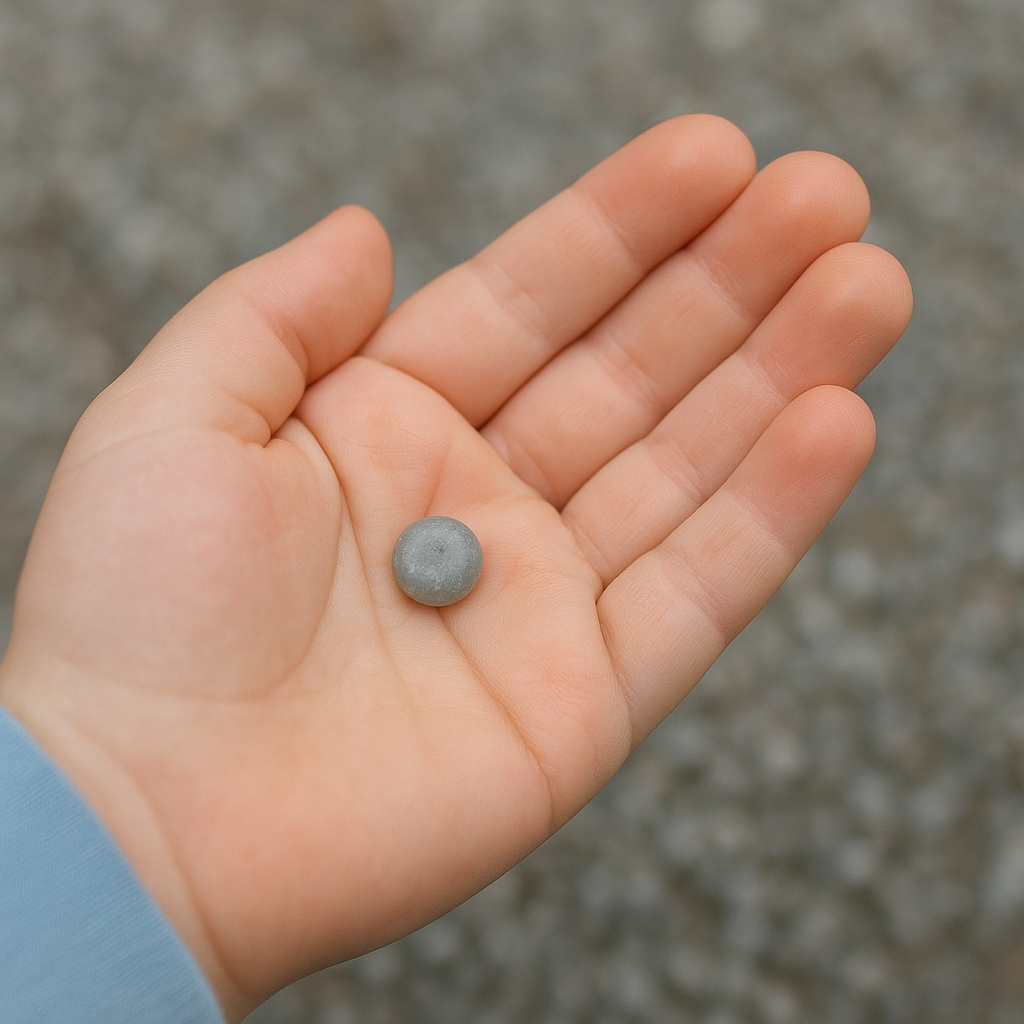
Departure time brings a surprise gift: a draw-string pouch holding five marble-sized pellets made from recycled HDPE processed on the spot with a 12 V extruder. The pellets smell faintly of campfire. Back at school, five pellets equal one indigenous seedling in a peer-run “trash-for-trees” market. Waste suddenly has purchasing power.
Voices, Beats and Winter Storms
Quotes from the dune stick: “The ocean bruises like my little sister,” says Riedewaan, 11. Erin, 10, warns, “Without sharks we’d have zombie oceans.” Aphiwe, 12, plans to scold her mom about plastic collar rings. On the bus ride home, Ysterplaat learners drum Kaapse Klopse on empty buckets, turning gumboots into percussion. That night a 65 km/h cold front rearranges the very beach they cleaned, but the data gap is already filled, ready for the next measurement and the next storm.
[{"question": "
What is Cape Town's ocean conservation program for children?
\nCape Town's ocean conservation program is an initiative designed to transform children into marine heroes. It achieves this through an engaging curriculum that combines exciting science experiments, fun games, and hands-on activities. The core focus is on educating children about the impact of plastic pollution on marine environments and empowering them to become active stewards of the ocean.
\n","answer": ""},{"question": "How do children participate in hands-on activities to learn about ocean pollution?
\nChildren participate in a variety of hands-on activities that make learning about ocean pollution interactive and impactful. They become \"beach detectives,\" collecting real-time data on beach waste using tools like spring scales and the African Marine Waste Network app. Activities include \"Plastic Autopsy,\" where they analyze the stomach contents of an albatross to identify plastic types, and \"Shark Sense,\" where they track pollution plumes to understand their spread. They also engage in a \"trash-for-trees\" initiative, where collected plastic pellets can be traded for indigenous seedlings, directly linking their efforts to environmental restoration.
\n","answer": ""},{"question": "What are some of the unique stations or learning experiences offered in the program?
\nThe program features several unique and innovative learning stations. \"Shark Sense\" uses a blackout tent and dye to simulate pollution spread from rivers to distant marine habitats. \"Plastic Autopsy\" involves examining actual albatross stomach contents with an FTIR scanner to identify different polymer types of plastic. \"Kelp Carbon\" demonstrates the CO₂ impact of dying kelp forests using a portable calorimeter, relating it to car mileage. The \"Ocean Safety Relay\" teaches essential ocean safety and observation skills through a timed challenge involving flags and entangled plush dolphins.
\n","answer": ""},{"question": "How do children contribute to real-world data collection and environmental monitoring?
\nChildren actively contribute to real-world data collection and environmental monitoring. Each child receives a laminated card detailing common harmful waste items, and they use spring scales to weigh their findings. This data is then uploaded via the African Marine Waste Network app, which instantly updates the city's pollution heat-map. This allows city managers to identify pollution hotspots and plan interventions, making the children's efforts directly contribute to actionable environmental intelligence.
\n","answer": ""},{"question": "What is the \"trash-for-trees\" initiative, and how does it work?
\nThe \"trash-for-trees\" initiative is an innovative incentive program designed to give collected waste tangible value. At the end of the program, children receive a certain number of marble-sized pellets made from recycled HDPE. Back at their schools, these pellets can be traded for indigenous seedlings in a peer-run market. This system effectively transforms waste into \"purchasing power,\" encouraging continued environmental action and fostering a sense of ownership over reforestation efforts.
\n","answer": ""},{"question": "What impact does the program have on the children's understanding and attitudes towards ocean conservation?
\nThe program has a profound impact on children's understanding and attitudes, turning them into passionate ocean stewards. By directly experiencing the scale of plastic pollution, understanding its sources (like the \"upstream guessing game\" debunking myths about ship-based debris), and contributing to real data, children develop a deep connection to the issue.Quotes from participants like \"The ocean bruises like my little sister\" and plans to scold parents about plastic usage demonstrate a shift in perspective, fostering a sense of responsibility and empowering them to advocate for change within their communities and families.
\n","answer": ""}]
Kagiso Petersen is a Cape Town journalist who reports on the city’s evolving food culture—tracking everything from township braai innovators to Sea Point bistros signed up to the Ocean Wise pledge. Raised in Bo-Kaap and now cycling daily along the Atlantic Seaboard, he brings a palpable love for the city’s layered flavours and even more layered stories to every assignment.
View all articles →