
Loftus fan’s death raises safety questions after Springboks Test
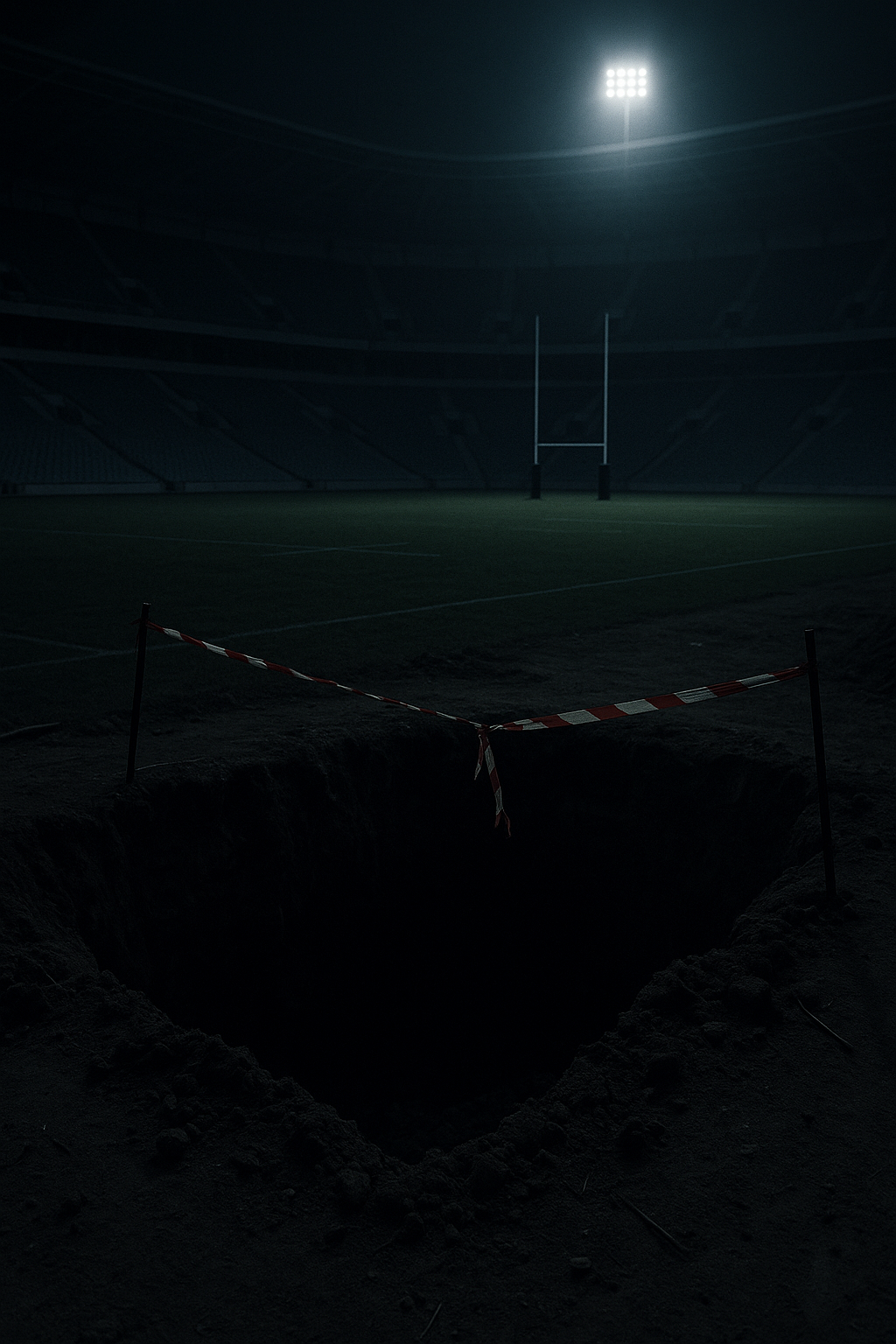
Tragedy strikes after a Springboks match as Hugo van der Berg dies falling into an unsecured excavation. His death highlights urgent urban safety failures.
Hugo van der Berg died after falling into a big hole near a stadium after a rugby game. Safety nets were broken, barriers were moved, and it was too dark to see. This sad accident shows big problems with building safety and how the city watches over projects. Friends and family remember Hugo as a kind man who always helped others. His death makes us ask tough questions about keeping people safe in our cities.
What caused Hugo van der Berg's death?
Hugo van der Berg died after falling into an unprotected construction excavation near Loftus Versfeld stadium. The incident involved multiple safety failures, including collapsed protective netting, displaced barriers, and inadequate lighting at the construction site. This tragedy occurred after a rugby match, highlighting critical urban safety and municipal oversight issues.
Get Cape Town news in your inbox
Stay updated with the latest stories from the Mother City.
A Night of Rugby Ends in Tragedy
The Springboks Test match at Loftus Versfeld stadium in Pretoria promised an evening of national pride and sporting excellence. Thousands of spectators filled the stands, their voices rising in anticipation and celebration. Among them walked 51-year-old Hugo van der Berg, unaware that this would be his final day. What awaited him outside the stadium transformed a night of joy into an irrevocable tragedy that has forced South Africans to confront uncomfortable truths about construction safety and municipal oversight.
The circumstances of this fall remain under official investigation, yet the fundamental facts paint a devastating picture. A major urban thoroughfare, used by thousands of pedestrians during a scheduled high-capacity event, contained an unprotected vertical hazard. The construction site formed part of the City of Tshwane's A Re Yeng Line 2B initiative, an integrated transport and infrastructure program carrying the Setswana phrase meaning "let's go" - words now freighted with terrible irony for van der Berg's family and community.
Heroism Amid Hazard: The Rescue Attempt Unfolds
The human response to van der Berg's plight revealed both extraordinary courage and systemic failure. Medical professionals who had attended the rugby match - doctors and nurses enjoying their Saturday evening - immediately transformed into emergency responders. They descended into the excavation without hesitation, applying their training in circumstances far removed from clinical settings. Their professional commitment shone through the chaos, yet their skills proved insufficient against the severity of van der Berg's injuries.
Advanced Life Support paramedics assumed resuscitation efforts upon arrival, working methodically through established protocols. Despite their expertise and prolonged attempts, they could not restore vital signs. The declaration of death at the scene marked not merely medical failure but the culmination of multiple protective system collapses that had placed van der Berg in mortal danger.
The rescue operation's difficulties multiplied as the hazardous environment struck again. An elderly spectator lost his footing at the excavation lip, sliding downward until an exposed drainpipe halted his descent. A young man, moved to assist the unfolding rescue, similarly fell while approaching the scene. Meanwhile, the structural integrity of the excavation margins deteriorated visibly as loose earth collapsed under the weight of gathering crowds. These secondary incidents transformed a single casualty situation into a multi-casualty emergency, forcing incident commanders to balance rescue priorities against responder safety. The very people attempting to help became additional victims, their injuries testament to conditions that should never have been permitted.
Remembering Hugo: A Life Defined by Quiet Service
The personal dimensions of this loss emerged gradually through family testimony and the poignant discovery of van der Berg's final public appearance. Earlier that Saturday, South African Broadcasting Corporation cameras had captured him in cheerful spirits ahead of the Test match kickoff. This footage, originally unremarkable sports programming, became an unintentional farewell - his animated conversation with reporters preserving a vitality soon to be extinguished.
The family's subsequent experience compounded the trauma. Van der Berg's relatives spent anxious days searching for him, contacting hospitals and authorities while hoping against mounting evidence. The eventual confirmation that he was the unidentified victim near Loftus Versfeld closed this agonizing uncertainty with permanent grief.
Yolanda van der Berg, his sister-in-law, has provided the most intimate portrait of the man behind the news coverage. She described a temperament marked by gentleness and consistent orientation toward others' needs. He spoke softly, she noted, yet his actions carried weight - particularly his devotion to children and animals, those dependent creatures who cannot reciprocate assistance. This pattern of unassuming generosity defined his relationships and his place within his community. "He was deeply loved by everyone who knew him," she affirmed, a characterization that has resonated across social media platforms as South Africans seek to honor a stranger whose death feels personally affecting. The gap between this remembered warmth and the cold circumstances of his ending fuels much of the public anger now directed at responsible authorities.
Cascading Failures: How Protection Systems Collapsed
The Old East Safety Forum, a community organization monitoring neighborhood welfare, has conducted independent assessment of the construction site that claimed van der Berg's life. Their findings document not a single point of failure but multiple protective system collapses that together created inevitable tragedy.
The physical perimeter security had degraded significantly. Protective netting designed to prevent falls had collapsed entirely, removing the primary barrier between pedestrians and the excavation void. Directional barriers intended to channel foot traffic along safe routes had shifted from their positions, presumably overwhelmed by crowd pressure and inadequate anchoring. These displacement failures suggest either insufficient specification for anticipated loads or inadequate maintenance inspection.
Illumination deficiencies compounded these physical hazards. Sections of Lynnwood Road where planners should have anticipated substantial post-event pedestrian flows lacked adequate street lighting. The combination of darkness, crowd density, and unmarked vertical drops created navigation conditions where even alert pedestrians faced elevated risk. For individuals distracted by conversation, mobile devices, or simply the residual excitement of match attendance, these conditions proved fatal.
The A Re Yeng Line 2B project represents significant municipal investment in integrated transport infrastructure, combining road improvements with stormwater system upgrades. Such ambitious programs necessarily involve temporary disruption and construction activity. However, the coexistence of this disruptive work with major scheduled events suggests coordination failures between project management and event planning functions. Either the work should have progressed sufficiently to eliminate hazards, or enhanced temporary protections should have been mandated for high-traffic periods.
Institutional Accountability and Legal Framework
Brooklyn police have initiated formal inquest proceedings regarding van der Berg's death, though they have appropriately restricted public comment pending investigation completion. This procedural caution, while legally necessary, has generated frustration among community members demanding immediate transparency and accountability assignment.
The investigative mandate necessarily spans multiple institutional boundaries. Municipal permitting authorities must explain their oversight of construction site safety standards. Stadium and event management organizations face scrutiny regarding their assessment of surrounding infrastructure risks when planning crowd dispersal patterns. The construction contractors bear direct responsibility for maintaining secure worksites, particularly during periods of elevated nearby public activity.
South African construction safety law derives primarily from the 2014 Construction Regulations promulgated under the Occupational Health and Safety Act. These regulations establish explicit duties across project hierarchies - clients, designers, principal contractors, and subcontractors - regarding hazard identification, documented risk assessment, and implementation of protective method statements. Regulation 13 specifically addresses public exposure: where civilians may access construction areas, contractors must implement "reasonable steps" ensuring protection from construction-related hazards. The documented failures at Lynnwood Road - collapsed netting, displaced barriers, insufficient lighting - suggest systematic departure from these statutory obligations rather than isolated oversight.
Urban Infrastructure Under Pressure: National Context
Van der Berg's death occurs within broader patterns of South African municipal infrastructure management that reveal systemic tensions between service delivery ambitions and implementation capacity. The City of Tshwane, like comparable metropolitan municipalities, operates under enormous pressure to demonstrate developmental progress while managing fiscal constraints and institutional limitations. The A Re Yeng project itself illustrates this tension - genuine advancement in integrated public transport planning, yet implementation marked by delays, cost escalation, and now preventable fatality.
International comparisons illuminate both the technical preventability of such incidents and the governance challenges in achieving consistent protection. The United Kingdom's New Roads and Street Works Act 1991 established stringent requirements for street works safety, including mandatory specifications for signing, lighting, and guarding that leave minimal discretion to site managers. Australian jurisdictions have developed comprehensive "safe site" guidance for construction adjacent to public thoroughfares. These frameworks demonstrate that technical knowledge for preventing such tragedies exists; the persistent challenge lies in implementation consistency and enforcement rigor.
The temporal predictability of stadium event pedestrian surges deserves particular analytical attention. Municipal event planning typically addresses vehicular traffic management, public transport scheduling, security deployment, and emergency medical coverage. Infrastructure construction sites apparently received insufficient integration into this coordinated planning. The failure to either accelerate work completion before major events or implement enhanced temporary protections represents a planning gap with demonstrated fatal consequences.
Community Voices and Democratic Accountability
The Old East Safety Forum's intervention exemplifies the emerging role of organized community structures in demanding institutional accountability for service delivery failures. Community safety forums across South African urban areas have developed as significant mechanisms for citizen engagement with local government, particularly regarding infrastructure and environmental concerns. Their capacity to document field conditions, mobilize public attention, and sustain pressure for official response represents meaningful democratic development, even as their necessity indicates ongoing deficits in proactive government accountability.
Digital media response to van der Berg's death has similarly demonstrated public capacity for rapid information dissemination and collective expression. The circulation of his SABC interview footage has personalized the tragedy beyond abstract policy debate, attaching human specificity to statistical risk. This digital memorialization, while potentially retraumatizing for family members, has maintained public focus on institutional accountability in ways that formal processes alone might not achieve. The sustained visibility of this case across platforms has prevented the premature closure that often follows initial news coverage.
Technical Standards and Policy Reform Trajectories
Contemporary excavation safety practice emphasizes continuous "competent person" oversight, formal soil classification, systematic protective system selection, and adequate access provisions. The Lynnwood Road failures - netting collapse, edge soil failure, exposed secondary hazards - suggest fundamental deficiencies across these technical dimensions. The drainpipe that injured the elderly secondary victim represented an additional uncontrolled hazard beyond the excavation geometry itself.
Emerging policy responses will likely encompass enhanced permitting requirements for construction near major venues, mandatory event-specific safety assessments, and potentially expanded criminal liability for safety system failures causing death. Existing regulatory instruments already provide substantial enforcement mechanisms, including prohibition notices and criminal prosecution, yet historical application has been inconsistent. Whether this tragedy catalyzes more rigorous enforcement culture remains contingent on political will and sustained public attention.
The Measure of Response: From Grief to Protection
As formal processes advance through their necessary procedures, the immediate circumstances retain disturbing power. A man who found life's meaning in helping others died where help arrived too late. A family's celebration of national sporting pride became permanent sorrow. A public infrastructure project intended to improve urban mobility instead destroyed a life.
These contradictions between purpose and outcome structure the accountability work ahead. Technical and regulatory responses will matter; institutional culture transformation will matter more. The ultimate measure, however, will be concrete: whether the next major Loftus Versfeld event finds pedestrians protected by safety systems worthy of public trust. Systems that might have preserved a gentle man who helped without seeking recognition, who deserved far better from the city he called home.
What caused Hugo van der Berg's death?
Hugo van der Berg died after falling into a large, unprotected construction excavation near Loftus Versfeld stadium following a rugby game. Multiple safety failures contributed to the tragedy, including collapsed protective netting, displaced barriers, and inadequate lighting at the site, making the hazard invisible in the dark.
Where did this accident happen?
The accident occurred near Loftus Versfeld stadium in Pretoria, South Africa, specifically on Lynnwood Road, an urban thoroughfare. The construction site was part of the City of Tshwane's A Re Yeng Line 2B initiative, an integrated transport and infrastructure project.
What were the immediate safety failures that contributed to Van der Berg's fall?
The immediate safety failures included: protective netting designed to prevent falls had completely collapsed; directional barriers meant to guide foot traffic were moved or insufficient; and sections of Lynnwood Road lacked adequate street lighting, making the excavation invisible in the dark. These issues created a highly hazardous environment for pedestrians.
Who was Hugo van der Berg?
Hugo van der Berg was a 51-year-old man remembered by friends and family as a kind, gentle person who consistently helped others, especially children and animals. He was an unassuming individual whose life was defined by quiet service and a devotion to his community. His death turned a night of celebration into profound sorrow for his loved ones.
What broader issues does this tragedy highlight?
This tragedy highlights significant problems with construction safety oversight, municipal planning, and urban infrastructure management in South Africa. It raises tough questions about coordination between project management and event planning, the enforcement of safety regulations, and the accountability of city authorities and contractors in ensuring public safety, particularly around major events and construction sites.
What investigations or actions are being taken?
Brooklyn police have initiated formal inquest proceedings into van der Berg's death. This investigation will scrutinize municipal permitting authorities, stadium and event management for their risk assessments, and construction contractors for their adherence to safety standards. The incident is expected to lead to demands for enhanced permitting requirements, mandatory event-specific safety assessments, and potentially expanded criminal liability for safety system failures.

Oliver Daniels is a Cape Town journalist who chronicles the intersection of food, migration and identity in South Africa's kitchens—from wood-fired Gugulethu braai spots to Constantia vineyards. Born and raised on the slopes of Devil’s Peak, he still starts each week with a dawn walk across Table Mountain to catch the first Atlantic light before filing copy.
View all articles →