
LUMENOCITY launches Africa’s first festival of light with MINI partnership
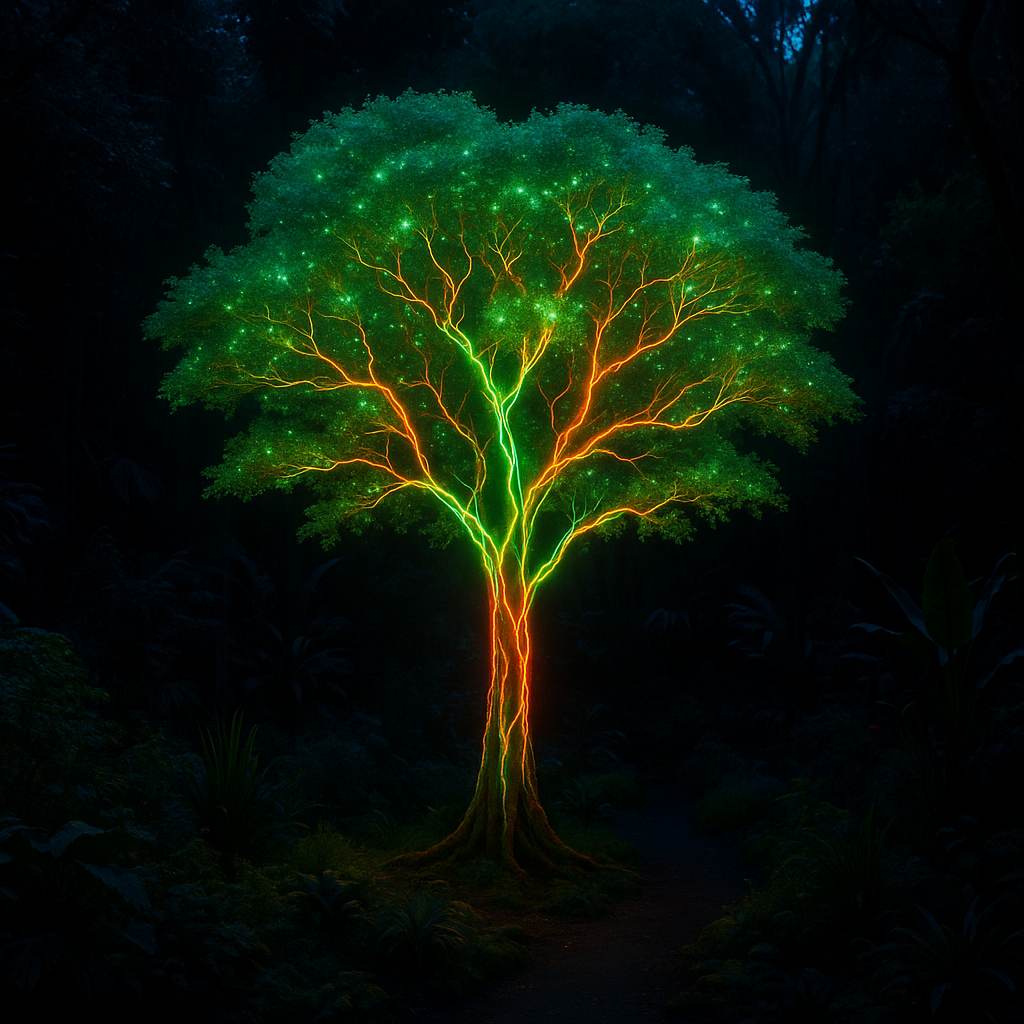
LUMENOCITY: Cape Town's pioneering light art festival re-wires Africa's creative grid, transforming Company's Garden with photons.
LUMENOCITY is Cape Town's amazing light festival, turning a garden into a glowing, interactive wonderland. It uses cool tech like electric car batteries to power stunning art, showing how light can fight against the city's power cuts. This festival isn't just pretty; it's a bold idea about how communities can share power and light up their own future, even when the city goes dark. It's truly a bright rebellion against the shadows!
What is LUMENOCITY?
LUMENOCITY is Cape Town's pioneering 96-hour international festival of radiant art, transforming Company's Garden into a luminous, interactive experience. It showcases light installations and art pieces, powered partly by innovative micro-grids using electric vehicle batteries, aiming to redefine public spaces and challenge the city's relationship with light amidst power challenges.
Get Cape Town news in your inbox
Stay updated with the latest stories from the Mother City.
A City That Has Always Bargained with Shadows
Cape Town’s affair with illumination is older than the city itself. Signal Hill’s first beacon warned 17th-century mariners that this stretch of Atlantic shoreline devours lanterns as easily as ships. Generation after generation learned to treat every working bulb like contraband: fleeting, negotiable, never guaranteed. When Eskom began its now-routine blackouts in 2007, the move merely legalised what households had long practised - counting watts like small change. Against that backdrop, the arrival of the continent’s first international festival of radiant art feels less like a carnival and more like an insurgency. Simply lighting a tree becomes a low-volume act of defiance.
Load-shedding turned darkness into the city’s shared currency. Restaurants hand out candles with the same efficiency they once poured wine; children do homework by torchlight while parents calculate how many remaining amp-hours will keep the freezer cold until sunrise. In this economy, lumen is luxury. Hosting a four-night photon auction in the middle of a power crisis is therefore deliberately paradoxical: the festival bets that demonstrating abundance - controlled, story-rich, community-owned - can overwrite the muscle memory of rationing.
April’s event does not promise an end to blackouts; instead it offers a rehearsal for life when the grid finally flickers back to stay. By flooding a public commons with cold, intelligent light, the curators ask: what if neighbourhoods could trade kilowatts the way they now trade data bundles? The question is rhetorical, but the hardware answering it is very real, shipped in watertight flight-cases and already humming on standby.
The Garden as a Living Circuit Board
Company’s Garden started life in the 1650s as a vegetable stall for scurvy-ridden sailors. Since then it has morphed from governor’s promenade to lunch-time campus for squirrel celebrities. For four nights it will shut its Victorian gates, lose its streetlights, and re-emerge as a 1.8 km neural pathway where artworks talk to one another over a hidden Wi-Fi mesh. Motion sensors note when a visitor hesitates; neighbouring installations shift hue or swell in volume, turning human curiosity into a broadcast protocol.
The trail’s gravitational centre is a 400-year-old saffron-pear tree, the oldest living European immigrant on the continent. A ring of micro-LEDs will hover above its branches like a crown, but the colour narrative belongs to the crowd. Infrared wristbands sample collective heart-rate in real time; the halo flips from warm amber to glacier white the moment adrenalin spikes. The tree therefore becomes a living barograph of public emotion, a stunt botanists will later mine to study how large groups metabolise wonder.
Organisers have sworn off fairy-light sentimentality. Marine-grade fibre, normally tacked to North Sea oil platforms, now snakes under 300-year-old gravel paths. IP65 laser housings shrug off the sideways rain and pulverised dust that usually doom outdoor projectors south of the Sahara. If the rig survives Cape Town’s April southeaster, the blueprint can be cloned in Lagos, Dakar or Maputo, giving local artists a reason to tour at home instead of begging European festivals for crate space.
MINI, Micro-Grids and the Theatre of 42 Minutes
Corporate South Africa usually sponsors culture by slapping logos on jazz banners or handing out branded water bottles. MINI’s engineers chose a riskier route: they yanked the 50 kW/h traction batteries out of three pre-production Cooper S electrics, rack-mounted them in ventilated flight cases, and tethered the stack to the Garden’s distribution board. The result is a pop-up micro-grid able to island the entire site for 42 minutes - long enough for most guests to finish a drink before Eskom’s substation reboots.
Vehicle-to-Grid demos normally happen inside climate-controlled labs. Here the lab is a public park, the test subjects are paying spectators, and the fail-state is an embarrassed scramble for phone torches. If the hand-off is seamless, provincial officials may green-fund permanent off-grid lighting for Company’s Garden, creating Africa’s first public park that never sleeps even when the rest of the city blacks out. Eskom planners, notorious for viewing electric cars as extra load, will watch the current flow the other way with the same fascination art critics reserve for an unauthenticated Banksy.
The PR maths is blunt: every minute the LEDs stay alive on car power is a minute the brand earns column inches about future mobility. Yet the long game is bigger than MINI. Should the pilot convince regulators, Cape Town could roll out curbside V-to-G stations that double as public-lighting backbones, turning parking meters into nano-utilities and making blackouts as socially awkward as forgetting to tip.
Works You Chase, Not Works You Check Off
LUMENOCITY refuses to print a programme. A GPS-aware app spits out artwork names only when your phone breaches a 50-metre halo, a trick borrowed from Pokémon Go and repurposed to kill the Instagram spoiler effect. You hunt the art the way nightclubbers once hunted white-label vinyl: by ear, by rumour, by following strangers who seem to know.
Durban architect Doung Anwar Jahangeer anchors one node with “Wind in Veins,” 144 hair-thin electroluminescent filaments that ripple like kelp whenever nocturnal breezes spin a concealed anemometer. Ghanaian animator Derrick Ofosu Boateng ghosts the South African Museum with “Ghost Slave Ship,” a holographic re-enactment of the 1794 São José wreck off Clifton beach. Depth cameras paste live silhouettes onto the doomed deck, letting visitors watch themselves drown in 18-bit colour before they step away, unscathed, into the night.
Sethembile Msezane’s “Choir of Banned Books” turns censorship into fauna. LED birds, each wing printed with a title once banned by the apartheid regime, perch on invisible wires. Whistle and a motion sensor triggers both wing-flap and a micro-sample of the archival protest song once suppressed alongside the book. The Garden becomes an aviary of recovered memory; the audience, unwitting choir conductors.
Night Mayors, Blue-Collar Passes and the Economics of Glow
Instead of bulked-up rent-a-cops, 120 “night mayors” patrol the grounds. Imported from Amsterdam, these unarmed concierges carry only two-way radios and reflective armbands. Research shows darkness discourages projectile violence simply because you can’t identify a target; by killing the Victorian streetlights the festival weaponises gloom as a de-escalation tool. SAPS agreed to keep firearms holstered inside the fence, a concession rarely offered during Cape Town’s notorious New Year minstrel carnivals.
Ticket pricing borrows from São Paulo’s biennial playbook. A R 5 000 benefactor pass buys you a dawn curators’ walk-through and a MINI chauffeur home; the profit subsidises a R 75 “blue-collar pass” valid only after 22h30. Forty-two percent of the discounted bookings trace to Mitchells Plain and Khayelitsha postcodes, areas census trolls seldom associate with high-art footfall. The data nudges sponsors to stop measuring success by how many CEOs show up and instead count how many shift-workers miss the last taxi home because they stayed for one more glow.
Hotel occupancy in the CBD is already tracking 87 % for festival weekend, a figure unseen since the 2010 World Cup. More telling is the surge in one-night Airbnb stays in Walmer Estate and Zonnebloem, neighbourhoods domestic tourists historically speed past. The ripple is calculable: economists at UCT’s Graduate School of Business forecast R 48 million in direct spend and another R 22 million in brand value for Cape Town as a “safe-after-dark” destination, a slogan the city has not earned since rolling blackouts and pandemic curfews rewired nightlife into curfew life.
Carbon Ledgers, Stolen Pi Boards and the 25-Year Invisible Show
Light festivals are notorious energy gluttons; Lyon’s Fête des Lumières inhales the equivalent of 440 houses for four nights. LUMENOCITY’s dashboard buys every municipal kilowatt with a kilowatt from the Darling Wind Farm 75 km away, projecting Scope-2 emissions at 14.3 tCO₂e. The debt is retired upfront with 240 endemic Milkwood saplings planted in the Liesbeek floodplain, trees that photosynthesise nocturnally via CAM metabolism - nature’s symbolic reminder that offsetting can stay awake even when the party ends.
South African customs officers greet touring tech like potential spy gear. Crews therefore label every flight-case “educational apparatus,” a ruse borrowed from the neighbourhood observatory down the road. Inside one crate: 80 Raspberry Pi 5 boards, each flashed with TouchDesigner scripts and a remote-kill code. If a unit wanders into the informal market, engineers can brick it from Germany, turning fence fodder into a cautionary tale about stealing the future.
The longest con is buried by an artist who calls himself only “M.” Two hundred waterproof LED capsules, each timed to wake for 30 seconds every 30 days for the next quarter-century, lie hidden beneath random flowerbeds. Only “M.” knows the grid references, and he claims amnesia. Should you stroll the Garden at 02:10 on a Tuesday in 2049 and a flowerbed suddenly winks, that is your private stanza from the past - an unrepeatable, unfiltered artwork that proves photons can outlive marketing budgets.
Dawn Dissipation, Brainwaves and the Countdown on Your Wrist
The festival’s final act is erasure. On 12 April at 05h29 every artwork begins a synchronized fade; by 05h45 every lamp is cold black, surrendering the space to sunrise and the indignant screech of hadeda ibises. Children who stay for the “dawn dissipation” receive a sandwich-bag kit - mini solar panel, capacitor, LED - so they can solder their own pavement light at home. Curators hope next year’s trail will feature pieces conceived in grandma’s backyard, closing the loop between spectacle and maker education.
Neuroscientists at Stellenbosch will fit 200 volunteers with EEG headbands to learn whether 490-nanometre cyan can nudge theta waves into the same sweet spot reached by 20 minutes of mindfulness. If peer review agrees, Cape Town could rebrand itself a “therapeutic nightlife” destination, an ironic upgrade for a municipality that spent a decade apologising for muggings after midnight.
At the gate every visitor straps on a luminous countdown that starts at 4 000 - the average number of nights in an 80-year life. Each minute inside extinguishes one pixel. Few remember to glance at the band until the final bulb dies against the exit turnstile, a quiet mnemonic that even the most shareable future is still finite. You leave poorer in allotted light, richer in the knowledge that electrons, like stories, travel furthest when someone dares to let them out of the box.
[{"question": "What is LUMENOCITY and what makes it unique?", "answer": "LUMENOCITY is Cape Town's pioneering 96-hour international festival of radiant art, transforming Company's Garden into a luminous, interactive experience. It's unique because it not only showcases stunning light installations but also uses innovative micro-grids, powered by electric vehicle batteries, to combat the city's frequent power outages. This makes it a 'bright rebellion against the shadows,' demonstrating how communities can share power and light up their own future."}, {"question": "How does LUMENOCITY address Cape Town's power challenges?", "answer": "LUMENOCITY directly confronts Cape Town's power challenges (load-shedding) by powering its installations partly through innovative micro-grids utilizing electric vehicle batteries. Specifically, MINI engineers repurposed 50 kW/h traction batteries from pre-production Cooper S electrics to create a pop-up micro-grid capable of powering the entire site for 42 minutes. This initiative aims to demonstrate sustainable power solutions and could potentially lead to permanent off-grid lighting for public spaces."}, {"question": "What kind of art installations can visitors expect at LUMENOCITY?", "answer": "Visitors can expect a diverse range of interactive and thought-provoking art installations. For example, 'Wind in Veins' by Doung Anwar Jahangeer features electroluminescent filaments that ripple with the breeze. Derrick Ofosu Boateng's 'Ghost Slave Ship' uses holography to re-enact a historical wreck with live silhouettes. Sethembile Msezane’s 'Choir of Banned Books' turns censorship into LED birds that react to sound. The festival also incorporates motion sensors and infrared wristbands to make installations respond to human interaction and collective emotion."}, {"question": "How does LUMENOCITY promote community engagement and accessibility?", "answer": "LUMENOCITY prioritizes community engagement and accessibility through its unique ticketing system and 'night mayors.' It offers a 'blue-collar pass' for R 75, valid after 22h30, which is subsidized by a R 5 000 benefactor pass. This strategy has successfully attracted a significant number of discounted bookings from diverse areas like Mitchells Plain and Khayelitsha. Instead of traditional security, 120 unarmed 'night mayors' from Amsterdam patrol the grounds, fostering a sense of safety and community."}, {"question": "What are the environmental considerations and legacy of LUMENOCITY?", "answer": "LUMENOCITY is committed to environmental responsibility. It offsets every municipal kilowatt used with an equivalent amount from the Darling Wind Farm, projecting Scope-2 emissions at 14.3 tCO₂e. This carbon debt is retired upfront by planting 240 endemic Milkwood saplings. The festival also aims for a long-term legacy, with an artist known as 'M.' having hidden 200 waterproof LED capsules that will periodically illuminate over the next 25 years, creating an 'invisible show' for future generations."}, {"question": "How does LUMENOCITY use technology beyond just powering the lights?", "answer": "LUMENOCITY leverages technology in multiple innovative ways. Beyond powering the lights with EV batteries, the Company's Garden transforms into a 'living circuit board' with a hidden Wi-Fi mesh, motion sensors, and infrared wristbands that allow installations to interact with visitors and each other. A GPS-aware app guides visitors to artworks, revealed only when they are within a 50-meter radius, mimicking a 'Pokémon Go' experience. Furthermore, neuroscientists are studying the impact of cyan light on brainwaves, potentially rebranding Cape Town as a 'therapeutic nightlife' destination."}]

Sizwe Dlamini is a Cape Town-based journalist who chronicles the city’s evolving food scene, from boeka picnics in the Bo-Kaap to seafood braais in Khayelitsha. Raised on the slopes of Table Mountain, he still starts every morning with a walk to the kramat in Constantia before heading out to discover whose grandmother is dishing up the best smoorsnoek that day.
View all articles →