
Malema, Hlophe, Breytenbach among MPs deciding Ramaphosa’s future
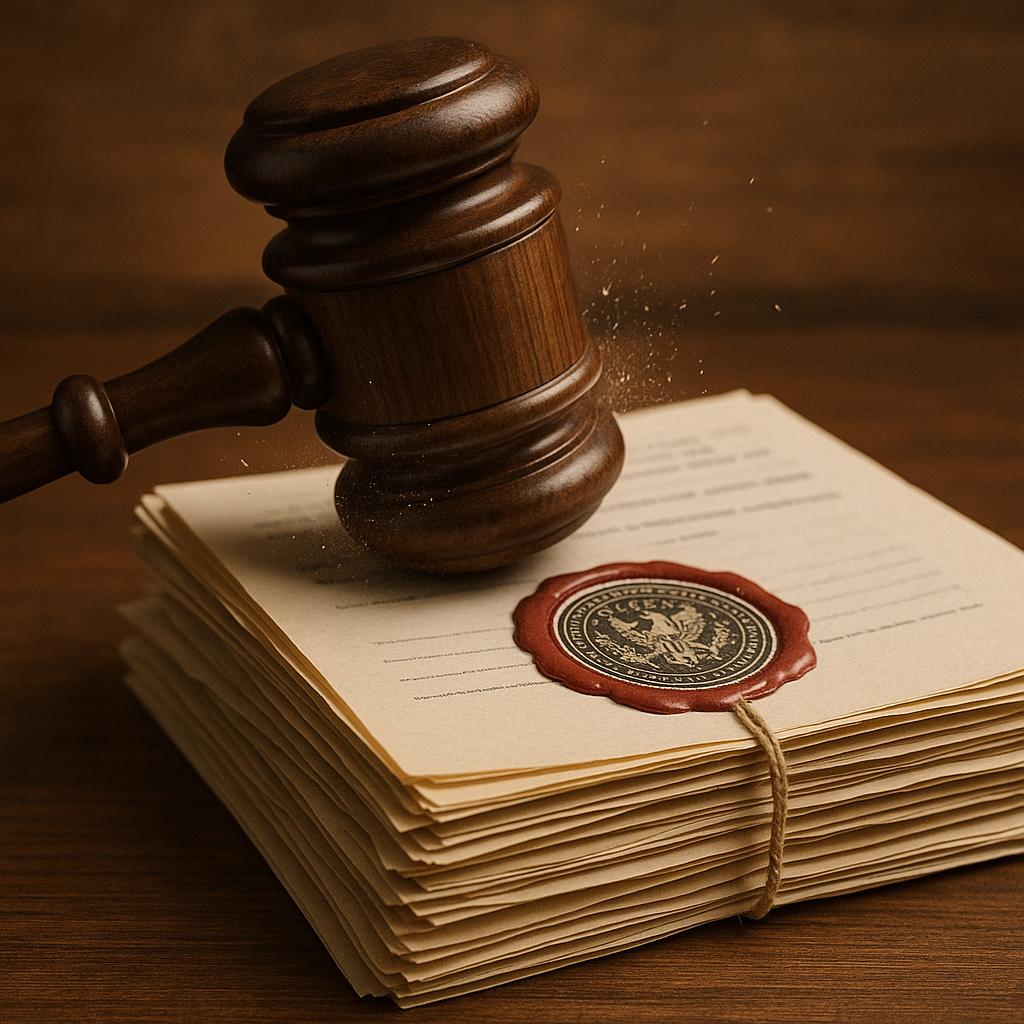
Structured overview of the Phala Phala impeachment committee, detailing its context, constitutional architecture, composition, and timelines.
South Africa is facing a big decision about its President, Cyril Ramaphosa, after a scandal involving cash hidden in a sofa. This isn't a simple impeachment; it's a careful four-step process to see if he broke the law, acted badly, or can't do his job. A new group of 31 lawmakers has been formed to dig into all the details, listen to people, and decide if Ramaphosa should be removed. This whole process is under a microscope, with live hearings and monthly reports to the highest court, to make sure everything is done right this time.
How can a President be removed in South Africa?
South Africa's Constitution outlines a four-stage process for presidential removal, rather than impeachment. It requires a finding of a grave breach of law, serious misconduct, or inability to perform duties. This involves a panel review, a multi-party committee hearing, a motion supported by 134 MPs, and a final two-thirds parliamentary vote (267 members) for immediate removal.
Get Cape Town news in your inbox
Stay updated with the latest stories from the Mother City.
The Court Order that Restarted Everything
On 19 May 2026 the Constitutional Court closed one chapter and opened another. Eleven judges spoke with one voice: Parliament’s first attempt to probe President Cyril Ramaphosa over the cash-stuffed sofa affair had suffered from fatal flaws. The Court refused to shred the original panel’s findings, yet it told lawmakers to go back, wipe the slate clean, and do it properly this time.
The remedy is a brand-new impeachment committee. It must be convened within thirty days of the ruling and must finish inside ninety sitting days, unless two-thirds of the House vote for an extension. Ramaphosa must be allowed to give sworn evidence, witnesses can be subpoenaed, and the sole question the panel must answer is whether any of the constitutional grounds for removal exist.
How South Africa Can Fire a President
South Africa does not impeach in the American sense; it removes. Section 89(1) of the Constitution supplies only three keys to the exit door: a grave breach of the supreme law or statute, serious misconduct, or an inability to carry out the duties of office. The route is deliberately steep and narrow.
Four Steps to the Door
Stage One: a trio of retired judges sifts the papers for prima facie proof.
Stage Two: a multi-party committee hears live witnesses, weighs documents, and drafts a report.
Stage Three: at least 134 of the 400 MPs must back the motion; only then can a two-thirds vote (267 members) force removal.
Stage Four: the moment the vote passes, the President’s term ends instantly. There is no internal appeal, although parallel judicial review outside Parliament may still be launched.
Because the process is political rather than criminal, the committee is not strapped to the Criminal Procedure Act. Nevertheless, House rules have borrowed concepts such as relevance, reliability, hearsay and privilege, hoping to bullet-proof the findings from later court attacks.
Who Sits in Judgement: the 31-Member List
Gazetted on 25 May 2026, the committee reflects the National Assembly’s arithmetic rather than neat blocs. Each party had the option to decline seats; GOOD and the PAC did so because their lone MPs serve in the executive. The final table seats thirty-one legislators drawn from fourteen parties.
The ANC Contingent (9 members)
Doris Mpapane, an actuary and former Scopa chair, leads the caucus line. Xola Nqola, who once cross-examined witnesses for the State Capture Commission, brings prosecutorial flair. Soviet Lekganyane, a Robben Island veteran, serves as deputy chief whip. Faith Muthambi, once a cabinet minister herself, knows the vulnerability of high office. Boyce Maneli, former diplomat, chairs Public works. Lusizo Makhubela, constitutional-law scholar, adds academic ballast. Mika Mahlaule, Youth League treasurer, is no stranger to internal disciplinary panels.
Opposition Heavy Hitters
The DA fields five seats led by George Michalakis, the party’s parliamentary leader since November 2025. Glynnis Breytenbach, ex-NPA prosecutor, will likely spearhead cross-examinations. Karabo Khakhau, a fresh Gauteng recruit, and Nazley Sharif, drawn from civil society, round out the legal muscle.
Julius Malema and Omphile Maotwe occupy the two EFF chairs. The MK Party - three seats - stuns observers by placing John Hlophe, a judge impeached in 2023, centre stage. IFP chief Velenkosini Hlabisa leads a twelve-seat smaller-party bloc whose votes may yet decide procedural battles.
The Rules of Engagement
Seven days after first meeting, the committee must pick its own chair. Four names circulate: Mpapane (ANC), Breytenbach (DA), Hlophe (MK) and Hlabisa (IFP). Each carries baggage - perceived bias, past investigations, or coalition sensitivities - so jockeying is intense.
Sub-Committees and Supervision
Three working groups are expected: Evidence & Procedure, Witness Logistics & Security, and Public Participation & Communications. Hearings will stream live on Parliament TV with sign-language interpretation, a nod to transparency lessons learnt from State Capture.
Ramaphosa has already filed a fresh court application; it does not freeze the committee but forces the Speaker to report progress to the Constitutional Court every month. The unprecedented “supervisory jurisdiction” embedded in the May order is designed to stop the delays that scuttled the 2022 effort.
Anatomy of the Scandal Revisited
The Break-In
In February 2020 burglars walked out of a Phala Phala lodge with roughly US $4 million - mostly US dollars and UAE dirhams - stashed beneath sofa cushions. CCTV captured the theft, yet no case was opened with SAPS or SARS. Instead, Major-General Wally Rhoode ran a shadow chase that roped in Namibian contacts.
Whistle-Blower Blast-Off
Arthur Fraser, former head of the State Security Agency, dropped a criminal docket in June 2022. Bank slips, video stills and sworn statements alleged kidnapping, torture and bribes-silence payments. His bundle shaped the first panel.
The Ever-Shifting Story
Ramaphosa has offered three versions of the cash: first, proceeds from buffalo sales; second, payment for advisory services; third, money held in trust pending tax advice. Documents proving any version have not yet been handed to Parliament - an omission the committee can cure with subpoenas.
The Evidence Stack
Paper Trail
South African Reserve Bank exchange-control files, CCTV timestamps, WhatsApp voice notes between Rhoode and suspect-handlers, forensic analysis by SekelaXabiso, and visitor logs tracking private jet arrivals all await scrutiny.
Witness Parade
The President’s side must field Ramaphosa himself, Rhoode, presidential lawyer Seiso Mohai and ANC Treasurer-General Gwen Ramokgopa. The complainants will push Arthur Fraser, former K-9 handler Imanuwela David and Namibian businessman Erkki Shigwedha into the box. Expert voices - SARS Commissioner Edward Kieswetter and SARB Governor Kuben Naidoo - will unpack tax and currency rules, while a forensic linguist may dissect voice notes for authenticity.
Political Cross-Currents
A Fractured ANC
Inside the governing caucus, fault lines pit the “Nasrec renewal” faction behind Ramaphosa against RET-aligned MPs - most visibly Faith Muthambi and Mika Mahlaule - who are rumoured to be coordinating with MK and EFF interlocutors. Chief Mdumiseni Ntuli has issued a three-line whip, yet at least two ANC MPs have privately told reporters they will vote conscience, not command.
Opposition Chessboard
The DA, IFP, FF+ and ActionSA have quietly formed the “Section 89 Forum”, pooling counsel and splitting cross-examination duties. Their eleven seats can stall a cover-up but remain well short of the 267 votes needed to oust the President.
Unlikely Bedfellows
Julius Malema and John Hlophe, once courtroom adversaries, now share late-night strategy dinners. Their joint press conferences railing against “imperial capture” have already forced the DA to demand their recusal on bias grounds, a motion likely to fail but sure to slow proceedings.
Risk, Markets and the Clock
State Security has flagged a “medium-threat” environment after Hawks intercepted chatter about burner phones and possible rendition to Luanda. Counter-surveillance jammers will blanket in-camera sessions. Diplomatic ripples are visible: Namibia’s President cancelled a 5 June state visit and the UAE embassy issued a terse distancing statement.
Currency traders dumped the rand 0.8 % on committee-list morning, then scooped it back after the Finance Minister pledged policy stability. Bond yields on the R2035 paper added nine basis points. JP Morgan’s political-risk desk puts Ramaphosa’s survival odds at 65 %, Nedbank at 73 % - the difference lies in how each weights intra-ANC fractures.
Your Pocket Diary
Mark these dates if you want to watch history unfold:
- 3 June – first meeting and chair election
- 10 June – evidence submission deadline
- 17–28 June – televised public hearings in Cape Town
- 5 July – closed briefing by SARS & SARB
- 12 July – Ramaphosa’s slated testimony (date may slide)
- 25 July – final witness list locked
- 15 August – committee report hits the programming committee
- 25 August – first House vote (needs 134 ayes to move forward)
If fresh bombshells surface, the Speaker can still invoke Rule 129 and ask the House to extend the clock - provided two-thirds of MPs agree.
What is the Phala Phala scandal?
The Phala Phala scandal involves President Cyril Ramaphosa and cash (approximately US $4 million in US dollars and UAE dirhams) found hidden in a sofa at his Phala Phala lodge in February 2020. This money was stolen by burglars. The controversy intensified because no official case was opened with the South African Police Service (SAPS) or the South African Revenue Service (SARS) at the time. Instead, a shadow investigation was allegedly conducted. The scandal came to light when Arthur Fraser, a former head of the State Security Agency, filed a criminal docket in June 2022, alleging kidnapping, torture, and bribery related to the recovery of the money.
How is President Ramaphosa being investigated?
President Ramaphosa is being investigated through a new 31-member impeachment committee, formed after the Constitutional Court ruled that Parliament's initial probe had fatal flaws. This committee will dig into the details, listen to witnesses, and decide if Ramaphosa should be removed based on constitutional grounds: a grave breach of law, serious misconduct, or inability to perform duties. The process is transparent, with live hearings, and monthly reports must be submitted to the Constitutional Court to ensure proper oversight.
What are the constitutional grounds for removing a South African President?
South Africa's Constitution, specifically Section 89(1), provides three narrow grounds for removing a President, which is referred to as 'removal' rather than 'impeachment' in the American sense. These grounds are: a grave breach of the supreme law or a statute, serious misconduct, or an inability to carry out the duties of office. The process is designed to be deliberately steep and challenging.
What is the four-step process for a President's removal in South Africa?
- Stage One: A panel, typically of retired judges, sifts through initial documentation to find prima facie proof of wrongdoing.
- Stage Two: A multi-party committee hears live witnesses, reviews documents, and drafts a comprehensive report.
- Stage Three: At least 134 out of 400 Members of Parliament (MPs) must support a motion for removal.
- Stage Four: If the motion passes, a final two-thirds parliamentary vote (requiring 267 members) is needed to force the President's immediate removal. There is no internal appeal, though judicial review outside Parliament remains a possibility.
Who are some key members of the new impeachment committee?
The 31-member committee reflects the National Assembly's composition. Key members from the ANC include Doris Mpapane (an actuary and former SCOPA chair), Xola Nqola (known for cross-examining witnesses at the State Capture Commission), and Faith Muthambi (a former cabinet minister). The DA's five members include George Michalakis (parliamentary leader) and Glynnis Breytenbach (a former NPA prosecutor). Julius Malema and Omphile Maotwe represent the EFF. Notably, the MK Party has included John Hlophe, a judge impeached in 2023. These members bring a range of legal, political, and investigative experience to the committee.
What are the key dates for this impeachment inquiry?
- 3 June: The committee's first meeting and election of its chair.
- 10 June: Deadline for evidence submission.
- 17–28 June: Televised public hearings in Cape Town.
- 5 July: Closed briefing by SARS & SARB.
- 12 July: Ramaphosa’s slated testimony (subject to change).
- 25 July: Final witness list is locked.
- 15 August: Committee report is submitted to the programming committee.
- 25 August: First House vote (requires 134 "ayes" to proceed).
Michael Jameson is a Cape Town-born journalist whose reporting on food culture traces the city’s flavours from Bo-Kaap kitchens to township braai spots. When he isn’t tracing spice routes for his weekly column, you’ll find him surfing the chilly Atlantic off Muizenberg with the same ease he navigates parliamentary press briefings.
View all articles →