
Man arrested after firearms and ammunition found in Century City flat
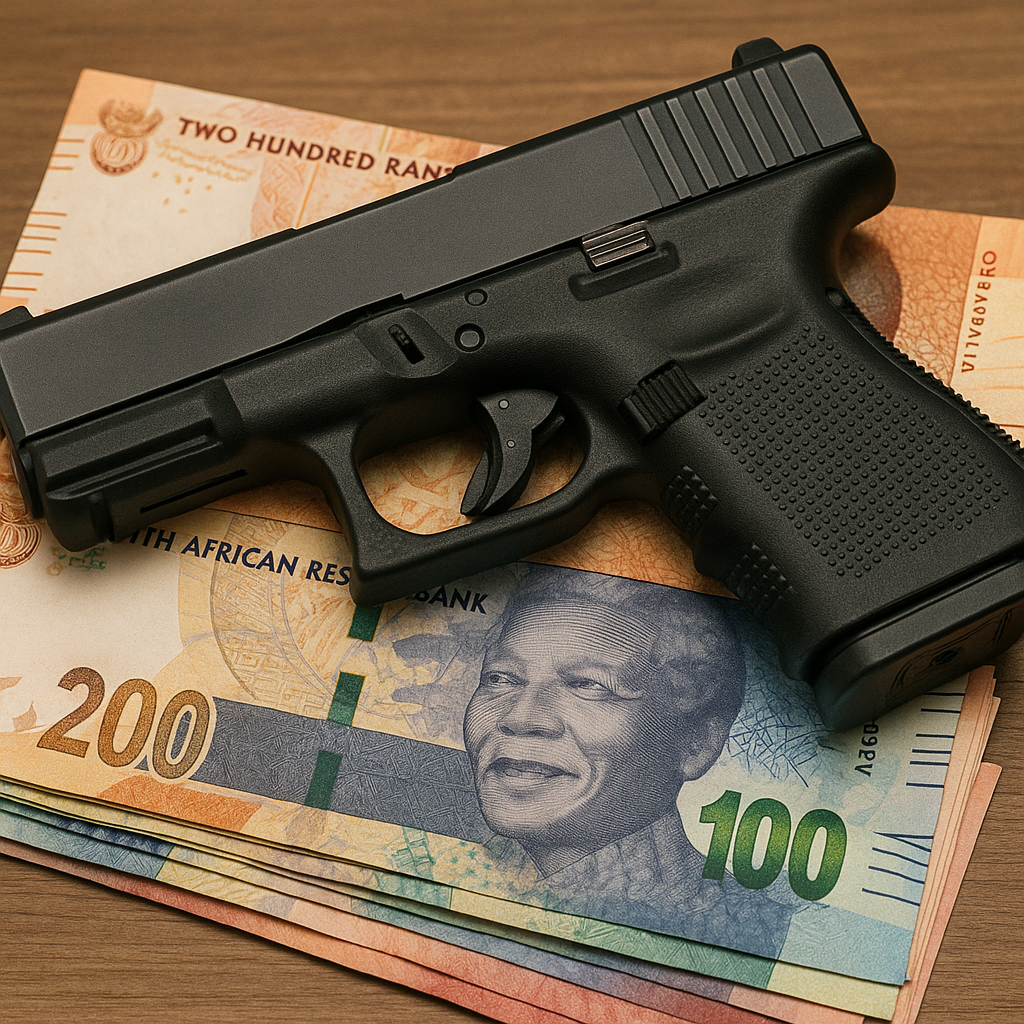
Century City firearm seizure highlights illegal weapons in affluent urban areas, raising concerns about security effectiveness & SA's gun control.
A big bust in fancy Century City, Cape Town, caught a suspect with lots of guns and bullets. This made people wonder about how safe the rich area really is, even with all its high-tech security like cameras and guards. It seems criminals found a way around the super strong security, showing that even the safest places can have problems. This event highlights how hard it is to stop illegal guns, even with strict laws in South Africa.
What is Century City's security architecture?
Century City, a 250-hectare development in Cape Town, features a robust security architecture including biometric entry systems, pervasive camera networks, controlled access protocols, and roving private patrols. This design aims to create an impenetrable environment for its affluent residents, separating them from surrounding crime realities.
Get Cape Town news in your inbox
Stay updated with the latest stories from the Mother City.
Arrest in Cape Town's Premier Development Raises Alarms
Police units descended upon Century City, Cape Town's flagship mixed-use precinct, and took a suspect into custody after uncovering an arsenal of weapons and nearly one hundred rounds of live ammunition. Officers processed the individual through standard booking procedures, initiating formal charges that will move through South Africa's congested court system. This enforcement action has intensified scrutiny of how illegal weaponry continues penetrating neighborhoods marketed as fortresses of safety, exposing vulnerabilities in even the most resource-intensive security arrangements.
The ammunition count alone signals troubling intent. Ninety-eight rounds far exceed what any legitimate owner would require for personal protection, pointing toward stockpiling for distribution, sustained criminal operations, or preparation for violent confrontations. Each cartridge now undergoes forensic examination - batch numbers, manufacturing origins, and degradation patterns all offer investigators potential threads to pull, potentially unraveling supply chains and linking these materials to prior violent incidents across the region.
Understanding Century City's Security Architecture
This 250-hectare development rose from unlikely origins, transforming a former racecourse and gum tree plantation into one of South Africa's most ambitious urban projects since 1997. Planners embedded defensive design from inception: biometric entry systems, pervasive camera networks, controlled access protocols, and roving private patrols created what developers promised as an impenetrable bubble separating affluent residents from surrounding crime realities.
The numbers tell Century City's economic story starkly. Many residential units span the spectrum from compact studios to sprawling penthouses commanding premium prices. Corporate headquarters anchor the commercial spine, while the Canal Walk retail complex and Ratanga Junction entertainment venue draw visitors from across the metropolitan area. This concentration of wealth and high-value targets made Century City the poster child for post-apartheid urban strategies favoring privatized, enclosed security over traditional public policing models.
Yet someone breached this architecture. The concealed weapons and ammunition cache indicate either elaborate circumvention of multi-layered verification systems or intimate knowledge of exploitable weaknesses. Residential complexes here deploy visitor registration mandates, biometric screening, and continuous CCTV monitoring of shared spaces. The successful smuggling of multiple firearms and substantial ammunition suggests sophisticated evasion tactics or possible collaboration from within the security apparatus itself.
Navigating South Africa's Complex Gun Control Landscape
The country's firearms regulatory regime stands as Africa's most elaborate statutory framework, constructed through constitutional imperatives and legislative instruments culminating in the Firearms Control Act of 2000 and subsequent amendments. Aspiring legal owners must navigate competency certifications, exhaustive background investigations, mandatory license renewals, and strict ammunition caps. Private citizens face a four-firearm ceiling for designated purposes, with additional constraints governing semi-automatic rifles and handguns.
Despite these barriers, illegal weapons saturate criminal networks. Quantifying this shadow inventory produces wildly divergent estimates - methodological disputes yield figures anywhere from half a million to several million unlicensed firearms circulating nationwide. Diverse channels feed this underground market: robberies targeting legitimate owners and security firms, cross-border trafficking from neighboring jurisdictions with laxer controls, institutional corruption enabling diversion from official stocks, and the reactivation of deactivated or replica weapons.
The National Firearm Priority Committee coordinates police response through amnesty windows, targeted enforcement sweeps, and ballistic evidence integration. Nevertheless, prosecution success rates disappoint, with case backlogs and evidentiary failures frequently collapsing otherwise viable charges. The Century City defendant's eventual charges under the Criminal Procedure Act - and potential sentencing exposure - will hinge on weapon types recovered and the strength of organized crime connections prosecutors can establish.
When Security Promises Meet Criminal Reality
South African criminal syndicates have grown increasingly methodical about ammunition logistics, developing supply mechanisms decoupled from firearm procurement. Bullets cross borders more easily than complete weapons, with lower detection risks making bulk purchases attractive for entrenched operations. Authorities have noted alarming inflows of armor-piercing and specialized munitions, though conventional full metal jacket rounds still dominate criminal arsenals.
Forensic technicians examining the Century City ammunition will scrutinize packaging, storage conditions, and manufacturing codes to trace origins. Degradation analysis may reveal how long these materials sat in illegal possession, potentially supporting charges beyond simple possession to encompass ongoing criminal enterprise participation.
The private security industry surrounding developments like Century City presents its own enforcement complications. Approximately 450,000 registered security officers nationwide substantially outnumber police personnel - a ratio reflecting both robust demand for protection and chronic state capacity limitations. The Private Security Industry Regulation Act establishes training and vetting benchmarks, though implementation consistency varies sharply across provinces.
Luxury residential enclaves attract residents explicitly fleeing crime prevalent in less protected neighborhoods. This security-driven migration accelerates urban fragmentation, with economic segregation now reinforced through physical barriers and unequal access to protective services. The Century City weapons discovery fractures the implicit bargain underlying such residential decisions: that concentrated private resources can eliminate risk entirely. The evidence suggests otherwise.
Courts, Precedents, and Systemic Pressures
The detained suspect now enters a criminal justice system buckling under caseload pressures. Firearms prosecutions compete against violent crime priorities for scarce trial slots, while pre-trial detention determinations weigh flight risk, witness tampering potential, and community safety. Prosecutors routinely oppose release in weapons cases, though overcrowding sometimes forces judicial discretion toward monitored alternatives.
Appellate jurisprudence has progressively sharpened sentencing severity for weapons offenses, with courts emphasizing aggravating circumstances when illegal possession intersects with organized criminal activity. Mandatory minimum sentences attach to certain charges, though judges retain deviation authority where substantial and compelling factors emerge. The specific combination here - multiple weapons plus ammunition stockpiling - typically triggers prosecutorial focus on potential syndicate linkages that could trigger sentencing enhancements.
Western Cape Violence and National Policy Debates
The Western Cape perennially ranks among South Africa's most firearm-afflicted provinces, with Cape Town metropolitan zones experiencing concentrated bloodshed. Provincial authorities have advanced the Safer Western Cape strategy, coupling weapons reduction with social intervention, though execution gaps persist. Century City's geographic placement within this violence landscape situates the arrest within continuing public health and safety policy discussions.
At national level, the incident rekindles controversy over amnesty program efficacy and destruction protocols for confiscated weapons. Previous surrender periods produced notable volumes, though skeptics question whether voluntary approaches reach criminal holders or merely capture compliant owners who allowed licenses to lapse. Mandatory seizure approaches confront constitutional property protections that have limited legislative ambition.
Regional instability adds international dimensions to South African illegal arms markets, with weapon flows emanating from conflict zones. The country's continental economic prominence generates demand for protective services operating in regulatory gray areas, occasionally drawing licensed security providers into diversion schemes. Investigators will determine whether Century City charges remain narrowly domestic or expand to encompass broader network infiltration.
Evidence Trails and Unanswered Questions
Multiple investigative threads warrant attention as proceedings advance. Financial forensics may expose acquisition funding incompatible with declared income. Digital device examination could map communication networks suggesting co-conspirator involvement. Residence fingerprint and DNA analysis might clarify whether the suspect maintained exclusive control or whether additional parties accessed the weapons repository.
Property ownership records deserve scrutiny, particularly where corporate veils or proxy arrangements obscure true beneficiaries. South Africa's real estate sector has attracted money laundering concern, with luxury properties documented as vehicles for illicit fund placement. Whether such dimensions figure in this case awaits evidence development.
Ballistic testing against national crime gun databases remains critical. Matching recovered weapons to prior criminal episodes, while technically demanding and time-consuming, has proven essential for establishing pattern evidence supporting conspiracy charges and sentencing aggravation. The meticulousness of evidence preservation and chain-of-custody documentation will substantially shape prosecutorial options and ultimate outcomes.
The Century City seizure ultimately illuminates a uncomfortable reality: even the most intensively secured urban spaces cannot guarantee immunity from determined criminal penetration. As this case unfolds through South Africa's overburdened courts, it will test whether enforcement, prosecution, and sentencing mechanisms can deliver accountability that matches the sophistication of weapons trafficking networks operating in plain sight of the country's most privileged residents.
What happened in Century City?
A suspect was arrested in Century City, Cape Town, after police discovered a significant arsenal of weapons and nearly one hundred rounds of live ammunition. This incident has raised concerns about the effectiveness of security in the affluent area.
What is Century City's security architecture?
Century City, a 250-hectare development, boasts a sophisticated security system. This includes biometric entry systems, extensive camera networks, controlled access protocols, and private security patrols. The goal is to create a highly secure environment for its residents, separating them from general crime realities.
Why is the discovery of 98 rounds of ammunition significant?
The presence of 98 rounds of ammunition is troubling because it far exceeds what would be considered necessary for personal protection for a legitimate owner. This quantity suggests potential stockpiling for distribution, sustained criminal operations, or preparation for violent confrontations, rather than simple possession.
How does this incident relate to South Africa's gun control laws?
South Africa has one of the most elaborate firearms regulatory frameworks in Africa, including the Firearms Control Act of 2000. Despite strict laws, illegal weapons are prevalent in criminal networks. The Century City bust highlights the ongoing challenge of preventing illegal firearms from penetrating even highly secured areas, underscoring vulnerabilities in the system.
What does this incident reveal about security in luxury developments like Century City?
The discovery of weapons in Century City, a development marketed as a fortress of safety, exposes cracks in its high-tech security infrastructure. It suggests that even the most resource-intensive security arrangements can be circumvented, either through sophisticated evasion tactics by criminals or potential internal collaboration. This challenges the implicit promise that private resources can eliminate all risk.
How are illegal weapons typically acquired in South Africa?
Illegal weapons enter criminal networks through various channels. These include robberies targeting legitimate owners and security firms, cross-border trafficking from countries with less stringent controls, corruption leading to diversion from official stocks, and the reactivation of deactivated or replica weapons. Ammunition logistics are often separate, with bullets crossing borders more easily than complete firearms.

Hannah Kriel is a Cape Town-born journalist who chronicles the city’s evolving food scene—from Bo-Kaap spice routes to Constantia vineyards—for local and international outlets. When she’s not interviewing chefs or tracking the harvest on her grandparents’ Stellenbosch farm, you’ll find her surfing the Atlantic breaks she first rode as a schoolgirl.
View all articles →