
Man goes from selling chicken to becoming self-made millionaire
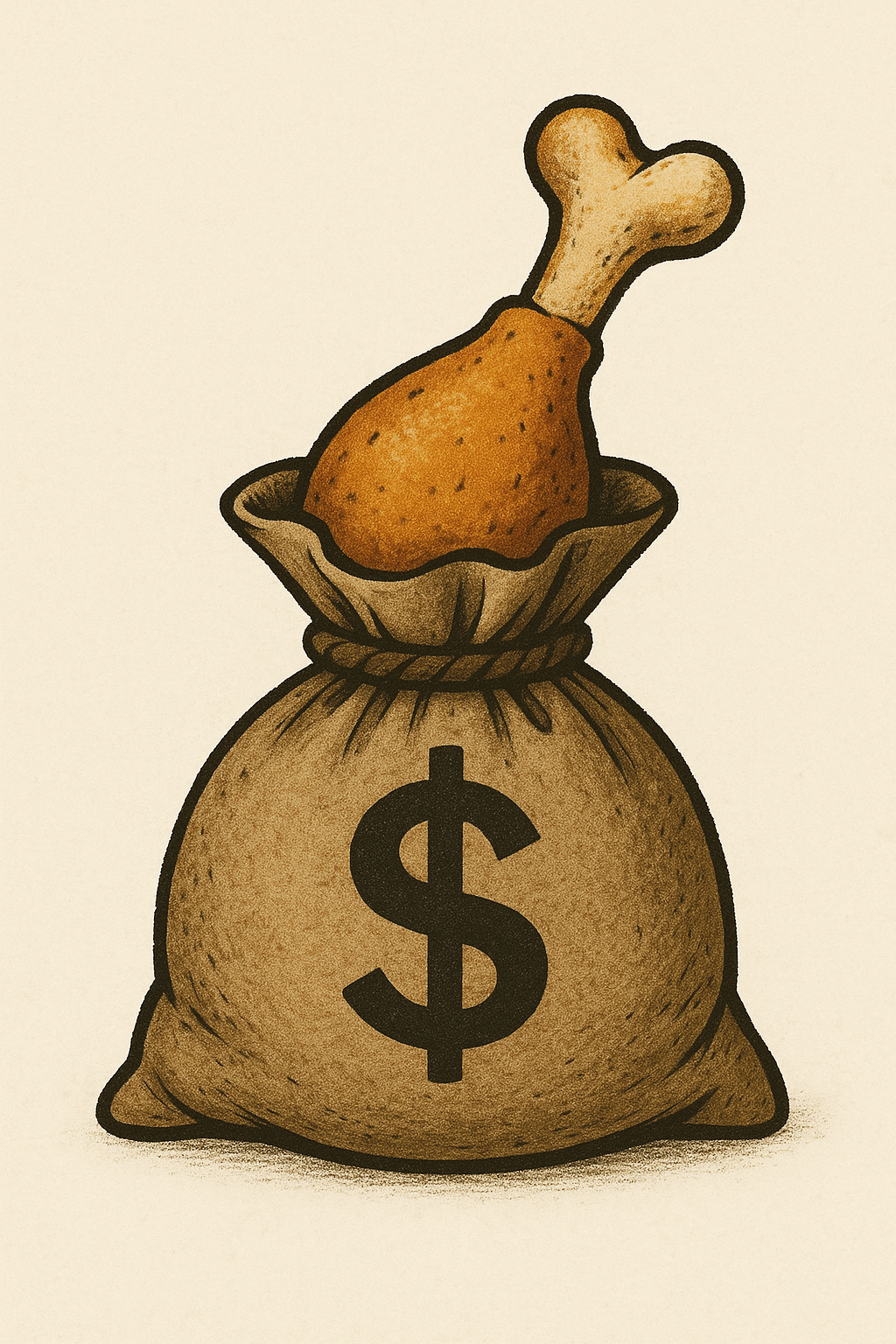
From R75 chicken bags to a R1M empire: A Cape Town nurse's journey of shrewd strategy, tech, and community trust.
Nathaniel Johnson, a true hustler from Khayelitsha, started his empire selling frozen birds for R75. He turned that small start into a massive R1 million business! He used smart tricks like reselling sneakers and creating tiny franchises, proving that anyone can turn local chances into a global success story. His journey shows that even with little money, big dreams can come true with clever ideas and hard work.
What is the "Khayelitsha Hustle"?
The "Khayelitsha Hustle" refers to Nathaniel Johnson's entrepreneurial journey, which began by selling R75 frozen birds and scaled to a R1 million business. It encompasses his innovative strategies in poultry distribution, sneaker resale, and community-focused micro-franchising, demonstrating how he leveraged local opportunities into a global enterprise.
Get Cape Town news in your inbox
Stay updated with the latest stories from the Mother City.
Sunrise in Site C: The Moment the Numbers Aligned
On 12 September 2024, Nathaniel “Nate” Johnson stood barefoot on the cement porch of his grandmother’s match-box house, thumb hovering over his banking app. At 06:43 the screen refreshed and the digits locked: R1 000 562,31. The seven-figure balance was more than money; it was a receipt for 1 000 nights of cracked cooler boxes, WhatsApp arguments and the unshakeable belief that no grant, boss or politician would ever sign his permission slip to prosper.
Three days later he uploaded a twelve-minute TikTok titled “Chicken → Cash → Freedom”. Shot in one take, the clip shows him drawing a single arrow on a piece of cardboard: R75 cost, R100 selling price, R25 net, reinvest. He ends with a quiet sentence, half isiXhosa, half English: “Unomadoda kufuneka abone into engabikho.” An entrepreneur must stare into a future the rest still call impossible. The post has since clocked 5,3 million views and is now used as a case-study in a UWC second-year entrepreneurship elective.
Nate’s story did not start with that sunrise. It began fourteen years earlier in the corridors of Site B day hospital where the smell of Dettol mixed with over-boiled cabbage. At sixteen he noticed boxes of surplus hand-sanitiser stacked next to expired gloves. He asked the stock clerk for ten bottles, sold them to taxi-drivers terrified of H1N1, and bought himself his first prepaid Nokia. The lesson was permanent: every problem smells like profit if you stand close enough.
Ward Trauma, Text-Book Tycoons and the Birth of an Algorithm
University nursing lectures ran from eight to three; Nate’s real classes started at four when he torrented PDFs by Christensen, Godin and Thembekwayo. While classmates memorised the branches of the facial nerve, he mapped hospital wastage: meals patients never touched, oxygen tubing cut too long, single-use syringes tossed by the crate. “If the state can mismanage life-saving gear,” he reasoned, “private citizens can damn well organise dinner.”
Groote Schuur’s trauma high-care unit taught him more about margins than any MBA. A twelve-hour shift paid R19 400 a month but cost him sleep, sanity and the weekly heart-break of signing death certificates for boys younger than him. By month eight he had reverse-engineered the poultry supply chain: two Winelands abattoirs dumped unsold frozen birds every afternoon at 30 % below retail. Cash collected at 16:30 could become double by 21:00 if the cold chain held. He quit the ward the same week his aunt donated her dented 2005 Corolla.
Phase 1 looked laughable: a R3 000 chest freezer wedged across the back seat, powered by an R800 inverter scrounged from a retired electrician. He mapped a 35 km triangle - Langa terminus at 17:30, Gugulethu rank at 18:15, Site C spaza at 19:00 - selling 50 bags a night and pocketing R1 250 before curfew. When customers began sliding into his WhatsApp, he built a wait-list, then outsourced delivery to three nursing buddies who Uber-ed part-time for R5 a bag. Volume leapt to 240 birds a night while he still wore hospital scrubs to keep police road-blocks polite.
Rather than fight for bigger turf, Nate franchised the hustle. A R3 500 starter-kit bought a second-hand cooler, laminated price list and bulk-buy vouchers. Every Friday he inducted three new “runners”, charged R200 weekly rent and insisted on daily NFC scans so he could track open/close cycles from his phone. Eighteen months later micro-franchises dotted Mitchells Plain, Delft and Stellenbosch township, each node feeding him data and dollars while he slept.
When Chicken Bought Sneakers and Sneakers Bought a Cold-Chain Fleet
Poultry profits fattened the war-chest, but sneakers provided the steroid shot. South Africa receives roughly 7 % of global Nike/Jordan allocations; average resale mark-up sits at 280 %. Nate slipped “sneaker scouts” inside Cape Town’s Foot Locker stores - R200 for every drop-date tip. Bots hammered checkout pages; human mules ferried boxes to rented storage units. Within six months he was flipping 600 pairs a quarter and laundering the cash through a Yoco card machine to keep SARS smiling.
He then tokenised the hype itself. On Instagram Stories he auctioned “ownership” of pairs still en-route from America. Buyers paid 60 % upfront, flexed digital bragging rights for two weeks, then collected the shoes once market price peaked. The sneaker derivative book churned R120 000 weekly - more than the chicken circuit but reliant on its working capital. When a Singaporean fund offered USD 47 000 for 600 dead-stock Jordan 1s, Nate cashed out via Tether, converted through a local crypto broker and cleared R920 000 in 36 hours. The liquidity injection arrived the same week he signed a 36-month restaurant supply contract for 2 500 kg of marinated wings, locking in R1,90 net per kilogram and finally pushing his bank balance past the sacred million.
By November 2024 everything fed into NJ Capital Holdings, a private company sliced into four divisions: NJ Protein (eleven staff, one 3-ton refrigerated truck), NJ Sneaker Fund (38 pairs logged as NFT-provenance assets), NJ Media (TikTok, YouTube and a R49-a-month Discord community) and NJ Academy (weekend workshops that have already graduated 270 township traders). Every inbound rand is ritualistically quartered: 40 % reinvested, 30 % parked in a high-interest TymeBank vault, 20 % angel-funded to new runners, 10 % quarantined as “chaos capital” for loadshedding, lawyers or funeral contributions.
Code, Culture and Containers: How the Hood Took Ownership
Ask a Langa teenager what “Pull a Corolla” means and they’ll grin: start stupidly small, move fast, track everything. Cape Flats pastors now quote Nate’s line - “God doesn’t condemn a man to be rich if he does it the proper way” - during Sunday stewardship sermons. The slang is free marketing; the data layer is invisible to the street but vital to the scale. WhatsApp Business API pipes orders into Google Sheets; a Python script optimises nightly routes; an Android app logs every cooler-box open event. Nate confesses he can’t code - he swapped two Travis Scott Jordans for the script and pays a UWC intern R4 000 a month to babysit the servers.
Expansion plans reach beyond the Peninsula. Durban’s Bridge City Mall and Soweto’s Bara taxi rank are already scouted; each new node will be 51 % locally owned, 34 % held by NJ Capital and 15 % by a community trust to keep township optics immaculate. A stealth side-project with Stellenbosch engineers is prototyping solar-powered freezer containers made from repurposed shipping boxes. The first 2 kW photovoltaic unit stands at Gugulethu Sports Complex, rented to vendors at R10 a tray per night - proof that cold-chain infrastructure can be decentralised across the entire country.
The psychology of new money fascinates him more than the millions. “Speed of decision-making” is what flipped first. A R75 pallet once took three seconds to judge; a R250 000 reefer-truck froze him for a week until he converted the price into chicken bags - 10 000 units. If the asset moves 10 001, he buys. He trail-runs Lion’s Head at dawn, journals three gratitude sentences, naps inside the idling refrigerated truck at 14:00 and swears the compressor hum syncs brainwaves. Dress code remains township minimal: R120 Select Sneakers, R20 barber trim, second-hand Panerai bought only because its 72-hour power reserve outlasts Eskom’s darkest streaks.
Five-year forecasts are spoken in probabilities, not promises: 65 % chance NJ Protein feeds five townships across three provinces; 40 % chance of a micro-IPO on a new JSE AltX segment for township business; 20 % chance he exits entirely to chase veterinary pharmaceuticals - because dogs in the location need shots and margins smell sweeter than chicken. The only certainty he offers is logistical: “As long as people eat protein and want to look fresher than their neighbours, there will always be a margin.”
What is the "Khayelitsha Hustle"?
The "Khayelitsha Hustle" refers to Nathaniel Johnson's entrepreneurial journey, which began by selling R75 frozen birds and scaled to a R1 million business. It encompasses his innovative strategies in poultry distribution, sneaker resale, and community-focused micro-franchising, demonstrating how he leveraged local opportunities into a global enterprise.
How did Nathaniel Johnson achieve his first R1 million?
Nathaniel Johnson achieved his first R1 million through a combination of strategic ventures. He started by optimizing the poultry supply chain, selling frozen birds with a quick turnaround. He then expanded into reselling high-demand sneakers, leveraging insider tips and even tokenizing ownership of future arrivals. The liquidity from a large sneaker sale and a significant restaurant supply contract for marinated wings ultimately pushed his bank balance past the R1 million mark in September 2024.
What innovative strategies did Nathaniel use to scale his business?
Nathaniel employed several innovative strategies. He created a micro-franchise model for his chicken distribution, providing starter kits to "runners" and tracking their sales through NFC scans. For sneakers, he used "scouts" and bots to acquire limited-edition items and even auctioned "ownership" of sneakers before they arrived. He also utilized a robust data layer, piping WhatsApp orders into Google Sheets and using Python scripts for route optimization, even though he can't code himself.
What role did technology play in Nathaniel Johnson's success?
Technology played a crucial role. Nathaniel used a banking app to track his finances, WhatsApp for customer communication and order management, and leveraged TikTok for marketing, with his "Chicken → Cash → Freedom" video going viral. He also employed a Python script for route optimization, an Android app for tracking cooler-box activity, and used Yoco card machines for transactions and Tether for large crypto cash-outs, ensuring efficient operations and financial management.
How did Nathaniel give back to his community or foster local ownership?
Nathaniel is committed to community empowerment. His expansion plans for new nodes in places like Durban and Soweto involve a 51% local ownership model, with 34% held by NJ Capital and 15% by a community trust. He also established NJ Academy, offering weekend workshops that have graduated 270 township traders. Furthermore, he angel-funds new runners from his profits and has a stealth project prototyping solar-powered freezer containers rented to local vendors, decentralizing cold-chain infrastructure.
What are Nathaniel Johnson's future plans and business philosophy?
Nathaniel's future plans include expanding NJ Protein to five townships across three provinces and a potential micro-IPO for township businesses on the JSE AltX. He also considers exiting to pursue veterinary pharmaceuticals. His business philosophy emphasizes decision-making speed, understanding market margins, and a pragmatic approach to capital allocation, with profits ritualistically quartered for reinvestment, savings, angel funding, and "chaos capital." He believes that as long as there's demand for protein and fashion, there will be a margin to be made.

Kagiso Petersen is a Cape Town journalist who reports on the city’s evolving food culture—tracking everything from township braai innovators to Sea Point bistros signed up to the Ocean Wise pledge. Raised in Bo-Kaap and now cycling daily along the Atlantic Seaboard, he brings a palpable love for the city’s layered flavours and even more layered stories to every assignment.
View all articles →