
Midweek closures planned for Chapman’s Peak Drive
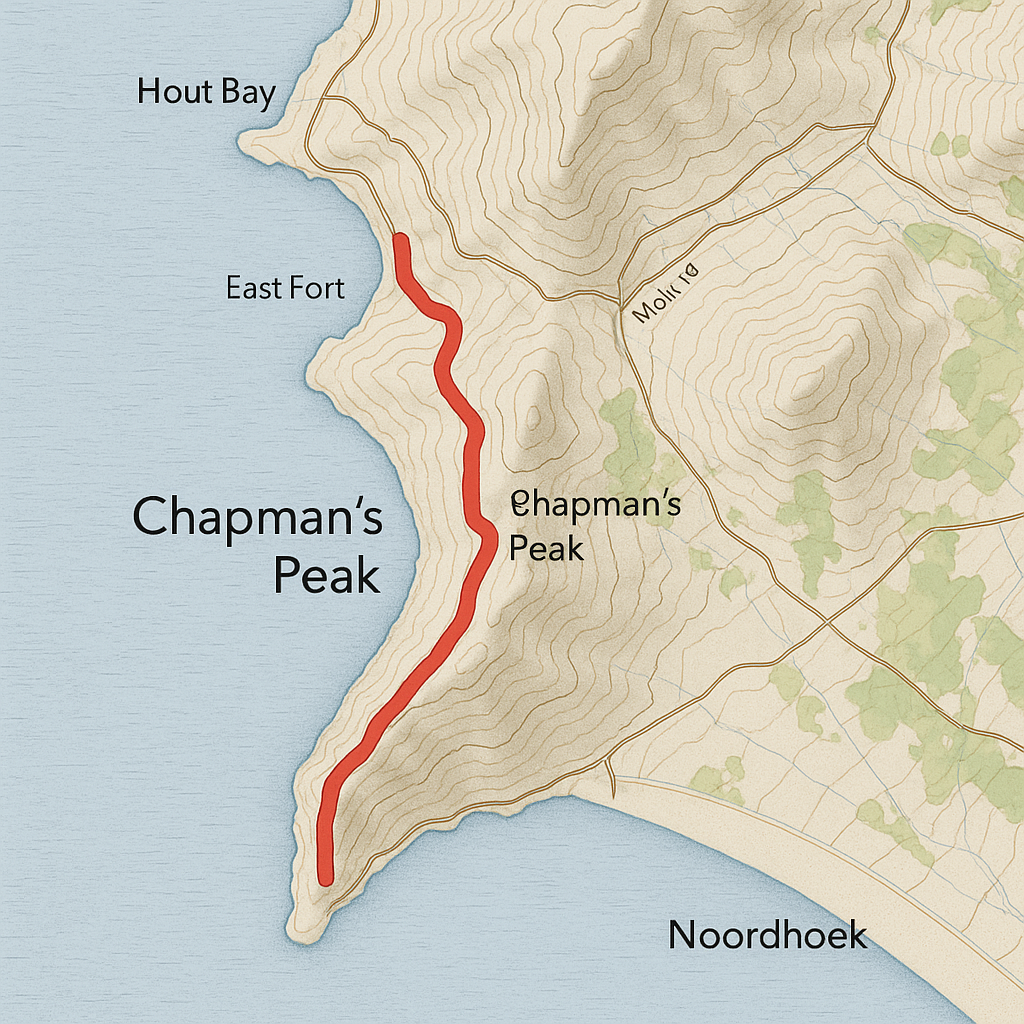
Chapman's Peak Drive closes weekly for fynbos re-wilding. Ecologists remove invasive plants to restore the iconic road's biodiversity.
Chapman's Peak Drive will have "green pauses" every Wednesday from February 5 to March 25, 2026. During these times, the road closes for six hours, letting ecologists remove harmful alien plants. They'll also rewild the area with native fynbos, helping nature heal and preventing dangers like rockfalls. This clever plan turns road closures into a cool way to help the environment.
What are the "green pauses" on Chapman's Peak Drive?
"Green pauses" are scheduled six-hour closures of Chapman's Peak Drive every Wednesday from February 5 to March 25, 2026. During these times, traffic is halted to allow ecologists to remove invasive alien plants and rewild the area with native fynbos, aiming to restore the ecological balance and prevent hazards like rockfalls.
Get Cape Town news in your inbox
Stay updated with the latest stories from the Mother City.
1. A First-of-Its-Kind Silence
Every Wednesday from 5 February through 25 March 2026, the legendary coastal corniche linking Hout Bay and Noordhoek will mute itself. Between 10:00 and 16:00, engines, bicycle cassettes and selfie-hungry boots vanish. Toll booms stay shut, CCTV lenses pivot away from licence plates to film silver-tree canopies instead, and twenty field specialists in tan work-suits fan across the cuttings with pop-up shade tents, violin-sized chainsaws and chilly vacuum-sealed seed vaults. These six-hour “green pauses” are the first deliberately scheduled, repeating windows for nature recovery on a toll road that has previously shut only for weather-dictated repairs.
Managers chose Wednesday because traffic probes count 38 % fewer vehicles than Friday and 22 % less than Monday. Six hours is the minimum span that allows a twenty-person crew to climb 500 m, clear one hectare of invasive Australian wattles, ignite a controlled burn and retreat before the notorious summer south-easter morphs into a rotor-washing gale. Cruise coaches are normally back in the city by 09:30; sunset chasers rarely appear before 17:00, so the slot nestles inside the daily tourism lull.
The decision flips the script on two decades of grumbling about surprise closures. Instead of inconvenient “maintenance days,” motorists now get a published calendar that converts delay into conservation theatre - and, as the concessionaire hopes, Instagrammable content that justifies the detour.
2. Alien Invaders, Water Thieves, Avalanche Makers
Rooikrans and Port Jackson wattles arrived from Australia in the 1840s, praised for stitching together the Cape Flats’ shifting sands. Engineers later planted them along the new Chapman’s Peak cutting to armour the raw cliff. The foreigners flourished too well: their root nodules pump nitrogen into naturally nutrient-starved sandstone, letting them guzzle resources while native proteas, ericas and restios merely sip. One mature rooikrans can scatter 9 000 seeds per square metre; fire heat cracks those seeds and unleashes a green carpet that grows three times faster than indigenous resprouters.
The ecological bill is steep. A wattle thicket intercepts 40 % of rainfall before it reaches groundwater, hikes peak fire temperatures by 3 °C and adds 25 t of biomass per hectare to 70-degree granite slopes - mass that can tip a slab avalanche onto the tarmac below. During Cape Town’s 2018–21 drought, hydrologists calculated that restoring the entire catchment to fynbos would free 2.3 million extra litres daily, enough for 4 000 households, simply by slashing evapotranspiration. Fire modellers add that removing wattles shortens flame length from four metres to 1.5 m, giving crews a 12-minute safety margin to anchor containment lines.
Geotechnical engineers care about roots as much as botanists do. Wattle mats fail at only 25 kPa shear stress, whereas deep protea and restio taproots knit weathered granite blocks down to two metres. Every tonne of wuckle removed is a tonne less likely to ride a winter storm onto the road.
3. Toolkit, Tech and the Smell of a Mountain Exhaling
Work unfolds in three choreographed waves. A drone armed with multispectral cameras first discriminates wattle infrared signatures from endemic Protea nitida reflectance. The resulting map populates a tablet that stamps each invasive clump with a QR code. Arborists then slice stems ankle-high and daub the stump with 20 % triclopyr gel, preventing regrowth. Cut branches feed a tracked chipper that blows 8 mm fragments straight into hessian sacks; chips left on the slope could surf winter runoff and smother rare geophytes.
The “fynbos strike team” follows, drilling 10 cm holes with a two-stroke auger. Each cavity receives a smoke-water pellet - lab-brewed from burnt restio - and a four-species seed mix: Leucadendron laureolum for architecture, Erica plukenetii for colour, Restio quadratus for thatch and Cliffordia falcata to sponge excess nitrogen back out of the soil. Within eighteen months, only photobleached stumps remain; within five years the slope is ready for the next fire cycle, now biased toward natives.
Data flow in real time. Stem diameters, stump-paint efficacy, 30-day seedling counts and soil-moisture probes feed LoRaWAN transmitters bolted to the cliff. The open-source dashboard FynbosWatch, built by UCT’s Plant Conservation Unit, turns pixels from red (invaded) to amber (cleared) to green (restored). Algorithms trained on 50 000 drone photos predict where regrowth is likely, letting managers swap broad-brush operations for sniper visits. Motorists who register receive an apology email - and a free coffee voucher - if closure overruns by more than fifteen minutes.
4. Detours, Toads and the Sound of Breathing Granite
Drivers diverted onto the 26 km “figure-eight” horseshoe via Suikerbossie and Ou Kaapse Weg grumble, then discover upsides. Constantia wineries refund the missed toll against a bottle of Sauvignon, while Noordhoek Farm Village runs a Wednesday market with ghoema bands and falafel wraps for those who prefer to park and wait. Mountain bikers relish the 380 m climb; Uber drivers budget an extra R18 in fuel.
Wildlife cashes in too. Peregrine falcons fledge in February; fewer cars mean fewer startled juveniles splatted against the cliff. Chacma troops trail the crews, digging for beetle grubs in freshly turned soil. If barometric pressure dips below 1 010 hPa at 14:00, technicians halt for western leopard toad migration, erecting shade-cloth fences that channel amphibians into buckets and a lift across the tarmac in a bakkie proudly registered “TOAD 1.”
Stand near the 3.2 km marker at 11:30 and you can hear the mountain inhale: sugarbird wings zip overhead, ocean slurps against rocks 70 m below, a baboon dislodges a protea cone that thuds onto the catwalk. Then the chipper barks, a reminder that restoration is not a return to silence but a negotiated truce between engine and ecosystem. By 15:45 the last seed pellet is gone, crew radios crackle “pack-up,” and the slope exhales a resinous perfume that the first convertible at 16:05 will breathe in - unaware that the scent is the soundtrack of its own detour.
What are the "green pauses" on Chapman's Peak Drive?
"Green pauses" are scheduled six-hour closures of Chapman's Peak Drive every Wednesday from February 5 to March 25, 2026. During these times, traffic is halted to allow ecologists to remove invasive alien plants and rewild the area with native fynbos, aiming to restore the ecological balance and prevent hazards like rockfalls.
Why were these specific dates and times chosen for the closures?
The "green pauses" are scheduled every Wednesday from February 5 to March 25, 2026, between 10:00 and 16:00. Wednesdays were chosen because traffic analysis shows 38% fewer vehicles than Friday and 22% less than Monday, making it the least disruptive day. The six-hour window is the minimum required for a twenty-person crew to perform their tasks, including climbing, clearing invasive wattles, and conducting controlled burns. This timing also avoids peak tourist times, as cruise coaches are typically back in the city by 09:30 and sunset chasers rarely appear before 17:00.
What are the environmental benefits of removing alien plants like Rooikrans and Port Jackson wattles?
Removing alien plants like Rooikrans and Port Jackson wattles offers significant environmental benefits. These invasive species, originally from Australia, outcompete native fynbos by pumping nitrogen into the soil and consuming excessive water. Ecologically, their removal helps restore the natural, nutrient-starved sandstone environment, freeing up to 2.3 million extra liters of water daily for the catchment. Geotechnical benefits include preventing rockfalls, as wattles add significant biomass to steep slopes, and their shallow root systems are less effective at stabilizing the soil compared to the deep taproots of native fynbos. Furthermore, removing wattles reduces fire intensity, shortening flame lengths and increasing safety margins for firefighters.
How do ecologists identify and remove these invasive plants, and what technology is involved?
Ecologists use a multi-stage approach for identification and removal. Initially, drones equipped with multispectral cameras differentiate wattles from native fynbos based on infrared signatures. This data creates a map where each invasive clump is assigned a QR code. Arborists then slice the stems ankle-high and apply 20% triclopyr gel to prevent regrowth. Cut branches are fed into a tracked chipper, and the resulting fragments are collected in hessian sacks to prevent them from smothering native geophytes. Real-time data, including stem diameters and seedling counts, is transmitted via LoRaWAN devices and displayed on an open-source dashboard called FynbosWatch, which helps predict regrowth and optimize operations.
What is the rewilding process after alien plant removal?
After invasive plants are removed, a "fynbos strike team" begins the rewilding process. They drill 10 cm holes with a two-stroke auger, into which they place a smoke-water pellet (derived from burnt restio) and a four-species seed mix. This mix includes Leucadendron laureolum for structural integrity, Erica plukenetii for color, Restio quadratus for thatch, and Cliffordia falcata to absorb excess nitrogen from the soil. The goal is to restore the natural fynbos ecosystem, making the area more resilient to future fire cycles within five years.
Are there any alternative routes or community benefits for those affected by the closures?
Yes, drivers are diverted onto a 26 km alternative route via Suikerbossie and Ou Kaapse Weg. While this adds extra travel time, there are community benefits and incentives. Constantia wineries offer refunds for the missed toll against a bottle of Sauvignon, and Noordhoek Farm Village hosts a Wednesday market with entertainment and food for those who choose to wait. Wildlife also benefits significantly, with fewer vehicle disturbances for peregrine falcons and planned measures to protect western leopard toad migration. These closures transform a potential inconvenience into an opportunity for both environmental restoration and unique local experiences.

Aiden Abrahams is a Cape Town-based journalist who chronicles the city’s shifting political landscape for the Weekend Argus and Daily Maverick. Whether tracking parliamentary debates or tracing the legacy of District Six through his family’s own displacement, he roots every story in the voices that braid the Peninsula’s many cultures. Off deadline you’ll find him pacing the Sea Point promenade, debating Kaapse klopse rhythms with anyone who’ll listen.
View all articles →