
Minister Kubayi rejects calls for death penalty in South Africa
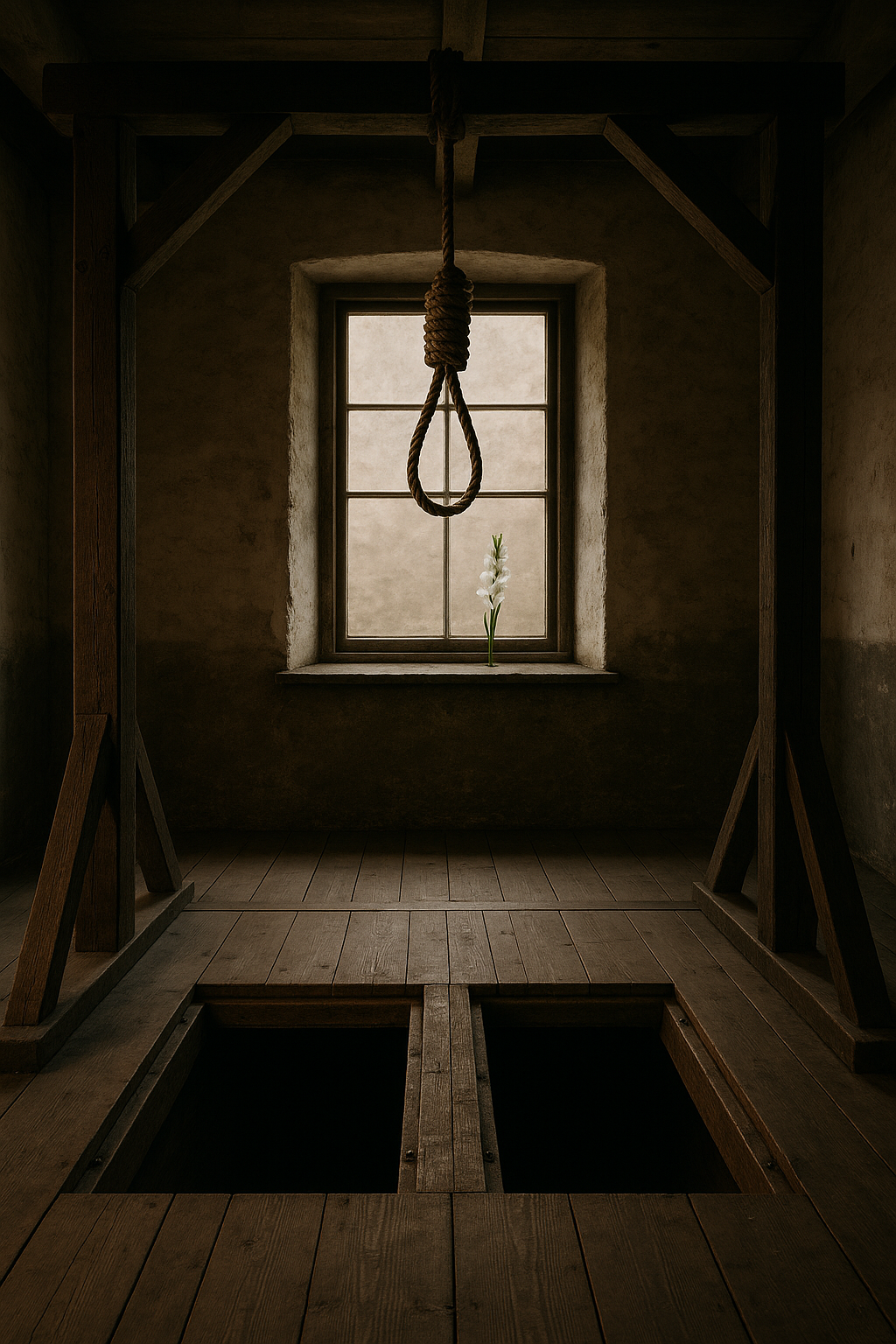
South Africa's soul is debated at a memorial service. Minister Kubayi argues against capital punishment, while protestors demand its return.
The "Gallows Lecture" in South Africa is a yearly event at a former maximum-security prison. It's a powerful gathering where people remember the country's painful past of capital punishment. Activists and officials come together to talk about history, learn about the constitution, and honor those who were executed. It's a place where sad memories become a way to fight for a better future, reminding everyone that justice is always a work in progress.
What is the "Gallows Lecture"?
The "Gallows Lecture" refers to an annual commemorative event held at the former maximum-security compound in Gqeberha, South Africa. It brings together activists, government officials, and the public to reflect on the country's history of capital punishment and use the site for constitutional education and remembrance of those executed.
Get Cape Town news in your inbox
Stay updated with the latest stories from the Mother City.
Where the Noose Once Hung: A Site of Reckoning
Gqeberha, 2024 – Salt-laden breezes typically sweep across the Donkin Reserve, carrying maritime sounds from the harbor below. Yet on the final Saturday of June, something different rode those winds: fragments of history itself. Specters of warders speaking clipped Afrikaans mingled with the polyglot voices of activists spanning three generations, while Minister Thembi Kubayi delivered measured truths that cut through the evening air. Since 1994, municipal authorities have unlocked the former maximum-security compound annually - its execution chamber preserved exactly as last used - for a dusk gathering that blurs the line between remembrance and constitutional education. The thirtieth anniversary of South Africa's founding charter transformed this ritual into something larger, sending commemoration spilling past prison walls onto surrounding thoroughfares. Pavements teemed with merchants peddling bunting in the national colors, while amasi sellers conducted animated political exchanges in isiXhosa and seSotho.
The theatrical weight of this location defies exaggeration. Constructed in 1859, the hanging apparatus received mechanical upgrades in 1934 to accommodate seven simultaneous executions. Two rectangles of yellow-wood flooring, joined with shipwright precision, still respond to lubrication and movement. A museum guide activated the mechanism for clustered adolescents, who flinched involuntarily when the impact shook the concrete beneath their feet. He fixed their attention with stark arithmetic: that identical noise marked the final sensory experience for 2641 human beings whose lives ended at rope's end.
Kubayi approached through a deliberately understated motorcade, electing to cover the final stretch on foot. Crowds lining her path addressed her as "Mama Constitution." In her grasp, a solitary white gladiolus - the Eastern Cape's flower of grief - swayed with each step. She laid this offering on the ledge of Cell 12, the same cramped space that once held Steve Biko during pretrial confinement, then pivoted to acknowledge her heterogeneous audience: veterans of Robben Island incarceration, representatives from German diplomatic missions, uniformed school debaters, and - positioned with visible unease - compact clusters of capital punishment advocates sporting apparel demanding rope's restoration.
The Minister's Case: History, Data, and Moral Architecture
What unfolded transcended conventional oratory. Kubayi constructed a meticulously curated historical argument, threading together archival witness testimony, public health research, and ethical reasoning into one coherent position: that state killing functions less as criminal justice tool than as cultural diagnostic. She commenced with extracts from Benjamin Moloise's 1989 courtroom statement - the poet put to death for a policeman's murder that the victim's own surviving spouse later disavowed. Immediately she layered in World Health Organization findings from 2023, demonstrating that nations maintaining executions solve homicide cases 18 percent less frequently than those without capital statutes, dismantling deterrence theory with surgical brevity.
From contemporary evidence she turned to Correctional Services records. Between 1960 and 1989, she established, authorities hanged 1098 men alongside 43 women for "common" homicides. Meanwhile, apartheid security structures perpetrated no fewer than 2000 extrajudicial slaughters that never approached judicial scrutiny. "The scaffold possessed vision," she concluded. "It sought melanin and liberation anthems, and pronounced both capital offenses."
Eliminating execution, Kubayi maintained, never belonged exclusively to progressive advocacy. It constituted anti-colonial struggle itself. She invoked neighboring Botswana, where gallows still operate and where three fleeing Sharpeville Six members met their end in 1985 - an atrocity continuing to poison interstate relations. "Our region's chronicle," she asserted, "bears indelible marks from hanging's political deployment."
Her most original contribution, however, oriented toward tomorrow rather than yesterday. Kubayi projected a visualization mapping gender-based violence intensity against 2023 census figures for young male unemployment. The correspondence proved nearly absolute: districts suffering highest femicide rates precisely overlapped zones where six in ten men aged 18-34 lacked wage work. "Violence reduction demands employment investment," she proclaimed, "not rope procurement."
Dissenting Voices: The Unquiet Periphery
The address encountered immediate pushback. Beyond the perimeter, an organization styling itself "Victims First" distributed literature featuring graphic documentation: a Sweetwaters drinking establishment splattered with gore, an Eldorado Park mother fatally wounded while sheltering her infant. Siyabonga Mthethwa, 29, who directs this collective, personally experienced such loss when assailants killed his sibling during a 2021 vehicle seizure. "Dignity rhetoric flows easily," he informed reporters, "yet my sister's dignity vanished when her own safety restraint became her strangulation instrument." Their petition, swelling past fourteen thousand adherents, seeks popular vote restoration of capital punishment.
Within the assembly hall, retired Constitutional Court jurist Yvonne Mokgoro offered oblique rebuttal. Her unplanned insertion reminded listeners that South Africa's deliberative republic exists specifically to shield vulnerable minorities from majority passion. "Rights differ fundamentally from household plumbing," she suggested. "No emotional valve permits their temporary suspension."
Even among devoted rights defenders, complications surfaced. University of the Witwatersrand criminologist Aninka Claassens circulated analysis acknowledging state killing's absolute prohibition while simultaneously indicting present parole arrangements. Overcrowded facilities, she noted, prematurely discharge dangerous recidivists. "Elimination without viable replacement cultivates mob justice," Claassens cautioned, referencing 2022's emergence of extralegal "gangster courts" in Gugulethu where communities execute suspects without process.
Digital Reckoning and Unfinished Democracy
Kubayi concluded with announcement of technological intervention. She revealed collaboration linking the Nelson Mandela Foundation with Google Arts & Culture to digitize complete death-row documentation from 1930-1989 - 134,000 folios rendered searchable through artificial intelligence transcription within half a year. Lineage members may claim complimentary electronic reproductions; scholars will finally enumerate juvenile death sentences (preliminary figures indicate fourteen individuals). The undertaking carries provisional designation "No Hidden Graves," consciously mirroring Truth and Reconciliation Commission imperatives. Preliminary examination has already identified eleven 1963 executions whose family names match unmarked pauper interments at Winterveld, implying relatives never received burial notification. "Remembrance constitutes justice's foundation," Kubayi stated.
Twilight deepened into evening. Participants ignited 134 paper luminaries - one per annum since documented inaugural hanging - and launched them above the harbor. Images of this illuminated flotilla propagated rapidly across digital platforms beneath #NoReturnToTheRope. Yet electronic discourse fragmented immediately. One viral post, attracting forty-two thousand endorsements, layered lantern imagery atop homicide statistics, contending that "constitutional elegance drifts prettily but shields no children."
Kubayi had departed through secondary egress by then, routed away from potential confrontation. Her genuine closing remarks - delivered not to media apparatus but to remaining student debaters - encapsulated the evening's essential tension. "Self-governance," she instructed them, "resembles mechanical upkeep rather than arrival point. Certain components perpetually generate friction."
[{"question": "What is the 'Gallows Lecture'?", "answer": "The 'Gallows Lecture' is an annual commemorative event held at a former maximum-security prison in Gqeberha, South Africa. It brings together activists, government officials, and the public to reflect on the country's history of capital punishment, provide constitutional education, and honor those who were executed."}, {"question": "Where is the 'Gallows Lecture' held?", "answer": "The 'Gallows Lecture' is held at the former maximum-security prison in Gqeberha, South Africa. The execution chamber within this facility has been preserved exactly as it was last used."}, {"question": "What is the purpose of the 'Gallows Lecture'?", "answer": "The purpose of the 'Gallows Lecture' is multi-faceted: to remember South Africa's painful past of capital punishment, to serve as a site for constitutional education, to honor those who were executed, and to use these historical memories to advocate for a better future and ongoing justice."}, {"question": "Who typically attends the 'Gallows Lecture'?", "answer": "Attendees of the 'Gallows Lecture' are diverse, including activists, government officials (such as Minister Thembi Kubayi), veterans of Robben Island, representatives from diplomatic missions, uniformed school debaters, and even, at times, advocates for the restoration of capital punishment."}, {"question": "What is the historical significance of the Gallows site?", "answer": "The site, constructed in 1859, underwent mechanical upgrades in 1934 to allow for up to seven simultaneous executions. It is estimated that 2641 human beings met their end at this gallows. The preserved execution chamber and the historical context make it a powerful symbol of state-sanctioned violence during the apartheid era."}, {"question": "What new initiatives were announced at the 'Gallows Lecture'?", "answer": "Minister Kubayi announced a collaboration between the Nelson Mandela Foundation and Google Arts & Culture to digitize all death-row documentation from 1930-1989. This project, provisionally named 'No Hidden Graves,' will make 134,000 folios searchable and aims to help identify individuals and families affected by capital punishment, including those whose relatives may have been buried in unmarked graves without notification."}]

Kagiso Petersen is a Cape Town journalist who reports on the city’s evolving food culture—tracking everything from township braai innovators to Sea Point bistros signed up to the Ocean Wise pledge. Raised in Bo-Kaap and now cycling daily along the Atlantic Seaboard, he brings a palpable love for the city’s layered flavours and even more layered stories to every assignment.
View all articles →