
MSC Cruises wraps up successful South African cruise season
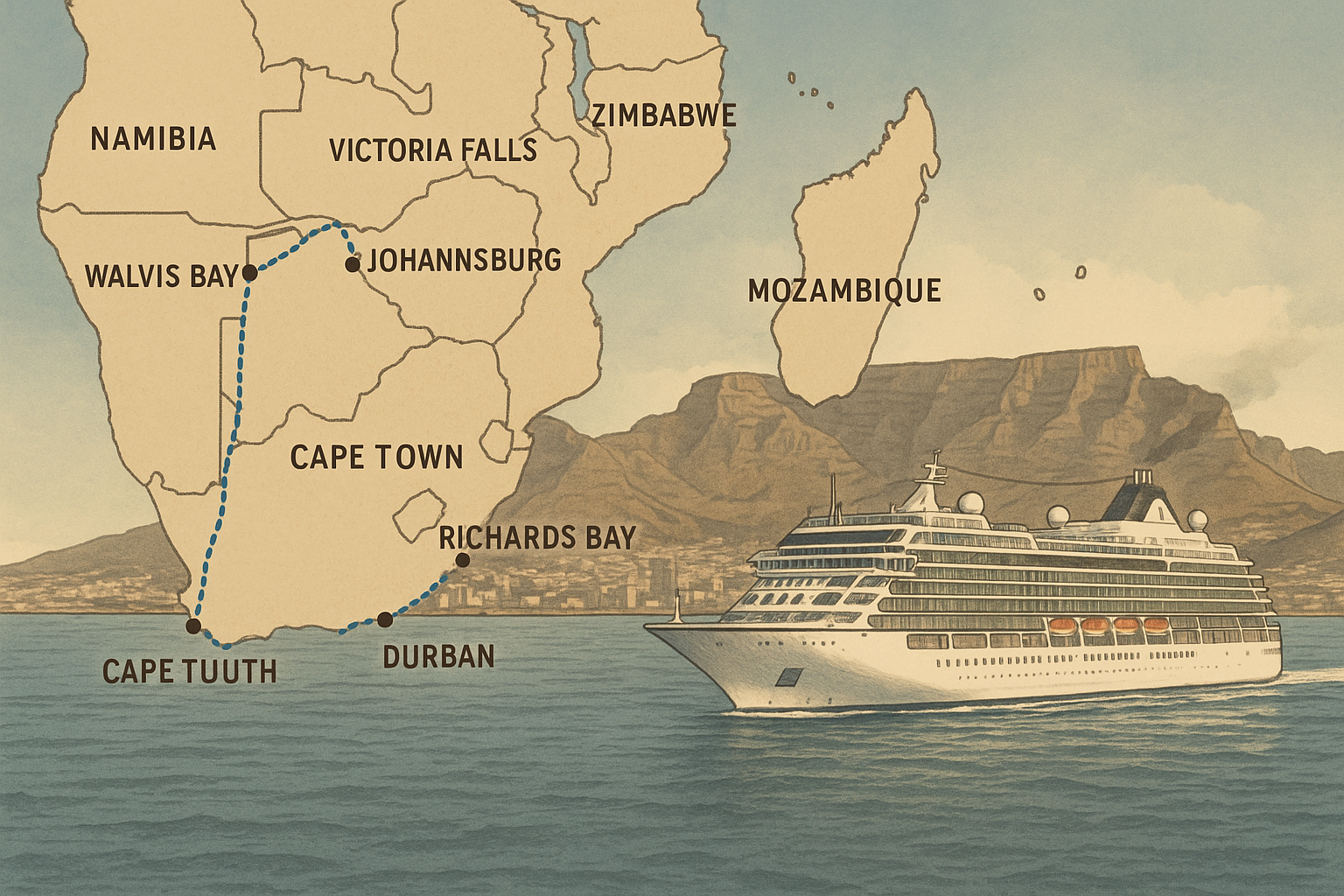
MSC Cruises' record South African season injected R2 billion into the economy, creating 17,000 jobs. Get ready for an even bolder 2026/27!
The MSC Opera's recent cruise season in South Africa was a huge success! It brought in almost R2 billion for the country and created 17,000 jobs. Many people, from young TikTok fans to grandmas, enjoyed the trips. The ship visited amazing places like Mozambique and even Namibia, making a big splash everywhere. Now, a new ship, MSC Armonia, is coming, promising even more excitement and a whopping R2.4 billion for South Africa!
What was the economic impact of MSC Opera's 2025/2026 cruise season in South Africa?
MSC Opera's 2025/2026 South African cruise season injected nearly R2 billion into the national economy. This included 37 departures, hosting 85,347 guests, creating 17,000 jobs, and a 32% jump in cruise-adjacent turnover, benefiting logistics, tourism, and even tech start-ups.
Get Cape Town news in your inbox
Stay updated with the latest stories from the Mother City.
Curtain Call in Cape Town: A Season That Rewrote the Record Books
On the mild evening of 12 April 2026 the last brow lifted from MSC Opera and the siren echoed across Cape Town’s breakwater, closing the most lucrative southern-Africa cruise chapter the company has logged since its maiden 1998 call at Durban. Thousands of onlookers - taxi drivers, buskers, food-truck chefs and day-trippers - lined the quayside to watch the white super-structure glide past Robben Island and melt into the Atlantic dusk. That single departure felt like a carnival, yet it represented only the final exclamation mark on a 21-week story that pumped just shy of R2 billion into the national economy.
Behind the confetti lay hard numbers: 37 departures, 85 347 guests and 17 000 pay-cheques that would never have existed had the vessel wintered elsewhere. GDP trackers recorded a 32 % jump in cruise-adjacent turnover, everything from dry-dock overtime in Coega to extra shifts for bunny-chow vendors on Grey Street. The ripple reached far beyond tourism: logistics firms moved 150 extra refrigerated containers each week, while a Gauteng-based tech start-up that digitises health-declaration forms tripled its staff.
The schedule itself was a logistical ballet. November through April saw three distinct route families: quick three- and four-night KwaZulu-Natal–Mozambique hops, mid-length “Agulhas Drift” journeys that nosed as far south as Port Elizabeth, and the headline-grabbing “Cape West Coast & Beyond” loops that stretched to Namibia, Réunion and Mauritius. Each itinerary was designed to load or discharge passengers in either Durban or Cape Town, maximising utilisation of both new terminals and giving travellers a reason to extend land stays.
Who Sailed, What They Did On Board, and Why It Mattered
Guest mix surprised even the revenue managers. Women made up 69 % of the manifest, a tilt credited to girls’-weekend groups, granny-grandkid celebrations and solo travellers who felt safer in the cocoon of a mega-resort that occasionally docked. Generation-Z bookings leapt 44 % after the company invited TikTok creators to film entire sailings; one clip of a flash-mob dance on Portuguese Island has already clocked 8.4 million views. Solo cabins sold out first after MSC quietly dropped the single supplement on insides, pushing lone-traveller numbers up 12 % year-on-year.
Theme nights turned the central atrium into a shape-shifting stage every second week. One voyage opened with Afro-Latin fusion: a Havana salsa band traded licks with a Cape-town jazz trio while Brazilian capoeiristas cartwheeled between cocktail stations. The next outing morphed into a floating culinary school where TV chefs Reuben Riffel and Zola Nene judged bunny-chow versus koeksister cook-offs, using ingredients sourced in Epping Market less than 24 hours earlier. Millennials queued for ‘90s rewind parties that paired Mandoza with Jamiroquai under ultraviolet light, while sunrise yogis and ice-plunge addicts booked out the wellness festival that took over the pool deck on the return leg.
Children sailed gratis as third and fourth berth occupants on select dates, packing the LEGO PlayZone with 15 405 under-12s and freeing parents to indulge at the Aurea Spa. That seemingly small concession added R4.2 million in spa retail alone, proving that family-friendly pricing can still juice high-margin ancillaries. Even the medical centre saw modest traffic - 412 visits, mostly seasickness tablets and one salsa-induced fractured wrist - thanks to UV-sterilised 100 % fresh-air HVAC that has become a quiet industry standard.
Ports, People and Procurement: How the Money Reached Main-Street
Farther offshore, Mauritius gained a fresh narrative when MSC Opera docked at kite-surfing hot-spot Pointe des Lascars instead of crowded Port Louis. Guests returned to the gangway at 02:00 after a guided night-market graze, an excursion so popular it will become a permanent fixture. Réunion’s new zip-line swoops 800 m above the UNESCO-listed Salazie Cirque, feeding adrenaline junkies panoramic footage that still trends on Instagram reels. In Namibia, the 05:30 seal-kayak sortie out of Walvis Bay generated 1.3 million hashtag impressions, unintentionally rebranding the destination as the sunrise capital of the South Atlantic.
Back home, 52 first-time South African suppliers won contracts worth R198 million: Atlantis protea growers shipped 65 000 stems for dining-room centre-pieces, Soweto brewers fermented 21 000 litres of uMqombothi-style ale for deck parties, and a Gqeberha start-up provided biodegradable straws made from sugar-cane bagasse. Environmental credentials sharpened when the line bunkered 7 300 t of 0.1 % sulphur gas-oil at Vopak Durban, cutting SOx emissions 93 % against legacy marine fuel. Durban’s Nelson Mandela Cruise Terminal staged the world’s first tri-ship simultaneous turnaround - MSC Opera, AIDAprima and Norwegian Dawn - requiring 380 extra security staff and a temporary N2 traffic reroute, yet the operation finished 22 minutes ahead of schedule. Cape Town’s reborn grain-silo terminal rolled out a red carpet directly opposite Zeitz MOCAA, allowing 14 000 travellers to wander into Africa’s leading contemporary-art museum without boarding a bus.
Looking Ahead: MSC Armonia, St Helena and the R2.4 Billion Promise
Training quietly stole the spotlight beneath the razzmatazz. A bilateral deal with the Transport Education Training Authority rotated 491 South African cadets through deck, engine and hotel divisions; 24 accumulated enough sea-time to qualify for Officer of the Watch tickets, the largest cohort MSC has ever produced in one season. That human-capital dividend will outlast any spreadsheet, seeding a local officer pipeline previously dominated by Europeans and Asians.
On 27 November 2026 the baton passes to MSC Armonia, a 1 566-guest vessel that trades sheer scale for intimacy and promises shorter restaurant queues and faster bar service. A 2025 refit installed USB-C ports, Italian linens and rainforest showers in every stateroom, while 180 balconies gained frosted-glass fronts for added privacy. Kids score age-segmented LEGO DUPLO zones and a VR racing lounge; grown-ups can binge Sri-Lankan street-food curries devised by Colombo superstar Dharshan Munidasa at a pop-up station exclusive to South African waters. Durban-based itineraries will stick to two-, three-, four- and five-night Mozambique permutations, while Cape Town sailings will stretch three, five and seven nights to Namibia and the headline-grabbing maiden call at St Helena, timed to coincide with the 2026 wild-horse migration in neighbouring Lüderitz.
Within 72 hours of release, forward bookings for the new season had already swallowed 42 % of the previous year’s final tally. Entry-level insides out of Durban open at R6 399 pp, yet balcony cabins on the St Helena route are 78 % gone. Airlines answered by slotting 22 additional weekly Johannesburg–Durban frequencies for winter 2026, Uber created a one-click “cruise-port” ride option guaranteeing 25-minute flat-rate transfers, and the V&A Waterfront green-lit a R120 million “Cruise Village” night market that will run November-through-April. Zeitz MOCAA will stay open until 23:00 on every Cape embarkation Wednesday for jazz-and-art nights aimed at early arrivals. Even Durban’s Golden Mile is upgrading: a 2.2 km protected swim lane, bank-rolled partly by a voluntary R10 “blue flag” levy added to every cruise ticket, will be ready for the first arrival.
MSC’s next gangway drops in 254 days. Between now and then South Africa has one short winter to gear up for 130 000 additional visitors, an expected R2.4 billion spend, and the first leisure ship ever to plant a flag on St Helena, the mid-Atlantic volcanic speck so isolated that even Shackleton paused before approaching. If last season proved anything, it is that the benefit flows both ways: the ship needs the shore, and the shore - now armed with new piers, new officers and new confidence - clearly needs the ship.
What was the economic impact of MSC Opera's 2025/2026 cruise season in South Africa?
MSC Opera's 2025/2026 South African cruise season injected nearly R2 billion into the national economy. This included 37 departures, hosting 85,347 guests, creating 17,000 jobs, and a 32% jump in cruise-adjacent turnover, benefiting logistics, tourism, and even tech start-ups.
How did MSC Opera's season impact employment and local businesses?
The cruise season created 17,000 jobs, and GDP trackers recorded a 32% jump in cruise-adjacent turnover. This benefited a wide range of businesses, from dry-dock operations in Coega and food vendors in Grey Street to logistics firms that moved 150 extra refrigerated containers weekly, and a Gauteng-based tech startup that tripled its staff due to digitizing health-declaration forms. Additionally, 52 first-time South African suppliers secured contracts worth R198 million.
What demographic trends were observed among MSC Opera's guests?
The guest mix showed women making up 69% of passengers, attributed to groups like girls'-weekend trips and solo travelers. Generation-Z bookings surged by 44% following collaborations with TikTok creators. Solo cabins sold out quickly after the company removed the single supplement on inside cabins, leading to a 12% year-on-year increase in lone travelers. Children sailed free as third and fourth berth occupants on selected dates, bringing 15,405 under-12s onboard, which also boosted Aurea Spa retail sales by R4.2 million.
What unique experiences were offered during the MSC Opera cruises?
The cruises featured diverse theme nights, including Afro-Latin fusion with live bands, and floating culinary schools where TV chefs judged local food cook-offs. '90s rewind parties were popular with millennials, while wellness festivals catered to yogis and ice-plunge enthusiasts. Excursions included guided night-market grazes in Mauritius, zip-lining in Réunion, and seal-kayaking in Walvis Bay, Namibia, which garnered significant social media attention.
How did MSC Opera contribute to environmental sustainability and infrastructure development?
MSC Opera demonstrated environmental commitment by bunkering 7,300 tons of 0.1% sulphur gas-oil in Durban, reducing SOx emissions by 93%. The season also saw infrastructure advancements, such as Durban's Nelson Mandela Cruise Terminal staging the world's first tri-ship simultaneous turnaround, and Cape Town's reborn grain-silo terminal allowing direct access to the Zeitz MOCAA museum.
What can South Africa expect from the upcoming MSC Armonia season?
The MSC Armonia, a 1,566-guest vessel, will take over from November 27, 2026, promising a R2.4 billion injection into the South African economy. It features recent refits including USB-C ports, Italian linens, rainforest showers, age-segmented LEGO DUPLO zones, and a VR racing lounge. New culinary offerings include Sri-Lankan street-food curries. Itineraries will include Durban-based Mozambique routes and Cape Town sailings to Namibia and a maiden call at St Helena. The season is already seeing high demand, with significant airline and local infrastructure preparations underway, including a new 'Cruise Village' night market and extended museum hours.

Hannah Kriel is a Cape Town-born journalist who chronicles the city’s evolving food scene—from Bo-Kaap spice routes to Constantia vineyards—for local and international outlets. When she’s not interviewing chefs or tracking the harvest on her grandparents’ Stellenbosch farm, you’ll find her surfing the Atlantic breaks she first rode as a schoolgirl.
View all articles →