
MSC Opera sets sail for Cape Town as South African cruise season nears its end
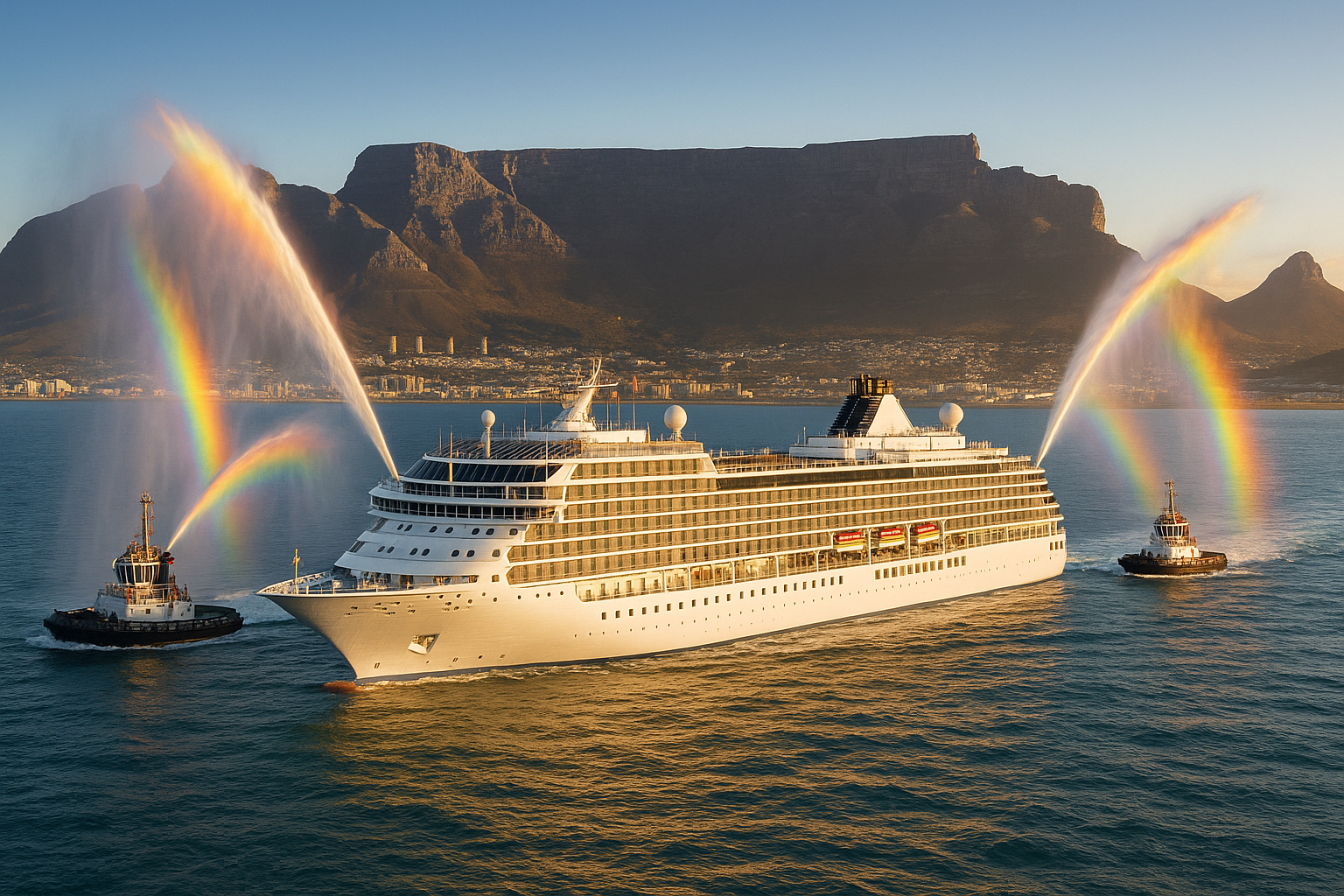
Experience MSC Opera's final South African season: cruises from Durban to Cape Town, themed festivals, and unique shore excursions.
The MSC Opera is sailing its final season in Southern Africa in 2026, offering a special trip from Durban to Cape Town. This journey is like a floating party, with themed cruises, music, and delicious food. It's truly a unique way to experience South Africa's coasts and culture before the ship is replaced by the MSC Armonia. Don't miss this grand dame's last dance!
What is the MSC Opera's 2026 farewell lap?
The MSC Opera's 2026 farewell lap is her final season sailing in Southern Africa, featuring a unique repositioning cruise from Durban to Cape Town, three themed boutique sailings (Bok Boot, Oppiwater Kunstefees, MiCasa Friendship Cruises), and five-night trips to Walvis Bay. She will then be replaced by the MSC Armonia.
Get Cape Town news in your inbox
Stay updated with the latest stories from the Mother City.
1. The Milk-Run That Feels Like a Continent-Swap
On 27 March 2026 the last siren of summer echoes across Durban’s entrance channel. At exactly 18:00 the 274 m Opera slips her bollards, reverses into the turning basin and points her bow toward the Cape. The run is only 790 nautical miles - shorter than Joburg to Polokwane by road - but the emotional mileage is epic. By midnight the warm Agulhas swirl has vanished; by dawn you’re tasting Benguela mist on your lips. Veterans book this hop months ahead, not for distance but for the one sunrise when seven sea-stacks known as the Twelve Apostles glow like molten brass.
The three-night repositioning is nick-named “the milk-run with a champagne bow.” There is no foreign passport stamp, yet the contrast feels trans-continental: mangrove-lined estuaries give way to fynbos cliffs; air that smelled of cane-sugar now carries Table Mountain’s sandstone chill. The ship’s god-mother, Sophia Loren, once said the vessel was “a lipstick you apply to the ocean”; on this leg the colour changes from tropical coral to Atlantic burgundy.
Nelson Mandela Cruise Terminal - opened 2023 - has already swallowed half a million passengers through biometric e-gates that clear 1,800 souls an hour. Yet the architect kept a 22 m glass wall facing the breakwater so land-lubbing families can watch the reverse-out ballet. When the stern clears the wall, the pilot hoists a banner: “HAMBA KAHLE” - safe travels - an unsolicited benediction started by harbour-master Siphokazi Mthembu and now demanded by every master who departs.
2. A City That Happens to Float
Once the muster drill ends, the decks tilt into holiday geometry. The Il Patio grill - staffed by Zulu braai-masters - fires peri-peri prawns while the Caruso Lounge glitters with Murano masks donated by Loren herself. By 20:30 the 713-seat Teatro dell’Opera unveils “African Pulse,” a 45-minute mash-up of gumboot and Verdi; the encore herds passengers on-stage to attempt the volkspele heel-click, a nod to the 360 South Africans among 800 crew.
Sea-day rhythm is tuned to local DNA. Quiz-masters ask you to rattle off all eleven official languages in thirty seconds; spa therapists wrap you in Cederberg rooibos and buchu. DJ Archie’s playlist drifts from amapiano to Cliff Richard the instant the mercury dips below 22 °C - an acoustic thermometer more trusted than the bridge forecast. In the Aroma bar, baristas pour red cappuccinos - espresso over rooibos micro-foam - while whispering that southern-right whales blow anywhere between 34°S and 36°S, directly across the track.
Seventy-two hours after casting off, the mountain appears: first a cloud, then a 1 km slab of Precambrian quartzite. Because Opera enters from the east, she must pirouette 270° to berth stern-in at the V&A, gifting every balcony a slow-mo postcard: mountain, stadium, candy-clock-tower. Port Control signs off in English, Afrikaans and isiXhosa - a tri-lingual courtesy codified after 2010 and now baked into Transnet’s marine standing orders.
3. Three Floating Festivals and a Desert Detour
Cape Town no longer settles for day-trippers; it wants turn-around traffic. MSC answers with three boutique sailings that turn the hull into a drifting carnival.
Bok Boot Cruise (30 Mar–4 Apr)
Block-booked by Bok Radio in 48 hours, the voyage becomes a 90,000-tonne tour bus. Cabins host Refentse, Early B and a mystery headliner revealed only once the ship clears the twelve-mile limit - outside SA’s noise-curfew. LED rigs draw juice from the emergency generator; sound is capped at 96 dB so the bridge can still hear foghorns. Between sets, gamblers descend to the San Remo where croupiers wear Springbok jerseys - an informal audition for the casino’s July rugby week.
Oppiwater Kunstefees (9–14 Apr)
Modelled on OppiKoppi but engineered for SOLAS rules, open flames become LED “fire.” Playwrights have 72 hours to stage a 30-minute piece using only confiscated luggage; last year’s winner premiered at 02:00 in the laundry, a satire about lonely socks. The atrium’s marble acoustics deliver two-second reverb - longer than La Scala - while a trombonist tunes steam pipes to A-flat, inventing an industrial gamelan.
MiCasa Friendship Cruise (14–17 Apr)
Heart FM broadcasts breakfast shows from the bridge wing, sampling engine-noise bass lines. MiCasaperforms three sets, but the drawcard is a “silent gqom” party: dancers wear RF headsets, non-dancers stargaze in quiet. Galleys stay open until 03:00; the viral snack is a bunny-chow calzone - Cape Malay curry sealed in charcoal dough.
Between parties, the ship reverts to classic mode. Five-night runs north-west reach Walvis Bay, where the world’s driest desert sits ten kilometres from the quay. A 2026 novelty is “Desert Train & Dune Lunch”: guests ride the 1902 narrow-gauge to Swakopmund, then summit Dune 7 on electric fat-bikes - no two-stroke buzz to scare sidewinder adders. The picnic pairs Namib oysters with Constantia wine, chefs cheekily branding it “south-north terroir.”
Environmental optics matter. Since 2020 Opera burns low-sulphur gas-oil; in Cape Town she plugs the galley refrigeration into shore power, trimming 18 t of CO₂ per call. Grey-water now feeds the laundry, saving 1.2 million litres per charter - enough for 35 Cape households for a month. Guests watch live emissions on the MSC for Me app; beat the previous carbon-intensity figure and every inside cabin scores a R200 bar tab - a gimmick that has cut per-capita energy use by six per cent.
4. Curtain Call for a Grand Dame
Built in 2004 at Chantiers de l’Atlantique, Opera was lengthened 24 m in 2015, adding 193 aft-facing balconies monetised for African sunsets. The 2025/26 season is her last southern summer; in November she heads to the Adriatic, replaced by the 65,000-ton Armonia, freshly SCR-tuned to slash NOₓ by 80 %. Armonia will swap peri-peri for focaccia, add buffalo-milk stracciatella and host UCT’s first ship-board desalination lab, letting students test membranes against the Benguela upwelling.
Final Opera voyages are oversold by 34 %. MSC has opened “observer cabins” - converted crew-inside rooms with shared heads. The wait-list stands at 1,200, proof that scarcity sells even on water.
On land, the city rehearses its role. Taxi drivers quote draft and air-draft stats like scripture; restaurants print menus in four languages. A new zip-line will fling thrill-seekers from the mall roof to a barge timed to wave at departing passengers. Table Mountain’s cable-car now runs until 21:00 so cruisers can watch deck officers blink “DANKIE KAAPSTAD” in Morse - software written by a 19-year-old Gugulethu cadet.
Whether you come for whales, house music, dunes or riesling, the floating province that is MSC Opera has soldered itself into South Africa’s summer circuitry. For three weeks she becomes an extra state - bobbing between time-zones, currencies and tongues - a movable Cape of Good Hope that asks no visa yet stamps every traveller with salt you’ll still find in your shoes long after the last whistle.
What is the MSC Opera's 2026 farewell lap?
The MSC Opera's 2026 farewell lap marks her final season sailing in Southern Africa. This includes a special repositioning cruise from Durban to Cape Town, three unique themed boutique sailings (the Bok Boot Cruise, Oppiwater Kunstefees, and MiCasa Friendship Cruises), and five-night trips to Walvis Bay. After this season, the MSC Opera will be replaced by the MSC Armonia.
What makes the Durban to Cape Town repositioning cruise unique?
The repositioning cruise from Durban to Cape Town, departing on March 27, 2026, is described as a "milk-run with a champagne bow." Despite its relatively short distance, it offers a dramatic change in scenery and atmosphere, transitioning from the warm Agulhas current and mangrove estuaries to the cooler Benguela mist and fynbos cliffs. Passengers can witness the unique sight of the Twelve Apostles sea-stacks glowing at sunrise, and the ship's arrival in Cape Town involves a 270-degree pirouette for stunning views of Table Mountain and the V&A Waterfront.
What themed cruises are available during the farewell season?
The MSC Opera will host three distinct themed cruises: the Bok Boot Cruise (March 30 – April 4), which is block-booked by Bok Radio and features live performances by artists like Refentse and Early B; the Oppiwater Kunstefees (April 9–14), an arts festival with theatrical performances, and the MiCasa Friendship Cruise (April 14–17), where Heart FM broadcasts live and MiCasa performs, including a "silent gqom" party. These cruises offer unique entertainment tailored to South African culture and tastes.
Where else does the MSC Opera sail during its final season?
In addition to the Durban to Cape Town journey and themed cruises, the MSC Opera offers five-night trips north-west to Walvis Bay, Namibia. This itinerary includes a special "Desert Train & Dune Lunch" experience, where guests can ride a historic narrow-gauge train to Swakopmund and then explore Dune 7 on electric fat-bikes, enjoying local delicacies like Namib oysters and Constantia wine.
What environmental efforts does the MSC Opera implement?
Since 2020, the MSC Opera has been committed to environmental sustainability. She burns low-sulphur gas-oil to reduce emissions and, when in Cape Town, plugs into shore power to significantly cut CO₂ output. The ship also recycles grey-water for laundry, saving millions of liters per charter. Guests can even track the ship's live emissions via the MSC for Me app, with incentives for reducing per-capita energy use.
What will replace the MSC Opera in Southern Africa?
Following its 2025/26 farewell season, the MSC Opera will depart for the Adriatic. It will be replaced in Southern Africa by the MSC Armonia, a 65,000-ton vessel that has been upgraded with SCR technology to reduce nitrogen oxide (NOₓ) emissions by 80%. The Armonia will introduce new culinary experiences and will also host the University of Cape Town’s first ship-board desalination lab, allowing students to conduct research on the Benguela upwelling.

Chloe de Kock is a Cape Town-born journalist who chronicles the city’s evolving food culture, from township braai joints to Constantia vineyards, for the Mail & Guardian and Eat Out. When she’s not interviewing grandmothers about secret bobotie recipes or tracking the impact of drought on winemakers, you’ll find her surfing the mellow breaks at Muizenberg—wetsuit zipped, notebook tucked into her backpack in case the next story floats by.
View all articles →