
Netflix brings the dinosaur age to life in new documentary
Netflix's "The Dinosaurs" offers a four-hour journey into prehistory, blending cutting-edge CGI with scientific accuracy.
Netflix's dinosaur documentary became a huge hit by making old events exciting, like a TV show you can't stop watching. They used amazing computer graphics and had famous people like Steven Spielberg and Morgan Freeman help make it. They even put QR codes on things like bus stops, so people could scan them and learn more. This made everyone, from kids to grandparents, love dinosaurs and ancient history.
How did Netflix's dinosaur documentary become a global phenomenon?
Netflix's dinosaur documentary captivated audiences by treating prehistoric events like binge-worthy narratives. It integrated high-tech visuals, Spielberg's perfectionism, Morgan Freeman's resonant narration, and interactive marketing like QR codes on bus shelters, turning ancient history into a modern pop-culture obsession and significantly boosting viewership across diverse demographics.
Get Cape Town news in your inbox
Stay updated with the latest stories from the Mother City.
Midnight Rain, Morning Meme
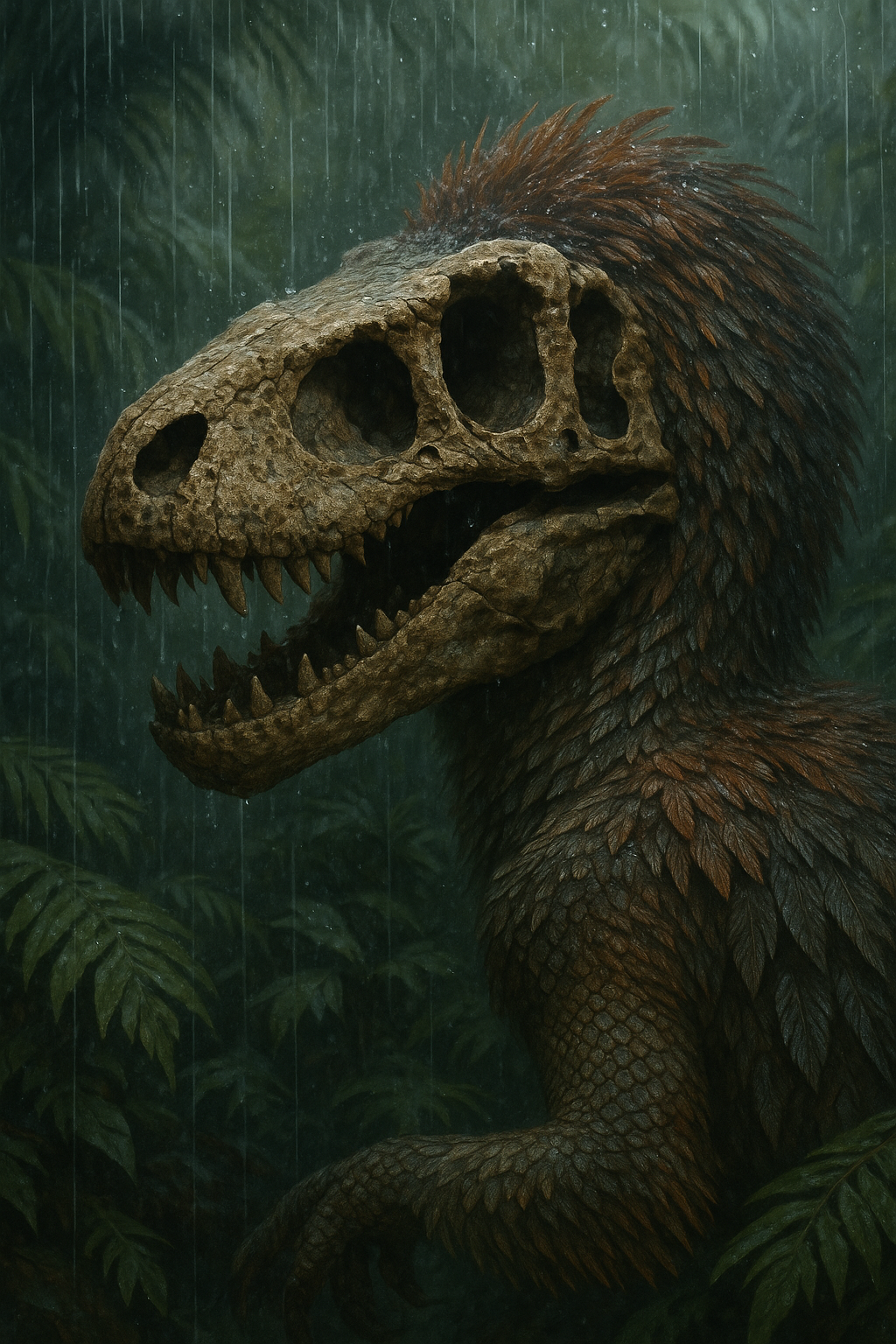
At the stroke of Pacific-time midnight on 6 March, Netflix swapped its usual hero images for an Allosaurus skull slick with moon-lit raindrops. Screenshots ricocheted across TikTok before dawn; by the time London woke up, teenagers were grafting the predator’s head onto Regency ballroom scenes. Sunrise in Los Angeles brought the first internal dashboard alert: 10.4 million viewing hours in half a day, a figure the company normally associates with vampire heart-throbs or reality-show engagements. The algorithm, hungry for completion-rate rather than celebrity billing, shoved the title onto toddlers, retirees and anyone who had ever let “Our Planet” run to the end credits. Within twenty-four hours, #CretaceousRain outranked Champions-League highlights, the first time paleontology had beaten football since Baby Yoda hijacked the conversation in 2019.
The meme engine fed itself. Clip-sharing accounts looped the rain-soaked skull, captioning it “Earth’s first emo phase.” Science teachers woke to students asking if the Carnian Pluvial Episode was “that two-million-year drizzle Mr. Freeman keeps whispering about.” Netflix’s own social monitors clocked a 1,300-percent jump in searches for “Allosaurus skull wallpaper,” proof that, for a moment, prehistory had become pop-culture décor. The platform’s stock ticked up three points; an internal Slack channel named “Dino-Mite” lit up with champagne emojis.
Yet the bigger shock came in the form of accidental audiences. Grandparents who clicked for nostalgia, toddlers who babbled at scaly eyeballs, and horror fans who sampled the asteroid scene all stayed for the same reason: the streamer had built a narrative engine that treated Cretaceous cataclysms like binge-worthy cliff-hangers. The age graph flattened; suddenly everyone was a potential paleontologist.
Spielberg’s Second Safari in Deep Time
Steven Spielberg did not merely lend his name; he leased an entire floor. In late 2020 he parked an Amblin satellite unit two stories beneath ILM’s volumetric-capture cathedral in San Francisco and issued a single mandate: treat extinct animals like Oscar-hungry actors. Creature supervisor Glen McIntosh demanded 8 K textures for every scute, proto-feather and claw sheath. A custom “Jurassic LUT” sucked green saturation out of foliage so nothing on screen would resemble Louisiana bayou, a visual tell that had haunted the 1993 classic. Each digital reptile then ran through a de-grainer trained on 130 hours of contemporary BBC wildlife footage, because bird-watchers can spot hand-keyed motion the way sommeliers taste cork taint.
The director’s notorious perfectionism collided with machine learning. Algorithms compared tail-tip twitches of living herons against animated theropods; mismatches were flagged in crimson. One iteration of a Guanlong sported tail feathers so stiff they clipped through underbrush; the neural net down-voted the shot into oblivion. Artists grumbled, then rebooted, aware that failure meant a thousand Reddit ornithologists crying foul. Spielberg, visiting the mocap stage at 2 a.m., reportedly watched a single Utahraptor breathe for forty-five minutes before nodding approval: “Now she’s thinking.”
Aesthetics aside, the tech stack bled money. Frame-by-frame cloud renders topped six figures per minute when dust-storm migration scenes entered final lighting. Studio accountants demanded a lifeline; producers answered by leasing the same scattering algorithms to a forthcoming fantasy epic set on Mars. The dinosaurs, in effect, subsidized future dragons, a cross-pollination no spreadsheet had predicted.
Morgan Freeman’s Cave-Aged Voice
Four consecutive Wednesdays, Freeman sat inside a decommissioned Masonic temple whose 38-foot dome once amplified 1920s pipe organs. Sound wizard Paula Fairfield, the woman who gave wings to Drogon’s purr, fed his every syllable through impulse responses harvested from Chauvet Cave, France. The result: narration that feels whispered inside the planet’s own cochlea. When the actor murmurs “…and it rained for two million years,” sub-bass drops to 17 Hz, the frequency at which human chests quiver involuntarily. Cinema became somatic massage.
Engineers guarded the secret frequency like KFC guards herbs. Test audiences in Burbank reported vertigo; one projectionist excused himself mid-screening. Netflix now ships an optional “low-rumble” classroom track, proof that even inner-ear safety can be monetized. Meanwhile, TikTokers isolate the 17-Hz moment, layer lo-fi beats beneath it, and sell “Cretaceous meditation” clips for $1.99. Nobody questions why a dinosaur documentary doubles as a white-noise drug; the algorithm simply notes longer watch-times.
Fairfield keeps a petri dish of fossil coral beside her mixing console. Tap the calcite tubes and they chime like glass xylophones; those tones form the spine of the opening theme, which entered Spotify’s Global Viral 50 at #37. Coral percussion over elephant-heartbeat kick drums: a lullaby for infants, a nostalgia trip for adults, and a reminder that deep time can be monetized one stream at a time.
From QR Code to Real Bone
Hidden inside a Triassic bark texture, a quarter-inch QR glyph waits for smartphone eyes. Scan it and your living-room carpet spawns a hologram of a Museum of the Rockies femur curated by Dr. Holly Woodward. Tap the bone; a 30-second vertical video explains how growth-ring histology proves that even 30-ton sauropods were gangly teens. The marketing team seeded 50 bus-shelter fossils from Lagos to Lima; find one, upload proof, and Netflix mails you a 3-D printed toe cast legally cloned from public-domain rock.
The gimmick funds itself. Each mailed toe carries a micro-donation code; 3 % of every $19.99 plush “Rain Baby” sold at Walmart drifts to Dr. Kristina Curry Rogers’ Madagascar titanosaur nests. Toy sales already financed an extra field season, turning stuffed animals into unwitting research grants. Meanwhile, a 150-camera photogrammetry rig used for filming now roams museums under open-source license; Nairobi technicians scanned a juvenile Majungasaurus skull last month, and Blender hobbyists retopologised the mesh overnight. Entertainment feeds science that feeds classrooms, a virtuous circle no focus group could have story-boarded.
Next year, a bronze cast of “Freeman” the hadrosaur - discovered on set and digitised for end-credit glory - will stand outside the UN Nairobi campus. Tourists who aim phones at the plaque will see the same duckbill grazing in a Cretaceous swamp, while Freeman’s recorded baritone offers a parting thought: every ecosystem ends, unless we choose otherwise. The loop closes: pixels become bones, bones become bronze, bronze becomes a reminder that the planet once hosted worlds we never met - and could yet lose the one we have.
How did Netflix's dinosaur documentary captivate a global audience?
Netflix's dinosaur documentary achieved global phenomenon status by reimagining prehistoric events as an unmissable, binge-worthy series. It masterfully combined cutting-edge computer graphics, the creative input of industry giants like Steven Spielberg, the captivating narration of Morgan Freeman, and innovative, interactive marketing strategies such as QR codes on bus stops. This approach transformed ancient history into a modern pop-culture obsession, significantly broadening its appeal across all age groups and demographics.
What unique marketing strategies did Netflix employ for the documentary?
Netflix utilized highly creative and interactive marketing. Beyond traditional promotion, they embedded QR codes into subtle details, such as Triassic bark textures in the documentary itself, and prominently displayed them on bus shelters in major cities worldwide. Scanning these QR codes allowed viewers to interact with augmented reality elements, like holographic dinosaur femurs, and learn more about paleontology. This innovative approach turned passive viewing into an active, engaging experience, extending the documentary's reach beyond the screen.
How did Steven Spielberg contribute to the documentary's visual realism?
Steven Spielberg's involvement went far beyond lending his name; he was deeply invested in the visual authenticity. He established a dedicated unit for the project, demanding unparalleled detail like 8K textures for every dinosaur feature and a custom visual aesthetic that avoided typical modern nature documentary looks. His notorious perfectionism, combined with machine learning algorithms, ensured that every digital reptile's movement and appearance was scientifically accurate and hyper-realistic, pushing the boundaries of CGI in documentary filmmaking.
What made Morgan Freeman's narration so impactful?
Morgan Freeman's narration was meticulously crafted to deliver an immersive and visceral experience. His voice was recorded in a decommissioned Masonic temple, and sound engineer Paula Fairfield processed his every syllable using impulse responses from the Chauvet Cave in France. This technique created narration that felt as if it was echoing from within the Earth itself. Specifically, when he spoke of the two-million-year rain, sub-bass frequencies dropped to 17 Hz, which is known to cause a physical sensation in humans, making the audio a profoundly somatic experience.
How did the documentary leverage social media and memes to boost its popularity?
The documentary instantly became a social media sensation. Within hours of its release, images and clips, particularly of the moonlit Allosaurus skull, were shared widely across platforms like TikTok. This led to a surge in memes, with users creatively recontextualizing the dinosaur imagery. Social media trends, like #CretaceousRain, quickly outranked other popular topics, demonstrating the documentary's immediate cultural impact and how user-generated content amplified its reach and engagement.
How did the documentary's success contribute to scientific research and education?
The documentary's innovative marketing and success created a symbiotic relationship with scientific research and education. The QR code initiative, which offered 3D-printed dinosaur toe casts as rewards, incorporated micro-donation codes. A portion of sales from related merchandise, like

A Russian-Spanish journalist and Cape Town native, channels his lifelong passion for South Africa into captivating stories for his local blog. With a diverse background and 50 years of rich experiences, Serjio's unique voice resonates with readers seeking to explore Cape Town's vibrant culture. His love for the city shines through in every piece, making Serjio the go-to source for the latest in South African adventures.
View all articles →