
New aparthotel brand set to reshape Cape Town stays
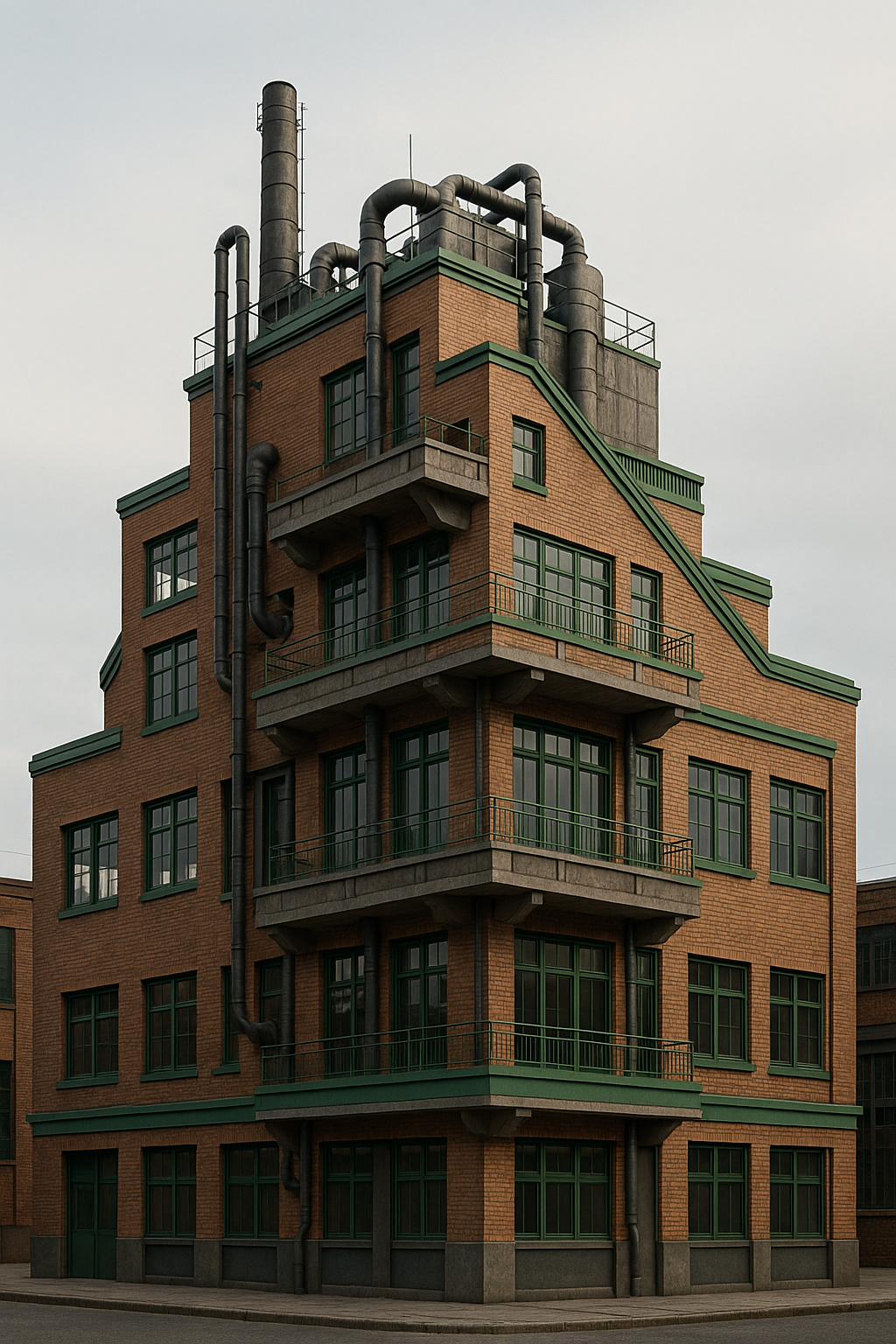
The Daily Aparthotels redefines Cape Town accommodation with an 87-unit micro-city blending co-working, boutique living & tech innovation.
The Daily in Cape Town is a super cool new hotel opening in 2027. It's built with wood and has smart, flexible rooms for short or long stays. You can work, sleep, and even find fun things to do downstairs. They use awesome tech and care about the environment, making it a really fresh spot for travelers.
What is The Daily in Cape Town?
The Daily is a forthcoming seven-level, 87-key hospitality development in Cape Town, South Africa, set to open in early 2027. It offers flexible, turnkey city living for various stay durations, blending co-working and boutique accommodation. The Daily aims to revolutionize hospitality with sustainable timber construction, innovative modular apartments, and a dynamic, community-focused ground floor experience.
Get Cape Town news in your inbox
Stay updated with the latest stories from the Mother City.
From Sketch to Skeleton: A Timber-Built Micro-City Rises
Green Point’s Main Road will soon sprout a seven-level, 87-key tower that behaves like a co-working hive at sunrise and a boutique bedroom after dark. Slated to open its doors in early 2027, the first outpost - The Daily APT - aims to kill the old hotel-versus-Airbnb dilemma by offering a third lane: turnkey city living that can be claimed for a single night, a semester, or an entire calendar year. Inside, there are no crystal chandeliers or cavernous lobbies; instead guests find sound-proof call booths, tunnel racks for bicycles, 500 Mbps symmetrical fibre and a ground-floor lounge that shape-shifts from espresso bar to vinyl lounge without anyone dragging a chair.
Architect Darryl Croome’s team at DC-A began by layering tracing paper over 1960s municipal drawings found in the City Archives. Their final massing steps back in increments, echoing the gabled rooflines of nearby Three Anchor Bay while quietly concealing a cross-laminated timber frame - almost unheard-of in mid-rise South African hospitality. CLT slashes embodied carbon by a quarter when compared with reinforced concrete and lets crews erect a floor a week after the ground slab was poured, sliding pre-built bathroom pods in from a Paarl factory. Sun-shading fins are fashioned from red-bat hardwood rescued from the demolished Table Bay Yacht Club and then soaked in plant-based fire retardant. A three-metre pavement cut-back creates a breezy arcade that invites runners coming off the Green Point Urban Park to jog straight through the block rather than around it.
Interior way-finding, handled by Bone Studio, is conceived as a breadcrumb trail of sensory clues. Studios open off a 2.7 m-wide teal corridor lined with bass-trap panels that feel like thick felt. Duplex lofts are reached by blackened-steel stairs that look deliberately industrial, reminding occupants they’re living inside a functioning city, not a cushy resort. Every third landing hides a refill nook: filtered still or sparkling water, a real-time kilowatt scoreboard that turns conservation into a game, and a tiny shelf of dog-eared Penguin Classics donated by past residents.
Plug-and-Play Apartments: Puzzles You Can Sleep In
Inventory breaks into four Lego-like types:
- 34 Smart Studios (24–27 m²): queen wall-bed flips down, desk retracts, 55-inch display spins to serve as either television or second monitor.
- 28 One-Bed Suites (35–42 m²): full galley with induction hob and SMEG dish-drawer; toaster brands your sourdough via laser-cut stencil.
- 15 Two-Bed Lofts (50–65 m²): mezzanine second room under raw CLT rafters, dual bathrooms, washer-dryer vented through a thermal chimney.
- 10 Two-Bed Duplexes (72–80 m²): double-aspect lightwells, six-seat dining slab, Murphy bunks for kids, balconies aimed at Signal Hill or the stadium.
No headboard is ever bolted to a wall. Instead, a magnetic aluminium frame lets guests swap fabric covers on demand: one-night visitors might choose charcoal Kuba cloth as a nod to the DRC; long-stay nomads can upload a drone shot of Cape Point and have it printed in-house within 48 hours.
The Lobby That Refuses to Stand Still
Traditional Cape Town hotel receptions mimic North-American arrival halls: single desk, velvet rope, bellhop stand-by. The Daily inverts that script. A 20-metre serpentine counter, made from yoghurt-pot terrazzo, begins life at 05:30 slinging takeaway espresso; by 09:00 it is a standing desk for laptop warriors; at 18:00 it turns into a drinks rail; and just before midnight it moonlights as a dessert-tasting bench curated by a rotating cast of local pastry chefs. Check-in is phone-only, but if you crave a human, staff step through hidden pocket doors clad in indigo chore coats labelled “Host”.
Ceiling trusses accept theatrical fixtures, so lighting moods can be re-coded weekly. Tuesday evening might glow warm amber for a natural-wine pop-up; Saturday at dawn can switch to 4000 K blue-white for the triathlon club that commandeers the space at 04:45 for a carb-load. A white-noise algorithm developed with Stellenbosch University cancels traffic rumble while amplifying conversation, creating what acousticians call a “social cocoon”.
Beneath the pavement level, a 180 m² gym splits into three bays: iron-pumping corner, Peloton row, and barefoot mat zone cushioned by recycled wetsuits collected on Muizenberg beach. Forgotten your kettlebell? A QR scan can courier one to your balcony for sunrise snatches. Up top, the roof is half hydroponic herb farm feeding the café, half Finnish flat-pack sauna re-assembled by the same crew behind Zeitz MOCAA. Cold-plunge pools steam when Atlantic fog rolls in two kilometres away; eight-channel astronomy apps let guests identify constellations from their duvets.
Streetside Economics: How the Neighbourhood Sells Itself
The building sits seven minutes from the stadium Parkrun start line and eleven from the V&A Waterfront’s forthcoming “District Extraction” food hall. Across the road, council plans to flip an abandoned bowling green into a micro-mobility hub sporting 200 e-bike docks and drone-delivery lockers. Around the corner, Bo-Kaap is piloting time-window permits for food-walk tours, and The Daily is angling to become the official sleep-over partner - check out, borrow a complimentary e-bike, pedal past pastel facades, and still be back for a Zoom call on fibre faster than many Sandton offices.
Data from AirDNA show average Cape Town short-term stays jumped from 3.8 nights in 2019 to 7.2 nights in 2023. The Daily’s internal model, co-built with fintech WhereWhenAI, forecasts that 41 % of occupied room nights in 2028 will exceed thirty days. To smooth seasonality, one quarter of stock will be held for quarterly corporate blocks aimed at European recruiters flying developers in for four-week “Silicon Safaris”. Dynamic pricing scrapes rugby fixtures, wind-speed forecasts and Uber surge multipliers, adjusting rates every ninety minutes within a 15 % band. Target: RevPAR matching 4-star Seaboard rivals at half the staffing overhead.
Community push-back is real: Green Point prices spiked 68 % since 2016. The brand’s answer channels 5 % of net profit into a trust that subsidises three-year leases for teachers and nurses in neighbouring blocks. Locals with five-plus years of proven address get 20 % off day-pass coworking. Similar schemes in Lisbon’s LX Factory and Brooklyn’s Navy Yard trimmed resistance by 30 % within two years, and the team banks on Cape Town following suit.
Factory to Furniture: A Circular Supply Chain You Can Brag About
Every bedside lamp is 3-D printed from marine plastic trawled off Robben Island. Shower-grout incorporates abalone-shell dust, a by-product of legal aquaculture. Coffee beans, roasted by Bluebird in Paarden Eiland, send waste heat through insulated ducts to pre-warm guest showers the next morning, shaving 11 % off gas demand. Even the welcome postcard is algae paper that can be planted in Company’s Garden to feed the roses; the map printed on it depicts Green Point long before the 2010 stadium existed.
Inside each unit a Matter-ready hub talks simultaneously to Apple HomeKit, Google Home and Samsung SmartThings. Leave the balcony open longer than nine minutes and the AI vents auto-seal to save energy. A holographic bedside concierge named “Daily” speaks isiXhosa, Afrikaans, French and Mandarin, and can explain why the Noon Gun occasionally fires late on windy days. A 1 TB solid-state library of open-source movies removes the need for bandwidth-hungry streaming.
Tomorrow’s Tech Playground, Available to Book Today
The building doubles as a living lab for two moon-shot ideas: power-over-ethernet lighting lets laptops, phones and microwaves plug straight into ceiling sockets, trimming 18 % from copper wiring weight; grey-water heat exchangers warm communal corridors and cut HVAC demand by 7 %. Guests pick “Observer Mode” (data published to an open-source urban-efficiency dashboard) or “Ghost Mode” (no retention). The dashboard, nicknamed “Mother City Motherboard,” refreshes every ten seconds and has already been forked by engineers in Nairobi and Accra.
Four additional sites are optioned: a Sea Point Art-Deco corner (2029), a District Six heritage warehouse, an Observatory build aimed at visiting university parents, and a Stellenbosch plot near the wine-tram loop. Each will keep the CLT chassis and always-on lobby, but swap in local material lore - sea-bamboo screens in Sea Point, Cape brick in District Six, aluminium mesh tribute in Observatory.
Recruitment began eighteen months pre-launch with pop-up “Live Interviews” in Woodstock and Khayelitsha cafés; successful hires rotate for six weeks through Soho House, citizenM and Roam before coming home. Housekeeping is opt-in by zone: robots deliver linen, while humans re-train as “Space Stylists” paid on minibar upsell. A ghost kitchen on level −2 pumps out three rotating menus - Cape Malay, Modern Kraal, Vegan Veldt - sourced within a 90 km radius. Fermented house hot-sauce, bottled in up-cycled wine flagons, is flogged at weekend markets for extra revenue.
Quarterly, an emerging artist receives a loft for three months and installs a street-facing intervention. First up: photographer Phumzile Khanyile, whose after-dark projection “Soft Walls” turns the louvres into a moving collage of domestic intimacy. One per cent of every night’s takings feeds an acquisition fund run by an independent curatorial board, seeding a permanent collection future guests can tour through AR headsets. International brands are already taking notes: Marriott’s Tribute Portfolio has toured twice; Accor’s Adagio is piloting the grey-water tech in Lille. Cape Town’s unreliable grid, water scarcity and stark inequality, the founders argue, create the perfect crucible for solutions exportable to hotels everywhere - proof that conscience and profit can share the same balance sheet.
What is The Daily in Cape Town?
The Daily is a groundbreaking seven-level, 87-key hospitality development in Cape Town, South Africa, slated to open in early 2027. It offers flexible, turnkey city living for various stay durations, blending co-working spaces with boutique accommodation. It aims to revolutionize hospitality through sustainable timber construction, innovative modular apartments, and a dynamic, community-focused ground floor experience.
When is The Daily expected to open?
The Daily is scheduled to open its doors in early 2027. This new establishment in Green Point, Cape Town, is already generating buzz for its innovative approach to urban living and hospitality.
What makes The Daily's construction unique and sustainable?
The Daily is notably constructed using cross-laminated timber (CLT), which is almost unheard of in mid-rise South African hospitality. This choice of material significantly slashes embodied carbon by a quarter compared to reinforced concrete. Additionally, sun-shading fins are made from red-bat hardwood rescued from the demolished Table Bay Yacht Club, and the building incorporates features like grey-water heat exchangers and power-over-ethernet lighting to further enhance its environmental credentials.
What types of rooms are available at The Daily?
The Daily offers four flexible room types designed like "Lego-like puzzles": Smart Studios (24–27 m²), One-Bed Suites (35–42 m²), Two-Bed Lofts (50–65 m²), and Two-Bed Duplexes (72–80 m²). These rooms feature innovative elements such as wall-beds, retractable desks, smart displays, full galleys, and even Murphy bunks in some larger units, catering to both short and extended stays.
How does The Daily integrate technology and smart living?
The Daily is a tech-forward establishment, offering 500 Mbps symmetrical fibre internet, sound-proof call booths, and Matter-ready hubs in each unit that connect to Apple HomeKit, Google Home, and Samsung SmartThings. It also features an AI that auto-seals vents to save energy, a holographic bedside concierge named "Daily" fluent in multiple languages, and a real-time kilowatt scoreboard that gamifies energy conservation.
What unique amenities and services does The Daily offer?
Beyond its innovative rooms, The Daily boasts a dynamic ground-floor lounge that transforms from an espresso bar to a vinyl lounge, and a 20-meter serpentine counter that shape-shifts throughout the day for various services. Other amenities include a 180 m² gym, a rooftop hydroponic herb farm, a Finnish flat-pack sauna, cold-plunge pools, and themed lighting that can be re-coded weekly. They also offer services like complimentary e-bikes and a ghost kitchen providing three rotating menus sourced locally.

Michael Jameson is a Cape Town-born journalist whose reporting on food culture traces the city’s flavours from Bo-Kaap kitchens to township braai spots. When he isn’t tracing spice routes for his weekly column, you’ll find him surfing the chilly Atlantic off Muizenberg with the same ease he navigates parliamentary press briefings.
View all articles →