
Oversight visit reveals severe SAPS shortages in Cape Flats
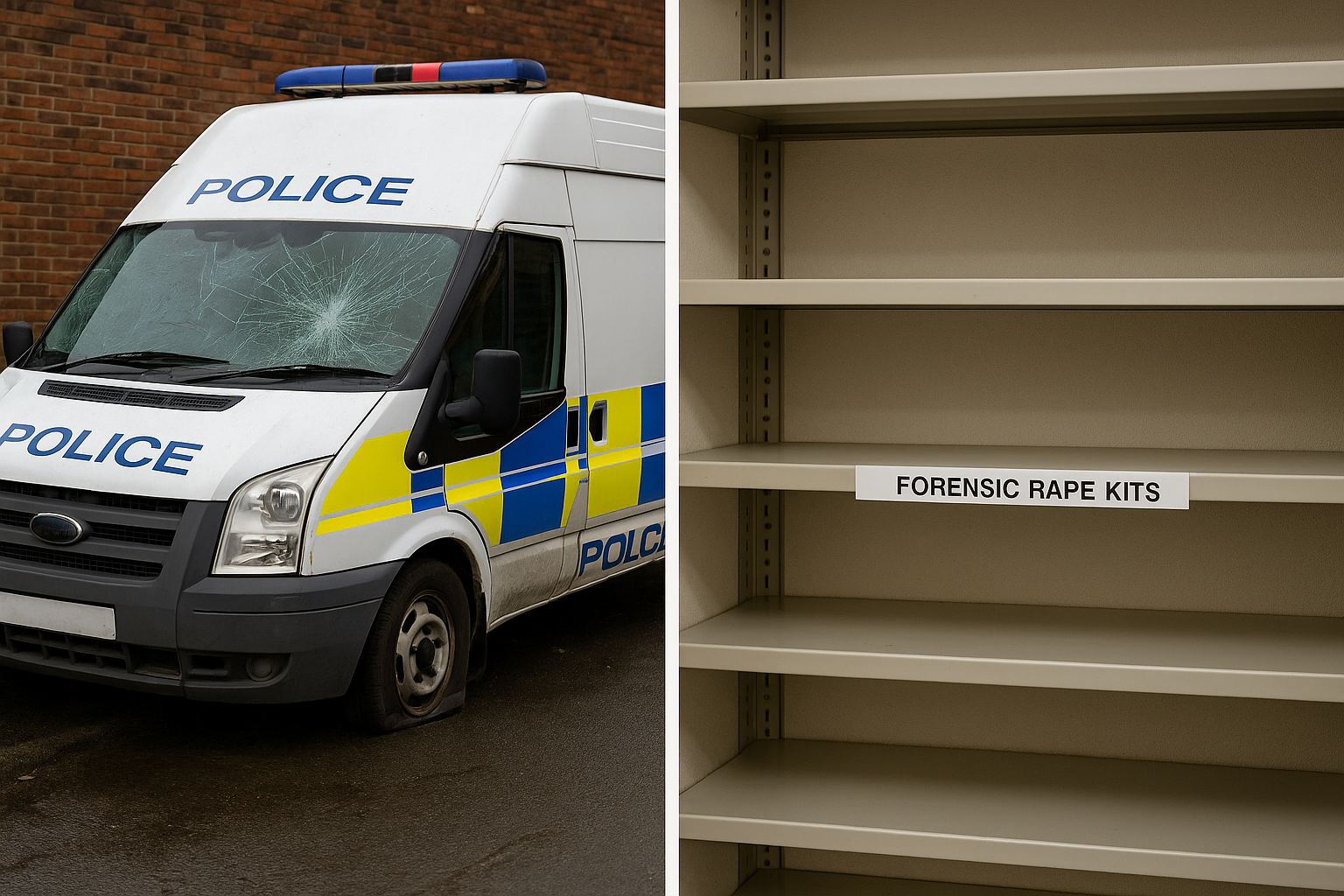
Cape Flats police facilities are crumbling: patrol vans grounded, rape kit shortages, and massive backlogs cripple public safety efforts.
Cape Flats policing in 2025 is in big trouble. Their cars are broken, and they don't have enough people or important supplies like rape kits. This means they can't get to emergencies fast or solve crimes well, making people lose trust. Even with some clever local fixes, the system is falling apart, leaving communities unsafe and frustrated.
What are the main challenges facing Cape Flats policing in 2025?
The Cape Flats policing in 2025 faces critical issues, including severe vehicle shortages and disrepair, understaffed specialized units, lack of essential forensic supplies like rape kits, and significant backlogs in DNA lab work. These challenges severely impair response times, investigative capacity, and public trust.
Get Cape Town news in your inbox
Stay updated with the latest stories from the Mother City.
Courtroom Creaks and Carpool Crises
At 08:10 sharp, Wynberg Regional Court feels more like a bus depot than a hall of justice. Boots echo as complainants, private prosecutors and a handful of community patrollers queue outside Section C. A single attempted-murder file - stemming from a 19 August shooting in Philippi - has already been shunted four times: twice because detectives could not fetch witnesses from the rural Eastern Cape; once when the investigator’s sedan needed brake pads; and once because the court interpreter never appeared. Each postponement chips at survivor trust, leaving the impression that the court calendar runs on attrition rather than evidence. After a quick solidarity huddle, Cameron and Nicholas fold a photocopy of the cover page into a file already swollen with vehicle defect slips and steer east.
A breath later, the convoy rolls into Philippi East. On paper the precinct is a tidy rectangle. In reality, it sits on a postage-stamp plot ringed by Crossroads, Brown’s Farm and Samora Machel - communities that trade places at the top of South Africa’s murder charts. The charge-office counter sags beneath dockets, but the chokepoint is outside: twenty-three SAPS vans - mostly Toyota Quantums and battered NP300s - sit nose-to-tail, tyres flat and bonnets yawning.
• Eleven are waiting for parts from a Bellville South workshop now under liquidation.
• Seven bear “Code Red” labels after cash-in-transit ambushes, yet remain on the asset register, racking up insurance premiums.
• Five have “minor defects” such as leaking hydraulics, but the outsourced mechanic contract expired in March, leaving them grounded for more than 120 days.
Only three vehicles are legally roadworthy. One - a high-miler Ford Ranger - had been dispatched to a gender-based-violence scene minutes earlier, its passenger seatbelt knotted because the buckle snapped off last year. Average response time for priority-one calls has swollen from 12 minutes in 2021 to 34 minutes in 2025. Tow-truck Samaritans often arrive first, smudging footprints and adding second-layer trauma.
Fourteen minutes down the R300 feeder road lies Lentegeur SAPS - an unlikely bright spot. The yard is orderly: 24 of 27 vehicles pass the snap ignition test, tyres eyeballed with a 20-cent coin. Detectives whisper that they cut a handshake deal with a local technical college: final-year mechanical students swap brake pads and oil free of charge during practical hours. The arrangement breaks every Supply Chain Management rule in the book, yet patrol-density maps shot by the oversight drone show heavier coverage along Lentegeur’s perimeter than anywhere else nearby.
A Skeleton Unit, a Million Residents
Nyanga Family Violence, Child Protection and Sexual Offences unit hides behind the main station in a prefab that should have been retired in 2010. Built for 32 detectives and 11 support staff, it now houses seven detectives, one typist and interns on rotation. Their beat sprawls across Manenberg, Philippi, Athlone, Gugulethu, Samora Machel and Lansdowne - 1.2 million people in all.
Staffing is stuck at roughly 20 % of sanction. Three investigators are on stress-related sick leave; one constable has been seconded to court orderly duty indefinitely. Only four of eleven vehicles start when the key turns. A Hyundai H1 still shuttles rape survivors to district surgeons, but the sliding door refuses to latch. Victims wedge a traffic cone against it so wind does not fling it open on the N2.
Inside the supply cupboard: zero rape kits. A requisition form stamped August 2024 begging for 200 kits gathers dust - unsigned after the provincial depot in Maitland cited “supplier non-performance.” A detective confessed to buying cotton swabs and brown paper bags at a local pharmacy, crossing fingers that a chain-of-custody defence will hold later. Three hundred and twelve sexual-offence dockets older than 90 days still await DNA lab work. NGOs are now circulating quotes from private labs; the state backlog sits at fourteen months.
February’s ransomware attack knocked SAPS’s e-Natis 2.0 portal offline for “intermittent patches.” Regional offices have leaned on WhatsApp broadcast lists for emergency purchases, dodging competitive bidding and inviting mark-up scams. One clerk’s phone flaunts a tyre quote for R4,900 - three times trade price. The last SAPS annual report chalked up a 28 % underspend on operating budgets owing to “supply chain bottlenecks,” yet no disciplinary docket appears in the public domain.
Stats SA’s 2024 census layer paints a sober ratio: every Nyanga FCS detective carries roughly 171 000 residents. FBI benchmarks for similar units show one detective per 6 000 people. Cape Flats detectives shoulder a population load twenty-eight times heavier than global norms.
Metro Muscle, Empty Pockets
Late afternoon light glints off two new Toyota Land Cruisers parked at Philippi East Mall. They belong to the City of Cape Town’s Law Enforcement Advancement Programme - LEAP - on a five-year lease. Over the previous weekend the teams ran 46 roadblocks and seized eight illegal firearms. Residents ask for selfies; anecdotal chatter suggests taxi ranks see fewer extortion “tax collectors” when LEAP is near. Yet the programme’s brief stops at confiscation; it cannot investigate or prosecute, underlining the gulf between a well-funded city adjunct and a national police vehicle fleet that will not start.
At a card table outside the mall, 73 passers-by filled out one-minute surveys:
- A 17-year-old mother from Browns Farm whose rape case has stalled six times, the torn docket cover folded inside her schoolbag.
- A spaza owner paying R200 a day to a gang that live-streams LEAP patrol routes on TikTok.
- A retired nurse volunteering at a GBV safe house who has seen survivors reuse underwear because evidence kits - and the new clothes that go with them - are out of stock.
Need breeds work-arounds. Station noticeboards carry QR codes linking to crowdfunded brake-disc campaigns. One Philippi East detective moonlights as an Uber driver to buy discs for his squad car. Local radio hosts a Friday “Adopt-a-Bakkie” slot where volunteer mechanics pledge free labour but hit a wall: SAPS part numbers are proprietary and tied to a single national vendor. Officers juggle three WhatsApp evidence groups because the Evidence Management System reboots every time substation load-shedding kicks in, a daily event since May.
Acoustic sensors covering 7 km² of Philippi feed real-time gunfire alerts to LEAP operators. Between January and July 2025, ShotSpotter flagged 1 847 incidents; SAPS arrived within 30 minutes at only 312. Civil society heat-maps now superimpose gunfire alerts against response-time blanks. The picture is a strobe-light audit of systemic failure.
The Salt River Forensic Pathology lab was designed to refrigerate 40 bodies; 70 now share the space on rolling trolleys. Toxicology delays stall inquest findings, which in turn freeze insurance payouts and UIF death benefits - widening the economic crater every murder leaves behind.
SAPS’s March 2025 medium-term budget revision for the Western Cape nudged the line up by 6 %, yet 87 % of new funds cover salaries, leaving 1.8 % for vehicle replacement and 0.9 % for forensic consumables. A leaked memo shows the provincial commissioner wants to move R48 million from “stationery” to urgent repairs; National Treasury is unmoved.
Courts, Codes and Community Ingenuity
In June the Integrated Violence Prevention Strategy (IVPS) launched with glossy slides promising whole-of-society coordination. A Khayelitsha forum meets monthly; three others have suspended gatherings citing “no wheels” and “unpaid travel claims.” Meanwhile, IVPS slide-decks ping back and forth on Microsoft Teams while real detectives travel by Uber or not at all.
The Nyanga FCS unit’s lone female detective is six months pregnant and due for maternity leave in October. Past attempts to fast-track female graduates stalled because SAPS HR insists on two years of general duty first. Result: the pipeline leaks into visible policing, never reaching specialised desks.
A shipping container beside Philippi Stadium hosts the “Philippi Evidence Angels” - retired lab techs working weekends with rape kits flown in from a UK NGO. Swabs are photographed with QR-coded labels and later transferred into SAPS evidence lockers. Seven Angel-backed cases have already passed committal, proving that community ingenuity can nudge the glacier forward.
Official data is vanishing. The oversight team requested three months of CAS reports; they received one heavily redacted month. Volunteer statisticians now station themselves at charge counters every Friday night, tallying dockets on clipboards. Some stations ask for the tallies to plug gaps in the national Incident Registration Information System - an inversion in which citizens police the police’s own data.
Employee Health and Wellness scheduled three trauma-debrief sessions for Nyanga FCS this year; two were cancelled after the psychologist’s car broke down. A Lansdowne pharmacy reports a 65 % spike in SSRI prescriptions linked to SAPS medical aid numbers. Six dog-eared suicide-prevention posters from 2018 still cling to station walls.
The Social Justice Coalition has filed an urgent Western Cape High Court application compelling SAPS to release maintenance logs, procurement contracts and forensic kit levels for 40 precincts. Hearings begin November 2025; UN special rapporteurs have filed amicus briefs referencing South Africa’s treaty duties to women and children.
As thunder drummed in from False Bay and dusk draped the yard, officers on standby at Philippi East sheltered beneath the eaves, radios crackling with calls they would answer on foot - if at all.
{
"faq": [
{
"question": "What are the main challenges facing Cape Flats policing in 2025?",
"answer": "Cape Flats policing in 2025 is grappling with severe issues, including a critical shortage of roadworthy vehicles, understaffing in vital units like the Family Violence, Child Protection and Sexual Offences (FCS) unit, and a dire lack of essential supplies such as rape kits. This is compounded by significant backlogs in DNA lab work and systemic failures in supply chain management, all of which hinder effective crime response and investigation, eroding public trust."
},
{
"question": "How do vehicle shortages impact police response and operations?",
"answer": "The scarcity of functional police vehicles critically impairs response times, with priority-one calls seeing average times swell from 12 minutes in 2021 to 34 minutes in 2025. Many vehicles are grounded due to lack of parts, expired maintenance contracts, or damage from incidents like cash-in-transit ambushes, yet remain on asset registers. This forces officers to use unroadworthy vehicles or even respond on foot, often leading to critical delays and further trauma for victims."
},
{
"question": "What is the state of the Nyanga Family Violence, Child Protection and Sexual Offences (FCS) unit?",
"answer": "The Nyanga FCS unit is severely understaffed, operating at roughly 20% of its sanctioned capacity, with only 7 detectives for a population of 1.2 million. This means each detective carries a caseload twenty-eight times heavier than global norms. They also face a critical lack of resources, including zero rape kits in their supply cupboard, forcing detectives to improvise with pharmacy-bought items, and only four out of eleven vehicles being operational, one of which has a broken sliding door."
},
{
"question": "Are there any local initiatives or 'work-arounds' addressing these issues?",
"answer": "Yes, communities and officers have developed various ingenious work-arounds. For instance, Lentegeur SAPS has a handshake deal with a local technical college for free vehicle maintenance, significantly improving their fleet's readiness. Officers crowdfund for brake discs, and one detective moonlights as an Uber driver to buy parts. The 'Philippi Evidence Angels,' retired lab techs, process rape kits flown in from a UK NGO, and volunteer statisticians tally dockets to fill gaps in official data. However, these local efforts cannot fully compensate for systemic failures."
},
{
"question": "How does the City of Cape Town's LEAP programme fit into this policing landscape?",
"answer": "The Law Enforcement Advancement Programme (LEAP) by the City of Cape Town provides a well-funded, visible presence with new vehicles and successful operations like seizing illegal firearms. While effective in deterring certain crimes and improving public perception, LEAP's brief is limited to confiscation and cannot investigate or prosecute cases, highlighting a significant gap between municipal capacity and the struggling national police service (SAPS)."
},
{
"question": "What are the broader consequences of these policing failures on the community and justice system?",
"answer": "The systemic failures lead to a loss of trust in the justice system, with cases like attempted murder being postponed multiple times. Backlogs in DNA lab work, sometimes extending to fourteen months, stall investigations and court proceedings. Delays in toxicology findings at forensic labs, due to overcrowding, further delay inquests and impact insurance payouts and death benefits. This not only leaves communities unsafe and frustrated but also exacerbates the economic and social impact of crime."
}
]
}

Hannah Kriel is a Cape Town-born journalist who chronicles the city’s evolving food scene—from Bo-Kaap spice routes to Constantia vineyards—for local and international outlets. When she’s not interviewing chefs or tracking the harvest on her grandparents’ Stellenbosch farm, you’ll find her surfing the Atlantic breaks she first rode as a schoolgirl.
View all articles →