
Passenger rail returns to the Garden Route after 16 years
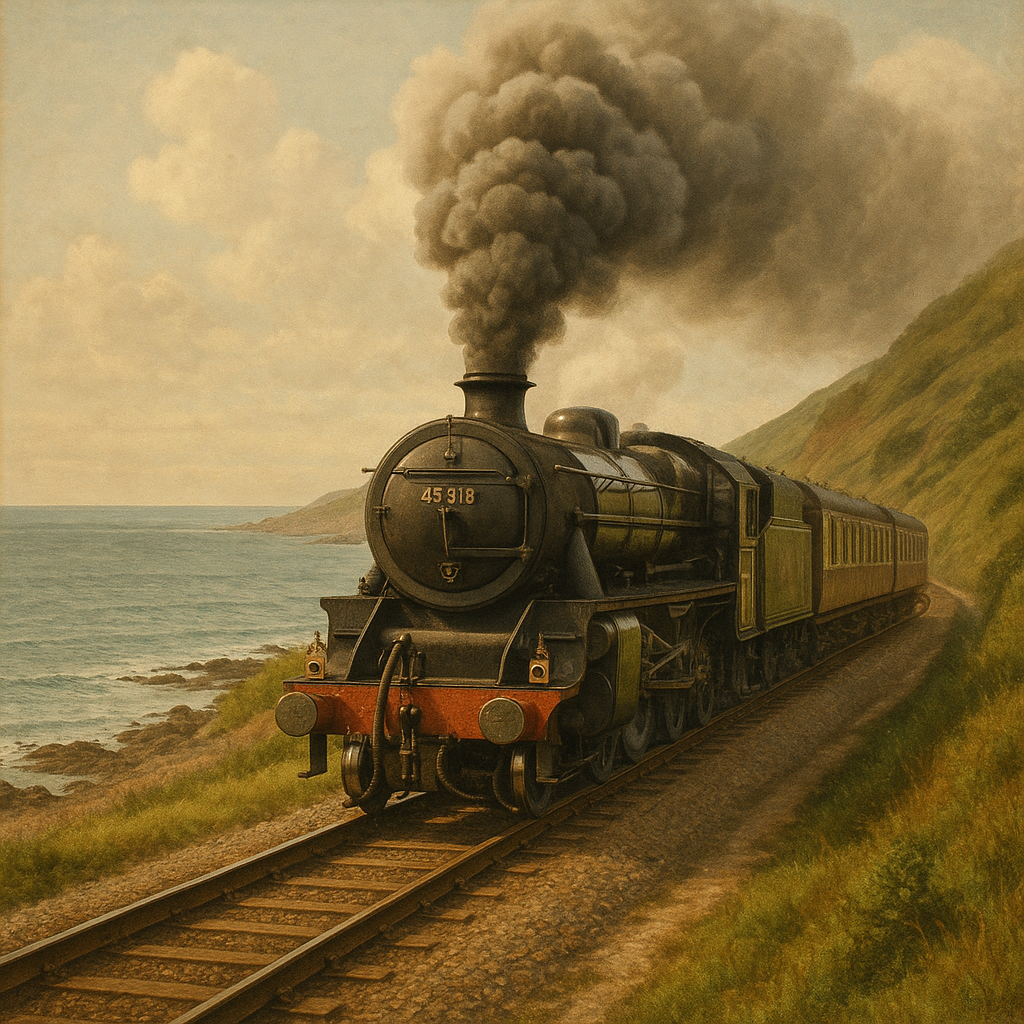
After 16 years, passenger trains return to South Africa's Garden Route. This revival could spark broader regional transport transformation.
The Garden Route's passenger train service, silent for 16 years, is back! Ceres Rail Company, after much hard work with Transnet, brought joy to 1,400 passengers. This isn't just about old trains; it's a big step for regional travel and shows everyone really wants trains back. It hints at a future where trains help connect people and places again.
How did passenger rail service resume on South Africa's Garden Route?
Passenger rail service resumed on South Africa's Garden Route after Ceres Rail Company secured approvals from multiple Transnet entities, including Transnet Freight Rail and the Transnet Rail Infrastructure Manager. This culminated years of persistent effort and negotiation through complex bureaucratic processes, leveraging the company's prior experience in operating heritage services since 2012.
Get Cape Town news in your inbox
Stay updated with the latest stories from the Mother City.
A Sixteen-Year Silence Breaks: Heritage Trains Roll Again
Steel wheels once again sing against rails along South Africa's magnificent Garden Route, ending a drought in passenger service that stretched across nearly two decades. On Sunday, 12 July 2025, Ceres Rail Company guided approximately 350 travellers along the 35-kilometre stretch between George and Great Brak River - the first paying passengers to make this journey since regular services ceased sixteen years prior. Western Cape Minister of Mobility Isaac Sileku rode among these inaugural travellers, lending official weight to an occasion that transcended mere nostalgia and hinted at something larger: the possible rebirth of regional rail transport.
The market response stunned even optimistic organisers. Every seat across four weekend departures found an occupant, bringing roughly 1,400 people back to Garden Route tracks. This flood of interest exposes a truth often obscured by official narratives: the disappearance of passenger rail from this corridor reflected systemic neglect and investment choices rather than any genuine lack of public desire. Communities here have spent years shackled to road transport alone, not from preference but from the absence of alternatives.
The Deep Roots of Garden Route Rail History
Grasping why this July moment matters demands understanding how fundamentally railways shaped this region's development. The Garden Route extends some 300 kilometres along South Africa's southeastern shoreline, from Mossel Bay eastward to Storms River. Its modern identity owes much to nineteenth-century rail expansion. When the George-Mossel Bay line opened in 1907, it wove together inland forests and farms with coastal harbours, simultaneously unlocking tourism potential decades before asphalt highways arrived.
No service embodied this heritage more gloriously than the Outeniqua Choo Tjoe. From 1928 through 2009, this legendary train carried passengers between George and Knysna through scenery that earned international acclaim among the world's great railway journeys. Its eventual closure - brought on by infrastructure damage and unsustainable operating costs - stripped the Garden Route of all scheduled passenger rail. The wound went deeper than lost tourism revenue. Local residents lost a practical mobility option: students commuting to schools, workers travelling between coastal villages and inland employment, families visiting relatives across neighbouring settlements.
The heritage trains running today utilise infrastructure that never fully fell silent. Transnet Freight Rail has continued moving timber and other cargo between George and Mossel Bay, preserving tracks that appeared abandoned to casual observers. This dormant passenger potential hidden within freight corridors represents a pattern repeated across South Africa - operational rail infrastructure awaiting only institutional will and investment to serve people once more.
Navigating the Maze: How Revival Finally Came
Rick Botha, who leads Ceres Rail Company, makes clear that July's triumphant journeys culminated years of persistent effort rather than sudden breakthrough. South Africa's rail governance presents formidable obstacles to anyone attempting new passenger services. The transformation of South African Transport Services into Transnet and PRASA during the 1990s fragmented institutional responsibility. Coordinating between freight operators, infrastructure custodians, and prospective service providers demands extensive negotiation through bureaucratic thickets.
Ceres Rail Company threaded this needle by securing approvals from multiple Transnet entities: Transnet Freight Rail, which actually runs trains on these tracks, and the Transnet Rail Infrastructure Manager, which controls maintenance schedules and access allocation. Safety certifications, insurance frameworks, crew qualifications, and operational protocols all required building from scratch or rigorous verification. This explains why promising corridors nationwide remain unused for passengers despite obvious demand - the fixed costs of initiating service frequently deter potential operators before they begin.
The company brought crucial experience to this challenge. Since 2012, Ceres Rail Company has operated heritage services on a former branch line in the Boland region, developing relationships with Transnet and demonstrating competence within South Africa's regulatory environment. The Garden Route expansion thus extended proven operational capabilities into new geography rather than requiring entirely new organisational construction.
Beyond Tourism: Rail's Development Potential
Minister Sileku's presence aboard the inaugural service signalled official recognition that rail serves purposes beyond holiday entertainment. His subsequent statements connecting enthusiastic public response to arguments for expanded operations reflect growing policy attention toward integrated transport planning. The Western Cape faces mounting costs from road congestion, particularly during peak tourism periods, creating both economic drag and environmental degradation.
The Garden Route's geography creates distinctive transport pressures. Its coastal configuration limits highway expansion options, while its popularity among domestic and international visitors generates seasonal traffic surges that overwhelm the N2. Settlement patterns along this corridor - George as the primary urban centre, with Mossel Bay, Hartenbos, Great Brak River, Wilderness, Sedgefield, Knysna, and Plettenberg Bay strung along the coast at intervals of 5 to 40 kilometres - lend themselves naturally to rail service.
Environmental arguments strengthen rail's case. The Garden Route sits within a globally recognised biodiversity hotspot, where sensitive coastal ecosystems endure pressure from expanding road infrastructure and vehicle emissions. Rail traction, whether electric or modern diesel-electric, delivers markedly lower carbon intensity per passenger-kilometre than private automobiles. This aligns with South Africa's Paris Agreement commitments and provincial climate targets. The Western Cape's relatively advanced renewable energy sector additionally creates prospects for future electrification powered by low-carbon sources.
Learning from Global Experience
South Africa's rail difficulties, severe as they are, mirror challenges faced worldwide. Nations everywhere have confronted post-industrial rail decline and selective recovery. Australia's experience offers instructive parallels, where conversion of rural branch lines to tourist operations has preserved infrastructure that might otherwise have vanished, occasionally establishing foundations for subsequent service expansion. Victoria's Puffing Billy Railway and various Queensland heritage lines demonstrate how volunteer and private involvement can sustain operational capability within public regulatory structures.
More ambitiously, New Zealand's TranzAlpine and Coastal Pacific services illustrate how scenic rail can function as genuine public transport integrated with tourism marketing. These employ contemporary rolling stock and booking systems rather than purely heritage equipment. Operating on tracks shared with freight traffic, they demonstrate mixed-use corridor viability when institutional arrangements permit.
Closer geographically, Kenya's recent standard-gauge railway investment - controversial regarding cost and debt implications - has substantially expanded passenger capacity between Nairobi and Mombasa, with extensions under construction. This represents an alternative path not pursued in South Africa, where comparable corridor development has stalled despite acknowledged needs.
The Western Cape combines elements from these international experiences: heritage preservation, tourism development, and authentic mobility needs all converge in the Garden Route context. The province's relatively robust institutional capacity, compared to other South African regions, creates conditions potentially favourable to negotiated solutions that have proven unattainable elsewhere.
Technical Realities and Operational Challenges
The July heritage services employed vintage rolling stock - steam or heritage diesel locomotives pulling restored carriages evoking mid-twentieth century South African rail travel. This aesthetic choice appropriately matched the commemorative occasion and provided distinctive marketing appeal. Sustained regular service, however, would demand different approaches.
Heritage equipment, charming as it is, presents maintenance and availability challenges that constrain frequency and reliability. Regular passenger operations would likely require modern diesel multiple units or locomotive-hauled coaches meeting contemporary standards: climate control, accessible boarding, bicycle accommodation - amenities today's travellers expect. Capital costs for such equipment, whether purchased new or refurbished from domestic or international sources, represent significant barriers to expansion.
Track condition imposes additional constraints. Transnet's maintenance priorities necessarily focus on freight corridors generating commercial revenue. Branch lines serving lower-density routes have historically suffered deferred upkeep. The George-Mossel Bay line, though operational, may require substantial upgrading to support regular passenger schedules with appropriate speed and dependability. Investment decisions involve complex trade-offs between immediate maintenance, longer-term renewal, and potential passenger revenue that remains uncertain without committed service provision.
Station infrastructure similarly demands attention. George station retains substantial facilities from its operational peak, but intermediate stops would need platform construction, weather protection, and access improvements to serve modern passengers. Effective integration with local transport networks - taxi ranks, bus stops, pedestrian routes - determines rail's practical accessibility and utility for everyday travellers rather than tourists alone.
The Road Ahead: From Heritage to Integration
The Western Cape Government's expressed commitment to continued advocacy for passenger rail revitalisation establishes policy direction while acknowledging implementation complexity. Meaningful progress will require sustained engagement among provincial authorities, Transnet entities, potential operators including Ceres Rail Company or competitors, and municipalities along possible route extensions.
Demonstrated demand for Garden Route rail experience creates favourable conditions for investor interest, whether public, private, or blended arrangements. International development finance institutions have shown growing appetite for African transport infrastructure. Climate-aligned rail investment may attract green financing mechanisms reducing public capital requirements. Such arrangements, however, demand bankable proposals with credible revenue projections and risk allocations protecting both public interests and private returns.
For the immediate future, July 2025's successful heritage services have transformed the Garden Route transport conversation. They have proven passenger rail remains physically possible on corridors long assumed dormant. They have shown public enthusiasm persists despite sixteen years of absence. They have demonstrated that institutional barriers, while substantial, yield to determined effort.
Whether this proof of concept translates to sustained restoration depends upon decisions pending regarding investment priorities, regulatory frameworks, and political will to elevate rail within South Africa's constrained public finances.
Those 1,400 passengers who travelled between George and Great Brak River experienced more than spectacular coastal vistas and vintage railway atmosphere. They participated in testing possibility itself - demonstrating that the Garden Route's rail narrative may yet extend beyond heritage commemoration toward renewed functional integration in regional mobility.
When did passenger train service return to South Africa's Garden Route?
Passenger train service returned to South Africa's Garden Route on Sunday, 12 July 2025, after a 16-year hiatus. The Ceres Rail Company operated the first services between George and Great Brak River.
Which company was responsible for bringing back the passenger train service?
Ceres Rail Company, after years of persistent effort and negotiation, was responsible for bringing back the passenger train service. They secured approvals from various Transnet entities, including Transnet Freight Rail and the Transnet Rail Infrastructure Manager.
What was the public's reaction to the return of the train service?
The public response was overwhelmingly positive, surprising even the optimistic organisers. All seats across four weekend departures were filled, bringing approximately 1,400 people back to the Garden Route tracks. This demonstrated a significant public desire for rail travel.
What was the

Amanda Wilson is a Cape Town-born journalist who covers the city’s evolving food scene for national and international outlets, tracing stories from Bo-Kaap spice shops to Khayelitsha micro-breweries. Raised on her grandmother’s Karoo lamb potjie and weekend hikes up Lion’s Head, she brings equal parts palate and pride to every assignment. Colleagues know her for the quiet warmth that turns interviews into friendships and fact-checks into shared laughter.
View all articles →