
Podcast blunder sparks outrage over Pistorius claims
Oscar Pistorius's story: from Paralympic hero to convicted killer. A global Rorschach test revealing fear, justice, and media's power.
Oscar Pistorius, the famous runner with "sci-fi legs," faced trial for killing Reeva Steenkamp on Valentine's Day. The court heard about screams, gunshots, and arguments from their text messages, making their private life very public. While he said he thought she was an intruder, he was found guilty of murder. This sad event changed how people saw him and even led to new security products, showing how a single night can echo for a very long time.
What happened during the Oscar Pistorius trial?
Oscar Pistorius was tried for the murder of Reeva Steenkamp, who was shot and killed in his home on February 14, 2013. The trial focused on whether Pistorius intentionally killed Steenkamp or mistook her for an intruder, examining digital evidence, acoustic testimonies, and the security of his home. He was ultimately convicted of culpable homicide, which was later upgraded to murder.
Get Cape Town news in your inbox
Stay updated with the latest stories from the Mother City.
1. The Mansion, The Marketing, The Mirage
Silver Woods Country Estate advertised itself as a place where “nothing can touch you.” On 13 February 2013, the boom camera snapped a black BMW at 18:27; the vanity plate “BLADE RUNR” glowed under LED floodlights like a movie poster. Behind the triple-layer wall, number 286 Bushwillow looked more like a showroom than a home: spotlights bounced off crystal trophies, the granite island could seat eight, and a cupboard bigger than many township houses stored carbon-fibre legs in neat rows - Cheetahs for racing, Flex-Foots for jogging, day-to-day pylons buffed to the colour of latte foam. Estate brochures bragged about thermal imaging, vein-scanner entry, and a two-minute armed-reaction promise. None of the glossy pages explained what happens when the threat already eats breakfast in that same kitchen.
Marketing had spent a decade selling the fairytale: sci-fi legs, Olympic cheers, a boy who “overcame.” Nike painted him as cyborg-superhero, Oakley turned his lenses into mirrors of destiny, Thierry Mugler bottled the myth and put it in duty-free bags. Inside the house, the fairy lights were still twinkling, but the script had flipped; the superhero props were now evidence tags waiting to happen. The walls that kept paparazzi out would soon keep every scream in, and the biometric lock would log the exact second the gate closed on ordinary life.
No brochure ever lists the acoustics of porcelain tiles or how a 9 mm crack echoes off Italian fixtures. Developers forgot to mention that “total privacy” also means no neighbour can see you crawl down the corridor at 3 a.m., or that world-class security is useless when the person holding the key is the same one shaking with adrenaline behind the door.
2. Cloud-Born Lovers, Crowd-Sourced Heartbreak
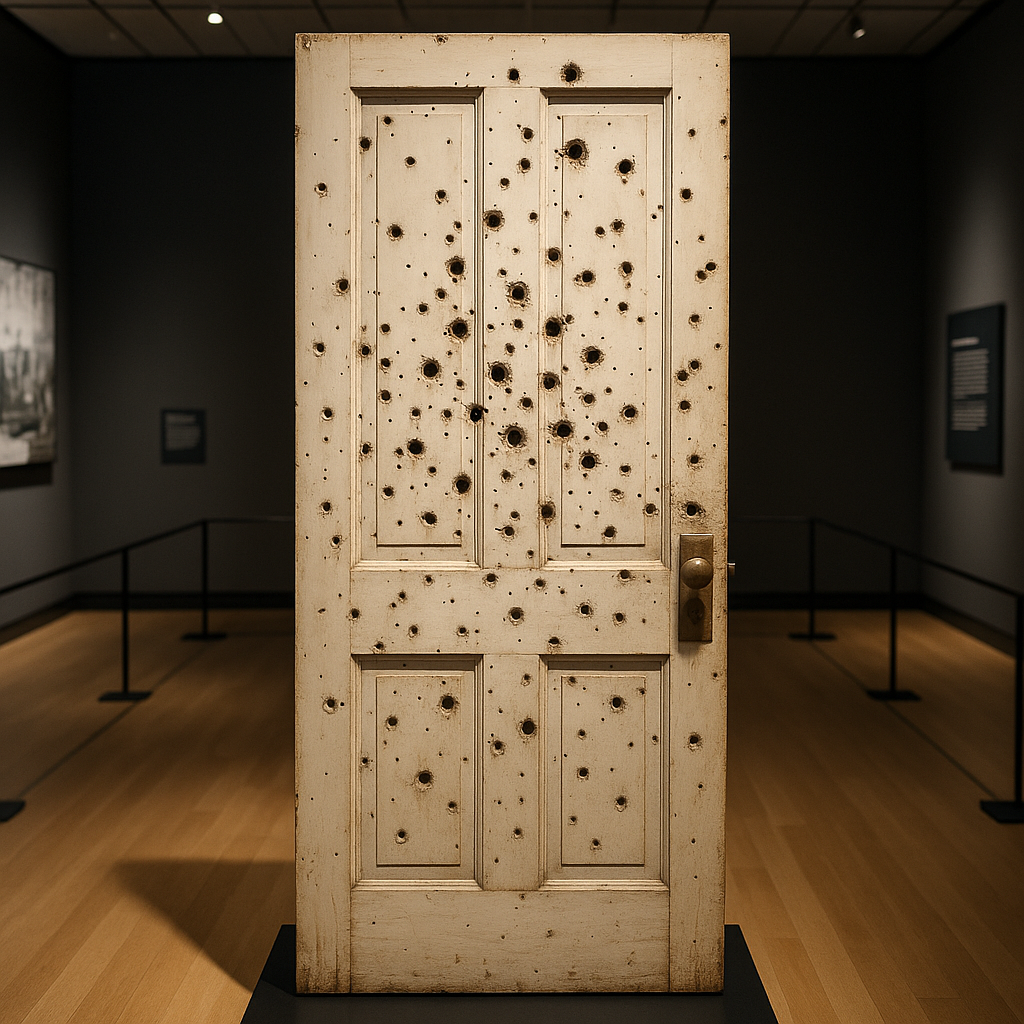
Reeva Steenkamp’s iPhone 4 lay face-down on the toilet mat, still warm. By sunrise the bathroom door was flat on the dining-table like a macabre cheeseboard, four holes punched below the handle in a perfect kite shape. Police photographers snapped 386 close-ups, yet the real excavation happened in the cloud. Investigators scrolled through 1,709 WhatsApp bubbles: heart emojis, grocery lists, a squabble from three weeks earlier about him “picking on me in front of everyone.” Each chat line became a courtroom fresco blown up to five metres, turning pillow talk into public property.
The couple’s digital afterlife felt like binge-watching a series cancelled mid-season. Viewers parsed timestamps for tone, ran emojis through sentiment analysis, turned metadata into morality charts. One message thread showed Reeva teasing him about leaving clothes on the floor; the next warned a girlfriend that he “gets angry quickly.” Analysts, influencers and armchair jurors mined the archive for the exact pivot point from lovers to evidence, forgetting that real hearts once beat between those blue-grey bubbles.
Prosecutors painted the archive as prophecy; the defence called it normal friction. Both sides forgot that Reeva had spent Valentine’s Eve handing out “No Means No” bracelets to ten-year-olds, filming herself blowing a kiss to the camera. The 58-second clip now loops forever on a memorial Vimeo page frozen at 3.7 million views - an audience larger than any she reached alive, a stardom no algorithm can monetise.
3. Echoes, Experts and the Unreliable Ear
Pretoria’s eastern suburbs became an involuntary orchestra that night. Dr Michelle Burger, 177 m away, swore she heard “blood-curdling” screams at 03:17, followed by four bangs. Dr Johan Stipp, two houses over, insisted the voice was male and the shots came earlier. Defence counsel Barry Roux spent days demonstrating how anxiety can pitch a grown man into bat-like falsetto, and how a cricket bat against wood mimics gunfire. Suddenly every resident became an audiophile, replaying memory like a cracked CD.
Acoustic experts flew in with decibel meters and heat maps coloured like weather charts, proving grass absorbs treble but throws bass. Dogs, pool pumps, security gates, weekend sub-woofers - each sound was logged, measured, cross-examined. The court finally ruled that sound is memory’s most creative liar, yet the ruling could not erase the recordings playing inside every witness skull. One neighbour still jumps when ice cracks in his drink; another cannot watch fireworks without tasting that metallic night again.
The debate migrated from courtroom to campus: law schools now use the soundtrack in evidence workshops, psychology departments study “ear-witness” fallibility, drama students choreograph scream exercises. A single fragmented second keeps educating people who were not even alive when the trigger squeezed, proving that an echo can outrun the bullet.
4. Carbon-Fibre Legs, Carbon-Copied Fear
When Pistorius unscrewed his Cheetahs and waddled forward on naked stumps, 32 networks went live. Paralympic veterans flinched: the display risked reducing them to tragic cyborgs, forever one step from toppling. Biomechanists drew force-vector diagrams showing how the blades return 92 % of stored energy, faster than human ankle tendons. Prosecutors seized the lesson: if science once argued he deserved to race able-bodied Olympians, today it could frame him as super-human, therefore super-lethal. The same carbon weave that unlocked London stadium turned into a metaphor for danger in a bathroom corridor.
Advertisers panicked within 72 hours. Nike yanked a highway billboard that screamed “I am the bullet in the chamber.” Oakley froze production lines, Thierry Mugler sent cologne recall teams to airports. Yet the charity set up to fit poor kids with prosthetics saw donations jump 400 %, mostly small-notes from Europe and the US tagged “praying for redemption.” A crypto start-up tried to float “BladeCoin”; regulators stamped it out in a week. Google noted “bathroom door price” queries up 2,300 %, while Valentine’s gift searches dipped 11 %. Trauma became trending data.
Copy-cat commerce bloomed. A Lagos firm sells “Ballistic Bathroom” kits - Kevlar-lined gypsum, 9 mm-rated door, $2,400 installed. A Dallas gun range offers toilet-door-shaped targets. South African developers now pitch en-suite panic rooms disguised as walk-in showers, lockable by foot pedal “when hands are wet.” A Nairobi start-up ships an app that tells gunfire from a domestic row, auto-dispatches armed response; critics call the package trauma-as-a-service. Fear, like any desirable commodity, found its export market.
Meanwhile, on TikTok, teenagers who were in nappies in 2013 remix the tragedy in 15-second drops. Minecraft reconstructions, deep-fake confessions in Donald Duck tones, NFTs of bullet-splintered wood - each iteration shaves off another sliver of context, but the views keep climbing. History used to repeat as farce; now it loops as content, monetised by coupons for home-security cams.
What was Oscar Pistorius convicted of?
Oscar Pistorius was initially convicted of culpable homicide for the killing of Reeva Steenkamp. This conviction was later upgraded to murder upon appeal. He claimed he mistook her for an intruder.
How did digital evidence play a role in the trial?
Digital evidence, particularly WhatsApp messages between Oscar Pistorius and Reeva Steenkamp, was extensively used in the trial. Investigators analyzed 1,709 chat bubbles, revealing arguments, affectionate messages, and insights into their relationship dynamics. These messages became crucial in the courtroom, influencing interpretations of their private life and the events leading up to Steenkamp's death.
Were there any issues with witness testimonies regarding sounds?
Yes, there were significant inconsistencies and debates surrounding acoustic testimonies. Neighbors reported hearing screams and gunshots, but their accounts differed regarding the timing, nature of the screams (male or female), and the exact sequence of events. The defense even demonstrated how a cricket bat could mimic gunfire and how anxiety could alter a person's voice pitch. The court acknowledged the fallibility of "ear-witness" accounts, highlighting how memory can distort sound perception.
How did the perception of Oscar Pistorius's prosthetics change?
Initially, Oscar Pistorius's carbon-fibre prosthetics, often called "sci-fi legs" or "Cheetahs," were celebrated as symbols of overcoming adversity, enabling him to compete in the Olympics. However, during the trial, these same prosthetics were reframed. Prosecutors used biomechanical evidence to suggest he was super-human, and therefore potentially super-lethal, turning the blades into a metaphor for danger rather than triumph.
How did the incident impact home security and related markets?
The tragic event led to a surge in interest and sales of home security products, particularly those related to bathroom safety. Queries for "bathroom door price" increased significantly, and new products emerged, such as "Ballistic Bathroom" kits, Kevlar-lined gypsum, and panic rooms disguised as walk-in showers. Companies also developed apps designed to distinguish gunfire from domestic disputes, reflecting a global market for "trauma-as-a-service."
What was the impact on Oscar Pistorius's sponsors and charity organizations?
Within 72 hours of the incident, sponsors like Nike and Oakley pulled advertisements and froze production lines, distancing themselves from Pistorius. Thierry Mugler also initiated cologne recall teams. Conversely, a charity that provided prosthetics to underprivileged children saw a 400% increase in donations, often accompanied by messages of prayer for redemption. The event also spurred various, sometimes controversial, attempts at commercialization, such as "BladeCoin," and led to the tragedy being re-contextualized as viral content on platforms like TikTok.

Chloe de Kock is a Cape Town-born journalist who chronicles the city’s evolving food culture, from township braai joints to Constantia vineyards, for the Mail & Guardian and Eat Out. When she’s not interviewing grandmothers about secret bobotie recipes or tracking the impact of drought on winemakers, you’ll find her surfing the mellow breaks at Muizenberg—wetsuit zipped, notebook tucked into her backpack in case the next story floats by.
View all articles →