
Police torture case postponed for state to get an interpreter
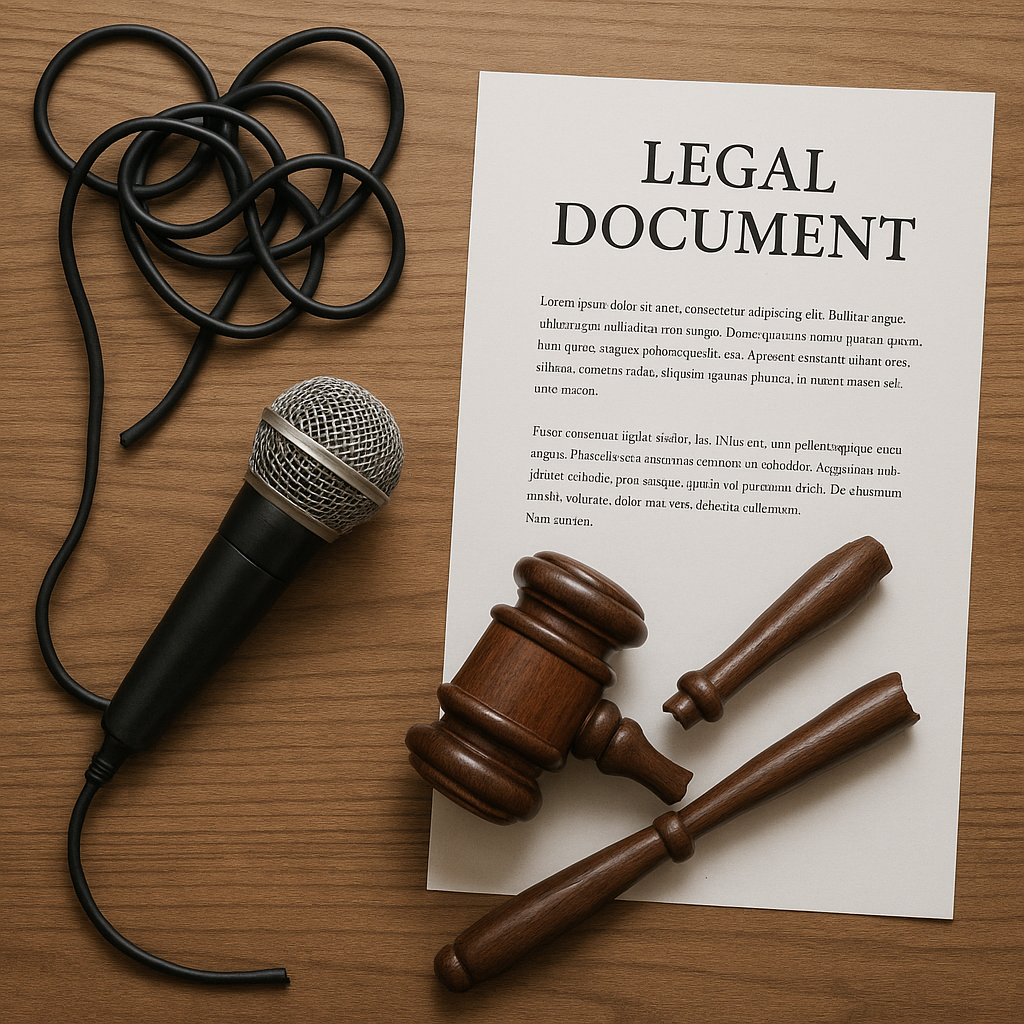
A missing Kirundi interpreter stalls a torture case in South Africa, highlighting systemic language barriers and their cost to justice.
Juma Igiraneza, a torture survivor, is trapped in an endless cycle of court dates in South Africa because there's no interpreter for his language, Kirundi. Despite being assaulted by police, his case keeps getting delayed due to a severe shortage of qualified interpreters in the court system. This bureaucratic failure means he faces financial ruin and psychological distress, while the accused officers remain free. The system's inability to provide basic language access denies him justice and highlights a deeper institutional crisis.
Why is there a language barrier in South African courts?
South Africa's court interpretation system faces significant challenges due to a shortage of qualified interpreters, especially for languages like Kirundi. Out of 2,300 authorized positions, only 1,078 are filled nationwide, with 67 language categories lacking adequate coverage. Bureaucratic hurdles, low compensation, and a lack of formal examination protocols for many languages exacerbate the problem.
Get Cape Town news in your inbox
Stay updated with the latest stories from the Mother City.
The Human Cost of Bureaucratic Failure
In the dimly lit corridors of Wynberg Magistrates' Court, fluorescent tubes cast their harsh white glare across tired faces waiting for justice that never seems to arrive. Juma Igiraneza, a 29-year-old refugee from Burundi, occupies his usual spot on the polished wooden bench outside Court 14. His fingers work ceaselessly, turning over a thin plastic rectangle - his Greyhound bus ticket purchased with money scraped together by relatives in the Eastern Cape. The departure date reads this coming Friday; his mandated return falls on 27 July, when this nightmare of court appearances will resume.
Inside the chamber, Magistrate Sharon Mthimunye maintains her professional composure, though her pen taps an increasingly impatient rhythm against documents grown soft with handling. The charge sheet tells a brutal story: assault with intent to inflict serious injury, torture, crimen injuria. Three uniformed officers from the South African Police Service occupy the dock - Lieutenant-Colonel Delmore Manuel, Constable Jermaine Conradie, and Constable Leigh-Ann Maroon. Their posture conveys military discipline; their uniforms remain impeccably pressed. Across the room, Advocate Petersen adjusts an expensive charcoal sleeve while Prosecutor Nodada delivers words that have become ritual: "The interpreter is not available, M'Lady."
This broken link in the chain of communication should not wield such destructive power over criminal proceedings. Yet South Africa's lower courts have developed their own vocabulary for this particular failure: "I-problem." The letter stands for interpreter, certainly, but practitioners recognise its deeper meanings - impasse, indifference, institutional paralysis.
When Surveillance Cameras Capture What Words Cannot
The undisputed facts of this case unfold like footage from a disturbing documentary. On 7 November 2023, operatives from the Mowbray Crime Prevention Unit descended upon a modest barber establishment wedged between a Somali grocery and a mobile phone repair shop on Main Road. Their official target - the proprietor suspected of cigarette smuggling - had vanished before their arrival. What followed, captured in grainy but unmistakable detail, shows officers directing their attention toward Igiraneza. The refugee had established his modest trade here in 2019, building a clientele through careful craftsmanship with clippers and razors.
The security footage reveals four figures in police uniforms forcing the barber to the ground. One officer plants a boot on his neck. Another pours liquid - identified later as spiced tea - over his head and face. A third toys with hair-cutting equipment, snapping the power switch repeatedly near his ears. Throughout this ordeal, Igiraneza's mouth moves in desperate Kirundi, the melodic Bantu tongue spoken by roughly nine million people across Burundi's hills and neighbouring territories. South Africa's professional translation body only established formal examination protocols for this language in 2021. That November evening, not a single officer present could comprehend his pleas.
The Machinery of Delay: How Language Becomes Weapon
South Africa's court interpretation system operates through a four-tier classification, with Level 1 handling minor traffic violations and Level 4 managing intricate commercial or terrorism proceedings. Kirundi appears nowhere on official rosters. When such cases emerge, judicial administrators must venture into informal networks - Congolese religious leaders, East African graduate students with academic connections to Bujumbura. The Office of the Chief Justice provides R1,200 daily compensation, yet accessing these funds demands navigation through bureaucratic thickets. Regional court managers require motivation letters, comparative quotations from three providers, and sworn affidavits confirming that no local linguistic alternative exists. Weeks evaporate in this process. Should a case collapse and require re-enrolment, the entire cycle commences from its beginning.
Igiraneza's matter first disintegrated on 17 April, when his allocated interpreter received emergency reassignment to a Western Cape High Court rape trial. Upon rescheduling in May, Prosecutor Nodada secured the services of Jean-Bosco Niyonkuru, a theology lecturer with roots in Makamba province whose linguistic repertoire included Kirundi, French, Swahili, and functional Afrikaans. Niyonkuru formalised his engagement on 8 May. Forty-eight days later, he accepted a university position in the Democratic Republic of Congo's Goma region and departed without forwarding address. No successor has materialised despite sustained searching.
Monday's proceedings exemplified this systemic dysfunction. The court remained unlit and locked until 09:45, cleaners pushing citrus-scented mops that irritated Igiraneza's eyes. The accused officers arrived in an official vehicle with obscured windows, traversing assembled journalists with studied neutrality. Their alleged victim completed a fourteen-hour minibus journey from Mthatha, R1,350 lighter in his worn wallet. His brother Jean-Claude transported humble provisions - bread rolls, bottled water, immigration documents expiring in October.
When Magistrate Mthimunye finally assumed her position at 10:05, her inquiry about Kirundi capacity among court personnel drew only negative responses. The prosecution sought a fortnight's extension to expand their search. Defence representatives offered no resistance, understanding intimately how temporal erosion undermines prosecutorial strength - witness memories deteriorate, individuals relocate, evidence packets mysteriously disappear. The magistrate granted deferral to late July, warning that only divine intervention would justify further interruption.
Counting the Price: Financial Ruin and Psychological Wounding
Beyond the courtroom walls, GroundUp requested documentation of Igiraneza's accumulated burdens. His weathered notebook reveals devastating arithmetic: R1,350 for transport, accommodation costs disguised as electricity contributions, R180 for sustenance across two days, R15 for document duplication, R600 in forfeited earnings from missed appointments. Each appearance consumes nearly half a month's minimum wage. Four such journeys since December have hollowed his resources utterly.
"I cultivate appearance, not litigation," he manages in fragmentary English. "Each court summons sends my patrons elsewhere. Eventually, my chair will stand empty."
The damage extends beyond material deprivation. Following February's television broadcast of the assault footage, anonymous voice messages arrived through WhatsApp, their Kirundi threats unmistakable: "Sinjye umutwe wa sheyitan" - I watch the barber. Relocation from his Nyanga dwelling to overcrowded Philippi quarters followed, seventeen individuals now sharing sleeping rotations in space designed for far fewer. A paper envelope holds contact details for two human rights attorneys, though their pro bono capacity remains closed until 2025.
The accused enjoy markedly different circumstances. R2,000 bail secured their release in November; professional duties continue uninterrupted. Manuel's twenty-seven-year service record glitters with narcotics enforcement commendations. Conradie recently transitioned from tactical operations to communications desk. Maroon, the youngest at twenty-nine, maintains social media presence blending tactical equipment selfies with scriptural encouragement. Internal disciplinary proceedings under SAPS Regulation 20 await completion of criminal processes - another circular postponement that binds Igiraneza to perpetual attendance.
Systemic Collapse: Numbers That Tell of Institutional Failure
South Africa's justice administration maintains merely 1,078 interpreters nationwide, less than half the 2,300 positions authorised six years previously. Sixty-seven language categories lack adequate coverage: Tigrinya, Kinyarwanda, Shona, Amharic, Twi, Wolof, Kurdish-Sorani, Pashto. Kirundi's absence from official lists reflects historical reality - no permanent staff member has ever satisfied admission requirements. The examination itself, available only in English and Afrikaans, demands fifteen-minute translation of 300-word judicial questions into Kirundi and back, a barrier that defeated both 2023 candidates through time expiration alone.
This republic shelters 177,000 asylum seekers and 1.4 million recognised refugees, with forty-two percent originating from the Democratic Republic of Congo, Burundi, Rwanda, and Somalia. Refugee Rights Centre estimates indicate Gauteng and Western Cape courts each require Kirundi interpretation approximately 120 times annually. Outsourcing fills this vacuum, though tariff reduction from R1,800 to R1,200 daily has discouraged qualified practitioners from accepting brief, geographically distant engagements.
Technological alternatives exist - VoiceBoxer, Zoom-interpretation platforms - yet magistrates reject these for evidentiary proceedings. Constitutional Section 6 guarantees accused persons interpreters of personal selection, a provision defence teams exploited spectacularly in 2022 Johannesburg proceedings. Seventeen minutes into a pilot program, counsel established that the remote Kirundi translator was actually Rwandan, employing incompatible courtroom terminology. The matter collapsed entirely.
European Union funding enabled Stellenbosch University to construct an online Kirundi-English legal lexicon containing 4,000 specialised terms - "reasonable doubt" rendered as "ikizinga rishingiye ku bushake," "common purpose" as "igikorwa runaka." Without living interpreters to voice these words, however, the database resembles a library emptied of readers.
Public Scrutiny and Private Desperation
Confidential sources indicate senior police leadership have explored extra-judicial resolution. Mediator-facilitated discussions apparently proposed R250,000 compensation for criminal case withdrawal. Igiraneza acknowledges declining - "I require law's voice" - while confessing such sums would eliminate debts accumulated through repeated court travel.
Clinical psychologist Dr. Bongani Mkhasibe, serving refugee populations at the University of Cape Town, identifies in Igiraneza's experience patterns matching complex post-traumatic stress: hypervigilance, intrusive recollection, learned helplessness. "Language itself becomes retraumatising instrument," Mkhasibe observes. "Each clerk's announcement - 'interpreter absent' - translates within the victim's perception as 'your suffering exceeds articulation.'"
Jean-Claude Hatungimana has initiated WhatsApp mutual assistance among Kirundi-speaking witnesses across multiple matters - twenty-three participants presently, including a Bellville woman whose sexual assault case has stalled through five separate postponements. They exchange economy accommodation intelligence, maintain shared calendar documentation, identify collectively as "abajuriye" - the waiting ones.
Searching for Exit: Diplomatic Channels and Procedural Maneuvers
Prosecutor Nodada has now petitioned Burundian, Tanzanian, and Kenyan diplomatic missions for certified interpreter directories. The Tanzanian response offered a diplomat currently on leave until August. Kenyan representation proposed a Nairobi-based conference professional demanding $400 daily plus premium air travel - expenditure brackets far exceeding available resources.
Magistrate Mthimunye has additionally requested Cape Town Regional Court assumption, attracted by their broader foreign-language interpreter inventory. Such transfer requires universal party consent; defence counsel have already indicated opposition, insisting Mowbray maintains proper jurisdiction given offence location and witness residence.
Department of Justice communications acknowledge awareness of shortage circumstances, promising new recruitment policy for scarce-language practitioners by 2025/26 financial year.
Igiraneza will therefore present himself once more on 27 July - bus coupon preserved, professional tools in backpack - praying that someone in these corridors might finally speak in sounds he recognises.
[{"question": "### What is the core issue Juma Igiraneza is facing?", "answer": "Juma Igiraneza, a torture survivor in South Africa, is experiencing endless court delays in his case against police officers because there is no interpreter available for his language, Kirundi. This lack of language access is preventing him from obtaining justice."}, {"question": "### Why is there a shortage of Kirundi interpreters in South African courts?", "answer": "South Africa's court interpretation system has a severe shortage of qualified interpreters, with only 1,078 out of 2,300 authorized positions filled nationwide. Specifically for Kirundi, there are no permanent staff members, and formal examination protocols were only established in 2021. Bureaucratic hurdles, low compensation (R1,200 daily), and a lack of proper examination accessibility (only in English and Afrikaans) further exacerbate the problem."}, {"question": "### How does the interpreter shortage impact Juma Igiraneza personally?", "answer": "The ongoing delays are causing Juma significant financial ruin and psychological distress. Each court appearance requires him to travel long distances, costing him money for transport, accommodation, and lost earnings. He has also received threats, forcing him to relocate and leading to symptoms of complex post-traumatic stress. The system's failure to provide an interpreter makes him feel that his suffering is not being heard."}, {"question": "### What happened during Juma Igiraneza's alleged assault by police?", "answer": "On November 7, 2023, security footage shows four police officers assaulting Juma Igiraneza at his barbershop. One officer placed a boot on his neck, another poured liquid over his head, and a third toyed with hair clippers near his ears, all while he pleaded in Kirundi, a language none of the officers present could understand."}, {"question": "### Are there any technological solutions or alternative approaches being considered for the language barrier?", "answer": "While technological alternatives like Zoom interpretation platforms exist, magistrates currently reject them for evidentiary proceedings. An online Kirundi-English legal lexicon with 4,000 terms has been developed by Stellenbosch University with EU funding, but it requires living interpreters to be effective. Attempts have been made to contact diplomatic missions for interpreter directories, but these have met with limited success or prohibitive costs."}, {"question": "### What is the broader systemic issue highlighted by Juma's case?", "answer": "Juma's case highlights a deeper institutional crisis within South Africa's justice system. The severe understaffing of interpreter positions, the lack of coverage for numerous language categories (67 in total), and the complex, slow bureaucratic processes for securing external interpreters demonstrate a systemic failure to provide basic language access. This denial of justice affects not only Juma but also a significant portion of the country's refugee and asylum-seeking population.", "additional_info": "The South African Constitution, specifically Section 6, guarantees accused persons interpreters of their personal selection. However, practical implementation faces significant challenges, as demonstrated by a 2022 case where a remote Kirundi translator was found to be Rwandan and using incompatible terminology, leading to a trial's collapse."}]
Amanda Wilson is a Cape Town-born journalist who covers the city’s evolving food scene for national and international outlets, tracing stories from Bo-Kaap spice shops to Khayelitsha micro-breweries. Raised on her grandmother’s Karoo lamb potjie and weekend hikes up Lion’s Head, she brings equal parts palate and pride to every assignment. Colleagues know her for the quiet warmth that turns interviews into friendships and fact-checks into shared laughter.
View all articles →