
Popular Cape Town restaurant ëlgr announces final dinner service
Elgr's final service on May 30, 2026, sparks a booking frenzy. Explore its unique Nordic-inspired menu and the emotional farewell.
ëlgr, a super popular Cape Town restaurant, is closing soon! Everyone is trying to get a table before it shuts down on May 30, 2026. People are even trading weird things for reservations because it's so hard to get in. The chef, Jesper Nilsson, makes amazing Nordic-inspired food with local South African twists. It's truly a special place, and its closing is a big deal for food lovers.
What is ëlgr, the restaurant described in the article?
ëlgr is a highly sought-after Cape Town restaurant, founded by Jesper Nilsson, known for its unique Nordic-inspired cuisine with local South African influences. It is famous for its intricate dishes, artistic presentation, and an exceptionally exclusive dining experience, making its upcoming closure a significant event.
Get Cape Town news in your inbox
Stay updated with the latest stories from the Mother City.
The Stampede for a Seat at the Fire
Cape Town’s dinner diaries flipped upside-down the instant Jesper Nilsson posted a single-line notice: ëlgr’s last service will be 30 May 2026. Within minutes the booking engine collapsed - three crashes, three reboots, 42 seats per night suddenly the hottest currency in the city. Fairy-lights that once blinked innocently above the courtyard now frame deliberate pilgrimages: couples recreate their first-date selfies, solo guests film swirling wood-smoke for fifteen-second reels, and critics arrive with pre-composed obituaries wedged inside pocket-sized notebooks. Through the mayhem Nilsson glides in the same hush he adopted when the doors opened in December 2020, topping up skin-contact Chenin, tilting hand-thrown ceramics by a millimetre, behaving as if the verdict can still be appealed.
The resale market exploded overnight. A clandestine WhatsApp group barters tables at quadruple face value, except nobody wants cash - bids arrive in promises: a weekend on a trawler, first-press Springsteen, an Afrikaans Harry Potter signed to someone’s unborn child. One colour-grader traded a full restoration of Nilsson’s father’s 8 mm hunting footage for the final two-top on 29 May; their negotiation lasted forty-three voice notes and ended in mutual tears. Meanwhile a shared spreadsheet tracks the dishes regulars still lack: sixty-four per cent have yet to taste pine-resin confit duck; nearly a third regret never proving their Swedish credentials to unlock the off-menu surströmming pizza.
When the last fortnight’s bookings went live at midnight on a moonless Monday, 17 432 people jammed the queue. Servers in Vilnius and Mumbai were dragooned to keep the site breathing. Nilsson added a “slow queue” button: wait three extra minutes and you could leave a voice note explaining why you need in. Four thousand messages arrived - fishermen retired on the West Coast, divorcees toasting freedom, parents recording for toddlers who will never remember Nordic smoke. After each service Nilsson scrubs the plancha while playing twenty pleas; tears drop, hiss, vanish. Every recording will be parked on a password-protected server whose location even he does not yet know.
From Värmland Moose to Swartland Clay: The Birth of a Myth
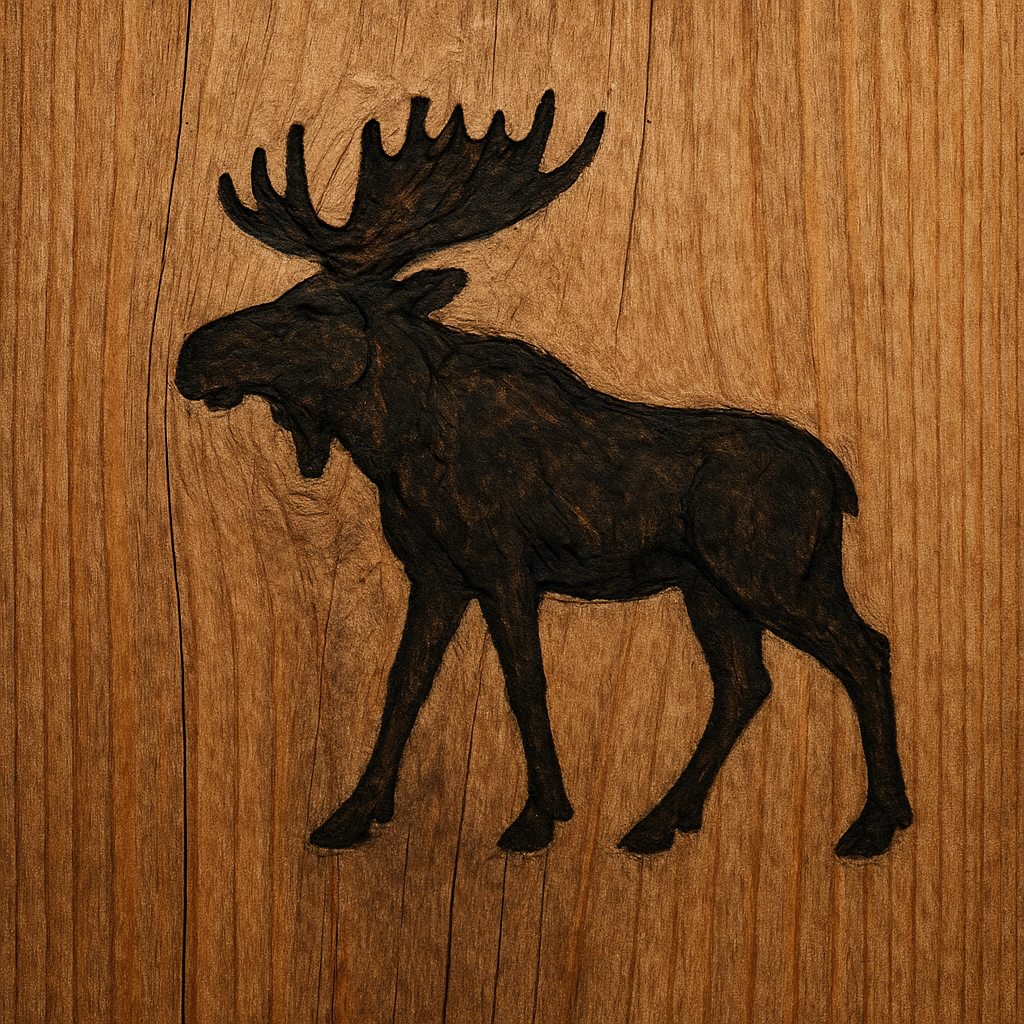
The seed of ëlgr was planted when a seven-year-old Nilsson met a motionless moose on a snow-dusted Värmland road. That tableau became the mental lens through which he later framed every still-life on a plate. Years on, while sanding reclaimed oak for the communal table, he uncovered a knot shaped uncannily like the same antlered silhouette. Instead of cutting it out he ring-fenced it with glacier-blue resin. The finished slab - now scarred by 1 847 wine-key scratches and candle grease - sits centre stage, nicknamed “the moose altar.” Regulars refuse any other seat; unsuspecting walk-ins are diplomatically steered away.
The menu ignores the Gregorian calendar. Produce dictates the clock: when Tulbagh’s first stonefruit arrives, kernels are milked into a rain-kissed marzipan soup; when the southeaster shreds fig leaves to lace, they are blitzed into a chlorophyll oil that jolts snoek rillettes. Nordic reflexes surface in a blow-torched pizza crowned with freeze-dried reindeer moss that crackles like roasted nori; the moss flies vacuum-packed from Finnish Lapland because, as Nilsson lectured a class of students, “terroir is memory, not latitude.” His open-face smørrebrød carries bokkom dust and fynbos samphire, insisting the Atlantic and the Baltic can share the same bite.
The wood oven - built from Swartland clay and insulated with pulverised wine bottles - was sketched forty-seven times and argued over once, the quarrel centred on mouth height for a six-foot-two chef. It burns alien bluegum cleared from wetland rehab sites, its flame waltzing between 380 °C and 420 °C depending on moisture. At 08:17 sharp, sous-chef Thandi Mokoena slots three precisely weighed logs; the moment the door shuts, the playlist flips to a 90-bpm Afro-tech loop that times the morning prep. Pizza dough rests twenty-six hours in a drawer salvaged from an oceanographic lab, emerging leopard-spotted and shot through with “Nordic nothingness” air pockets. One of the last pies will almost certainly be “Hunting Season”: hot-smoked springbok masquerading as elk, pickled blueberry and juniper ash - a wink at the name ëlgr and a flavour technically illegal to import.
Liquid Memories: Aquavit, Wetsuits & Grandmother’s Handbag
Bar manager Keenan O’Shea treats cocktails like rotating art shows. Flagship pour “The Øresund” arrives in glass blown to echo the exact curve of the strait between Copenhagen and Malmö. A buoyant sheet of sea-buckthorn ice caps the drink; as you sip, bergamot-akvavit bleeds through a pinhole, shifting the gradient from sunrise orange to Nordic navy. The garnish is a Jonkershoek spruce tip misted with two-per-cent brine to mimic Baltic spray. O’Shea logs weather data from a rooftop station and claims the drink changes under low pressure - findings unpublished but obsessively annotated beside every customer’s name in a leather-bound ledger.
Wine authority Elin Hasselborg narrates like an Icelandic saga on audiobook. Her list is sorted by “mood knots,” not cultivars: wines that smell of wet granite after a storm, wines that exhale grandmother’s handbag, wines that finish with the sigh of a kayak kissing a pier. She champions “silent farmers” who avoid Instagram, budgets, occasionally labels. One 2019 Paardeberg Cinsault appears only after 22:00 when lights sink to 27 lux - the midsummer dusk of Gothenburg. The bottle wears a wool sleeve hand-knitted by Nilsson’s aunt; undressing it feels like exposing a relic.
Behind the pass, conversation is rationed to thirty-seven laminated words - mostly “behind,” “hot,” “fire,” “yes.” Everything else travels by Morse-like taps: one rap means plate, two means refire, three is the bat-signal that yanks Nilsson from the dining room. The rule crystallised after a New Year’s service hit 92 dB and induced cardiac arrest in the neighbour’s prize French bulldog - he survived, the bill footed by the house, the walls now cloaked in cork panels that double as thyme planters. Staff lunch hits at 16:45 and always includes a gluey pot of rice, Thandi Mokoena’s tribute to her grandmother’s conviction that starch bonds a crew faster than blood. Each employee earns one “legacy dish” shift: cook anything destined for the bin. Greatest hits range from coffee-ground chicken hearts to butternut-skin caramel on sourdough crusts.
Countdown to Silence: Pigs, Vinyl and Invasive Blossoms
Suppliers feel the aftershock as keenly as diners. Lionel van Rooyen, an Iberico-cross pig farmer in Hemel-en-Aarde, usually delivers two carcasses a month; the looming closure leaves fourteen whey-fattened hogs without abattoir space or comparable buyers. Nilsson steps in, purchasing the entire herd and converting ëlgr’s swansong into a nose-to-nodal fiesta: porchetta laced with fynbos honey, Pinotage-must blood sausage, a twelve-course alphabet-themed dinner pairing each letter of Swedish to a cut. Tickets vanished in eleven minutes; sales restricted to one per ID and fingerprint-scanned to thwart scalpers.
Even the building is rehearsing its own requiem. The landlord, a retired architect upstairs, hired a sound artist to trap every creak of Oregon-pine, every hiss of the espresso machine, every laugh ricocheting off the courtyard. Two hundred vinyl records - cut at 45 rpm, Nilsson’s prep speed - will carry a twenty-four-hour loop. After the final plate is fired, invitees will trek to Signal Hill at sunrise, arrange battery speakers into the outline of a moose, and play the loop while sharing a vegetarian dish that reminds them of something once lost. No microphones, no cameras, no meat.
The courtyard wisteria, planted opening week, has erupted in early-May bloom, purple chandeliers brushing diners’ hair like a foreign coronation. Bees, drunk on blossom sugar, dive toward spritzes; O’Shea replaced paper coasters with ice discs that melt into herb planters, watering crops that will outlive the ovens. Nobody mentions wisteria is invasive; mythology trumps botany for once. And so, beneath the violet rain, Cape Town eats, trades, weeps and films - trying to hoard flavours, moments, stories before the final log crumbps into ash and the moose walks quietly back into the snow.
What is ëlgr, the restaurant described in the article?
ëlgr is a highly sought-after Cape Town restaurant, founded by Jesper Nilsson, known for its unique Nordic-inspired cuisine with local South African influences. It is famous for its intricate dishes, artistic presentation, and an exceptionally exclusive dining experience, making its upcoming closure a significant event. It opened in December 2020.
When is ëlgr closing?
ëlgr is scheduled to close its doors permanently on May 30, 2026. This announcement has led to an unprecedented rush for reservations as diners try to experience the restaurant one last time.
What makes ëlgr's food unique?
Chef Jesper Nilsson's cuisine at ëlgr is characterized by a fusion of Nordic inspiration and local South African ingredients. He integrates elements like pine-resin confit duck, freeze-dried reindeer moss, bokkom dust, and fynbos samphire, often prepared in a custom wood oven. The menu is seasonal, dictated by the availability of fresh produce, and each dish is crafted with an artistic approach, embodying a philosophy that "terroir is memory, not latitude."
How difficult is it to get a reservation at ëlgr?
Getting a reservation at ëlgr is extremely difficult, especially since the closure announcement. The booking engine crashed multiple times due to overwhelming demand. There's even a clandestine resale market where people trade unusual items and experiences, not just cash, for a table. When the last fortnight's bookings went live, over 17,000 people jammed the online queue.
What is "the moose altar" at ëlgr?
"The moose altar" is the nickname for ëlgr's central communal table. It's made from reclaimed oak, and during its sanding, Chef Nilsson discovered a knot shaped uncannily like an antlered moose silhouette. He preserved this knot by ring-fencing it with glacier-blue resin. This table has become a significant feature, with regulars refusing to sit anywhere else.
What special events or offerings are happening as ëlgr approaches its closure?
As ëlgr nears its closing date, special events include a "nose-to-nodal fiesta" featuring an entire herd of Iberico-cross pigs purchased by Nilsson from a local farmer, with tickets selling out in minutes. The landlord is also recording the restaurant's sounds for a 24-hour vinyl loop to be played on Signal Hill after the final service. Additionally, there are unique cocktails that change with atmospheric pressure and a wine list sorted by "mood knots" rather than traditional categories.

Thabo Sebata is a Cape Town-based journalist who covers the intersection of politics and daily life in South Africa's legislative capital, bringing grassroots perspectives to parliamentary reporting from his upbringing in Gugulethu. When not tracking policy shifts or community responses, he finds inspiration hiking Table Mountain's trails and documenting the city's evolving food scene in Khayelitsha and Bo-Kaap. His work has appeared in leading South African publications, where his distinctive voice captures the complexities of a nation rebuilding itself.
View all articles →