
Princess Vlei trail vandalised weeks after R10.2 million upgrade opens
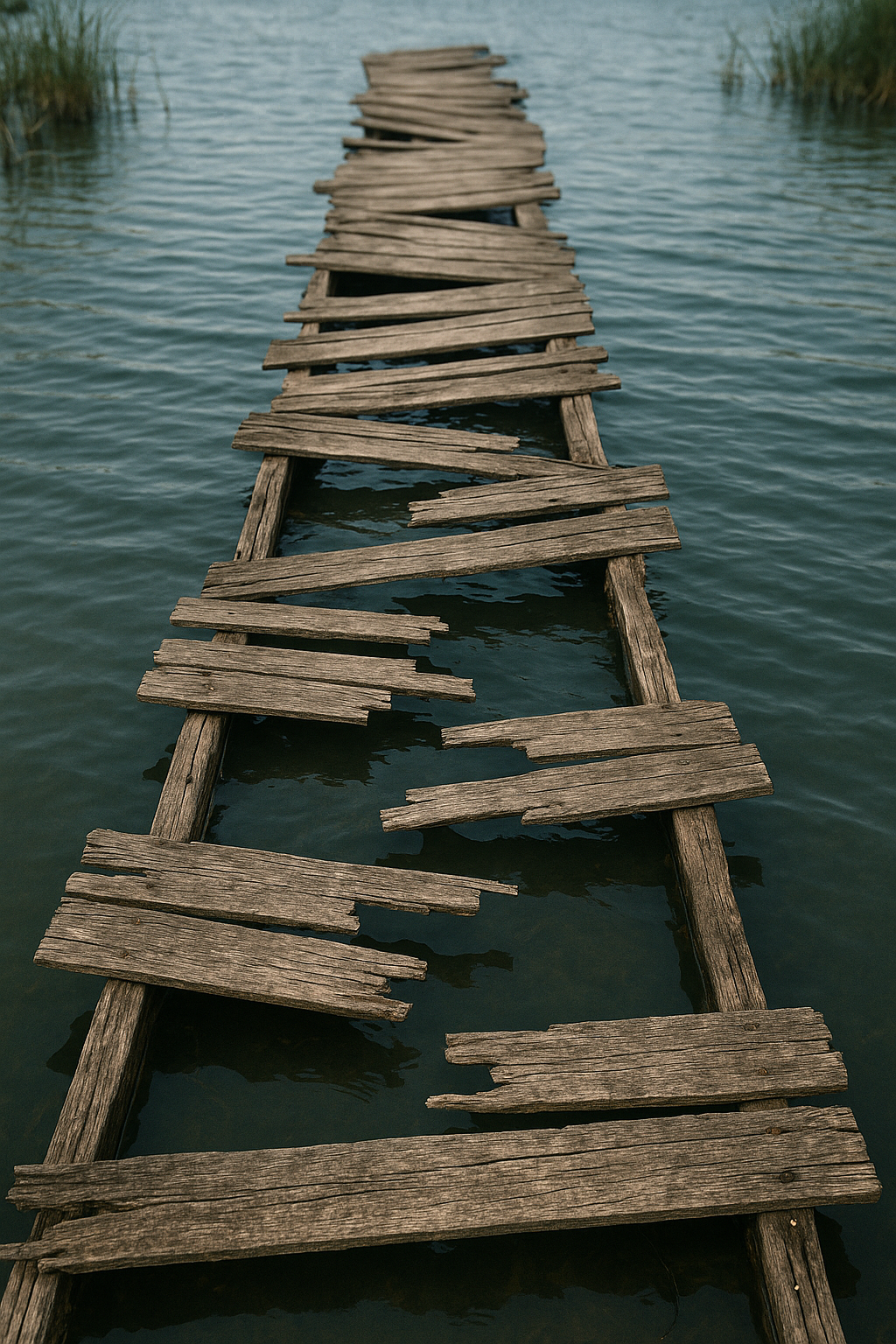
A R10-million Cape Town trail became a crime scene in 3 weeks. What went wrong & how can communities protect public spaces?
Just weeks after a beautiful R10-million walking trail opened in Cape Town, it was trashed! Thieves stole wooden planks from boardwalks, signs were spray-painted, and markers disappeared. It seems the trail's open design made it easy for bad guys to cause a lot of damage. Now, people are trying to figure out how to keep this lovely place safe for everyone to enjoy.
What caused the damage to the Princess Vlei Trail?
The Princess Vlei Trail suffered significant damage due to systematic vandalism and theft, including the dismantling of boardwalks for timber resale, defacement of signs with graffiti, and removal of kilometer markers. This occurred within three weeks of its R10.2 million public opening, highlighting vulnerabilities in open-access infrastructure.
Get Cape Town news in your inbox
Stay updated with the latest stories from the Mother City.
The Morning That Promised Everything
On a crisp winter morning in early June 2024, a modest gathering of schoolchildren, pensioners, and municipal officials assembled at the edge of Princess Vlei. The yellow ribbon stretched between freshly painted bollards seemed to hold more than ceremonial weight - it represented years of advocacy, planning, and public investment finally materializing along 4.23 kilometers of previously neglected wetland. Drone footage captured that day reveals a transformed landscape: crushed gravel tracing the shoreline's curves, three timber boardwalks suspended like bridges between worlds above reed beds, and eighteen brushed-aluminium markers guiding visitors toward picnic lawns 1.2 kilometers distant.
The R10.2 million price tag purchased substantial infrastructure: 2,300 tonnes of road-base material, 1,100 indigenous trees carefully selected for local conditions, thirty-two low-voltage lighting fixtures, two bird hides positioned for optimal viewing, and a single solar-powered innovation that plays recorded Cape robin-chat songs each dawn to spark curiosity in young visitors. Social media responded with unexpected enthusiasm. Within a single day, #PrincessVleiTrail outperformed even #LoadShedding in local Facebook engagement, suggesting that residents across the Cape Flats had been waiting for precisely this kind of accessible green space.
What the photographs could not capture was the emotional register of the moment - the pride of elderly residents who remembered when this same water body served as an unofficial dumping ground, the excitement of children testing new sneakers on unfamiliar terrain, the quiet satisfaction of community organizers who had fought since 2014 for this recognition of Princess Vlei's ecological and cultural significance.
When Moonlight Revealed Predators
Twenty-four days later, the atmosphere had curdled entirely. At 2:13 AM on June 30th, a waning crescent moon offered just enough illumination to silhouette the Hottentots-Holland mountains while casting the vlei itself in ambiguous shadow. A municipal ranger vehicle - an aging Ford Ranger with one headlamp repaired using blue tape - was completing its southern embankment circuit when Constable Viwe Tshona detected irregularity: torch beams cutting through the reed line where no legitimate activity should exist.
By 2:16 AM, the rangers had abandoned their vehicle and approached on foot. The scene they discovered defied simple categorization as theft. Three figures were systematically dismantling the western footbridge, using a cordless impact driver to remove 1.8-meter CCA-treated pine deck slats. Twenty-seven planks already lay stacked on the embankment, each bearing the municipal asset stamp "EPH 2402." The operation displayed methodical precision rather than opportunistic impulse.
When challenged, the trio demonstrated practiced evasion. They vaulted the balustrade, crossed the muddy foreshore, and melted into the dense Port Jackson willow thickets on the far bank. Their sole remaining trace was a balaclava, half-slipped during flight, carrying the distinctive chemical signature of methylated spirits and tik - a combination suggesting both intoxication and the specific subculture of Cape Flats substance use.
The incident's timing mattered as much as its method. Three weeks of public celebration had yielded to a brazen dismantling operation conducted in the small hours, suggesting that perpetrators had been observing patterns, testing response times, and waiting for optimal conditions.
The Mathematics of Stolen Timber
Public confusion erupted immediately across social media platforms. Commenters struggled to comprehend the market for used bridge planks, unable to imagine legitimate buyers for such conspicuously sourced material. The economic logic, however, becomes clear when tracing the commodity chain twelve kilometers southeast to Masiphumelele settlement.
There, informal recyclers operate established networks for construction salvage. A single 1.8-meter decking plank - structurally adequate for spanning drainage ditches in informal housing construction - commands R80 to R120 in cash transactions. A complete footbridge yields approximately R2,000 in aggregate resale value. Meanwhile, municipal replacement costs escalate dramatically: R420 per plank including specialized labor, marine-grade epoxy sealant, and stainless steel fasteners resistant to wetland corrosion.
This asymmetry defines contemporary infrastructure crime. Vandals capture roughly eighty percent of material value within hours, while restoration demands fivefold expenditure from public accounts. The pattern extends well beyond Princess Vlei. In 2022 alone, Cape Town allocated R3.8 million to replace stolen oceanfront railings along the False Bay coastline, only to witness renewed stripping within six months. The economics overwhelmingly favor destruction over preservation when enforcement remains sporadic and resale markets operate with impunity.
Expanding Damage, Shrinking Solutions
The footbridge represented merely the most visually striking casualty. Dawn revealed systematic degradation across multiple trail elements. Joggers discovered four directional signs twisted until their 3mm Allen bolts sheared completely. The interpretive panel titled "Birds of the Vlei" had been defaced with explicit political graffiti. Most puzzlingly, the kilometer marker at picnic lawns had vanished entirely, leaving only disturbed soil suggesting recent excavation.
Closer examination revealed deliberate anti-forensic measures. GPS coordinates originally etched into aluminium surfaces had been aggressively scratched away - presumably using keys or coins - to prevent identification should the sign appear in scrapyard transactions. Municipal officials calculated signage replacement at R47,000, a figure that contextualizes the damage: equivalent to an entire park bench installation program in Delft, sacrificed to anonymous malice.
This destruction occurred within a documented history of interrupted stewardship. In 2011, contractors abandoned a R28 million upgrade following procurement disputes; incomplete braai facilities became immediate graffiti targets. In 2018, youth volunteers planted 600 red disa orchids commemorating the sixtieth anniversary of forced removals from the neighboring Village Board; within seven days, forty percent had been uprooted and sold to informal flower vendors on Voortrekker Road.
Criminologists recognize this pattern as the "broken window" feedback loop, where visible disorder signals absence of effective ownership or enforcement, thereby encouraging further degradation. Princess Vlei's trajectory suggests this dynamic operating across decades rather than months.
The Arithmetic of Open Access
The trail's fundamental design principle - "open access" without gates, tickets, or temporal restrictions - creates inherent security tensions. The Recreation and Parks Department deploys fourteen rangers across rotating shifts covering the entire 104-hectare Princess Vlei reserve. Simple division yields sobering responsibility: 7.4 hectares per ranger, approximately equivalent to ten rugby fields of continuous surveillance obligation.
Night operations compound these constraints. A single patrol vehicle must cover the complete trail loop plus adjacent Lotus River canal within eight-hour shifts. The 2024/25 municipal budget allocates R1.2 million for "after-hours security" distributed across thirty-three nature reserves. Princess Vlei's proportional share approximates R98,000 - sufficient for two additional casual security personnel covering 6:00 PM to 6:00 AM periods.
Councillor Higham acknowledges these allocations as "not heroic" while defending the philosophical commitment to unfenced public space. The democratic ethos of unrestricted access, he argues, would be betrayed by physical barriers or admission controls. Yet this position leaves unresolved the fundamental tension between inclusive design and asset protection.
Technological Possibilities and Municipal Realities
International municipalities increasingly deploy Internet of Things solutions for similar challenges. West Hollywood's Santa Monica Boulevard cycle track features forty-two solar-powered "SmartBollards" incorporating accelerometers that trigger 120-decibel sirens and strobing LEDs when tampered with, simultaneously transmitting WhatsApp location alerts to nearest patrol vehicles. Unit cost: USD 310 (R5,800).
Cape Town's own Technology and Innovation Directorate conducted relevant pilot research in 2021. LoRaWAN sensors at Mnandi Beach detected illegal dumping patterns; eighteen months of data-driven response reduced cleanup expenditures by thirty-four percent. Princess Vlei activists now advocate comparable "tech layer" implementation: infrared trail cameras concealed within bird box enclosures, near-field communication tags embedded in signage enabling resident "tap and report" functionality, and automated WhatsApp bots directing photographic evidence to appropriate rangers.
The complete hardware package for trail coverage would consume less than three percent of original construction expenditure - roughly R300,000 - yet municipal procurement timelines and interdepartmental coordination have stalled implementation.
From Bystanders to Sentinels
The first weekend following vandalism produced unexpected community mobilization. Forty-seven residents participated in an impromptu "sunrise walk and watch" organized by the Princess Vlei Forum. Equipped with reusable coffee containers and smartphone flashlights, participants divided into four groups shadowing established ranger routes.
The demographic composition revealed deep community investment. A seventy-two-year-old retired art teacher contributed her systematic observation records - pocket notebooks documenting every tagged Egyptian goose since 2016. A Parkrun core team member proposed route modification so that 250 weekly participants now pass each footbridge twice, effectively doubling informal surveillance during peak usage periods. Most strikingly, a fifteen-year-old Lotus High student arrived with borrowed GoPro equipment, producing "We guard what we love" - a twenty-two-minute documentary accumulating 1,400 YouTube views within its first week.
These interventions echo "positive loitering" strategies developed in Chicago's Rogers Park neighborhood, where residents deliberately occupy crime-susceptible locations to signal community presence and claim spatial ownership. The approach substitutes relational investment for technological or physical barriers.
Global Evidence, Local Application
Empirical research supports such community-centered approaches. A 2020 Centre for Social Justice meta-analysis determined that every pound sterling invested in "community guardianship" programming - neighborhood patrols, youth sports engagement, signage adoption schemes - generates approximately £7.40 in avoided vandalism and asset depreciation. Applied to Cape Town's R10.2 million trail, modest annual investment of R150,000 in patrols, school eco-clubs, and sponsorship arrangements could theoretically prevent R1.1 million in damages across a decade.
Municipal data reinforces this projection. The 2022 Asset Management Report demonstrates that reserves with active "Friends of..." associations - Zandvlei, Rondevlei - experience thirty-eight percent fewer major vandalism incidents than comparable unaffiliated sites.
Engineering Resilience, Cultivating Care
Engineering staff are currently compiling "Lessons Learnt" documentation intended to inform future trail development from Wolfgat Nature Reserve through the proposed Blue Downs biodiversity corridor. Preliminary recommendations include material substitution: fiber-reinforced recycled plastic deck slats carry fifteen percent premium but eliminate scrap value while extending service life from fifteen to forty years.
Traceability improvements feature prominently. RFID tags embedded at fifty-centimeter intervals beneath walking surfaces would enable source identification of replacement stock, deterring contractor insider theft. "Adopt-a-sign" corporate sponsorship packages would transfer maintenance responsibility to invested local businesses receiving minimal logo recognition but substantial reputational stake.
Operational innovations include monthly "full-moon walks" functioning as combined cultural programming and security patrols - nocturnal foot traffic spikes historically deter fence-cutting and metal theft concentrated in 1:00 AM to 4:00 AM windows. Design modifications encompass shear-nut fasteners resisting conventional tool removal and anti-graffiti polyurethane laminates permitting spray-paint removal with citrus-based solvents.
The Poem on the Bridge
Technical specifications, however, cannot manufacture the intangible quality transforming casual users into committed custodians. Following the vandalism, Grade Nine learners from Phumelela Primary attached 400 fabric strips to the damaged bridge's balustrade. Each strip carries one line from their collectively composed verse: "We walk where the reeds once whispered exile // now we whisper back: stay."
Whether this whisper influences future perpetrators remains uncertain. Yet every footfall on the restored trail generates another observation opportunity, another potential witness, another participant in the ongoing negotiation between public space and public responsibility. The vlei's future depends not on eliminating risk but on distributing care widely enough that destruction becomes continuously visible, immediately reported, and collectively mourned.
The trail that began as R10.2 million of crushed gravel and treated pine must now become something less tangible but more durable: a shared conviction that this particular landscape matters sufficiently to guard.
What is the Princess Vlei Trail?
The Princess Vlei Trail is a 4.23-kilometer walking trail located in Cape Town, South Africa. It was officially opened in early June 2024 after years of advocacy and public investment, transforming a previously neglected wetland into an accessible green space. The R10.2 million project included crushed gravel paths, timber boardwalks, indigenous trees, lighting, bird hides, and educational markers, designed to offer a place for recreation and appreciation of the local ecology and culture.
What happened to the Princess Vlei Trail shortly after its opening?
Within just three weeks of its grand opening, the Princess Vlei Trail was extensively vandalized and suffered significant theft. Thieves systematically dismantled wooden boardwalks, stealing planks for resale. Signs were spray-painted with graffiti, interpretive panels were defaced, and kilometer markers were removed. This brazen act of destruction occurred mainly during nighttime hours, indicating a deliberate and organized effort.
What was the extent of the damage and the cost of replacement?
The damage was widespread and costly. For example, three figures were caught dismantling a footbridge, removing 1.8-meter CCA-treated pine deck slats. While a complete footbridge yields approximately R2,000 in aggregate resale value for the thieves, the municipal replacement cost for a single plank is R420, including specialized labor and materials. Beyond the boardwalks, four directional signs were twisted and destroyed, an interpretive panel was defaced, and a kilometer marker was stolen. The total cost for signage replacement alone was estimated at R47,000. These figures highlight the significant financial burden placed on public accounts for restoration.
Why is the Princess Vlei Trail vulnerable to such damage?
The trail's fundamental design principle of "open access" without gates, tickets, or temporal restrictions, while embodying a democratic ethos, creates inherent security challenges. The Recreation and Parks Department has limited resources, with only fourteen rangers covering the entire 104-hectare reserve, meaning each ranger is responsible for safeguarding a vast area. Night patrols are also constrained by inadequate staffing and budget allocations for after-hours security, making it difficult to deter organized theft and vandalism.
What efforts are being made to protect the trail and prevent future incidents?
Community mobilization has been a key response, with residents organizing

Sizwe Dlamini is a Cape Town-based journalist who chronicles the city’s evolving food scene, from boeka picnics in the Bo-Kaap to seafood braais in Khayelitsha. Raised on the slopes of Table Mountain, he still starts every morning with a walk to the kramat in Constantia before heading out to discover whose grandmother is dishing up the best smoorsnoek that day.
View all articles →