
QUIRKY KAROO TOWNS THAT LIVEN UP THE LONG ROAD BETWEEN CAPE TOWN AND GAUTENG
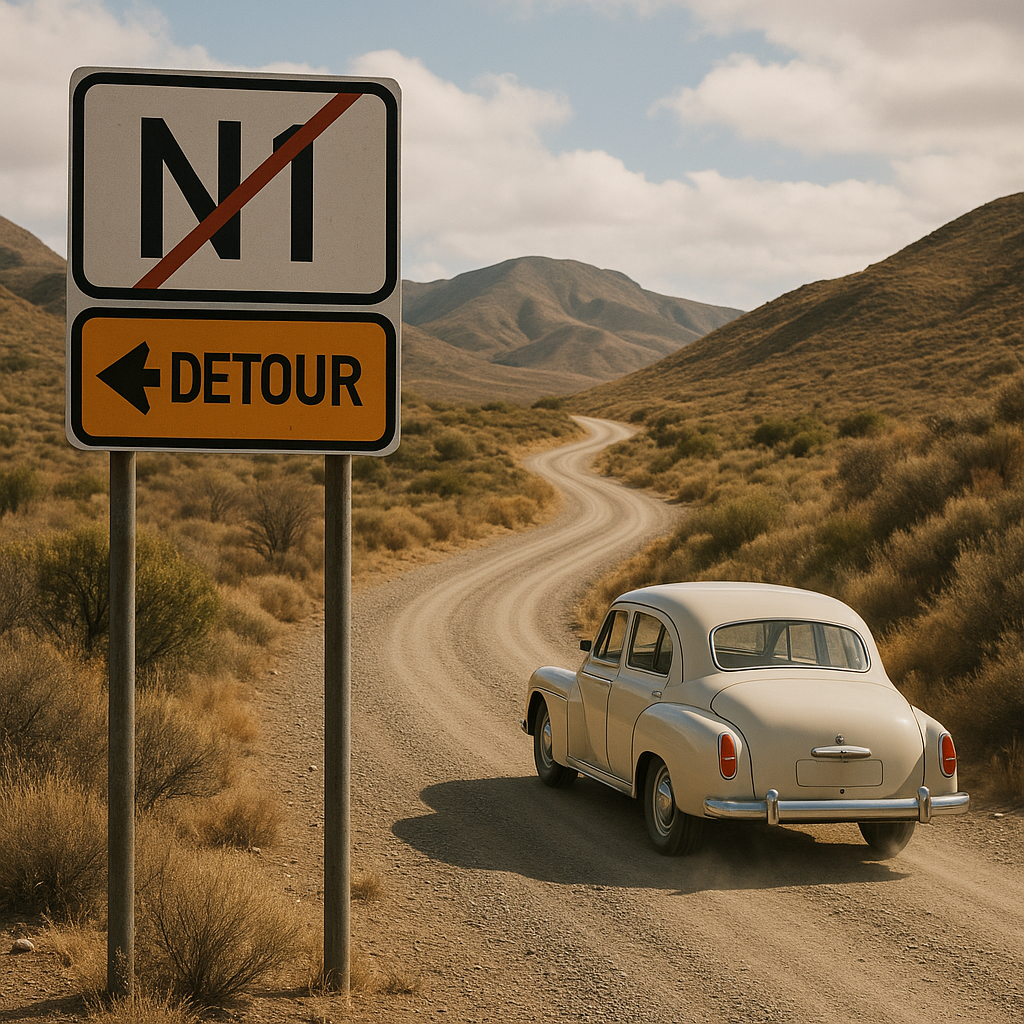
Transform your Cape Town to Gauteng drive! Discover hidden gems, fossil trails, and Karoo magic with this N1 detour guide. Add 2 hrs, multiply adventure.
Forget the boring N1! This guide turns your Cape Town to Gauteng trip into an amazing adventure. Discover hidden gems like Du Toit's Kloof at sunrise, the wild Gamkaspoort gravel road, and the historic Matjiesfontein. Get up close with nature, from Karoo National Park's fossils to cheetahs in Philippolis. Turn a long drive into an unforgettable South African treasure hunt!
What are the best stops between Cape Town and Gauteng?
The best stops between Cape Town and Gauteng transform the N1 highway into an adventure. Key highlights include Du Toit's Kloof for sunrise and venison pie, exploring the Gamkaspoort gravel road, visiting the historic Matjiesfontein hamlet, experiencing Karoo National Park, and seeing the Gariep Dam. Further along, discover Hanover's old jail and interact with cheetahs at the Cheetah Experience in Philippolis.
Get Cape Town news in your inbox
Stay updated with the latest stories from the Mother City.
Most people treat the N1 like a 950-km extraction: get in, get it over with, wake up in Johannesburg with only a fuel receipt to prove you were alive.
Turn the same strip of tar into a choose-your-own-adventure and you’ll clock an extra 110 minutes of driving yet walk away with fossils on your dashboard, cheetah hair on your jeans, and a head full of Karoo stars.
Below is a field-tested, dawn-to-dusk playbook that keeps the highway in sight but never lets it steal the show.
1. Dawn on the Old Pass & the Breakfast that Beats the Tunnel
Leave the city at 05h30 and ignore the first toll gate.
Slip onto the R101 and climb Du Toit’s Kloof the way ox-wagons once did - between sandstone walls that glow peach as the sun clears the ridge.
Black eagles surf the thermals above your windscreen; the only soundtrack is tyre crunch and early-morning cicadas.
At 06h00 sharp, NEWrest @ Du Kloof flings open its barn doors.
Order a rooibos espresso and a venison pie glazed with apricot jam, then step onto the deck that stares straight down the throat of the tunnel you just boycotted.
Fill the tank, charge the camera, and remind yourself the next decent caffeine is 250 km away - this is your last civilised restroom for half a province.
Back on the R101 the descent is fast and twisty; merge with the N1 at Worcester only long enough to wave at the vineyards, then dive south-east onto the R60/R62 toward Robertson.
You have now traded commuter rage for the longest wine route on earth and the morning is still cool enough to taste the terroir in the air.
2. Moonscapes, Merino & the Dam Nobody Shares on Instagram
Barrydale’s retro diner, Diesel & Crème, is good for a peanut-butter milkshake and a pee among vintage petrol pumps.
Ten minutes later the R62 corkscrews over Tradouw Pass - Swedish engineering from 1873, still flawless, still shaded by yellowwoods that smell like crushed pepper when the day warms up.
Instead of following tour buses to Oudtshoorn, swing left onto the unsigned Gamkaspoort gravel.
The 45 km track climbs a mini-Table Mountain made of the same sandstone, then spills onto a turquoise reservoir ringed by empty peaks.
Cape mountain zebra pose on the beach like paid influencers; there is zero signal and, on weekdays, zero humans.
Stay in SANParks’ stone cottage (solar lights, no shop, bring firewood) or simply picnic and exit at Calitzdorp in time for a chocolate-paired port tasting at Boplaas or De Krans.
Rejoin the N1 at Worcester for 38 km, then peel off again at Matjiesfontein.
The entire hamlet is a national monument: one Yorkshire-stone street, camel-thorn trees, and the turreted Lord Milner Hotel where Olive Schreiner once argued politics over sherry.
Check in, dump bags, and board the 15h00 museum-bus - a 1970 Bedford converted to open-air theatre - for a 45-minute dose of Anglo-Boer gossip and lightning-struck farriers.
3. Fossils, Lions & the Curvature of the Karoo
Next sunrise, re-enter the N1 for 12 km - yes, twelve - then swing into Karoo National Park.
Most visitors photograph the signboard and bolt; you’ll drive the 18 km Lammertjiesleegte loop at dawn instead.
Gemsbok, red hartebeest and, if the bush telegraph is accurate, a black-maned lion could photobomb your windscreen.
Park at the fossil trail and read how 250-million-year-old amphibians had skulls shaped like alien popcorn.
If your vehicle has decent clearance, book the 90 km Klipspringer Pass 4×4 trail: it corkscrews to 1 600 m until the horizon bends like a drooping ruler.
Spend the night in SANParks’ refurbished cottages - solar power, gas geysers, no plugs - while black-backed jackals sing you to sleep.
Back on the highway cruise 220 km through the upper Karoo where merino sheep outnumber people and windpumps creak louder than radios.
Just before Colesberg, exit at the Oviston/Gariep sign and drive the eastern shore.
The land’s palette flips: sapphire water, white beaches, flamingo-pink margins.
Launch a kayak beneath the 220 m concrete wall completed in 1971, or sail a dinghy until the dam’s shadow swallows the hull.
Overnight in a stone cottage once used by dam engineers - each stoep faces west for nuclear-orange sinkings you’ll remember longer than any Joburg sunset.
4. Ghost Jails, Mirror Pans & a Cheetah’s Purr
Refuel at Colesberg’s Engen-Wimpy combo that still rocks a 1987 colour palette, then detour 55 km east to Hanover.
Victorian tin roofs slump against each other; the entire village feels like a paused VHS.
The museum is the old jail - ask curator Antoinette to unlock the gallows room where an 1890s prisoner scratched, “I was here, now I am not, soon you will join me.”
Across the street Little Gariep Brewery pours Windpump Wit and slabs of ginger-beer loaf; sleep at Owl House Backpackers where a resident owl delivers nightly rodent reports.
Rejoin the N1 at Trompsburg (wave at the giant merino ram), then exit onto the R704 for Philippolis.
The tar dissolves into a 40 km causeway across Soetdoring Nature Reserve - white pans that mirror the sky so perfectly clouds seem to swim beneath your chassis.
In Philippolis, stroke an adolescent cheetah at the Cheetah Experience non-profit and feel the engine-idle purr vibrate through your forearm.
By 16h30 you’re back on the N1; Johannesburg’s skyline will harass you in three hours, but the Karoo’s vastness lingers behind your eyelids like an after-image.
Total extra driving: 1 h 50 min.
Gravel you can handle in a cautious sedan: 45 km Gamkaspoort, 22 km Oviston, 18 km Soetdoring.
Last cheap fuel is Colesberg; carry five litres of water per person in summer and download offline maps because signal commits suicide twice on this route.
Pack the cooler, cue a Karoo-indie playlist (Farryl Purkiss, David Kramer), and let the N1 become what it was always meant to be: not a conveyor belt to Gauteng, but a spine from which the country’s secret ribs fan out, waiting for the curious to count them - one gravel crunch at a time.
What makes this Cape Town to Gauteng trip different from the usual N1 drive?
This guide transforms the standard 950-km N1 highway journey into an "unforgettable South African treasure hunt." Instead of simply driving from Cape Town to Gauteng, it encourages travelers to discover hidden gems, encounter wildlife, and experience historical sites, turning a long drive into an adventure filled with unique stops and activities.
What are some must-see natural attractions along this route?
Nature lovers will find plenty to explore. Highlights include witnessing sunrise over Du Toit's Kloof, driving the wild Gamkaspoort gravel road with its stunning reservoir and Cape mountain zebras, exploring Karoo National Park for fossils and wildlife like gemsbok and potentially black-maned lions, and experiencing the vast beauty of the Gariep Dam with its sapphire water and flamingo-pink margins.
Are there any historical or cultural sites recommended?
Absolutely! The route is rich in history. You can visit the historic Matjiesfontein, an entire hamlet declared a national monument, and take a unique museum-bus tour. Further along, explore Hanover's old jail, which now serves as a museum, offering a glimpse into 19th-century life and even a gallows room.
What unique wildlife encounters can I expect?
This trip offers several memorable wildlife experiences. You can spot black eagles soaring above Du Toit's Kloof, encounter Cape mountain zebras at Gamkaspoort, look for gemsbok, red hartebeest, and potentially lions in Karoo National Park, and even get up close to an adolescent cheetah at the Cheetah Experience non-profit in Philippolis.
How much extra driving time and what type of roads should I expect for these detours?
The recommended detours add approximately 1 hour and 50 minutes of driving time to the overall journey. While mostly tarred, there are segments of gravel roads suitable for a cautious sedan, including 45 km at Gamkaspoort, 22 km around Oviston, and 18 km through Soetdoring Nature Reserve. It's advisable to carry extra water and download offline maps as signal can be intermittent.
What are some practical tips for travelers embarking on this adventure?
It's recommended to leave Cape Town early (around 05h30) to catch the sunrise at Du Toit's Kloof. Fuel up at strategic points like NEWrest @ Du Kloof and Colesberg, as the next reliable options can be far. Pack a cooler, create a Karoo-indie playlist, and carry at least five liters of water per person, especially in summer. Downloading offline maps is crucial due to patchy signal in remote areas.

Oliver Daniels is a Cape Town journalist who chronicles the intersection of food, migration and identity in South Africa's kitchens—from wood-fired Gugulethu braai spots to Constantia vineyards. Born and raised on the slopes of Devil’s Peak, he still starts each week with a dawn walk across Table Mountain to catch the first Atlantic light before filing copy.
View all articles →