
R100 000 reward offered for info on Atlantis school killings
A school shooting in Atlantis, South Africa, sparks community outrage and demands for safety measures amid ongoing taxi violence.
In the quiet town of Atlantis, a normal school morning turned into a nightmare. A taxi driver and a 13-year-old girl were tragically killed in a brutal shooting right outside Atlantis Secondary School. This horrific event wasn't random; it was a cruel result of long-standing, violent battles between rival taxi groups. The whole town, horrified and heartbroken, is now demanding change, hoping to stop such senseless violence from ever happening again.
What caused the shooting at Atlantis Secondary School?
The shooting at Atlantis Secondary School, which killed a taxi driver and a 13-year-old girl, was a result of long-standing, violent route wars between rival taxi associations. The assailant targeted the taxi driver, Chad Plaatjies, with the child, Aaliyah October, becoming an unintended victim.
Get Cape Town news in your inbox
Stay updated with the latest stories from the Mother City.
I. 07:15 – A Bell That Never Rang
Atlantis, a salt-stung settlement forty kilometres north of Cape Town’s postcard skyline, has spent twenty years measuring its mornings by the crackle of gunshots the way sailors measure weather by the colour of swell.
On a frost-nipped Tuesday, that cadence lurched into a new key. A chalk-white Toyota Quantum coasted to the curb outside Atlantis Secondary, hazards winking like a panicked pulse. Thirteen-year-old Aaliyah “Liya” October - shoulders proud inside the mustard jersey Gogo had saved for three stokvel cycles - stood third in the queue. Behind her, smaller kids swapped maths marks while the driver, 31-year-old dad-of-two Chadwin “Chad” Plaatjies, tooted for late-comers and tapped the steering wheel in time to an old kwaito cassette.
At 07:15 sharp, a solitary man in navy workshop coveralls crossed Koeberg Road. A painter’s mask hid his face; a five-litre paint tin occupied one hand, a 9 mm CZ pistol - swaddled in a Shoprite bag to keep brass from testifying - filled the other. Two pupils assumed he had come to stripe the fresh speed bump. Instead he stepped on the running board, touched steel to Chad’s temple and squeezed off four rapid shots. The final slug tore through Liya’s raised wrist, nicked bone, kissed the window frame and lodged beneath her shoulder-blade. Both were gone before the taxi kissed the prefab fence and sighed to a stop.
Security footage shows children scattering like startled springbok; one grade-8 boy freezes, neon lunchbox swinging. A matric girl sprints back for her friend, sneakers skating across casings that glitter like newly minted coins. Fourteen seconds start-to-finish. The killer jogs between the rental blocks nicknamed “Malta Heights” and vanishes into a green Mazda bakkie wearing false plates. That is the last anyone saw of him.
II. The Town That Learnt Grief by Megabyte
Within sixty minutes WhatsApp voice notes choke every Atlantis group: “Genoeg is genoeg, ons offer kinders soos skape vir slag.” Fathers forward the grainy hallway clip, proof that the feud has finally climbed the school steps. By mid-morning a petition drafted by the governing body tops 3 400 names; by dusk it sails past 18 000, a digital rosary threading Mamre, Pella, Saxonsea, Sherwood Park, even distant Dunoon.
The wish-list is ruthlessly practical: a permanent police satellite office inside the fence, a round-the-clock roadblock where Koeberg meets Atlantic Drive, and an immediate freeze on all scholar-taxi permits until route wars are refereed by an outside judge. Deputy principal Marlene Lewis - thumbs trembling too hard for punctuation - types: “Our children will not be bargaining chips in a boardroom fight carried out with AKs.”
Atlantis never asked for violence; it was assembled, screw by screw, to contain it. Conceived in the mid-seventies as a coloured “model township” under Group Areas scalpels, the suburb was planted on dunes so alkaline winter rain drains faster than regret. For two decades the Dorbyl car-assembly plant paid wages and stamped the 07:30 whistle across Vredenburg. When tariffs collapsed in 1997, 4 200 pay-cheques evaporated in a single quarterly report. Today the abandoned gates are a rust-red cenotaph; teenagers stage paintball battles under the hollow “DORBYL” sign.
Into that void slid the minibus business - cash-heavy, unbanked, politically wooed. By 2005 three route associations controlled Atlantis-Cape Town, Atlantis-Malmesbury, Atlantis-Bellville. Each runs its own rank marshals and “parking tax” of R20 a vehicle. Disputes advance from memorandum to burning tyres to mental hit-lists no one writes down because paper can testify. The first headline murder arrived in 2013: chairperson Mario van Wyck took seventeen bullets while adjusting a distributor cap. Detectives catalogued forty-two taxi-linked assassinations since, a sine wave that spikes with every municipal election.
Children have always been the blank margin round which adults drew borders. Primary schools rehearse “duck-and-cover” when crime intel warns of drive-bys; in 2019 a grade-2 girl caught a stray in the calf. Liya’s death on the actual pavement, however, detonated something older than fear - collective shame.
III. Cash for Clues, Sand for Footprints
Western Cape Mobility Minister Isaac Sileku - once a permit-holding driver himself - stood among bouquets of plastic flowers and last-year’s exam sheets. “We settled scores with fists, not by aiming at kids,” he muttered, cousins’ fourteen Quantum seats humming like gossip behind him. Cape Town mayor Geordin Hill-Lewis arrived hours later, sorrow in one hand, hard currency in the other: R100 000 for “actionable, verifiable information” that lands both triggerman and paymaster before a judge. Tips can be phoned, e-mailed, or slipped into tamper-proof boxes bolted outside the police station and the Dassenberg Road library. The city even dangles crypto vouchers so informants need no bank trail - an anti-poaching trick borrowed from KZN rhino wars.
Rewards here carry a mixed rap sheet. A R50 000 pot for the 2018 slaying of rank boss Colin Klaasen drew four callers, each accusing a rival owner; every alibi survived scrutiny and the purse stayed put, feeding rumours that civil servants “ate” the bounty.
Investigators are chasing narrower threads. Navy overalls come from two local panel shops plus a Transnet depot; the respirator’s batch number links to 78 units sold in Atlantis. Analysts are door-knocking buyers, cross-checking against firearm licences - tedious, but it is the sieve they have.
Inside the school a “Code Grey” protocol rules: no learner leaves the grounds on foot; parents sign a triplicate register in the western quad; taxis may not stop within 200 m. Two army veterans escort groups to a new pickup zone beside the magistrate’s court. The measures feel like wrapping a thunderstorm in bandages.
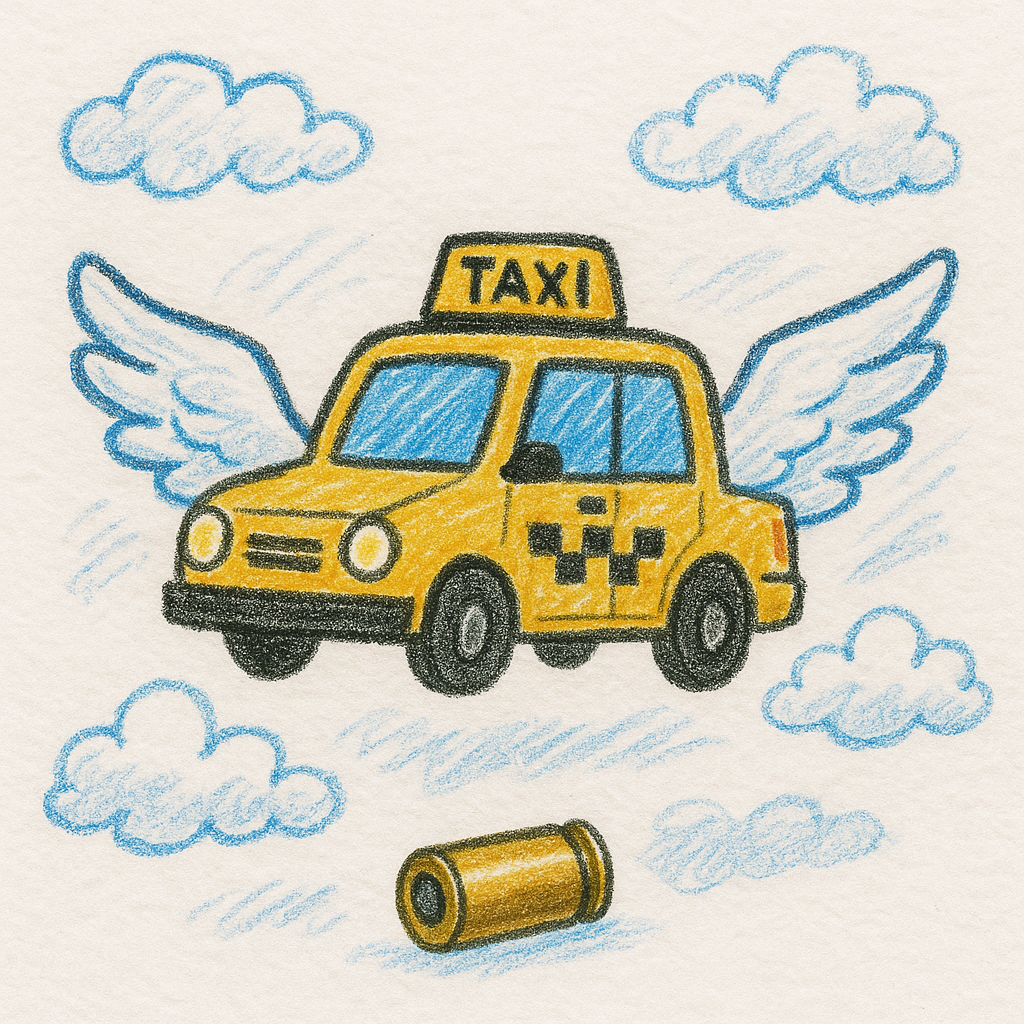
District psychologists speak of “delayed bereavement” - kids crack jokes about whose parent is next, then beg for extra worksheets because focus has become a luxury. One grade-9 artist sketched a winged taxi rising into clouds made of homework pages “so the ancestors can learn too.”
IV. Grandmothers, Rappers & the Long 07:15 Silence
While politicians table by-laws, the most stubborn resistance is small-scale. Every dawn the “G-Force” - ten grandmothers in reflective bibs - patrol four scholar routes armed only with two-way radios donated by a yacht club. Since February, muggings near primary schools have dropped 38 %. “We are the CCTV that never buffers,” laughs chairperson Aunty Ballie, 67.
Culture is pushing back as well. The night after the shooting, rap crew “Dollar$Van” cut “Liya se Naam” inside an egg-tray-lined garage. The hook loops the school bell under a mother’s raw cry; within forty-eight hours it trends #3 on South African TikTok, 1.4 million views and climbing. Streaming proceeds will fund a black-granite tombstone carved like an open exercise book. Verses name no gangs; the refrain pleads: “Skiet nie waar ons kinders leer nie.”
Even taxi bosses felt the moral aftershock. In the termite-gnawed pews of the old Dutch Reformed church, the Atlantis Joint Regional Council allowed women queue marshals the podium for the first time. They voted to suspend rush-hour loading until a retired high-court judge mediates route rows - taxi peace accords usually measured in weeks, but the optics of remorse are novel.
In Plattekloof’s forensic lab, analysts wait for rain to cease. Atlantis sand drinks water like secrets; the drizzle that followed the shooter may have erased his trail. Still, fragments linger - a partial shoeprint on the running board, a single reload-stamped casing traceable to three commercial ranges. Each sliver is a tessellation that, correctly placed, could chain back to whoever paid for two coffins: one a driver feeding twins, the other a child who had just mastered long division.
Until that chain tightens, the reward accrues interest at prime minus one percent. And every weekday, exactly one minute before the first bell, Atlantis Secondary stands in silence. Learners stare at the shut front gate, as if collective will could torque the future a few degrees off the axis of repetition.
[{"question": "
What led to the tragic shooting outside Atlantis Secondary School?
", "answer": "The shooting was a horrific consequence of long-standing and violent conflicts between rival taxi associations over routes. The primary target was the taxi driver, Chad Plaatjies, but 13-year-old Aaliyah October became an innocent victim caught in the crossfire."}, {"question": "Who were the victims of the Atlantis Secondary School shooting?
", "answer": "The victims were Chadwin \"Chad\" Plaatjies, a 31-year-old taxi driver and father of two, and Aaliyah \"Liya\" October, a 13-year-old schoolgirl. Both were fatally shot right outside the school gates."}, {"question": "What immediate actions did the Atlantis community take in response to the shooting?
", "answer": "The community's response was swift and widespread. A petition demanding change quickly garnered over 18,000 signatures, calling for a permanent police presence at the school, a round-the-clock roadblock, and a freeze on scholar-taxi permits until an independent mediator resolves the route wars. Local grandmothers formed a \"G-Force\" to patrol scholar routes, and local artists even released a song to raise awareness and funds."}, {"question": "What measures have been implemented at Atlantis Secondary School following the incident?
", "answer": "The school has adopted a \"Code Grey\" protocol, preventing learners from leaving the grounds on foot and requiring parents to sign a triplicate register for pickups. Taxis are now prohibited from stopping within 200 meters of the school, and army veterans escort groups to a new, safer pickup zone."}, {"question": "What is being done to find the perpetrator and prevent future violence?
", "answer": "Western Cape Mobility Minister Isaac Sileku and Cape Town mayor Geordin Hill-Lewis have offered a R100,000 reward for verifiable information leading to the arrest of the triggerman and paymaster. Investigators are pursuing leads from clothing and firearm batch numbers. Additionally, taxi bosses, in a rare show of remorse, have agreed to suspend rush-hour loading until a retired high-court judge mediates the route disputes."}, {"question": "How has Atlantis been affected by violence related to taxi conflicts historically?
", "answer": "Atlantis has a long history of taxi-related violence, with over forty-two assassinations cataloged since 2013, often spiking around municipal elections. Children have frequently been caught in the crossfire, with primary schools even rehearsing \"duck-and-cover\" drills. The town, originally designed as a \"model township,\" experienced significant unemployment after the Dorbyl car-assembly plant closed, leading to the rise of unregulated and often violent minibus taxi businesses.", "additional_info": "The taxi industry in South Africa has a complex history, often characterized by fierce competition, route disputes, and violence. These conflicts frequently stem from economic pressures, lack of formal regulation, and the large sums of cash involved, making it a lucrative but dangerous sector. The events in Atlantis sadly reflect a broader national issue.", "related_links": [{"text": "South African Taxi Industry Overview", "url": "https://www.transport.gov.za/"}, {"text": "History of Group Areas Act in SA", "url": "https://www.sahistory.org.za/article/group-areas-act"}, {"text": "Cape Town Crime Statistics", "url": "https://www.capetown.gov.za/"}]}]
Thabo Sebata is a Cape Town-based journalist who covers the intersection of politics and daily life in South Africa's legislative capital, bringing grassroots perspectives to parliamentary reporting from his upbringing in Gugulethu. When not tracking policy shifts or community responses, he finds inspiration hiking Table Mountain's trails and documenting the city's evolving food scene in Khayelitsha and Bo-Kaap. His work has appeared in leading South African publications, where his distinctive voice captures the complexities of a nation rebuilding itself.
View all articles →