
R5 million payout awarded to CT mother after child suffers lifelong injuries in road accident
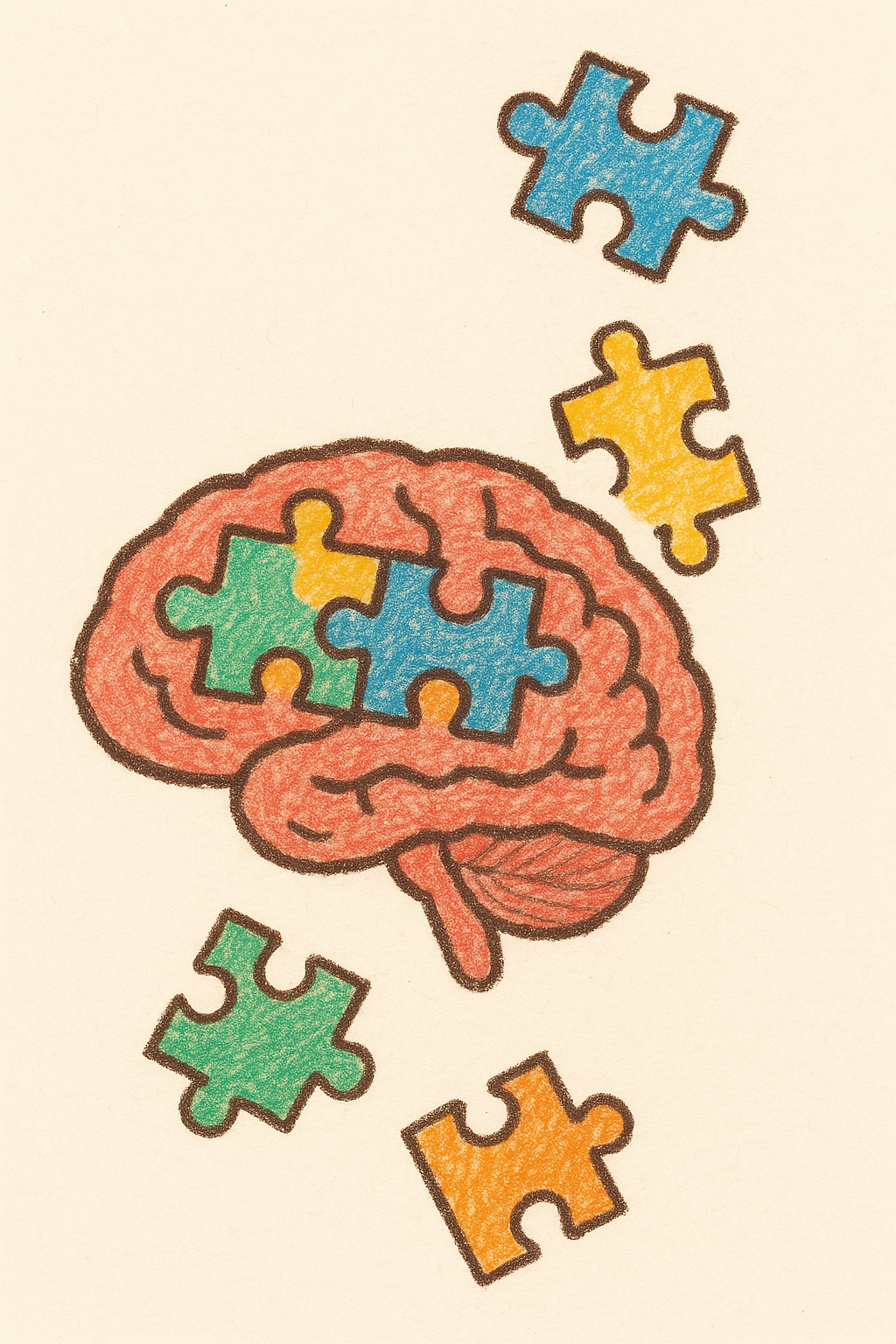
WC High Court orders RAF to pay over R5M in landmark childhood TBI case, setting precedent for developmental brain injury claims.
A South African court made a huge decision, giving R5 million for a child's "minor" brain injury from a car crash. This ruling says that even small brain injuries in kids can cause big problems later in life, making courts look at these cases differently. It means that how a child develops after an injury is super important, not just how they seem right away. This award will change how similar cases are handled forever, focusing on the child's whole future.
What is the significance of the South African court's R5 million award for a "minor" car-crash brain injury?
The South African court's R5 million award redefines how "mild" traumatic brain injuries (TBI) in children are compensated. It highlights that early childhood brain trauma, even if initially appearing minor, can lead to severe lifelong developmental and functional losses. The ruling emphasizes forward-facing, developmental assessment over immediate symptoms, setting a new legal precedent for child-TBI cases.
Get Cape Town news in your inbox
Stay updated with the latest stories from the Mother City.
A Quiet Walk That Became a Lurking Catastrophe
A Screech of Metal on a June Afternoon
On 9 June 2013 a mother and her three-year-old son were strolling on the verge of a jam-packed Cape Town arterial when a saloon car veered onto the shoulder. The driver had jerked the wheel to dodge another motorist who cut across lanes without signalling. The bumper clipped the toddler, flinging him several metres. He blacked out for seconds. CT scans at Red Cross War Memorial Children’s Hospital listed “mild traumatic brain injury” plus two hairline parietal cracks. Forty-eight hours later he walked out sporting only small dressings and a discharge sheet warning parents to watch for vomiting or mood swings.
Early Days: Everything Looked Fixable
In the following fortnight the boy displayed nothing more sinister than crankiness and restless nights, textbook reactions to low-grade head trauma. The police file labelled the harm “minor”, the RAF’s hand-picked doctor logged an 8/15 on the Glasgow Coma Scale - squarely inside the mild bracket - and the fund tabled a once-off R140 000 to cover future inconvenience. His mother declined; her gut said the story was not over.
The Slow, Invisible Slide
Across three successive school years teachers began flagging short-term memory lapses, word-retrieval blocks and volcanic meltdowns at innocuous noises. By Grade 2 the child could not tie laces, grasp basic numeracy or read classmates’ facial cues. A fresh MRI at Tygerberg revealed diffuse axonal injury and shrinking white-matter volumes compatible with progressive developmental stall. Neuro-psych testing pinned him on the 2nd percentile for executive function and the 9th for receptive language - light-years south of the 50th percentile he had hit at age two.
Trial of Two Narratives: A Life on Trial
Filing the Papers - and the Push-Back
In 2018 the family lawyer lodged a summons in the Western Cape High Court seeking past and future medical costs, loss of earning power, general damages and lifelong 24-hour care once the boy reached adulthood. Six expert fields - paediatric neurology, educational psychology, occupational therapy, vocational analysis, actuarial science and nursing - crowded the docket with 1 800 pages of data. The RAF countered that scholastic hurdles were rooted in pre-existing global delay, insisting the brain damage was “mild” and therefore capped at R200 000 under its own tariff grid.
A Mother’s Diary of Deterioration
During the November 2023 hearing the mother recounted nightly terrors, sensory overload in grocery aisles, and panic attacks triggered by hand-dryers. She quit her job as a laboratory technician to chauffeur the boy between speech therapy, physiotherapy and special-needs schooling.
Neuroscience vs Speculation
Professor Samantha Peters, head of paediatric neurology at the University of Cape Town, told the bench that early childhood is a fireworks show of synapse-creation and nerve-coating. A jolt at that stage does not simply knock out established skills; it warps the very scaffolding upon which identity and intellect are built. She coined the phrase “neuro-plastic maladaptation” to explain how poorly wired circuits become cemented as the child grows. Dr Lindiwe Mokoena, educational psychologist, produced year-by-year test graphs showing a steady IQ slide from above-average non-verbal scores at three to borderline functioning at thirteen, forecasting academic stalling at Grade 7 and lifelong supported employment.
The RAF relied on Dr Leon Joubert, who cited two prenatal ultrasound comments hinting at mild ventriculomegaly. Under cross-examination he admitted that such findings appear in 1.4 % of healthy foetuses and the remainder of the scans were normal. Judge Matthew Francis tossed the evidence as conjecture.
Forty-Two Pages That Redefined “Mild”
The Court’s New Lens
Handing down judgment on 14 March 2024, Judge Francis shredded the RAF’s tariff obsession. South African delict law, he reminded, compensates for proven functional loss, not medical labels. When a child is hurt before higher-order brain regions mature, the court must adopt a forward-facing, developmental gaze. He distilled a three-step test:
1. Did the trauma materially reroute the child’s biological arc, even if day-one symptoms seemed trivial?
2. Can we map that rerouted arc with the best neuroscience available?
3. What monetary value attaches to every past and future loss springing from the altered arc?
Finding the Invisible Saboteur
Applying the test, the court concluded that the insult to the left frontal white matter had silently undermined the boy’s executive and language networks while everyone’s attention was fixed on surface scars. Expert consensus showed a 95 % chance that, absent the crash, the boy would have finished mainstream schooling and found semi-skilled work.
The Numbers Behind the Headlines
- General damages: R2 600 000 - far beyond the usual mild-TBI bracket of R250 000–R500 000, justified by severe lingering fallout.
- Past medical costs: R580 000 - private therapists, remedial schooling, medication.
- Future medical care: R1 950 000 - neuro-reviews, anticonvulsants, occupational therapy, emerging mood-disorder treatment.
- Lost future earnings: R2 400 000 - gap between projected supported-work income (R4 500 per month in 2024 rands) and median Grade-12 graduate wages.
- Frail-care costs: R3 850 000 - trained carers who will prompt executive tasks, manage finances and ensure safety once the mother can no longer cope.
A 15 % contingency reduction produced a final cheque of R5 038 000 plus taxed costs. Crucially, the RAF must indemnify any further reasonable medical expenses for life, activated by mere proof of necessity.
Shockwaves Across Medicine, Policy and Family Life
A New Playbook for Child-TBI Cases
The ruling aligns South Africa with a growing global chorus that treats developmental-acquired brain injury (DABI) as qualitatively different from adult injury. Comparable logic surfaced in England (Croke v Wiseman [2018]) and Australia (Lee v State of NSW [2022]). Expect attorneys to file “protective” summonses right after toddler accidents, even when the child looks physically unscathed, then park quantum hearings until the brain matures at 12–14 years - safely inside prescription limits.
Research, Registries and Cost Fears
UCT has already enrolled 300 children with seemingly mild early TBI in a five-year study; interim numbers indicate that 28 % have measurable executive-function deficits by Grade 5. If replicated, actuaries will need brand-new models. Parliament’s Transport portfolio committee is mulling amendments that would compel neuro-cognitive screenings at 12, 36 and 72 months, funded by a ring-fenced fuel levy. The Western Cape Health Department is piloting a digital concussion registry that pings surgeons when a mild-TBI child misses follow-ups.
A Boy’s Fresh Chapter
Using the first interim payout, the family has relocated from Khayelitsha to Pinelands, placing the teenager in a neuro-inclusive private centre with equine therapy and sensory gyms. He is taking beginner coding classes sponsored by a local NGO. His mother, now formally recognised as his full-time carer, is studying developmental neuroscience via UNISA with a bursary carved from the award.
From Lump Sum to Lifelong Scaffolding
Judge Francis explicitly endorsed spending on experimental brain-computer-interface devices and augmented-reality social-cue trainers, reasoning that such tech will be mainstream within ten years and could slash carer hours. He married the award to South Africa’s constitutional right to bodily integrity and the UN Convention on the Rights of Persons with Disabilities, directing that compensation must include administrative support so the boy can exercise legal agency - by assisted decision-making - once he turns eighteen.
In short, a single moment on a roadside has rewritten how South African courts will confront the quiet, slow-motion tragedies hidden inside children’s skulls - and how insurers must now price the invisible.
What was the significant South African court ruling regarding a "minor" car-crash brain injury?
The South African court awarded R5 million for a child's brain injury that was initially considered "minor." This ruling is groundbreaking because it acknowledges that even seemingly small brain injuries in children can lead to severe, lifelong developmental problems, fundamentally changing how such cases will be assessed and compensated in the future. It places a strong emphasis on the child's long-term developmental trajectory rather than just immediate symptoms.
What were the initial circumstances of the child's injury?
On June 9, 2013, a three-year-old boy was clipped by a car that veered onto a verge in Cape Town. He blacked out for seconds and was diagnosed with a "mild traumatic brain injury" and two hairline skull fractures. Despite initial appearances that suggested a quick recovery, with only minor crankiness and restless nights, his mother suspected the injury was more serious.
How did the child's condition progress over time?
Initially, the injury appeared minor, with a low-grade Glasgow Coma Scale score. However, over successive school years, the child developed significant issues including short-term memory lapses, word-retrieval blocks, and severe emotional meltdowns. By Grade 2, he struggled with basic numeracy, reading social cues, and even tying his shoelaces. Later MRI scans confirmed diffuse axonal injury and shrinking white-matter volumes, consistent with progressive developmental stall, and neuro-psych testing showed a drastic decline in executive function and receptive language skills.
How did the court establish the link between the injury and the child's long-term issues?
During the trial, expert testimony, particularly from Professor Samantha Peters (paediatric neurology) and Dr. Lindiwe Mokoena (educational psychologist), was crucial. They explained how early childhood brain trauma can disrupt the brain's

Tumi Makgale is a Cape Town-based journalist whose crisp reportage on the city’s booming green-tech scene is regularly featured in the Mail & Guardian and Daily Maverick. Born and raised in Gugulethu, she still spends Saturdays bargaining for snoek at the harbour with her gogo, a ritual that keeps her rooted in the rhythms of the Cape while she tracks the continent’s next clean-energy breakthroughs.
View all articles →